- Non-tarifaire à la frontière sino-marocaine, importation marocaine de marchandises chinoises, baisse des coûts à explorerJun 11, 2026Voir les détails
- Quel signal opérationnel la suspension des exportations vers le Japon libère-t-elleJun 10, 2026Voir les détails
- Les importations chinoises de GNL ont rebondi en mai, les importations supplémentaires de la Russie et du Canada comblent le déficit au Moyen-OrientJun 10, 2026Voir les détails
- GEO va-t-il modifier sa stratégie SEO ?Jun 04, 2026Voir les détails
- À quelles activités les solutions de bout en bout conviennent-elles ?Jun 03, 2026Voir les détails
- Tendances des canaux de croissance mondiale 2026Jun 02, 2026Voir les détails
Modèle de réponse aux demandes de renseignements en anglais : comment le rédiger ? 8 exemples de formules à fort taux de réponse
Why does an English inquiry reply template always get written, but still no response?

If you can’t write an English inquiry reply template, the problem is often not with English itself, but with judgment. They all seem to be called “inquiry replies,” but the actual corresponding deal stage, customer intent, and completeness of information are completely different.
In the integrated foreign trade website and overseas marketing scenario, reply emails are not only a communication action, but also an important node that carries traffic, screens leads, and promotes conversion. Natural inquiries from the website, instant consultations brought by ad landing pages, and follow-up questions after social media redirection all require different reply logic.
A more common mistake is to directly apply one English inquiry reply template to handle all incoming messages. The result is either too lengthy, or gives too much irrelevant information, and eventually turns originally intentional leads into silent customers.
In actual use, first distinguish these 8 high-frequency reply scenarios
The core of a truly high-conversion English inquiry reply template is not “beautiful sentences,” but first identifying what type the incoming message belongs to.
Only asking for price, with very little information
The biggest fear of this type of inquiry is to quote a complete price as soon as it arrives. The other party may only be comparing prices, or may still not have clarified the specifications. The reply should first pick up the demand, then guide them to supplement quantity, parameters, target market, and procurement cycle.
The English inquiry reply template can be concise, but it should include two actions: confirm receipt of the inquiry, and ask 2 to 3 key questions. This is both professional and avoids making the follow-up quotation inaccurate.
When the product model is clear and a formal quote is being prepared
When the other party has already specified the model, quantity, and destination port, the English inquiry reply template should no longer stay in vague confirmation. At this point, you need to quickly provide the quotation basis and supplement delivery time, packaging, payment terms, and validity period.
If the source is an independent site inquiry page, this type of lead is usually of higher quality. Reply speed and information completeness will directly affect whether the next round of communication continues.
When the other party has not replied for a long time after the first contact
Follow-up scenarios are the easiest to underestimate. Many English inquiry reply templates are only suitable for the first email, but have no follow-up talking points. In fact, the second and third emails are more of a test of rhythm.
At this time, it is not advisable to repeatedly ask “Did you receive it?” A more effective approach is to add a new point of information, such as alternative specifications, near-term delivery, sample arrangements, or relevant cases in the target market, so that the other party has a reason to continue replying.
When the customer is concerned about quality or certification issues
Once the incoming message starts asking about testing, certification, materials, or after-sales, it means the other party has already entered the risk-assessment stage. At this point, the English inquiry reply template cannot simply repeat product advantages, but should respond to concerns with verifiable information.
Priority should be given to certification, testing methods, quality inspection processes, and sample support. If the wording is too sales-oriented, it will instead weaken trust.
When samples or small-batch trial orders are needed
Sample inquiries are not just “send one first and see.” The other party is usually evaluating response efficiency, compatibility, and execution details. The English inquiry reply template must clearly explain sample fees, lead time, shipping rules, and how they connect to subsequent bulk orders.
If this step is vague, it is easy for the sample to be sent out but the order still cannot be pushed forward.
When there are many customization requirements and communication tends to go off track
When color, size, packaging, or function adjustments are involved, the English inquiry reply template should emphasize the “confirmation scope,” not rush to promise. A more common judgment method is to first lock in what can be modified, then explain the minimum order quantity, sample cycle, and file requirements.
If such inquiries come from SEO pages, the search intent is often clearer, but the requirements are also more detailed. The email content needs to stay consistent with the landing page promise, otherwise it will cause cognitive disconnect.
When the other party asks for a phone call or video communication
When communication shifts from email to a meeting, the task of the English inquiry reply template becomes “reducing scheduling cost.” The reply should clearly state available times, time zone, meeting tool, and the topics planned for discussion.
If you only say “we can talk,” the other party still has to keep asking, and the efficiency is not high. Especially when dealing with leads across multiple time zones, the clearer the schedule, the higher the meeting rate.
When an old customer is placing a repeat order or adding an order
Repeat-order scenarios do not require re-showing all capabilities; the focus is efficiency, stability, and continuity of historical records. The English inquiry reply template should directly connect to the last order information, and then confirm whether there are any new specifications, new delivery requirements, or transportation requirements.
This type of email may seem simple, but it best reflects systematic management capability. Especially when multilingual websites, ad customer acquisition, and customer nurturing are running in parallel, unified inquiry record management can significantly reduce repeated communication.
Under different scenarios, the judgment focus of the English inquiry reply template is not the same
If you want to improve the reply rate, you can first break common scenarios into several judgment dimensions instead of only staring at the wording of the email.
High reply-rate writing usually cannot do without these structural actions
No matter which English inquiry reply template is used, the truly stable and effective structure is usually similar, just with different emphasis.
- First confirm that the demand has been received, to avoid the other party being unsure whether the email has arrived.
- Then give a direct reply, without detours and without piling on background introductions.
- Add 1 to 3 follow-up questions to make the next step clear and answerable.
- End with a clear action suggestion, such as quotation, sample, meeting, or material delivery.
What needs to be confirmed before landing is that the template is only the draft; what really determines the reply rate is whether the content is consistent with the website landing page, ad keywords, and inquiry source. Many companies do a good job on the front end of customer acquisition, but the back-end reply still stays in a manual, fragmented state, causing lead loss.
This is also why website and marketing service integration is becoming more and more important. Systems like B2B foreign trade solutions are valuable not only in building websites, but also in connecting inquiry capture, message notifications, multi-time-zone follow-up, and conversion tracking, so that English inquiry reply templates no longer rely on individual experience to perform on the spot.
When reply results are poor, it is not because there are too few templates, but because these judgment points are wrong
A common misjudgment is to treat all inquiries as purchase intent. In fact, some are only market research, some are comparing suppliers, and some are already close to placing an order. At different stages, the tone and information density of the English inquiry reply template should be adjusted accordingly.
Another issue is only looking at the email content and not the source page. Inquiries from Google SEO pages usually care more about matching; inquiries from ad pages usually focus more on speed and clear quotations; inquiries transferred from social media private messages need more supplementary formal information.
There is also an easy-to-ignore situation where the language is accurate but the conversion path is broken. For example, the website loads slowly, the landing page information is incomplete, or historical communication cannot be tracked, all of which can cause even a good English inquiry reply template to lose effectiveness. In practical use, page speed, translation quality, and lead filing capability all affect the follow-up conversion after replying.
Some integrated services are better suited to foreign trade scenarios precisely because they can handle these basic conditions at the same time. For example, system-level performance reaching a PageSpeed score of 90+, translation accuracy of 92.7%, and trackable inquiry conversion often bring more long-term value than optimizing a single email alone.
To truly use an English inquiry reply template well, you can start from these steps
First organize existing inquiry sources and distinguish between website organic traffic, ad leads, social media private messages, and repeat customers. Different sources should not use exactly the same reply template.
Then sort out 8 high-frequency scenarios, prepare a basic English inquiry reply template for each type, and reserve replaceable fields, such as product name, quantity, delivery time, certification, and sample rules. This is both faster and less likely to feel rigid.
If you still want to further improve results, the key is not to keep stacking templates, but to connect the website, inquiry form, automatic notifications, customer management, and follow-up into one chain. Only then can you clearly see which templates really bring replies and which pages really bring deals.
From this perspective, the English inquiry reply template is not an isolated copy, but part of the overseas customer acquisition system. By refining scenario judgment and standardizing reply actions, and then combining them with a stable independent site and marketing loop, inquiry quality, reply rate, and subsequent conversion can all improve together.
- SEO
- Marketing à l'international
- Site indépendant
- Commerce extérieur B2B
- Site web multilingue
- Qualité des demandes
- Référencement Google
- Solution B2B pour le commerce extérieur
- Conversion des demandes de renseignements
- Pages d’atterrissage publicitaires
- Modèle de réponse aux demandes de renseignements en anglais
Articles connexes
 Modèle de réponse aux demandes de renseignements en anglais : comment le rédiger ? 8 exemples de formules à fort taux de réponse
 Comment contrôler les coûts de la traduction de sites web indépendants ? Nombre de langues, mode de maintenance et estimation budgétaire
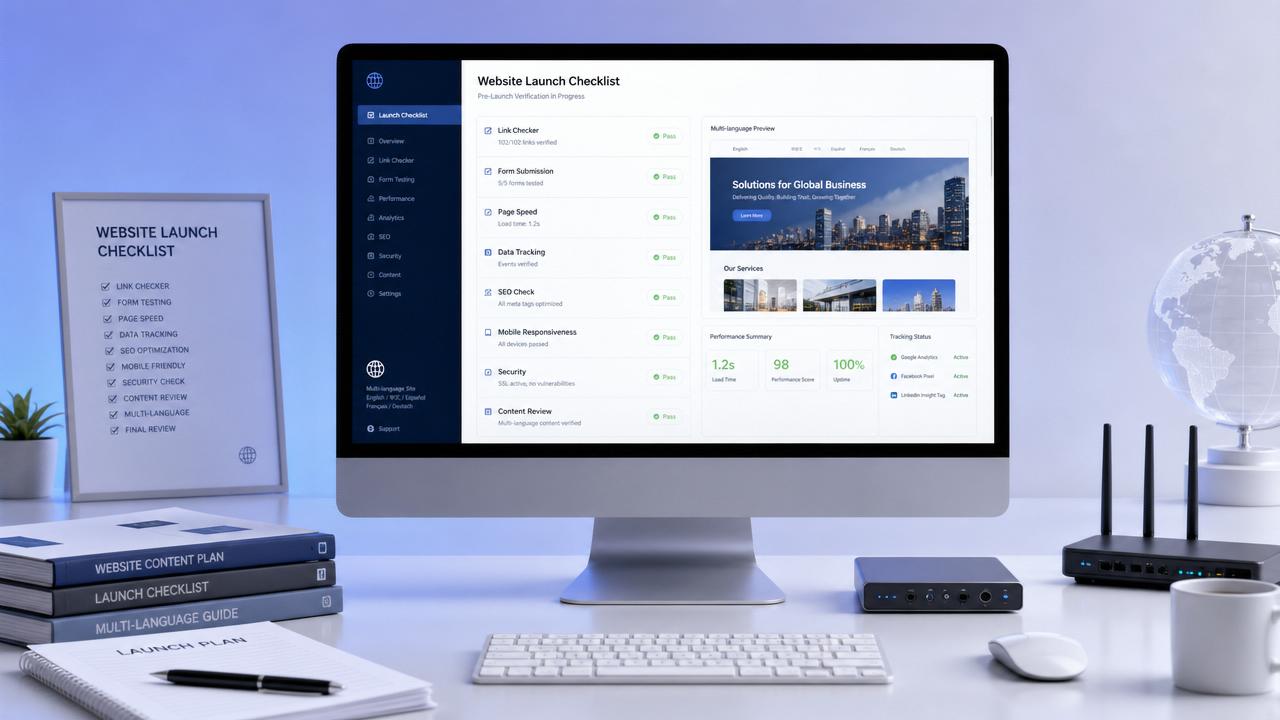
 Liste de contrôle pour la mise en ligne d’un site web d’exportation : quels sont les 20 points à vérifier ?


Produits connexes
 EasyCamp SaaS Système intelligent de création de sites Web et de marketingSystème intelligent de marketing web E-Yingbao SaaS : création de sites web sans code, basée sur l'IA. Créez rapidement des sites e-commerce multilingues indépendants en seulement 10 minutes. L'accélération mondiale des serveurs et l'optimisation SEO basée sur l'IA permettent aux entreprises de se connecter efficacement aux marchés mondiaux. La fusion harmonieuse entre technologie et convivialité rend la création d'une présence e-commerce internationale remarquablement simple.
 Service d'optimisation du système double moteur AI+SEOLe système d'optimisation double moteur AI+SEO d'YiYingBao, grâce à l'exploitation intelligente de mots-clés par l'IA, la génération de contenu et une optimisation technique complète, aide les entreprises de commerce extérieur à obtenir un trafic naturel de haute qualité, améliorant considérablement le classement des recherches et le taux de conversion.
 Système de marketing publicitaire intelligent AI+SEMAI+SEM propulse une création publicitaire intelligente, permettant un marketing publicitaire précis sur toute la chaîne. Le système génère automatiquement des rapports hebdomadaires/mensuels, l'IA recommande des mots-clés et des pays de diffusion, surveille en temps réel les indicateurs clés et fournit des alertes intelligentes, lance en un clic des solutions de diffusion à haut taux de conversion, aidant à acquérir rapidement des clients et à améliorer le ROI.
 Système de marketing sur les réseaux sociaux AI+SNSSystème de marketing intelligent Yingyingbao AI+SNS pour les réseaux sociaux - Capture sociale précise pour l'ère des réseaux sociaux. Prend en charge la synchronisation du contenu en un clic sur les principales plateformes, notamment Facebook et LinkedIn. La réécriture des publications alimentée par l'IA améliore la localisation. Un service client intelligent disponible 24 h/24, 7 j/7 et l'analyse du profil des utilisateurs permettent aux entreprises de se développer efficacement sur les marchés mondiaux.
 Solutions marketing publicitaire IA+SEMLes solutions publicitaires SEM basées sur l'IA exploitent l'intelligence artificielle pour améliorer considérablement la gestion des campagnes SEM. Grâce à l'IA, elles génèrent des rapports hebdomadaires et mensuels qui présentent les données des comptes sous plusieurs angles, permettant ainsi une supervision complète des performances et des tendances publicitaires. L'IA fournit des recommandations précises sur les mots-clés et les pays cibles, rédige de manière intelligente des textes publicitaires à fort taux de conversion et lance des campagnes efficaces en un seul clic, accélérant ainsi l'acquisition de clients pour les entreprises. Parallèlement, le système surveille les indicateurs clés en temps réel, identifie intelligemment les fluctuations anormales et émet des alertes en temps opportun, garantissant ainsi des performances publicitaires stables et des rendements élevés.
 AI+SEO营销解决方案易营宝AI+SEO营销解决方案,通过AI批量写作、智能生成TDK、精准关键词扩词等功能,全面优化网站SEO效果,提升流量与转化率。助力企业构建高效智能网站新生态。
 Services de noms de domaineEasy Marketing propose des services professionnels de noms de domaine, comprenant la recherche intelligente, l'enregistrement en un clic, la protection de marque et la gestion complète du cycle de vie, aidant les entreprises à construire une image de marque numérique.
 EasySell B2C Place de Marché Transfrontalière, Site Indépendant易营宝B2C跨境商城独立站是由易营宝信息科技(北京)有限公司自主研发的智能建站与跨境电商一体化解决方案。系统专为中小型及大型出口企业打造,集“建站、运营、营销、投放、转化”于一体,帮助企业快速打造跨境电商独立站,实现品牌出海与全球销售增长。
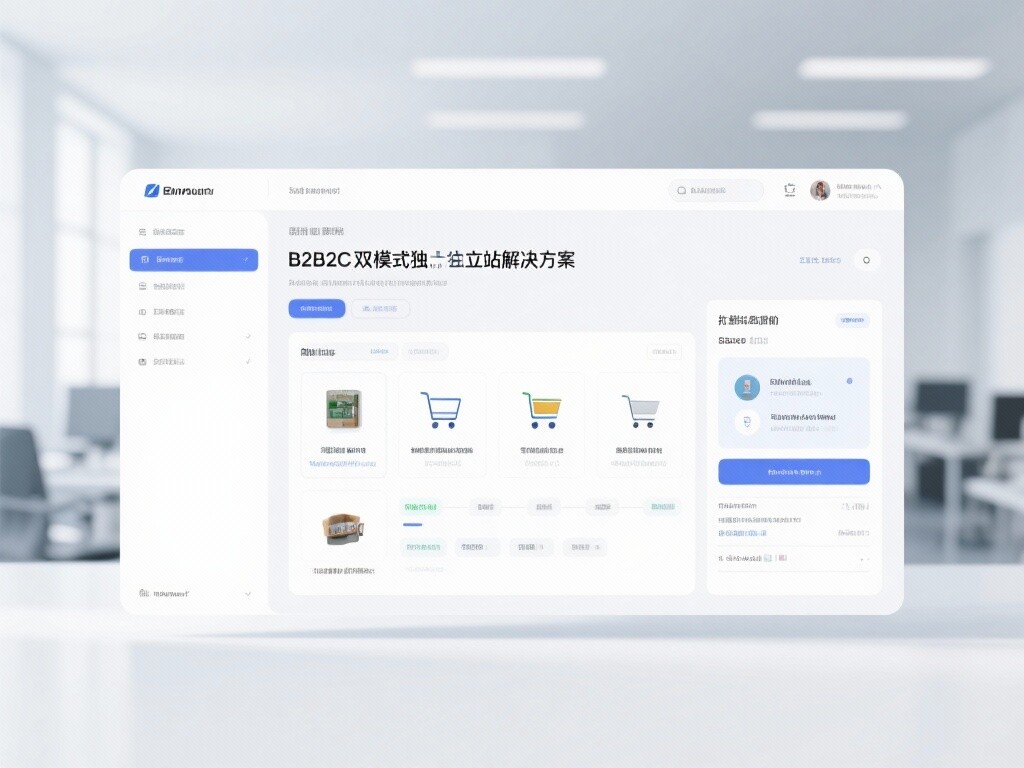
平台支持多语言、多币种、多渠道营销,内置AI智能翻译与SEO优化系统,适配东南亚、欧美、拉美、中东等主流市场,助力中国制造企业高效布局国际电商版图。 B2B2C双模式独立站解决方案易营宝推出的B2B2C双模式独立站解决方案,专为同时开展批发与零售业务的企业打造。平台支持商品价格展示、商品多规格管理、购物车与购物车弹窗、购物车总价计算,以及统一批量询价等功能,帮助企业以更高效、更直观的方式触达B端与C端客户。通过云建站、大数据分析与广告智能投放体系,助力企业打破渠道壁垒,实现国内外市场拓展与品牌价值提升。