









- The China-US tariff arrangement has reached a preliminary consensus, and the trade association will be establishedJun 15, 2026View details
- China-Morocco zero-tariff access, a breakthrough in the cost of Moroccan goods exports to ChinaJun 11, 2026View details
- What signal should be released for the suspension of exports to JapanJun 10, 2026View details
- China's May LNG imports rebounded, with increased volumes from Russia and Canada filling the Middle East supply gapJun 10, 2026View details
- Will GEO change its SEO strategy?Jun 04, 2026View details
- What types of businesses are end-to-end solutions suitable for?Jun 03, 2026View details
How to choose between foreign trade website building and WordPress? A comprehensive comparison from SEO, autonomy to cost
How to choose between a foreign trade website and WordPress? Let's first look at the underlying decision-making logic.
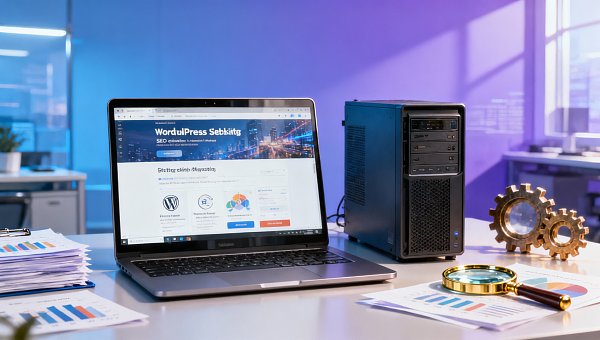
How to choose between building a website for foreign trade and WordPress? On the surface, it seems like a choice of tools, but in reality, it's a choice of growth model.
If the goal is simply to launch as quickly as possible, creating a usable website is not difficult.
The challenge lies in whether we can acquire customers steadily, accumulate search traffic in the long term, and truly control the data.
Recent changes indicate that overseas traffic is becoming increasingly expensive, and search results are placing greater emphasis on website quality.
This also means that when choosing a website for foreign trade and WordPress, one should not only consider whether the template looks good, but also the SEO fundamentals, system scalability, maintenance costs, and team collaboration efficiency.
Simply put, foreign trade website building solutions are usually more integrated and suitable for companies that want to avoid detours and promote their businesses quickly.
WordPress is more open-ended and flexible, but it also relies more on the team's capabilities.
From an SEO perspective, what are the differences between foreign trade websites and WordPress?
When many companies compare foreign trade websites and WordPress for the first time, the first question they ask is: Which is better for Google SEO?
The answer isn't about who is absolutely stronger, but rather who is better suited to the current team's execution capabilities.
SEO basic skills
WordPress is indeed very mature in terms of SEO.
The title, description, URL, custom columns, and content management all offer a high degree of freedom.
However, the problem is also very real: with too many plugins, speed, compatibility, and security are prone to issues.
SEO effectiveness is often hampered by these fundamental issues.
If a foreign trade website building platform is designed according to marketing logic, it will usually take into account page indexing, site structure, multilingual rules, mobile adaptation, and landing page conversion.
For companies looking to quickly expand into overseas markets, this integrated SEO foundation is often more convenient.
Content growth efficiency
SEO is not something that ends once a website is built; it is a continuous process of updating content, optimizing pages, and tracking data.
In real-world business scenarios, many WordPress websites fail not because of the system itself, but because of the lack of maintenance.
The disconnect between editing, technology, and operations leads to slow publishing, slow redesigns, and increasingly disorganized pages.
If an AI-driven integrated foreign trade website building solution is adopted, website building, content publishing, SEO optimization, and advertising landing pages can usually be coordinated.
This type of approach is more suitable for companies that seek to acquire customers continuously, rather than just creating a showcase website.
Autonomy and controllability cannot be judged solely by whether or not the source code is in one's possession.
When discussing website building for foreign trade and WordPress, autonomy is an unavoidable topic.
Many people believe that because WordPress is open source, it must have more autonomy.
This judgment is only half correct.
Having control over the source code does indeed mean greater freedom.
But true autonomy also includes server management, data backup, access control, version maintenance, and risk recovery capabilities.
If there is no stable internal technical team, open source may not bring freedom, but may also lead to a continuous reliance on outsourcing.
Conversely, some mature foreign trade website building services, while not entirely open source, offer a more stable control experience in data export, page management, marketing configuration, and multi-role collaboration.
Ultimately, the autonomy of building websites for foreign trade and using WordPress should not remain at the level of technical concepts, but should return to the controllability of business operations.
In the long run, a cheaper launch does not necessarily mean cheaper operation.
Many budget assessments tend to view website construction costs as a one-time investment.
However, what truly sets foreign trade websites apart from WordPress is often the total cost over a three-year period.
Common Hidden Costs of WordPress
- The initial cost of purchasing themes and plugins is not high, but subsequent renewal fees are considerable.
- Servers, CDN, security protection, and backup tools require continuous investment.
- Version upgrades and plugin conflicts often require technical troubleshooting.
- Redesigning the website, adding new pages, and implementing multiple languages often incurs another round of development costs.
Common cost structures for building websites for foreign trade
- The upfront costs are clearer, and system, operation and maintenance, and basic optimization are usually bundled together.
- The speed of deployment is fast, reducing the opportunity cost caused by the trial and error cycle.
- The marketing functions are highly integrated, avoiding the need for piecemeal plugins.
- Further expansion depends on the service provider's capabilities, and this should be a key evaluation factor when making a selection.
If you only compare the first-year price, WordPress often looks cheaper.
However, if customer acquisition efficiency, maintenance costs, and personnel investment are taken into account, the result may be completely different.
This is very similar to the logic of budget management.
When making long-term investment decisions, one can also refer to approaches like those in the study of comprehensive budget management in administrative and public institutions to understand the difference between explicit and implicit costs.
How to choose between foreign trade website building and WordPress for different business scenarios for greater stability?
The biggest mistake in selecting a product is discussing its advantages and disadvantages without considering the context.
Even when it comes to going global, the answers differ depending on the stage of the business.
More suitable for foreign trade website building
- We need to quickly launch a multilingual official website and promote it as soon as possible.
- With the goal of acquiring customers through inquiries, we emphasize the synergy between SEO and advertising.
- With limited internal technical resources, we hope to reduce the complexity of operation and maintenance.
- We hope to create a unified growth path encompassing the website, content, advertising, and social media.
More suitable for WordPress
- There is a mature technical team inside that can maintain the system long-term.
- The website has high requirements for personalized functionality and needs in-depth customization.
- They have clear experience in applying code-level control and plugin ecosystems.
- Willing to trade a longer timeframe for greater flexibility.
If a company is in the 0 to 1 stage, it is usually more important to get the growth going first.
If you've already entered the branding and operation phase, it would be more prudent to consider deeper system personalization later.
Why are more and more companies valuing the integration of "website building + marketing"?
A more obvious signal is that simply creating a website is no longer enough to support overseas growth.
The website is just the entry point; it connects to SEO, advertising, social media, content, and data analytics.
This is why the comparison between foreign trade website building and WordPress is increasingly shifting from "who can build a website" to "who can achieve growth".
For AI-driven integrated website and marketing platforms like Yiyingbao, the core value goes beyond just building web pages.
It places greater emphasis on integrated capabilities, from intelligent website building and multilingual deployment to Google SEO, advertising, social media traffic generation, and AI-powered search visibility enhancement.
For companies looking to expand into markets such as North America, Europe, Southeast Asia, and the Middle East, this capability can significantly shorten the distance from website creation to customer acquisition.
If you only build a website without considering its subsequent operation, you will often have to catch up later.
Finally, how do we determine which solution is more suitable for our current business needs?
To determine whether a website is suitable for foreign trade or WordPress, consider asking these four questions.
- After launch, who will continuously update the content and pages?
- Should SEO, advertising, and social media be promoted in a coordinated manner?
- Is there a team capable of handling technical maintenance and security issues long-term?
- Which should be prioritized: total cost over three years or customer acquisition efficiency?
If the answer leans towards efficiency, stability, and a closed-loop growth model, then building a website for foreign trade is usually more suitable.
If the answer leans towards flexible development, deep control, and technical autonomy, WordPress will have an advantage.
The truly good choice is not to follow the trend, but to match it with the current stage of business.
By incorporating SEO, autonomy, cost, and customer acquisition efficiency into your decision-making process, the answer to building websites for foreign trade and WordPress becomes increasingly clear.
Thinking clearly about growth goals before choosing tools is often more time-efficient and yields better results than building a website first and then adding operational support.
Related Articles
 How to choose a cross-border e-commerce platform source code? A comparison of open source, custom, and SaaS solutions
 What are the WordPress alternatives? 5 platform comparisons suitable for corporate websites
 Enterprise Website Platform Comparison: Which Solutions Are Best Suited for Official Websites, Online Stores, and Marketing Websites?
Related Products
 EasyCamp SaaS Smart Website Marketing SystemE-Yingbao SaaS Smart Website Marketing System: AI-powered, zero-code website building. Rapidly launch multilingual independent e-commerce sites in just 10 minutes. Global server acceleration and AI-driven SEO optimization empower businesses to efficiently connect with global markets. The seamless integration of technology and user-friendly operation makes building e-commerce sites incredibly simple.
 AI+SEM Intelligent Advertising Marketing SystemAI+SEM drives intelligent ad creation, empowering full-funnel precision advertising marketing. The system automatically generates weekly/monthly reports, AI recommends keywords and target countries, monitors core metrics in real-time with intelligent alerts, and enables one-click high-conversion ad solutions to help quickly acquire customers and improve ROI.
 AI+SEO Dual Engine Optimization ServiceEasyWin AI+SEO Dual Engine Optimization System leverages AI-powered keyword mining, content generation, and comprehensive technical optimization to help foreign trade enterprises acquire high-quality organic traffic, significantly improving search rankings and conversion rates.
 AI+SNS Social Media Marketing SystemYingbao AI+SNS Social Media Marketing System - Precision social capture for the social media era. Supports one-click content synchronization across major platforms like Facebook and LinkedIn. AI intelligently rewrites posts for enhanced relevance. 24/7 AI customer service and user profiling analysis empower businesses to efficiently expand into global markets.
 AI+SEO营销解决方案易营宝AI+SEO营销解决方案,通过AI批量写作、智能生成TDK、精准关键词扩词等功能,全面优化网站SEO效果,提升流量与转化率。助力企业构建高效智能网站新生态。
 AI+SEM Advertising Marketing SolutionsAI+SEM Advertising Marketing Solution leverages AI technology to deeply empower SEM ad campaigns. It automatically generates weekly/monthly reports using AI, presenting account data across multiple dimensions for comprehensive insights into campaign performance and trends. The system precisely recommends keywords and target countries, intelligently generates high-conversion ad copy, and enables one-click activation of efficient campaign plans to help businesses rapidly acquire customers. Simultaneously, it monitors core metrics in real time, intelligently identifies abnormal fluctuations, and issues timely alerts to ensure stable, high-return advertising results.
 Domain Name ServicesEasyWin provides professional domain name services, including intelligent queries, one-stop registration, brand protection, and full lifecycle management, helping businesses build a digital brand image.
 EasyOperate B2C Cross-Border E-Commerce Platform & Independent WebsiteEasyStore B2C Cross-border E-commerce Independent Store is an intelligent website building and cross-border e-commerce integrated solution independently developed by EasyStore Information Technology (Beijing) Co., Ltd. The system is specially designed for small and medium-sized as well as large export enterprises, integrating 'website building, operation, marketing, advertising, and conversion' into one, helping enterprises quickly establish cross-border e-commerce independent stores to achieve brand globalization and global sales growth.
The platform supports multiple languages, multiple currencies, and multi-channel marketing, with built-in AI intelligent translation and SEO optimization systems, suitable for mainstream markets such as Southeast Asia, Europe and America, Latin America, and the Middle East, assisting Chinese manufacturing enterprises in efficiently deploying international e-commerce strategies. SSL证书易营宝提供专业SSL安全证书服务,包括单域名和泛域名证书,确保网站数据传输加密、身份验证和完整性保护,助力企业建立安全可信的在线业务环境。









