









- What stages does the cross-border services ecosystem include? How do website building, promotion, payment, and compliance work togetherJun 22, 2026View details
- How will email marketing costs change in 2026Jun 22, 2026View details
- The China-US tariff arrangement has reached a preliminary consensus, and the trade association will be establishedJun 15, 2026View details
- Should overseas brand marketing start with ads or contentJun 21, 2026View details
- What determines B2C cross-border e-commerce website development costs? A breakdown of features, interfaces, and deployment methodsJun 17, 2026View details
- China-Morocco zero-tariff access, a breakthrough in the cost of Moroccan goods exports to ChinaJun 11, 2026View details
How to write an inquiry email template to get a higher reply rate? Deconstructing the structure of the opening sales email
Why does cold outreach often get stuck at “sent but no reply”?
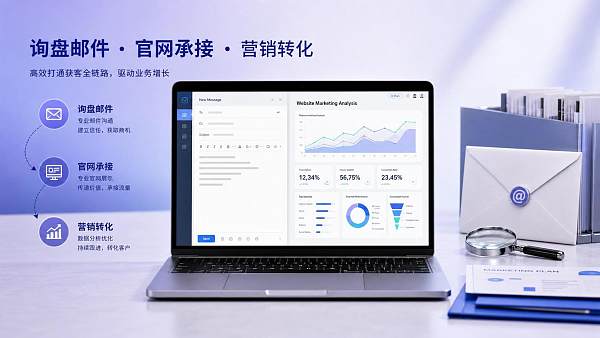
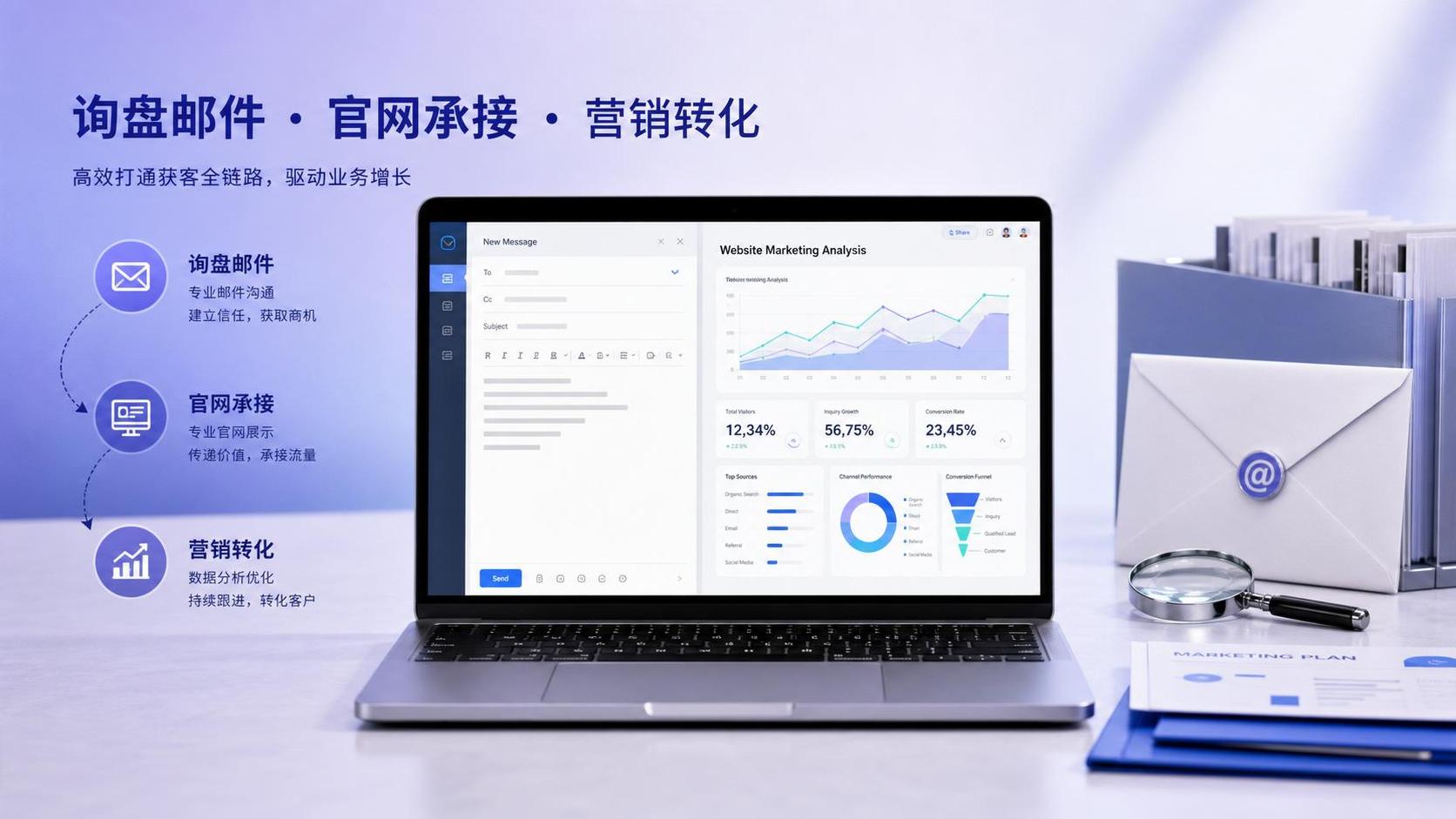
When many people write inquiry email templates, they first look for an opening line, then add a few product details, and finally include contact information. The email looks complete, but the result is very quiet. The problem is usually not whether there is a template, but that the cold outreach email does not match a real trigger scenario.
In the actual business of integrated website and marketing services, email is not an isolated action. It often happens together with website landing pages, search indexing, ad clicks, and social media touchpoints. Why the other party opens the email, whether they have seen the brand before, whether they have visited the website, and whether they are comparing solutions all matter a great deal.
So, if an inquiry email template wants a higher reply rate, the key is not whether it “sounds like a sales pitch,” but whether it can quickly explain the intent in the first email, reduce the judgment cost, and make the other party willing to move on to the next step of communication.
In actual use, first identify which trigger scenario the email comes from
The same cold email can have very different structures depending on the scenario. Cold outreach, website follow-up after a lead form submission, event attendee follow-up, and second-touch ad lead follow-up all have completely different reading expectations. Putting them all into the same inquiry email template usually does not produce a high reply rate.
A more common way to judge is to first look at three things: whether the other party knows you, whether the other party has a clear need, and whether you have enough background information. When these three conditions differ, the ratio between “introducing yourself” and “promoting action” in the email should also be adjusted accordingly.
In cold outreach scenarios, an inquiry email template must first answer “why is it worth reading?”
The biggest fear in cold outreach is not being rejected, but being ignored. The other party has no context and may not have the patience to read a full company introduction. At this point, the core of the inquiry email template is not to fill it with information, but to establish relevance with the shortest possible structure.
A relatively solid structure is usually: relevant entry point, clear value, light action. The relevant entry point should be close to the other party’s business situation, for example an incomplete official language version of the website, weak independent site conversion, or limited search visibility. The value statement should not broadly claim to “improve performance,” but should land on a problem they can actually feel.
If the company provides integrated services such as smart website building, SEO optimization, and ad placement, the email is better at highlighting the relationship between “website visibility and inquiry conversion.” Many low reply rates are not only because the email is weak, but because when the other party checks the brand, the website content does not provide enough support, so they naturally do not continue replying.
- Keep the opening sentence within one controlling thought, and do not stack three layers of selling points.
- The value point should correspond to one business problem as much as possible, and should not expand into broad industry jargon.
- The closing action should be light; prioritize “Is it convenient to confirm?” instead of pushing for a deal directly.
When the other party has visited the website, the first email is more like taking over than reintroducing
The follow-up after website lead capture is one of the easiest scenarios to waste. The reason is simple: the other party has just viewed the page, and the question points are still in their mind, yet you send a completely irrelevant standard inquiry email template, which is equivalent to resetting the interest that has already been established.
This kind of email is better written around browsing behavior. If they have viewed a multilingual website page, continue with language version, indexing efficiency, and subsequent promotion; if they have viewed a Google SEO solutions page, continue with keyword layout, content production, and inquiry paths. The smoother the connection between the email content and the website path, the more natural the reply will feel.
Platforms like 易营宝, which integrate website building, SEO, advertising, and social media operations, have an advantage not only in service breadth, but in being able to place “trigger - visit - lead capture - follow-up” on the same chain. If the first email can clearly follow that chain, the other party’s judgment cost drops significantly.
Exhibition leads and social media leads do not fit the same reply logic
A common problem with exhibition lead lists is assuming that because the other party has seen your badge, they will remember you. In reality, it is often the opposite. The first email should first help the other party recover the contact memory, and then move into need assessment. Time, location, and communication segment are best mentioned only once; do not turn the email into a scrolling log.
Social media leads are different. The other party may first watch a short video, ad creative, or post, and then jump to the website. At this time, if the inquiry email template still uses a traditional opening, it often feels disconnected. A better approach is to pick up the topic the other party has already shown interest in, and treat the email as an extension of the content rather than forcing it into a sales push.
Some teams also include content strategy in first-email preparation, such as first organizing internal case studies, industry insights, or method articles, and then sending them as supplementary materials. Content such as ESG implementation paths that help enterprises develop new quality productive forces, if relevant to the other party’s current topic of interest, can serve as cognitive support rather than a hard-sell link.
High-reply emails usually follow these structural judgments
An inquiry email template does not need to be complex, but its structure must be clean. A truly effective cold outreach email can often complete several key actions in a short time.
- First explain the reason for contact so the other party knows this is not an indiscriminate mass send.
- Then provide one verifiable value point, preferably related to the official website, traffic, or lead generation.
- Show credibility in moderation, but do not make the company reputation the main character.
- Finally push only one action, such as replying to one question or confirming one direction.
The easiest mistake here is to think that “more complete information” means “easier to reply.” In fact, the first email is meant to open a conversation, not close a deal. Especially in overseas marketing scenarios, overly long self-justification or overly aggressive quotation pushing will raise the other party’s reading resistance.
What is easily ignored before landing is not copywriting skill, but the handoff conditions
Many inquiry email templates fail not because of wording, but because the handoff chain is too weak. Once the other party opens the email, they will usually check whether the domain, official website, case studies, page speed, language versions, and contact methods are trustworthy. Any break in that chain will affect the reply.
If the company is already doing overseas lead generation, the email, website, and marketing system should be optimized in sync. For example, when building the site, reserve a multilingual structure in advance; when planning SEO pages, align them with search intent; when creating ad landing pages, focus on a single conversion goal; and when sending emails, carry the corresponding scenario. Only then is the outreach email not a solo battle.
The long-term value of 易营宝 in serving multi-region markets is also reflected here more clearly. Search habits, reading preferences, and conversion rhythms vary by region. If an inquiry email template can be linked with AI website building, SEO/GEO optimization, and ad placement data, it is usually more stable than relying on copywriting experience alone.
If you want optimization that can truly be executed, start with these steps
If you are preparing to rewrite an inquiry email template, there is no need to change everything at once. A more effective approach is to split by scenario first, and then look at data feedback. Separating cold outreach, website lead follow-up, event activation, and ad lead follow-up will make the structure of the first email much clearer.
- First sort out the lead sources and confirm the reading preconditions for each type of email.
- Then check the website handoff to make sure the promises in the email have page support.
- Compress the action instruction to one item to lower the reply threshold.
- Record the changes in title, opening sentence, and CTA, and keep testing on a small scale.
- If necessary, add content assets such as case studies, articles, or industry materials, such as ESG implementation paths that help enterprises develop new quality productive forces, but only if the premise is relevant to the current communication topic.
To put it simply, an inquiry email template is not a万能 sales phrase, but a communication structure adapted to the scenario. First clarify where the lead comes from, then judge what the other party most wants to confirm right now, and finally let the website, content, and email form a unified conversion path so the reply rate has a better chance of rising steadily.
Related Articles
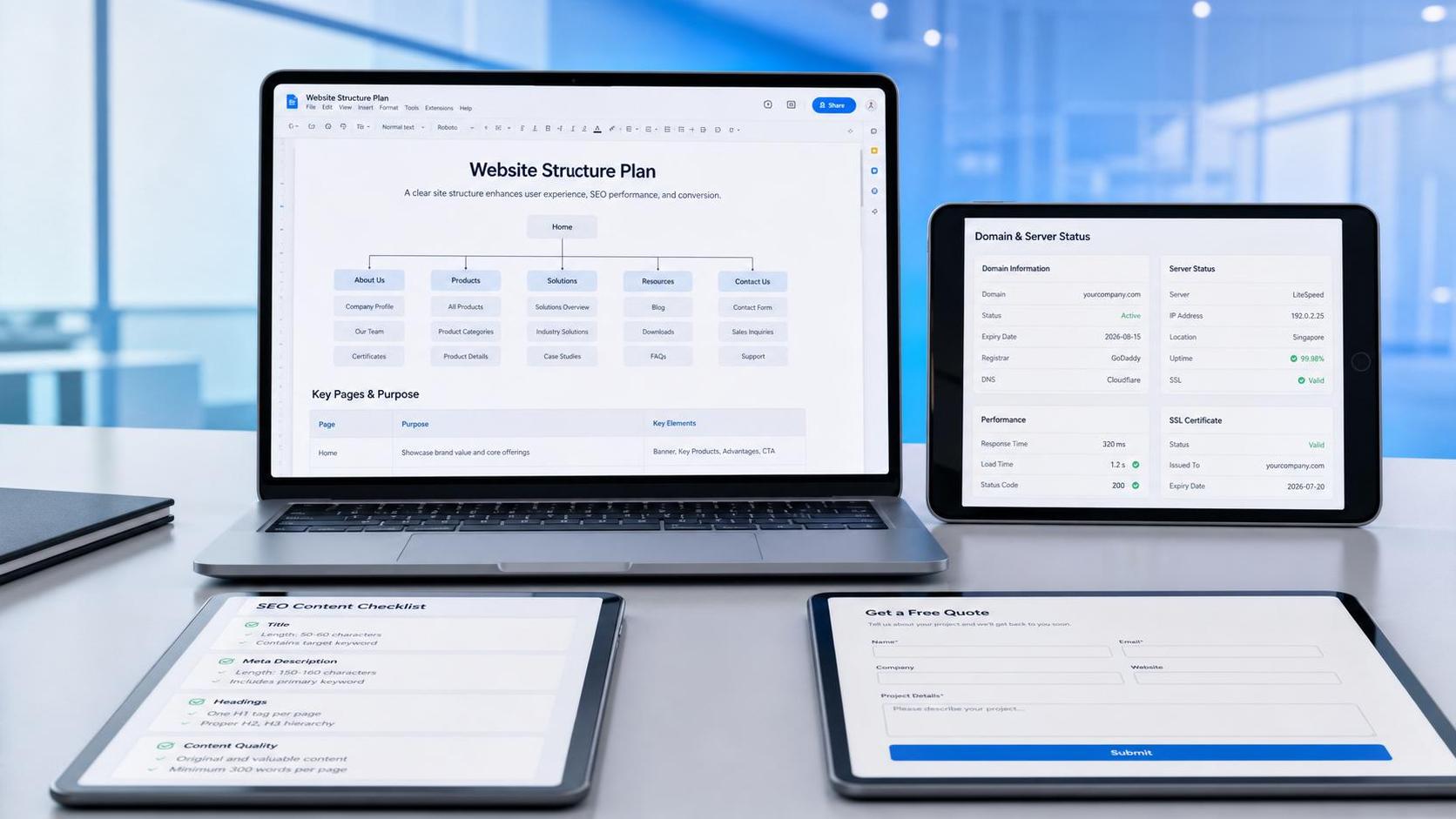
 What does the foreign trade website audit checklist include? From domain name to inquiry form, check item by item
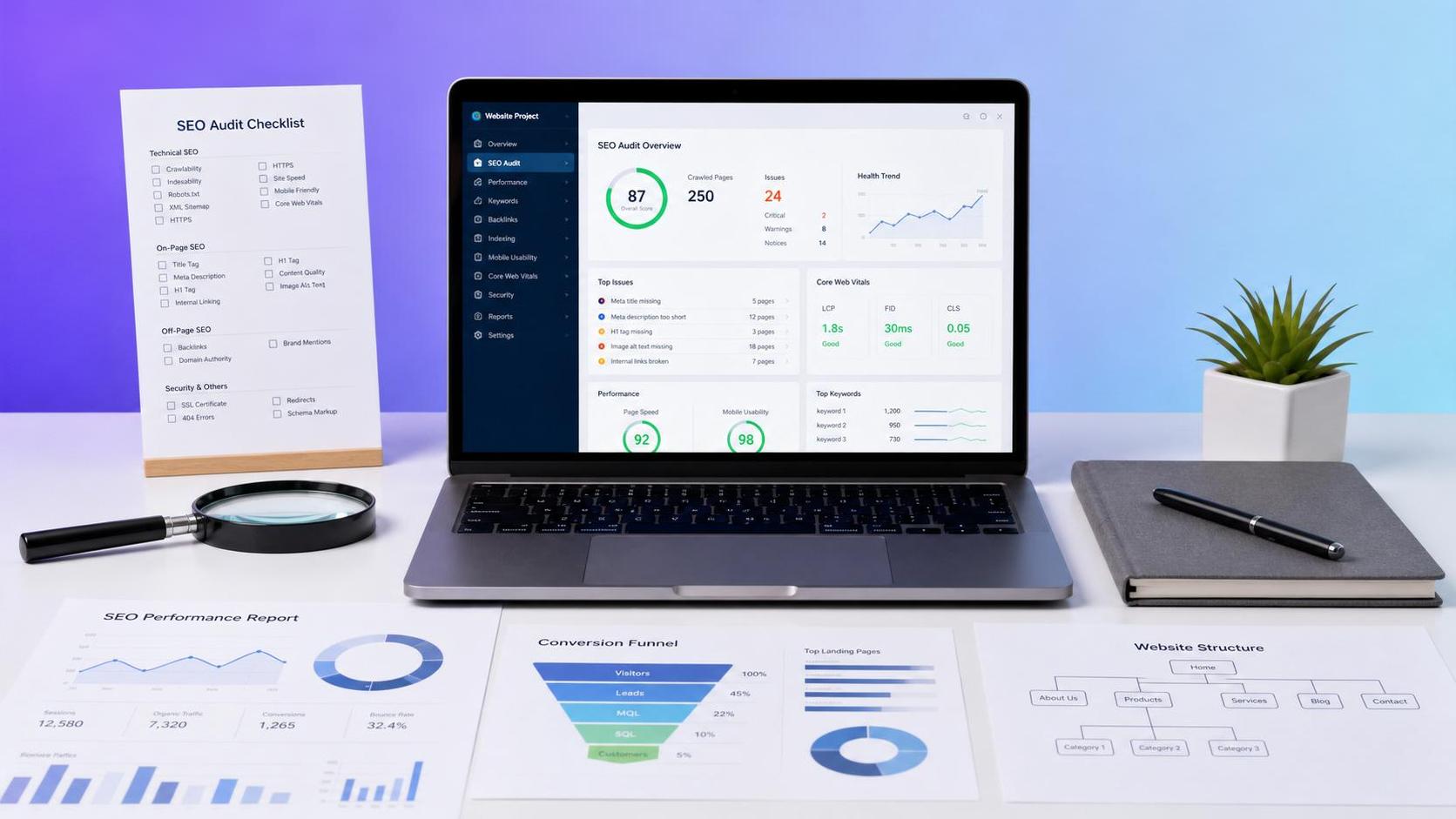
 What does an SEO checklist include? An overview of the essential pre-launch website checks
 How to write an inquiry email template to get a higher reply rate? Deconstructing the structure of the opening sales email
Related Products
 EasyCamp SaaS Smart Website Marketing SystemE-Yingbao SaaS Smart Website Marketing System: AI-powered, zero-code website building. Rapidly launch multilingual independent e-commerce sites in just 10 minutes. Global server acceleration and AI-driven SEO optimization empower businesses to efficiently connect with global markets. The seamless integration of technology and user-friendly operation makes building e-commerce sites incredibly simple.
 AI+SEM Intelligent Advertising Marketing SystemAI+SEM drives intelligent ad creation, empowering full-funnel precision advertising marketing. The system automatically generates weekly/monthly reports, AI recommends keywords and target countries, monitors core metrics in real-time with intelligent alerts, and enables one-click high-conversion ad solutions to help quickly acquire customers and improve ROI.
 AI+SEO Dual Engine Optimization ServiceEasyWin AI+SEO Dual Engine Optimization System leverages AI-powered keyword mining, content generation, and comprehensive technical optimization to help foreign trade enterprises acquire high-quality organic traffic, significantly improving search rankings and conversion rates.
 AI+SNS Social Media Marketing SystemYingbao AI+SNS Social Media Marketing System - Precision social capture for the social media era. Supports one-click content synchronization across major platforms like Facebook and LinkedIn. AI intelligently rewrites posts for enhanced relevance. 24/7 AI customer service and user profiling analysis empower businesses to efficiently expand into global markets.
 AI+SEO营销解决方案易营宝AI+SEO营销解决方案,通过AI批量写作、智能生成TDK、精准关键词扩词等功能,全面优化网站SEO效果,提升流量与转化率。助力企业构建高效智能网站新生态。
 AI+SEM Advertising Marketing SolutionsAI+SEM Advertising Marketing Solution leverages AI technology to deeply empower SEM ad campaigns. It automatically generates weekly/monthly reports using AI, presenting account data across multiple dimensions for comprehensive insights into campaign performance and trends. The system precisely recommends keywords and target countries, intelligently generates high-conversion ad copy, and enables one-click activation of efficient campaign plans to help businesses rapidly acquire customers. Simultaneously, it monitors core metrics in real time, intelligently identifies abnormal fluctuations, and issues timely alerts to ensure stable, high-return advertising results.
 Domain Name ServicesEasyWin provides professional domain name services, including intelligent queries, one-stop registration, brand protection, and full lifecycle management, helping businesses build a digital brand image.
 EasyOperate B2C Cross-Border E-Commerce Platform & Independent WebsiteEasyStore B2C Cross-border E-commerce Independent Store is an intelligent website building and cross-border e-commerce integrated solution independently developed by EasyStore Information Technology (Beijing) Co., Ltd. The system is specially designed for small and medium-sized as well as large export enterprises, integrating 'website building, operation, marketing, advertising, and conversion' into one, helping enterprises quickly establish cross-border e-commerce independent stores to achieve brand globalization and global sales growth.
The platform supports multiple languages, multiple currencies, and multi-channel marketing, with built-in AI intelligent translation and SEO optimization systems, suitable for mainstream markets such as Southeast Asia, Europe and America, Latin America, and the Middle East, assisting Chinese manufacturing enterprises in efficiently deploying international e-commerce strategies. SSL证书易营宝提供专业SSL安全证书服务,包括单域名和泛域名证书,确保网站数据传输加密、身份验证和完整性保护,助力企业建立安全可信的在线业务环境。









