









- What stages does the cross-border services ecosystem include? How do website building, promotion, payment, and compliance work togetherJun 22, 2026View details
- How will email marketing costs change in 2026Jun 22, 2026View details
- The China-US tariff arrangement has reached a preliminary consensus, and the trade association will be establishedJun 15, 2026View details
- Should overseas brand marketing start with ads or contentJun 21, 2026View details
- What determines B2C cross-border e-commerce website development costs? A breakdown of features, interfaces, and deployment methodsJun 17, 2026View details
- China-Morocco zero-tariff access, a breakthrough in the cost of Moroccan goods exports to ChinaJun 11, 2026View details
What does an SEO checklist include? An overview of the essential pre-launch website checks
Why does the SEO checklist need to be finalized before launch?
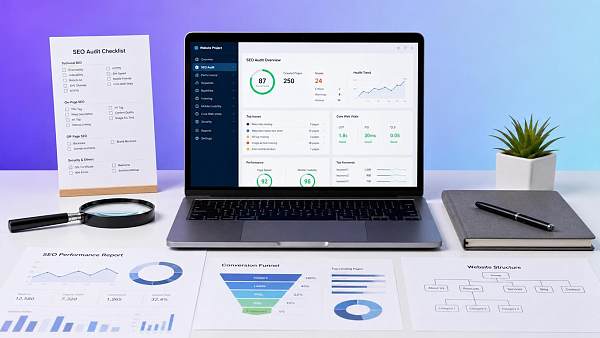
Whether a website can be indexed smoothly is often not something that can be fixed after launch; instead, the result is already baked in during the website-building stage. Many project delays, page rework, and slow traffic growth are caused by the fact that the SEO checklist was not fully organized early on.
Simply put, an SEO checklist is not a document for the operations team alone; it is more like a joint acceptance standard before launch. If technology, design, content, and promotion are not all moving forward around the same set of checklist items, the website may still run into crawl abnormalities, structural confusion, and thin content issues even after it goes live.
In practical applications, especially for websites targeting overseas markets, the checklist dimensions are even broader. For example, whether multilingual paths are standardized, whether pages are suitable for search engine understanding, and whether the site is compatible with both subsequent ad traffic and organic traffic, all of these directly affect future customer acquisition costs.
Platforms like 易营宝, which integrate intelligent website building, SEO optimization, advertising, and overseas marketing, usually place the SEO checklist earlier in the website-building process. The value of doing this is very clear: the website is not built first and optimized later; instead, it is built from the start around the goals of being “indexable, promotable, and convertible.”
What exactly does a complete SEO checklist check?
If we keep only the most critical parts, a practical SEO checklist usually revolves around four layers: crawlability, understandability, rankability, and convertibility. Many people think that as long as the title and keywords are done well, that is enough; in fact, it is far from sufficient.
At the technical layer, first check whether search engines can access the site normally
- Whether HTTPS is enabled and whether the certificate is valid.
- Whether the robots file is accidentally blocking core pages.
- Whether the XML sitemap has been generated and can be submitted.
- Whether 404, redirects, and canonical tags are set correctly.
- Whether mobile access, page speed, and server stability meet the standard.
At the structural layer, focus on whether page relationships are clear
Search engines do not “guess” your business focus the way humans do. If the category logic, breadcrumb navigation, internal links, and URL naming are unclear, crawl depth and page authority allocation will both be affected. A good SEO checklist usually keeps the directory hierarchy within a reasonable range to avoid too many orphan pages.
At the content layer, it is not about filling pages with words, but about solving search problems
Consistency among the title, description, H tags, and main text is part of the basics. More importantly, does the page content match real search intent? For example, a service page should clearly explain the solution, process, delivery, and applicable scenarios, rather than offering only a vague introduction.
At the conversion layer, it determines whether traffic will be wasted once it arrives
Many SEO checklists only focus on indexing and ignore the basics of conversion such as forms, buttons, inquiry entry points, and trust information. If the inquiry path is not designed well before launch, even if rankings improve later, it is still difficult to turn traffic into real business opportunities.
Which items are most likely to be overlooked, yet most likely to drag down launch results?
The real problem is often not that no one knows, but that everyone assumes someone else has already handled it. The table below can serve as a quick decision-making tool when reviewing the SEO checklist before launch.
A more common situation is that the website surface appears finished, but in reality many details are still in a state of “can open, but not suitable for promotion.” The purpose of the SEO checklist is to expose in advance the issues that are not obvious before launch but are very costly to fix afterward.
When building a marketing website, what is the difference between an SEO checklist and a regular website acceptance checklist?
Regular website acceptance often stops at whether the page is complete and the functions are usable. A marketing website is different; it needs to verify whether the “traffic path” is actually established. In other words, an SEO checklist not only checks whether the website can go live, but also whether it can continue to bring in effective visits after launch.
For example, whether service pages, industry pages, case pages, and landing pages form a clear content network; whether the homepage accurately carries brand terms and core business terms; whether article pages can guide users back to product or inquiry pages. All of these are SEO checklist items from a marketing perspective.
If the website also carries overseas promotion tasks, then the checklist standards need to go one step further. Multi-region loading speed, keyword mapping for different markets, the synergy between search and advertising, and landing page support for social media traffic all need to be considered together before launch. 易营宝, which provides long-term services for multilingual official websites, cross-border stores, and brand overseas launch sites, usually consolidates SEO, advertising, and content architecture into one integrated plan, with the goal of reducing later-stage refactoring costs.
It is also worth mentioning that organizing content assets is very important. Some companies build industry insights or research content into their websites to increase topic depth. For example, data pages related to industrial investment or policy trends are more likely to accumulate search value than simply publishing news, and content formats such as Investment Research on the Environmental Protection Industry Fund are more suitable for specialized layouts.
On the final pre-launch review, how should the SEO checklist priorities be arranged?
When time is tight, the worst thing is wanting to check everything but not checking anything thoroughly. A more stable approach is to handle items in this order: first impact indexing, then impact ranking, and finally impact conversion.
- First priority: crawlability and indexing basics. This includes robots, sitemap, status codes, HTTPS, and mobile adaptation.
- Second priority: page uniqueness. Focus on checking titles, descriptions, canonical tags, and duplicate content.
- Third priority: core page quality. The homepage, service pages, product pages, and contact page must all pass first.
- Fourth priority: data tracking. Search Console, analytics tools, and form conversion tracking should be connected first.
- Fifth priority: extended optimization. Structured data, topic pages, and content matrices can be advanced in phases.
What needs attention is that an SEO checklist is not a one-time document. What is done before launch is “error prevention”; after launch, “calibration” must continue. For example, crawl logs, indexing speed, core keyword rankings, bounce rate, and inquiry conversions can all be used to verify whether the earlier judgments were accurate.
If resources are limited, which misunderstandings should be avoided most?
The first misunderstanding is treating the SEO checklist as a keyword fill-in sheet. In reality, what truly affects launch results is often technical and structural issues, not whether a certain word appears a few more times.
The second misunderstanding is pursuing page quantity first. Many sites start by piling up lots of categories and articles, but the core service pages are not deep enough, resulting in not a few indexations but weak conversions. A more effective approach is to first solidify the search intent and conversion path of the key pages.
The third misunderstanding is doing SEO only after launch. Once technical changes, URL restructuring, or content migration happen after launch, the cost is usually much higher than handling them upfront, especially for multilingual sites where rework is even more obvious.
Another easily overlooked situation is different teams working independently. If website building, content, advertising, and SEO do not share the same version of the SEO checklist, the final result may be a split state where the page can run ads, but is not favorable to organic search, or is favorable to indexing, but not to form conversion.
Before a website goes live, which decision criteria should be carried through to the end?
If this SEO checklist is condensed into a few pre-launch judgments, the key points can come down to three things: can search engines crawl smoothly, can users understand quickly, and can traffic be converted effectively once it arrives.
When a website carries brand international expansion, overseas promotion, or long-term customer acquisition tasks, this checklist is no longer just a technical acceptance sheet, but part of the growth infrastructure. The earlier it is incorporated into the project process, the more it can reduce rework and shorten the cycle from launch to traffic growth.
A more stable next step is to first create your own SEO checklist based on the core pages, and then verify item by item whether crawlability, structure, content, and conversion form a closed loop. If you later need to expand content topics, you can also refer to a more systematic way of organizing materials, such as thematic content frameworks like Investment Research on the Environmental Protection Industry Fund, first clarify the information structure, and then move forward with publishing and optimization.
Related Articles
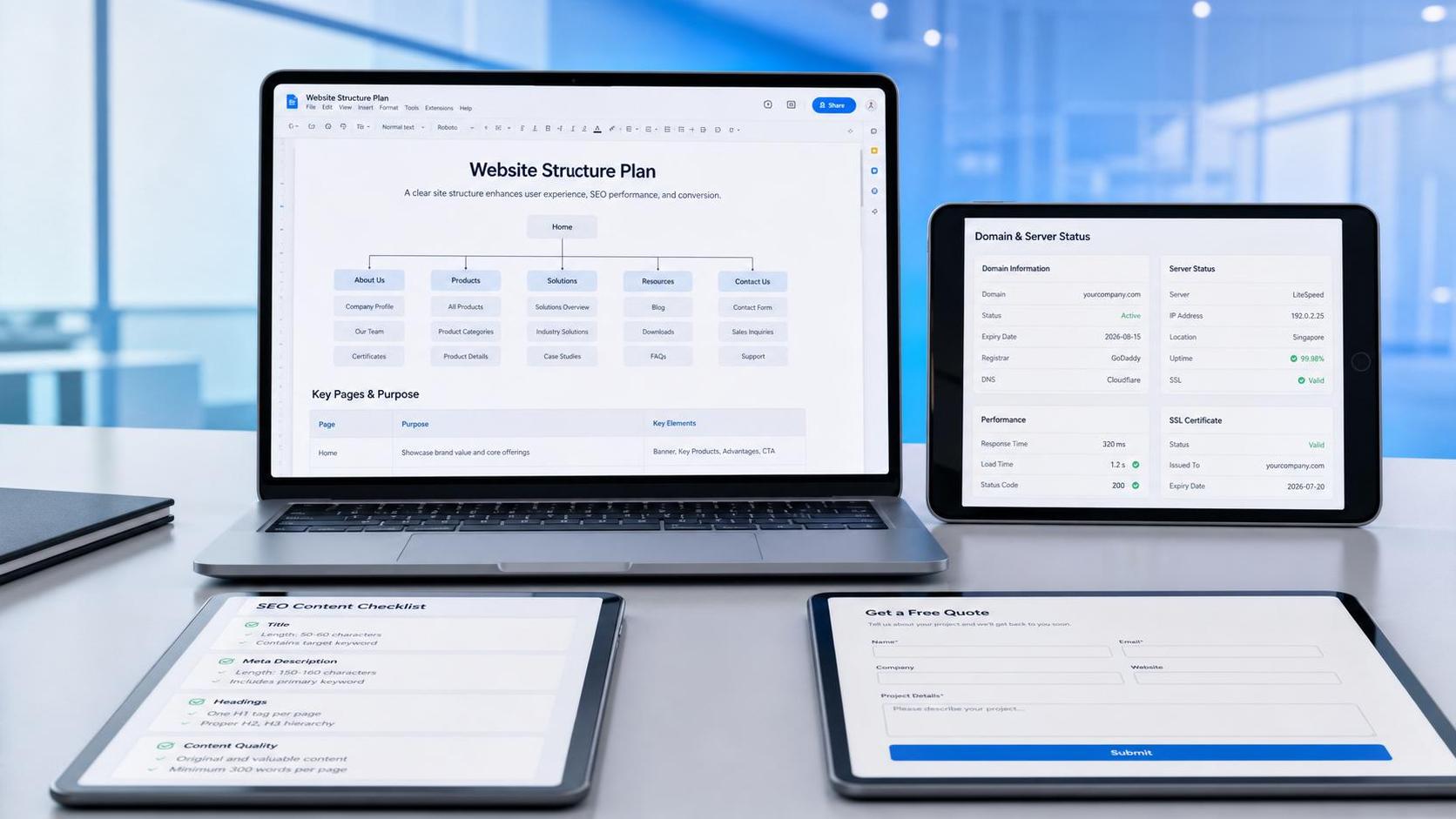
 What does the foreign trade website audit checklist include? From domain name to inquiry form, check item by item
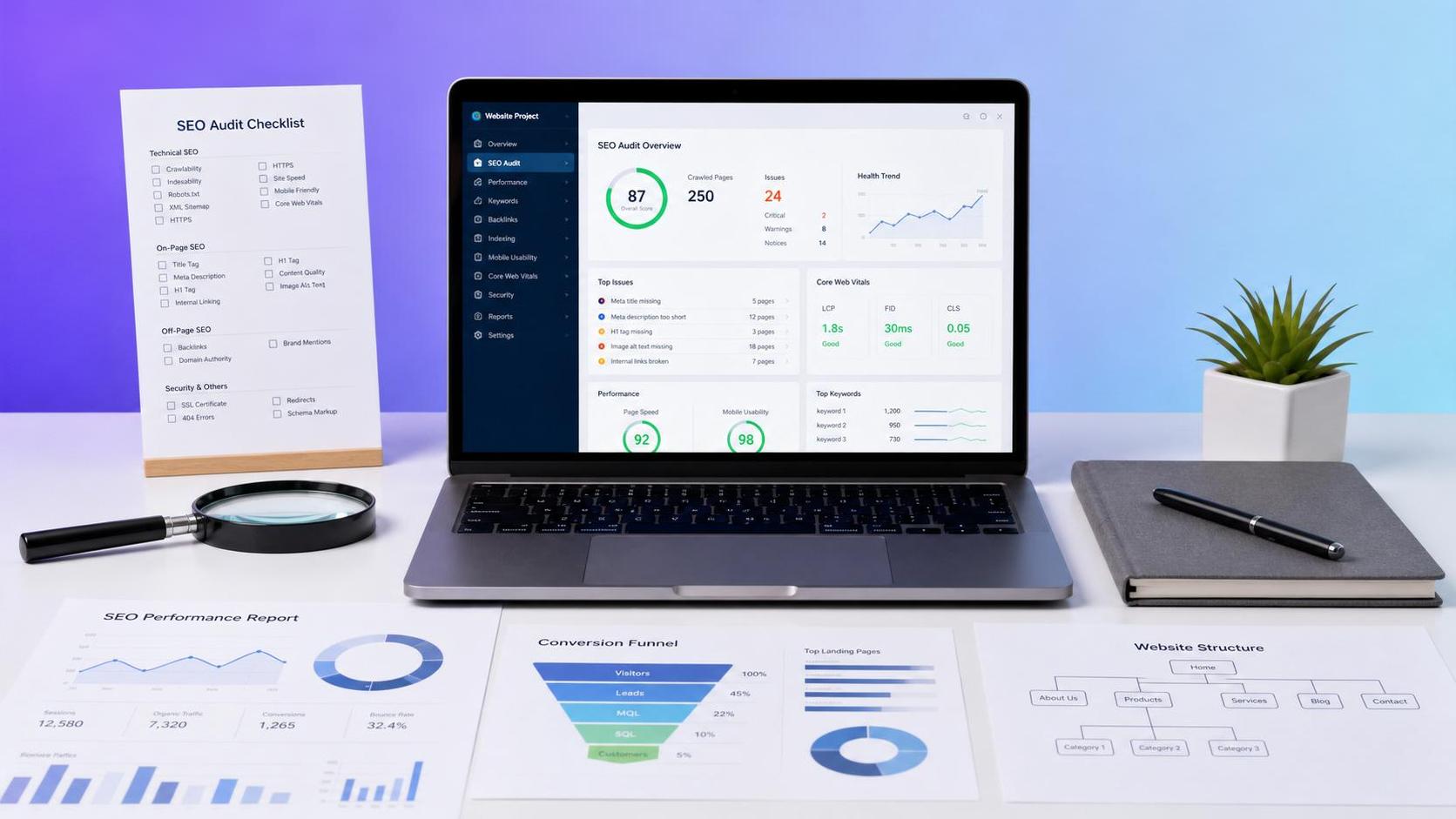
 What does an SEO checklist include? An overview of the essential pre-launch website checks
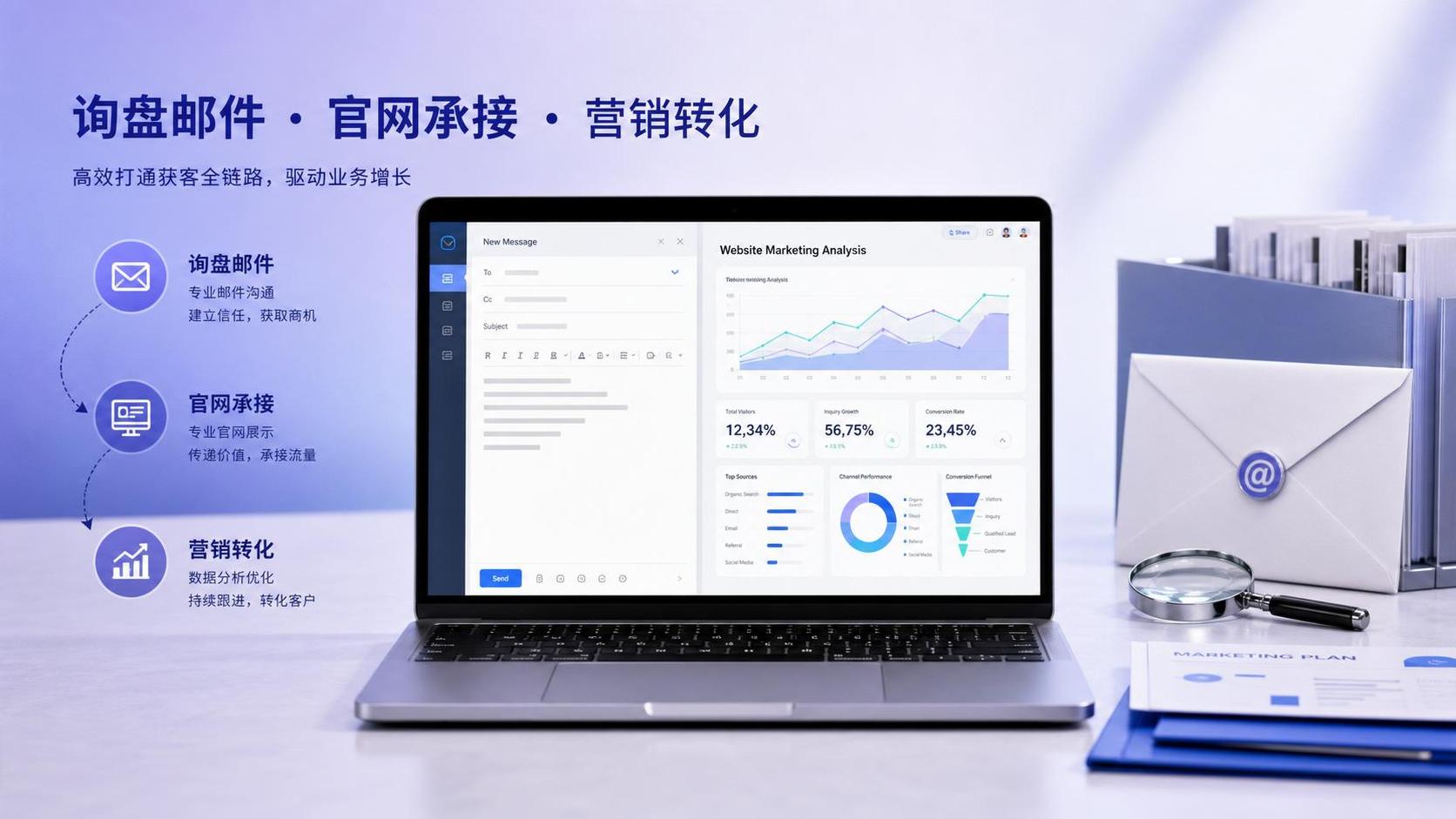
 How to write an inquiry email template to get a higher reply rate? Deconstructing the structure of the opening sales email
Related Products
 EasyCamp SaaS Smart Website Marketing SystemE-Yingbao SaaS Smart Website Marketing System: AI-powered, zero-code website building. Rapidly launch multilingual independent e-commerce sites in just 10 minutes. Global server acceleration and AI-driven SEO optimization empower businesses to efficiently connect with global markets. The seamless integration of technology and user-friendly operation makes building e-commerce sites incredibly simple.
 AI+SEM Intelligent Advertising Marketing SystemAI+SEM drives intelligent ad creation, empowering full-funnel precision advertising marketing. The system automatically generates weekly/monthly reports, AI recommends keywords and target countries, monitors core metrics in real-time with intelligent alerts, and enables one-click high-conversion ad solutions to help quickly acquire customers and improve ROI.
 AI+SEO Dual Engine Optimization ServiceEasyWin AI+SEO Dual Engine Optimization System leverages AI-powered keyword mining, content generation, and comprehensive technical optimization to help foreign trade enterprises acquire high-quality organic traffic, significantly improving search rankings and conversion rates.
 AI+SNS Social Media Marketing SystemYingbao AI+SNS Social Media Marketing System - Precision social capture for the social media era. Supports one-click content synchronization across major platforms like Facebook and LinkedIn. AI intelligently rewrites posts for enhanced relevance. 24/7 AI customer service and user profiling analysis empower businesses to efficiently expand into global markets.
 AI+SEO营销解决方案易营宝AI+SEO营销解决方案,通过AI批量写作、智能生成TDK、精准关键词扩词等功能,全面优化网站SEO效果,提升流量与转化率。助力企业构建高效智能网站新生态。
 AI+SEM Advertising Marketing SolutionsAI+SEM Advertising Marketing Solution leverages AI technology to deeply empower SEM ad campaigns. It automatically generates weekly/monthly reports using AI, presenting account data across multiple dimensions for comprehensive insights into campaign performance and trends. The system precisely recommends keywords and target countries, intelligently generates high-conversion ad copy, and enables one-click activation of efficient campaign plans to help businesses rapidly acquire customers. Simultaneously, it monitors core metrics in real time, intelligently identifies abnormal fluctuations, and issues timely alerts to ensure stable, high-return advertising results.
 Domain Name ServicesEasyWin provides professional domain name services, including intelligent queries, one-stop registration, brand protection, and full lifecycle management, helping businesses build a digital brand image.
 EasyOperate B2C Cross-Border E-Commerce Platform & Independent WebsiteEasyStore B2C Cross-border E-commerce Independent Store is an intelligent website building and cross-border e-commerce integrated solution independently developed by EasyStore Information Technology (Beijing) Co., Ltd. The system is specially designed for small and medium-sized as well as large export enterprises, integrating 'website building, operation, marketing, advertising, and conversion' into one, helping enterprises quickly establish cross-border e-commerce independent stores to achieve brand globalization and global sales growth.
The platform supports multiple languages, multiple currencies, and multi-channel marketing, with built-in AI intelligent translation and SEO optimization systems, suitable for mainstream markets such as Southeast Asia, Europe and America, Latin America, and the Middle East, assisting Chinese manufacturing enterprises in efficiently deploying international e-commerce strategies. SSL证书易营宝提供专业SSL安全证书服务,包括单域名和泛域名证书,确保网站数据传输加密、身份验证和完整性保护,助力企业建立安全可信的在线业务环境。









