









- Can Zhejiang foreign trade independent websites still be developed today? Look at changes in traffic and lead generationJul 28, 2026View details
- What New Signals Are Emerging in Enterprise Services SaaS Marketing ReportsJul 27, 2026View details
- What Does a Global Traffic Ecosystem Service Provider Do? What Are the Differences from a Single Advertising AgencyJul 16, 2026View details
- What should you focus on in the latest enterprise SaaS report? From renewal rates and delivery costs to overseas growth opportunitiesJul 12, 2026View details
- What signals are worth paying attention to in a cross-border marketing trend report? B2B companies should look at these 6 signalsJul 11, 2026View details
- How to Read a Cross-Border Marketing Trends Report? Five Key Dimensions for Evaluating Channel OpportunitiesJul 11, 2026View details
How to write a B2B inquiry reply template? The structure of the introductory follow-up email and common mistakes
Why Is a B2B Inquiry Follow-up Template Crucial for the First Email and Beyond
When it comes to writing a B2B inquiry follow-up template, many people’s first instinct is to find a ready-made phrase. But what really affects the result is often not how polished the wording is, but whether the email addresses the customer’s most pressing concerns at that moment.
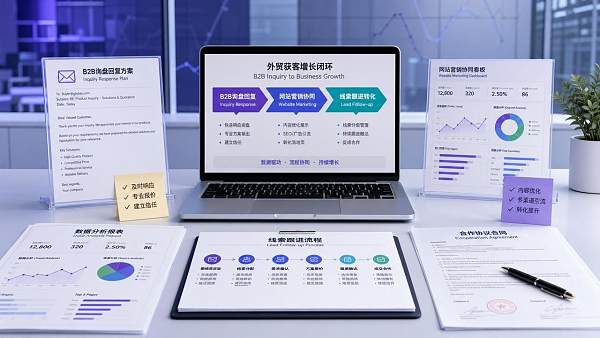
The task of a first follow-up email is very clear: first build trust, then confirm the requirements, and finally drive the next step forward. If the sequence is wrong, it is hard for the customer to keep replying after reading it.
In actual business, many inquiries are not without opportunity; they are just delayed by low-quality replies. For example, sending only a price, not offering a solution, or simply saying “welcome to cooperate” without answering questions—emails like these are often ignored once opened.
So, the key to a truly useful B2B inquiry follow-up template is not whether it sounds “templated,” but whether it can be used effectively. It should adapt quickly to different products, different countries, and different purchasing stages, while also making the customer willing to continue the conversation.
If a company is still doing overseas lead generation, inquiry follow-up efficiency cannot be viewed in isolation. The quality of customers coming from website development, SEO, ad placement, and social media traffic is different, so the wording of the first email should be adjusted accordingly.
Platforms like 易营宝, which integrate websites and marketing, place even greater emphasis on the complete path from traffic to inquiry to conversion. After customers enter the website through search, ads, or social media, if the company does not have a matching B2B inquiry follow-up template, the earlier investment is likely to be wasted.
A Effective B2B Inquiry Follow-up Template Usually Includes These 5 Parts
If you want to improve the reply rate, it is recommended to break the first follow-up email into a fixed structure. The advantage of doing this is that it is stable, easy to copy, and also convenient for the team to unify standards.
1. First Confirm That the Inquiry Has Been Received
Do not be too roundabout in the first sentence. State directly that you have received the other party’s inquiry and thank them for the contact. What the customer most wants to know first is whether the message has been seen seriously.
For example: Thank you for your inquiry about our product. We have received your questions regarding specifications, MOQ, and delivery time. This kind of expression is more responsive than a simple “Thanks for your inquiry”.
2. Answer the Core Questions the Customer Has Already Raised
A good B2B inquiry follow-up template is definitely not empty rhetoric. Whatever the customer asks, answer that first. Even if the answer is not yet complete, you should still respond to the clearly confirmed information first.
Common items that can be answered first include price range, basic specifications, sampling cycle, packaging method, certification status, and delivery time. Solve the immediate problem first, and the customer will be willing to continue reading the rest.
3. Supplement the Necessary Requirement Confirmation Questions
Many salespeople ask for a lot of information as soon as they start, which can easily make customers feel pressured. A more suitable approach is to ask 2 to 3 key questions around the quotation or solution that are truly necessary.
- What specifications or model are needed
- What is the estimated purchase quantity
- Where is the target market or usage scenario
This step determines whether a more targeted solution can be provided later, and it is also one of the most easily overlooked parts in a B2B inquiry follow-up template.
4. Provide a Light Proof Point
When customers first contact you, they will not trust you just because you say “we are very professional”. A more effective approach is to include a light proof point, such as a relevant case study, certification, service market, or delivery experience.
If the company has long-term content accumulation, it can also attach a professional reference material when appropriate. For example, when some customers are selecting an organization management solution, they will download materials such as The Current Situation and Optimization Strategy Research on Human Resource Management in Public Hospitals to first judge the service provider’s professional expression ability and depth of industry understanding.
5. Clearly State the Next Action
The first follow-up email is not the end; it is meant to drive the next interaction. The closing must include an action guide, such as confirming specifications, arranging a quotation, sending a catalog, or scheduling a time to communicate further.
Without a next step, the customer can easily stop after reading. A B2B inquiry follow-up template that can actually drive replies must be specific at the end, not just a vague “Looking forward to your reply”.
A B2B Inquiry Follow-up Template Structure That Can Be Referred to Directly
The structure below is suitable for most first follow-up emails. The core idea is short, precise, and able to drive progress.
- Thank the customer for the inquiry and specify the exact questions received.
- First answer the price, parameters, or delivery time that can be confirmed.
- Supplement 2 to 3 essential information items for quotation.
- Attach case studies, qualifications, or related materials to strengthen trust.
- Clearly invite the customer to reply with key information or proceed to the next step.
If a company has an overseas independent website, this template can also be aligned with the website landing page content. The selling points, case studies, and FAQs that customers see on the website should ideally remain consistent with the wording in the email, so that trust will be stronger.
This is also why more and more companies are planning website development, SEO, ads, and inquiry conversion together. The front-end marketing promise must be matched by a strong back-end B2B inquiry follow-up template, otherwise even high-quality leads will be lost.
The Most Common Mistakes in First Follow-up Emails
Many inquiries are not lost because of the product, but because of the details in the response. The following problems occur very frequently.
Using Only a Template Without Looking at the Customer’s Question
The customer asks for a customized solution, but you send a company introduction. The customer asks about delivery time, but you send a product catalog. A B2B inquiry follow-up template like this looks complete, but in fact it does not answer the question.
Writing a Long Company Introduction Right Away
Company strength is of course important, but the first follow-up email is not the place for more being better. Especially for first-time inquiry customers, solve the need first and then demonstrate capability; the order cannot be reversed.
Asking Too Many Questions and Raising the Reply Barrier
Some emails look like questionnaires, and once customers see a dozen questions, they no longer want to reply. The first email should only ask the most critical points, and the remaining information can be added later in the follow-up communication.
No Action Instruction at the End
Phrases like “please contact us if needed” are too passive at the end. A better way is to make a direct prompt: if convenient, please reply with the quantity and target market, and we will send the corresponding quotation within 24 hours.
The Email Content Is Out of Sync with the Website Information
Customers often click into the official website to confirm again. If the website content is outdated, the landing page does not match, or the case studies are unclear, even the best B2B inquiry follow-up template is hard to build stable trust.
How to Really Use a B2B Inquiry Follow-up Template
A template only becomes a conversion tool when it is put into the process. A company can optimize from three directions at the same time.
- Split templates by scenario, such as quotation type, sampling type, agency cooperation type, and customized requirement type.
- Absorb common Q&A into website content and reference it directly in emails.
- Record the reply rates of different templates and continuously adjust the opening, questions, and closing actions.
If a company is in the stage of upgrading overseas lead generation, it is more suitable to start from a system perspective. Platforms like 易营宝, which are AI-driven, can connect multilingual website development, SEO optimization, ad placement, and lead response, so that inquiry acquisition and follow-up actions are no longer fragmented.
From recent changes, customers are paying more and more attention to response speed and professional judgment. Whoever can provide a clear reply faster will more easily win the next communication opportunity. Even attaching a professional material such as The Current Situation and Optimization Strategy Research on Human Resource Management in Public Hospitals is, in essence, conveying a signal: you can not only sell products, but also provide credible information support.
In the end, a B2B inquiry follow-up template is not designed to make emails look more formal, but to make customers more willing to continue the conversation. Organize the structure well, avoid mistakes, and connect the website with the marketing path, and the first follow-up email will change from a “courtesy reply” into “effective progression”.
If you want to start optimizing now, the most practical action is not to rewrite all the emails, but to first select the ten most recent inquiries and review them one by one according to the structure in this article. You will soon see that what really affects the reply rate is often just those few key details.
Related Articles
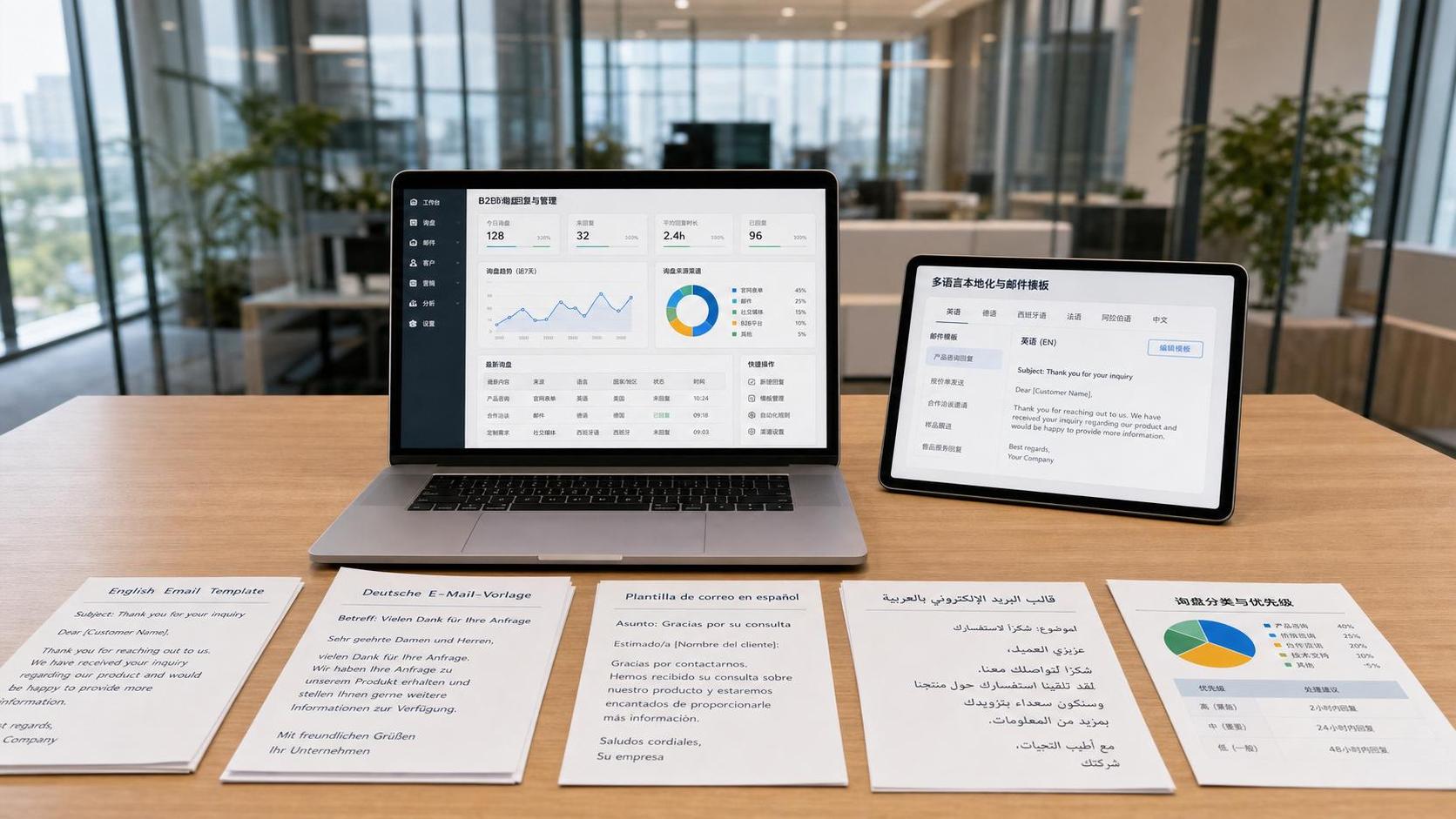
 How to Create a Multilingual Version of a B2B Inquiry Response Template
 SEO Checklist, TDK Template, Foreign Trade Website-Building Checklist, How to Use an Inquiry Email Template More Efficiently
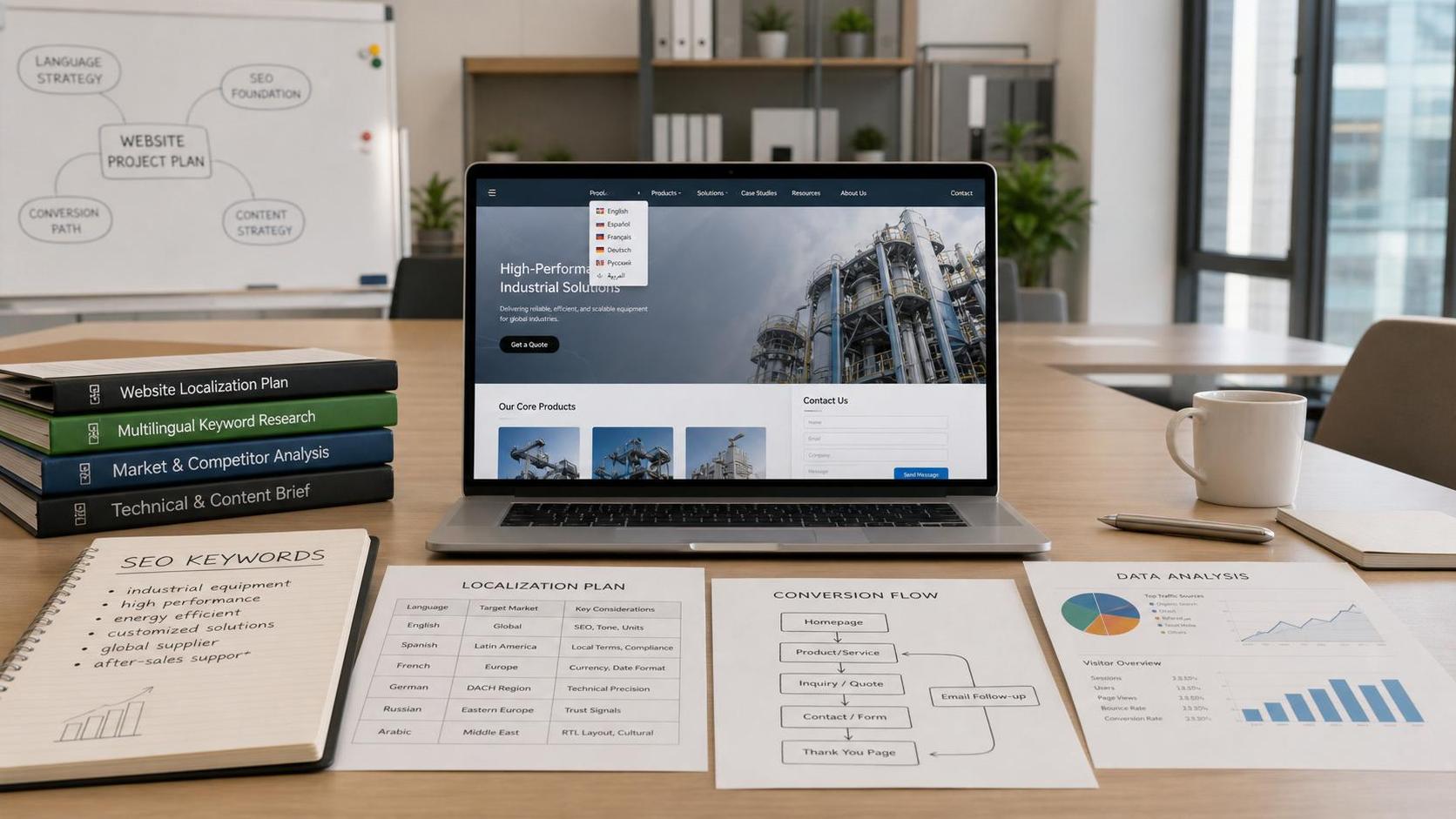
 Foreign Trade Website Checklist Consultant Version: Language, SEO, and Conversion Items to Confirm Before Launch

Related Products
 EasyCamp SaaS Smart Website Marketing SystemE-Yingbao SaaS Smart Website Marketing System: AI-powered, zero-code website building. Rapidly launch multilingual independent e-commerce sites in just 10 minutes. Global server acceleration and AI-driven SEO optimization empower businesses to efficiently connect with global markets. The seamless integration of technology and user-friendly operation makes building e-commerce sites incredibly simple.
 AI+SEM Intelligent Advertising Marketing SystemAI+SEM drives intelligent ad creation, empowering full-funnel precision advertising marketing. The system automatically generates weekly/monthly reports, AI recommends keywords and target countries, monitors core metrics in real-time with intelligent alerts, and enables one-click high-conversion ad solutions to help quickly acquire customers and improve ROI.
 AI+SEO Dual Engine Optimization ServiceEasyWin AI+SEO Dual Engine Optimization System leverages AI-powered keyword mining, content generation, and comprehensive technical optimization to help foreign trade enterprises acquire high-quality organic traffic, significantly improving search rankings and conversion rates.
 AI+SNS Social Media Marketing SystemYingbao AI+SNS Social Media Marketing System - Precision social capture for the social media era. Supports one-click content synchronization across major platforms like Facebook and LinkedIn. AI intelligently rewrites posts for enhanced relevance. 24/7 AI customer service and user profiling analysis empower businesses to efficiently expand into global markets.
 AI+SEO营销解决方案易营宝AI+SEO营销解决方案,通过AI批量写作、智能生成TDK、精准关键词扩词等功能,全面优化网站SEO效果,提升流量与转化率。助力企业构建高效智能网站新生态。
 AI+SEM Advertising Marketing SolutionsAI+SEM Advertising Marketing Solution leverages AI technology to deeply empower SEM ad campaigns. It automatically generates weekly/monthly reports using AI, presenting account data across multiple dimensions for comprehensive insights into campaign performance and trends. The system precisely recommends keywords and target countries, intelligently generates high-conversion ad copy, and enables one-click activation of efficient campaign plans to help businesses rapidly acquire customers. Simultaneously, it monitors core metrics in real time, intelligently identifies abnormal fluctuations, and issues timely alerts to ensure stable, high-return advertising results.
 Domain Name ServicesEasyWin provides professional domain name services, including intelligent queries, one-stop registration, brand protection, and full lifecycle management, helping businesses build a digital brand image.
 EasyOperate B2C Cross-Border E-Commerce Platform & Independent WebsiteEasyStore B2C Cross-border E-commerce Independent Store is an intelligent website building and cross-border e-commerce integrated solution independently developed by EasyStore Information Technology (Beijing) Co., Ltd. The system is specially designed for small and medium-sized as well as large export enterprises, integrating 'website building, operation, marketing, advertising, and conversion' into one, helping enterprises quickly establish cross-border e-commerce independent stores to achieve brand globalization and global sales growth.
The platform supports multiple languages, multiple currencies, and multi-channel marketing, with built-in AI intelligent translation and SEO optimization systems, suitable for mainstream markets such as Southeast Asia, Europe and America, Latin America, and the Middle East, assisting Chinese manufacturing enterprises in efficiently deploying international e-commerce strategies. SSL证书易营宝提供专业SSL安全证书服务,包括单域名和泛域名证书,确保网站数据传输加密、身份验证和完整性保护,助力企业建立安全可信的在线业务环境。









