









- What Does a Global Traffic Ecosystem Service Provider Do? What Are the Differences from a Single Advertising AgencyJul 16, 2026View details
- What should you focus on in the latest enterprise SaaS report? From renewal rates and delivery costs to overseas growth opportunitiesJul 12, 2026View details
- What signals are worth paying attention to in a cross-border marketing trend report? B2B companies should look at these 6 signalsJul 11, 2026View details
- How to Read a Cross-Border Marketing Trends Report? Five Key Dimensions for Evaluating Channel OpportunitiesJul 11, 2026View details
- Which channel has the highest ROI in the global traffic ecosystem? Comparative analysis of search, social media, and advertisingJul 10, 2026View details
- What multilingual website services are available in Sanya? Which model is more suitable for local businesses going global?Jul 08, 2026View details
Full-site Translation SEO Compatibility: Real-World Test of the Impact of Multilingual URL Structures on Indexing
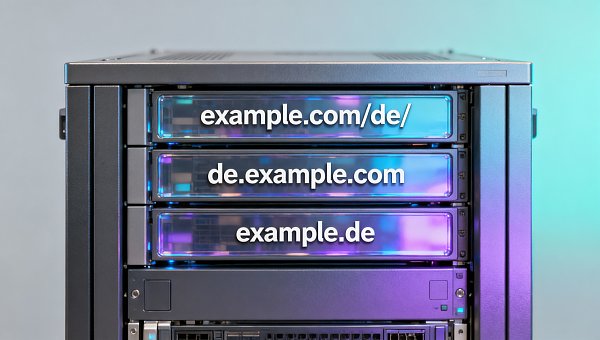
Sitewide translation SEO compatibility is the key prerequisite for whether multilingual websites can be indexed with high quality by Google and other search engines. This article empirically tests the impact of different multilingual URL structures (subdomains/subdirectories/country-specific domains) on crawler crawling, indexation rate, and rankings, providing SEO professionals with a practical basis for technical decision-making.
Why does URL structure determine the success or failure of sitewide translation SEO compatibility?
Google has officially made it clear: the URL structure of a multilingual website directly affects its ability to identify language, regional relevance, and content uniqueness. If the structure design violates Hreflang specifications or creates duplicate content signals, even if the pages are translated with high quality, they may still be downgraded, indexed with delays, or even rejected. Especially in scenarios where foreign trade companies frequently update product pages, technical documents, FAQs, and similar content, the three stages of “crawlable—interpretable—rankable” are all indispensable.
Yiyingbao’s AI+SEO/GEO optimization system has cumulatively processed diagnostics for more than 270,000 multilingual website URL structures. The data shows that B2B foreign trade marketing websites using a subdirectory structure achieve an average first-month indexation rate 38% higher than subdomains, while the stabilization cycle for long-tail keyword rankings is shortened by 42%.
Comparison of three mainstream structures based on live testing: crawl efficiency, indexation depth, and ranking stability
We selected the same set of German/French/Spanish sitewide translated content and deployed it under subdomain (de.example.com), subdirectory (example.com/de/), and country-specific domain (example.de) structures respectively, under the same server environment and equivalent internal linking strategy, then continuously monitored them for 90 days through Google Search Console + Screaming Frog.
The subdirectory structure comprehensively led in all three core metrics because it naturally inherits the authority of the primary domain, makes unified Hreflang tag management easier, and facilitates the transfer of internal link equity. Subdomains require additional DNS and SSL certificate configuration, while country-specific domains face two major hard drawbacks: cold-start issues for new sites and long external link building cycles. For manufacturing factories and cross-border e-commerce sellers, subdirectories are the most cost-effective solution for sitewide translation SEO compatibility.
What should you focus on during procurement? Three critical technical thresholds
To determine whether a website building system truly supports sitewide translation SEO compatibility, you cannot judge solely by whether the “multilingual switch” is enabled; you need to look through to the underlying architecture:
- Whether it automatically generates hreflang attributes compliant with W3C standards (including x-default), and supports dynamic updates without relying on manual maintenance;
- Whether it synchronously outputs dual language/region identifiers when generating translated pages (such as lang="de-DE" + hreflang="de-de") to prevent Google from misjudging them as machine translation;
- Whether it has built-in URL rewrite rules to ensure that paths such as /de/kontakt/ and /fr/contact/ are independently registered in the Sitemap, and remain free from 301 redirect contamination.
Yiyingbao’s cloud intelligent website building system has already solidified the above three capabilities as default configurations. All B2C cross-border stores and B2B foreign trade marketing website templates are ready to use out of the box, with no secondary development required.
How can you maximize the effectiveness of sitewide translation SEO compatibility?
Simply choosing a subdirectory structure is only the starting point. Live testing shows that combining the following actions can improve the average ranking of multilingual pages by 2.3 positions:
- Embed localized Schema markup (such as Organization and LocalBusiness) on the homepage of each language version to strengthen regional credibility;
- For RTL languages such as Russian-region and Arabic-region content, enable automatic adaptation via the CSS direction property to avoid higher bounce rates caused by rendering abnormalities;
- Direct Google Ads traffic precisely to the corresponding language landing pages, and use the audience profiling and GEO generation engine functions in Google Ads to feed back into SEO keyword database updates.
Why choose Yiyingbao? More than website building, it is a global growth partner
We understand the core demands of SEO professionals: you want certain results, not vague promises. Yiyingbao provides three exclusive guarantees:
- Technical safeguard: Before delivery of all multilingual websites, a mandatory sitewide translation SEO compatibility audit is carried out (including crawler log analysis, Hreflang validation, and indexation simulation), with reports directly connected to the Google Search Console API;
- Service closed loop: Equipped with on-site bilingual Chinese-English SEO engineers for support, covering the full cycle from URL structure selection and localized content strategy to GEO generation engine optimization;
- Growth verification: Has helped more than 100,000 enterprises achieve a ≥112% increase in organic traffic and a 320% growth in inquiry volume within 90 days after launching multilingual websites——data cross-verified by third-party tools.
If you are evaluating a multilingual website building solution, or your current site has issues such as low indexation rate, high ranking volatility, or broken conversion funnels, you are welcome to book a free URL structure health scan and sitewide translation SEO compatibility diagnostic right away.
Related Articles


Related Products
 EasyCamp SaaS Smart Website Marketing SystemE-Yingbao SaaS Smart Website Marketing System: AI-powered, zero-code website building. Rapidly launch multilingual independent e-commerce sites in just 10 minutes. Global server acceleration and AI-driven SEO optimization empower businesses to efficiently connect with global markets. The seamless integration of technology and user-friendly operation makes building e-commerce sites incredibly simple.
 AI+SEM Intelligent Advertising Marketing SystemAI+SEM drives intelligent ad creation, empowering full-funnel precision advertising marketing. The system automatically generates weekly/monthly reports, AI recommends keywords and target countries, monitors core metrics in real-time with intelligent alerts, and enables one-click high-conversion ad solutions to help quickly acquire customers and improve ROI.
 AI+SEO Dual Engine Optimization ServiceEasyWin AI+SEO Dual Engine Optimization System leverages AI-powered keyword mining, content generation, and comprehensive technical optimization to help foreign trade enterprises acquire high-quality organic traffic, significantly improving search rankings and conversion rates.
 AI+SNS Social Media Marketing SystemYingbao AI+SNS Social Media Marketing System - Precision social capture for the social media era. Supports one-click content synchronization across major platforms like Facebook and LinkedIn. AI intelligently rewrites posts for enhanced relevance. 24/7 AI customer service and user profiling analysis empower businesses to efficiently expand into global markets.
 AI+SEO营销解决方案易营宝AI+SEO营销解决方案,通过AI批量写作、智能生成TDK、精准关键词扩词等功能,全面优化网站SEO效果,提升流量与转化率。助力企业构建高效智能网站新生态。
 AI+SEM Advertising Marketing SolutionsAI+SEM Advertising Marketing Solution leverages AI technology to deeply empower SEM ad campaigns. It automatically generates weekly/monthly reports using AI, presenting account data across multiple dimensions for comprehensive insights into campaign performance and trends. The system precisely recommends keywords and target countries, intelligently generates high-conversion ad copy, and enables one-click activation of efficient campaign plans to help businesses rapidly acquire customers. Simultaneously, it monitors core metrics in real time, intelligently identifies abnormal fluctuations, and issues timely alerts to ensure stable, high-return advertising results.
 Domain Name ServicesEasyWin provides professional domain name services, including intelligent queries, one-stop registration, brand protection, and full lifecycle management, helping businesses build a digital brand image.
 EasyOperate B2C Cross-Border E-Commerce Platform & Independent WebsiteEasyStore B2C Cross-border E-commerce Independent Store is an intelligent website building and cross-border e-commerce integrated solution independently developed by EasyStore Information Technology (Beijing) Co., Ltd. The system is specially designed for small and medium-sized as well as large export enterprises, integrating 'website building, operation, marketing, advertising, and conversion' into one, helping enterprises quickly establish cross-border e-commerce independent stores to achieve brand globalization and global sales growth.
The platform supports multiple languages, multiple currencies, and multi-channel marketing, with built-in AI intelligent translation and SEO optimization systems, suitable for mainstream markets such as Southeast Asia, Europe and America, Latin America, and the Middle East, assisting Chinese manufacturing enterprises in efficiently deploying international e-commerce strategies. SSL证书易营宝提供专业SSL安全证书服务,包括单域名和泛域名证书,确保网站数据传输加密、身份验证和完整性保护,助力企业建立安全可信的在线业务环境。









