









- What Does a Global Traffic Ecosystem Service Provider Do? What Are the Differences from a Single Advertising AgencyJul 16, 2026View details
- What should you focus on in the latest enterprise SaaS report? From renewal rates and delivery costs to overseas growth opportunitiesJul 12, 2026View details
- What signals are worth paying attention to in a cross-border marketing trend report? B2B companies should look at these 6 signalsJul 11, 2026View details
- How to Read a Cross-Border Marketing Trends Report? Five Key Dimensions for Evaluating Channel OpportunitiesJul 11, 2026View details
- Which channel has the highest ROI in the global traffic ecosystem? Comparative analysis of search, social media, and advertisingJul 10, 2026View details
- What multilingual website services are available in Sanya? Which model is more suitable for local businesses going global?Jul 08, 2026View details
How to Assess the Quality of Backlinks for an International Trade Website
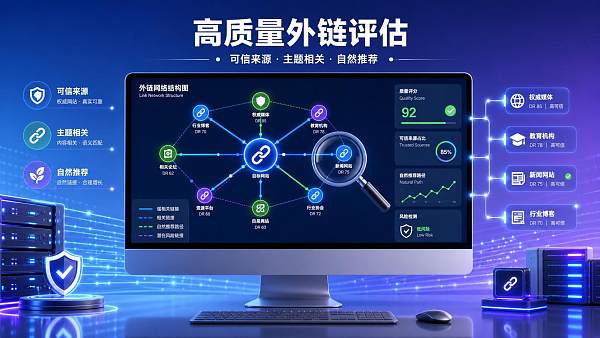
When promoting an overseas independent website, many companies treat backlinks as a “numbers game.” As a result, they publish numerous links, yet see no significant improvement in rankings or inquiries. The problem is usually not that there are too few backlinks, but that the quality assessment criteria for backlinks to overseas independent websites have not been properly understood. Truly valuable backlinks should simultaneously help the website build trust, improve keyword relevance, and achieve sustainable search performance.
For foreign trade companies, brands expanding into international markets, and marketing managers, the key to assessing backlink quality is not whether the platform is famous or whether the other party is willing to publish the link. Instead, it is whether search engines can regard the link as a credible recommendation, whether it matches the business topic, whether it can remain stable over the long term, and whether it ultimately supports indexing, rankings, and conversions.
Why Overseas Independent Websites Should Not Focus Only on the Number of Backlinks
Backlinks remain an important signal in Google SEO, but search engines no longer assess their value based solely on quantity. For overseas independent websites, a large number of low-quality backlinks not only fail to produce positive effects, but may also dilute the website’s topical focus and even lead to a decline in algorithmic trust.
This is especially true for B2B foreign trade websites, manufacturing websites, and multilingual independent websites. Their decision-making cycles are generally long and their conversion paths complex, so search engines place greater emphasis on their professionalism and credibility. If backlink sources are disorganized, topics are irrelevant, and content is weak, even if indexing increases in the short term, the links may not provide stable support for core keyword rankings.
Therefore, when evaluating backlinks, companies should shift their focus from “how many links have been published” to “whether each remaining link is worthwhile.” This is the most basic and most easily overlooked step in assessing backlink quality for overseas independent websites.
When Assessing Backlink Quality, First Check Whether the Website Itself Is Reliable
The first assessment criterion is the quality of the website where the link is placed. If a website is updated regularly, has a clear page structure, is indexed normally, receives stable traffic, and has a clear industry focus, the backlinks it provides generally deserve greater attention.
By contrast, if a website has a disorganized layout, excessive advertising, obviously stitched-together articles, an unlimited range of topics, or is dedicated to selling links, then even if a backlink can be published there, it is unlikely to qualify as a high-quality recommendation. Search engines have become highly capable of identifying such websites.
In practice, several aspects can be used for quick screening: whether the website has organic traffic, whether it updates content consistently, whether it contains a large number of irrelevant categories, and whether it has clear basic pages such as About, Contact, and privacy policy pages. Although these factors may seem simple, they are important signals for assessing a website’s credibility.
Topical Relevance Determines Whether a Backlink Has Real SEO Value
Many companies mistakenly believe that a “high-authority website” is necessarily suitable for backlink building. However, if its topic has little connection with their own business, the actual effect is often limited. For overseas independent websites, relevance is usually more important than any single authority metric.
For example, if a website exporting industrial equipment obtains most of its backlinks from travel, entertainment, or general information websites, those links may have limited value even if the websites have decent metrics. They make it difficult to convey a clear industry signal to search engines. In contrast, a link from a website focused on machinery, manufacturing, supply chains, or B2B trade is generally more valuable.
Backlink relevance depends not only on the overall topic of the website, but also on whether the topic of the publishing page matches the target page. A page discussing “industrial automation solutions” and linking to an equipment product page is often more helpful for rankings than a generic corporate news article.
Link Placement and Presentation Are More Important Than Many People Think
Even when two backlinks are otherwise similar, search engines interpret them very differently when one appears naturally within the main content and the other appears in the footer, sidebar, author bio, or a large-scale reciprocal link section. Links that are more natural and consistent with the reading logic generally provide greater value.
High-quality backlinks more commonly appear in complete content that naturally mentions your brand, solution, or related page while discussing a particular issue or case. This type of editorial recommendation is closer to a genuine citation and is more likely to be recognized by algorithms as an effective vote.
Anchor text should also be managed naturally. If all backlinks use exact-match keywords, such as repeatedly pointing to “backlink quality assessment criteria for overseas independent websites,” the pattern may appear deliberate. A more reasonable approach is to combine brand terms, URLs, generic terms, and a small number of core keywords to create a natural distribution.
Visible Authority Metrics Are Useful References but Should Not Be Used for Decisions Alone
When purchasing or screening backlink resources, many companies focus only on DA, DR, authority scores, or the number of indexed pages. These metrics can indeed provide an initial reference, but they are not the whole basis for assessing quality and cannot replace manual review.
Some websites have high third-party metrics but offer shallow content, sell backlinks extensively, or attract low-quality visitors. Meanwhile, some websites in specialized industries may not have outstanding metrics, yet have stable traffic and strong topical relevance, making them more suitable for overseas independent website strategies.
A more practical approach is to use metrics as the first-round filtering criteria, then make a comprehensive assessment based on page quality, industry relevance, link placement, content depth, and website update frequency. The resources selected in this way are generally better suited to long-term SEO growth.
The Ability to Generate Real Traffic and Potential Customers Is a Higher-Level Assessment Criterion
From a business perspective, quality backlinks should not serve rankings alone. They should also have the potential to generate traffic and support conversions. Especially for B2B foreign trade companies, a backlink seen and clicked by target customers is often more valuable than ten links that are “seen only by search engines.”
If the audience of an industry media outlet, vertical directory, professional blog, or partner website consists of your potential buyers, distributors, or business partners, such a link can not only improve SEO signals but may also directly generate inquiries and brand exposure.
Therefore, it is advisable to add a business perspective to the evaluation: Is the page containing the link likely to be read by target customers? Does the page provide useful information for their decision-making? Are visitors to the page likely to proceed to your product page or contact page?
High-Risk Backlinks That Overseas Companies Should Avoid
When assessing backlink quality, it is important not only to identify “good links” but also to recognize “risky links.” Common high-risk backlinks include links from spam directories, mass-submission websites, automatically scraped websites, private blog networks, off-topic forum signatures, mass-posted comment links, and obviously paid anchor-text placements.
The problem with these backlinks is not merely that they produce weak results. They can also disrupt the website’s link profile. For new websites, websites with low authority, or companies expanding into international markets, an abnormal link structure can result in high recovery costs later.
If a company has already built a large number of backlinks in the past, it can conduct a backlink audit regularly. Key checks should include whether the source domains are abnormal, whether anchor texts are overly concentrated, and whether there are page references unrelated to the business. Timely cleanup and adjustment are more important than continuing to accumulate links.
What Assessment Process Should Be Established for Backlink Building on Overseas Independent Websites?
The genuinely efficient approach is not to evaluate resources on an ad hoc basis, but to establish a fixed screening process. The first step is to identify the target page and core keywords, clarifying whether the backlink is intended to improve rankings for brand terms, product terms, or a particular type of industry-related question.
The second step is to screen resources, giving priority to industry media, partner websites, overseas blogs, professional directories, association platforms, and content websites with genuine readers. The third step is to manually review website quality, focusing on traffic, indexing, update frequency, and content expertise.
The fourth step is to determine whether the link can be naturally integrated into the content, whether the anchor text is reasonable, and whether the link may generate genuine clicks. Finally, published backlinks should be tracked continuously by monitoring indexing, rankings, referral traffic, and the performance of target pages, rather than treating the process as complete once the links are published.
Although this method is slower than mass link placement, it is more suitable for foreign trade companies that value long-term growth. As Google SEO increasingly emphasizes content quality, brand trust, and user value, backlink building is essentially returning to the logic of “high-quality recommendations.”
Conclusion: The Essence of High-Quality Backlinks Is Trustworthiness, Relevance, Naturalness, and Sustainability
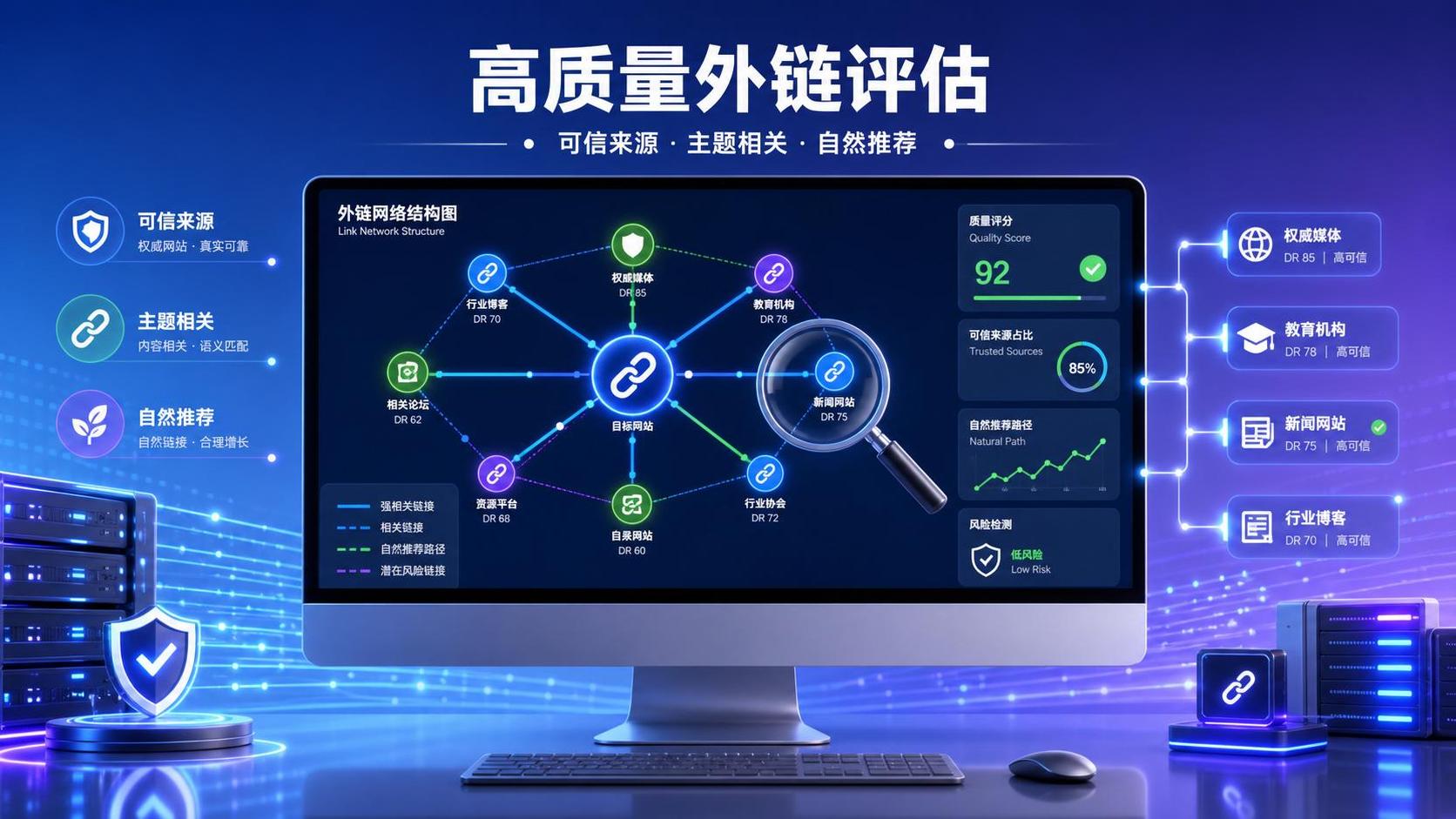
Returning to the core question, how should backlink quality for overseas independent websites be assessed? It can be summarized in four keywords: trustworthy sources, topical relevance, natural integration, and sustainable results. Once any of these four principles is neglected, even a large number of backlinks may fail to become genuine SEO assets.
For business managers, the value of backlinks should not be measured only by publishing costs. It should be evaluated based on whether the links can support long-term indexing, keyword rankings, brand credibility, and inquiry growth. For execution teams, the clearer the assessment criteria, the easier it is to avoid wasted resources and inefficient investment.
In the SEO competition for overseas independent websites, the ultimate contest is not about who has more links, but whose links look more like professional recommendations in the real world. When backlink quality is assessed correctly, the independent website’s search performance becomes more stable, providing a stronger foundation for subsequent content, indexing, and conversion growth.
Related Articles


Related Products
 EasyCamp SaaS Smart Website Marketing SystemE-Yingbao SaaS Smart Website Marketing System: AI-powered, zero-code website building. Rapidly launch multilingual independent e-commerce sites in just 10 minutes. Global server acceleration and AI-driven SEO optimization empower businesses to efficiently connect with global markets. The seamless integration of technology and user-friendly operation makes building e-commerce sites incredibly simple.
 AI+SEM Intelligent Advertising Marketing SystemAI+SEM drives intelligent ad creation, empowering full-funnel precision advertising marketing. The system automatically generates weekly/monthly reports, AI recommends keywords and target countries, monitors core metrics in real-time with intelligent alerts, and enables one-click high-conversion ad solutions to help quickly acquire customers and improve ROI.
 AI+SEO Dual Engine Optimization ServiceEasyWin AI+SEO Dual Engine Optimization System leverages AI-powered keyword mining, content generation, and comprehensive technical optimization to help foreign trade enterprises acquire high-quality organic traffic, significantly improving search rankings and conversion rates.
 AI+SNS Social Media Marketing SystemYingbao AI+SNS Social Media Marketing System - Precision social capture for the social media era. Supports one-click content synchronization across major platforms like Facebook and LinkedIn. AI intelligently rewrites posts for enhanced relevance. 24/7 AI customer service and user profiling analysis empower businesses to efficiently expand into global markets.
 AI+SEO营销解决方案易营宝AI+SEO营销解决方案,通过AI批量写作、智能生成TDK、精准关键词扩词等功能,全面优化网站SEO效果,提升流量与转化率。助力企业构建高效智能网站新生态。
 AI+SEM Advertising Marketing SolutionsAI+SEM Advertising Marketing Solution leverages AI technology to deeply empower SEM ad campaigns. It automatically generates weekly/monthly reports using AI, presenting account data across multiple dimensions for comprehensive insights into campaign performance and trends. The system precisely recommends keywords and target countries, intelligently generates high-conversion ad copy, and enables one-click activation of efficient campaign plans to help businesses rapidly acquire customers. Simultaneously, it monitors core metrics in real time, intelligently identifies abnormal fluctuations, and issues timely alerts to ensure stable, high-return advertising results.
 Domain Name ServicesEasyWin provides professional domain name services, including intelligent queries, one-stop registration, brand protection, and full lifecycle management, helping businesses build a digital brand image.
 EasyOperate B2C Cross-Border E-Commerce Platform & Independent WebsiteEasyStore B2C Cross-border E-commerce Independent Store is an intelligent website building and cross-border e-commerce integrated solution independently developed by EasyStore Information Technology (Beijing) Co., Ltd. The system is specially designed for small and medium-sized as well as large export enterprises, integrating 'website building, operation, marketing, advertising, and conversion' into one, helping enterprises quickly establish cross-border e-commerce independent stores to achieve brand globalization and global sales growth.
The platform supports multiple languages, multiple currencies, and multi-channel marketing, with built-in AI intelligent translation and SEO optimization systems, suitable for mainstream markets such as Southeast Asia, Europe and America, Latin America, and the Middle East, assisting Chinese manufacturing enterprises in efficiently deploying international e-commerce strategies. SSL证书易营宝提供专业SSL安全证书服务,包括单域名和泛域名证书,确保网站数据传输加密、身份验证和完整性保护,助力企业建立安全可信的在线业务环境。









