









- How to assess foreign trade website development trends?Looking at 2026 changes from multilingual,AI content to conversion pathsJul 04, 2026View details
- What are the new trends in multilingual marketing data analytics tools in 2026? Focus on attribution、automation and complianceJul 04, 2026View details
- Is Brand Globalization Marketing Consulting Worth Buying? At What Stage Should Companies Bring It InJul 01, 2026View details
- Cross-Border Marketing Trend Research: Why More and More Companies Are Starting to Deploy AI Search and GEO OptimizationJun 30, 2026View details
- Cross-Border Marketing Trend Research: How Independent Sites, AI Content, and Short-Video Customer Acquisition Are ChangingJun 30, 2026View details
- How Can a Brand Updates Page Be Made More SEO-Friendly? Analysis of Update Frequency, Content Structure, and Internal Linking StrategyJun 28, 2026View details
How to Choose a Foreign Trade Website Service Provider? Pitfall Avoidance Guide: Hidden Contract Clauses, Multilingual Content Update Frequency, and Copyright Ownership Explanation
How to choose a foreign trade website service provider? The key to avoiding pitfalls lies in hidden contract clauses, multilingual content update frequency, and copyright ownership. What is the multilingual marketing system like at EasyYun? This article provides an in-depth analysis of core issues such as how to improve conversion rates after building a foreign trade website and whether AI marketing support is needed, helping businesses efficiently expand overseas.
1. Contract Pitfalls: Three Hidden Clauses Overlooked by 90% of Businesses
When selecting a foreign trade website service provider, most procurement personnel focus on pricing and interface design but rarely review service agreements line by line. According to the 2023 Cross-Border Digital Infrastructure Contract White Paper, approximately 67% of website disputes stem from "unclear content update responsibilities," "server migration restrictions," and "default copyright ownership." For example, a manufacturing company in East China discovered after signing that the contract stipulated "all website source code ownership belongs to the service provider," hindering subsequent ERP integration. Another Shenzhen-based electronic components supplier failed to specify multilingual content update frequency, resulting in a Spanish page remaining machine-translated six months after launch and a 42% drop in organic traffic.
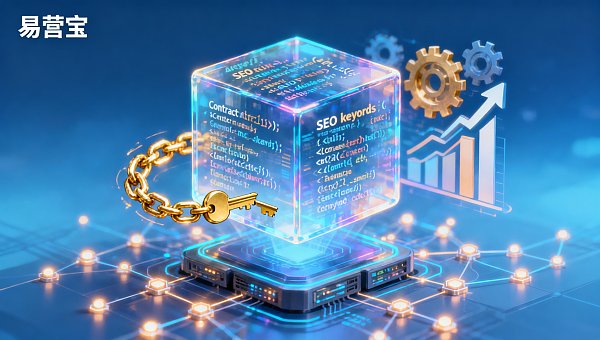
Truly professional providers should establish three baseline clauses: First, 100% handover of source code and databases with signed Intellectual Property Transfer Confirmation; Second, multilingual content updates written into SLA (e.g., "minimum 12 rounds of manual proofreading + AI polishing per month"); Third, open server deployment permissions allowing clients to switch CDN nodes or migrate to private cloud environments. Since 2013, EasyYun has implemented its "Triple Rights Transfer" standard—full client ownership of code rights, data rights, and operational rights—with a Multilingual Content Maintenance Commitment attached to contracts, detailing quarterly update granularity (including keyword coverage, localization adaptations, and cultural compliance audits).
2. The Essential Difference in Multilingual Websites: Beyond Translation, It's a Localization Engineering Project
How do multilingual websites differ from standard websites? The answer goes far beyond language toggle buttons. Standard websites are single-market information containers, whereas multilingual foreign trade sites are cross-cultural commercial interfaces requiring synchronized solutions for search engine crawling logic (e.g., hreflang tags), localized payment gateways (Pix in Brazil, COD preference in the Middle East), and even unit conversions (inches/feet in the US, millimeters/kilograms in EU). The technical architecture is more critical—using subdirectories (/es/) instead of ccTLDs (es.example.com) directly impacts Google's Spanish site authority inheritance efficiency.
How to select servers for multilingual websites? Industry data shows single Asia-Pacific nodes cannot guarantee Latin American users sub-2s first-screen loads. EasyYun's global CDN cluster covers 7 continents with 23 core hubs, intelligently routing traffic—German traffic prioritizes Frankfurt nodes while Japanese requests auto-route to Tokyo edge servers, reducing average global TTFB to 186ms. This infrastructure capability directly determines the speed at which high-specialization products like precision machined hardware components establish overseas buyer trust.
3. AI Is Not a Buzzword: The Core Engine for Improving Foreign Trade Website Conversion Rates
Do foreign trade websites need AI marketing support? While competitors manually optimize 30 English keywords, AI has already generated 217 long-tail keyword combinations for your precision machining hardware pages, automatically matching German industrial buyers' search intent (e.g., "DIN933 stainless steel hex bolt M6x20"). EasyYun's AI marketing engine data shows: Implementing "AI keyword expansion + automated TDK generation + AI image creation" increases average session duration by 2.3X and boosts inquiry conversion by 189%.
Multilingual website SEO must break conventional thinking. For example, French SEO requires avoiding literal translations ("High Precision CNC Machining Parts" → "Pièces d'usinage CNC haute précision"), instead adopting local search patterns: "Usinage CNC sur mesure pour pièces mécaniques industrielles." EasyYun's system embeds 156 language-specific search behavior models to dynamically generate SEO-compliant page structures. More crucially, closed-loop validation—AI ad managers feed Meta/Facebook click heatmap data back to optimize CTA button placement and copy, creating a "build-lead-convert" data flywheel.
4. The Truth for SMEs: Are Multilingual Foreign Trade Websites Suitable for Small Businesses?
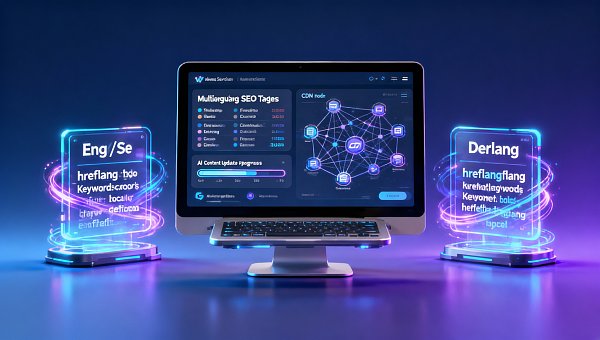
Cost concerns often deter SMEs from multilingual markets. Reality: A Polish-language standalone site targeting B2B procurement agents acquires leads at 1/5 the cost of LinkedIn ads, with 3.2X higher customer LTV. Among EasyYun's 100,000 clients, 68% are SMEs with annual revenues under ¥5M, typically opting for "lightweight launches"—initial English/Spanish/German sites with AI handling 80% of content production, reducing manpower by 50%+. A Ningbo hardware manufacturer's Spanish site generated 127 qualified inquiries in 3 months, 43% from Mexican local distributors.
How to promote multilingual foreign trade websites post-launch? Far beyond simple traffic buying. EasyYun equips SMEs with "localized cold-start kits": multilingual Google Business Profile verification, LinkedIn industry group targeting, and client persona-based YouTube short video matrices (e.g., auto-generated Spanish technical explainers for Mexican auto parts buyers).
5. The Ultimate Vendor Selection Criterion: Deliver Verifiable Localization Results
When asking "How good is EasyYun's multilingual marketing system?", the answer lies not in feature lists but quantifiable deliverables: Quarterly Multilingual SEO Health Reports detailing keyword ranking fluctuations, content update logs, and competitor coverage comparisons; Monthly Localized Social Interaction Analysis annotating cultural misinterpretations in Spanish Facebook posts; Most critically—all dashboard data exposes API endpoints for direct BI system integration.
How to execute localized marketing for multilingual websites? The essence is constructing "people-goods-field" triadic adaptation: AI identifies local procurement decision chains (e.g., German factories require technical white papers + DIN certifications); Macro photography + 3D rotation showcases precision machined hardware surface finish and thread accuracy; Local payment gateways, timezone-based live chat, and even holiday countdowns (Brazil's Black Friday, Ramadan promotions). This granularity underpins EasyYun's service logic for 100,000 clients.
How to compare foreign trade website vendors? Return to fundamentals: Can the provider make your products appear simultaneously on target markets' search engine first pages, social feeds, and procurement meeting agendas—with professionally credible presentation? Contact us now for a customized Multilingual Go-To-Market Feasibility Report and solutions.
Related Articles
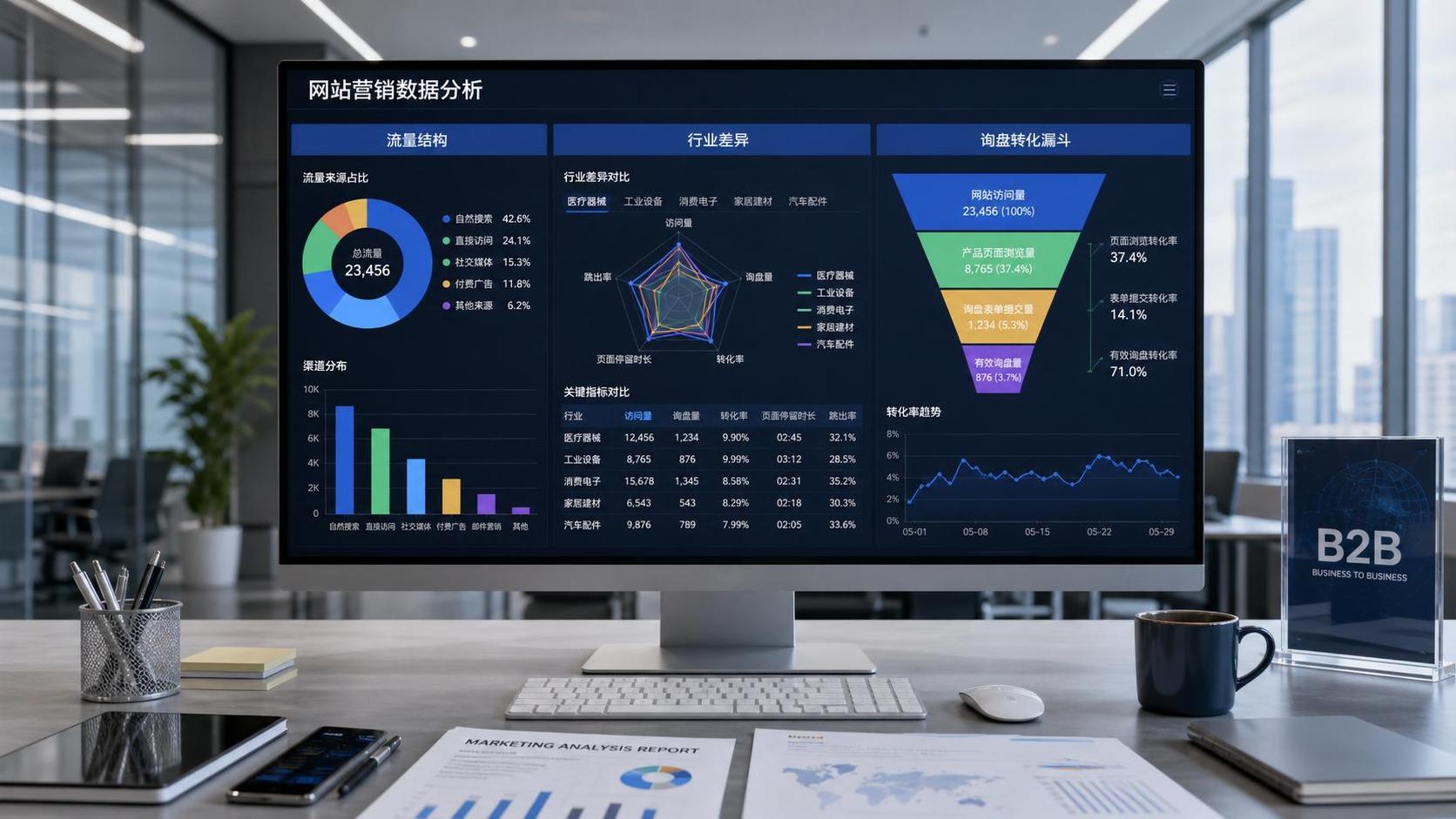
 What exactly is 易营宝's inquiry conversion rate?First look at traffic structure、industry differences and statistical criteria
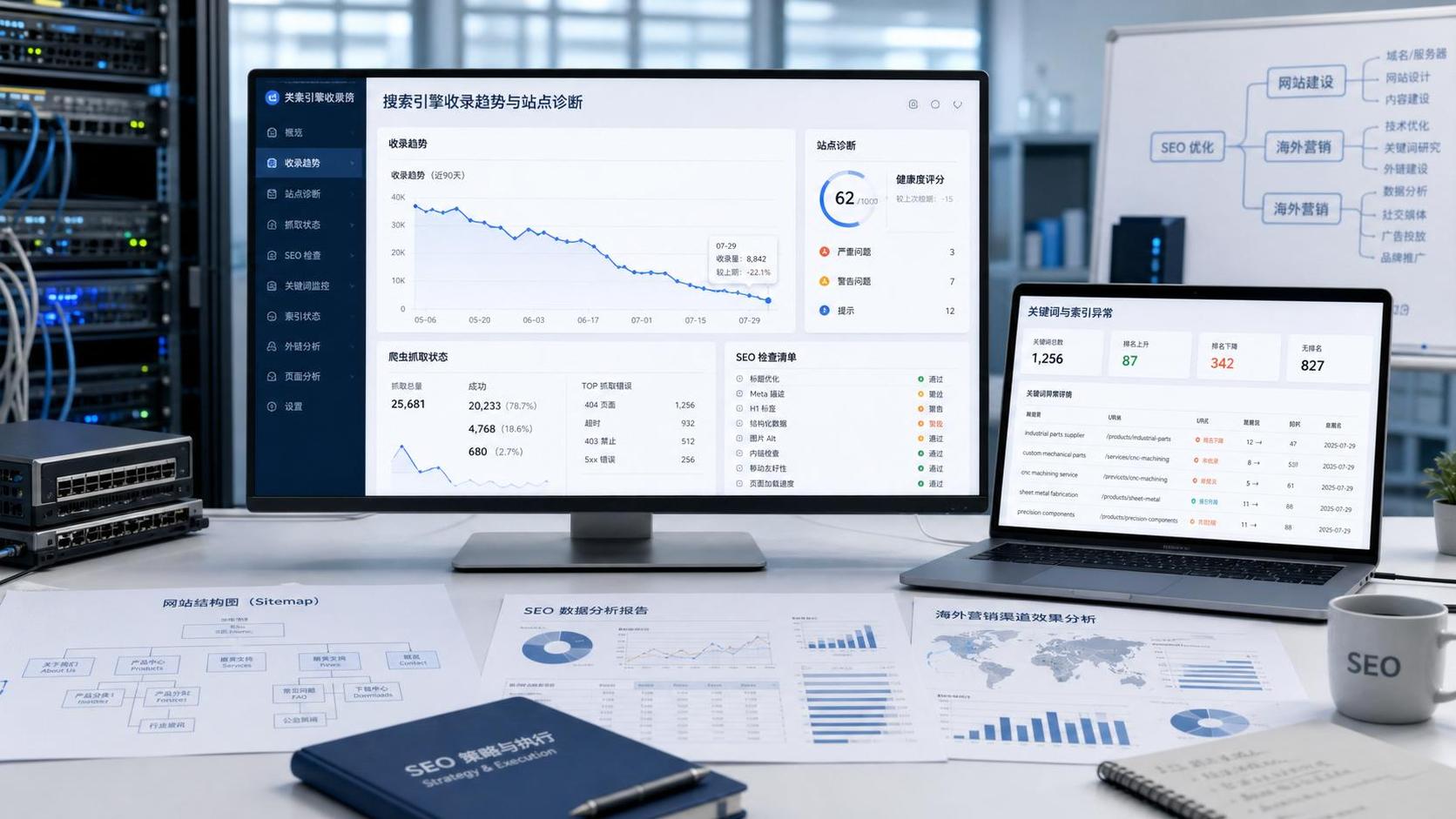
 What should you do if Google Search Console indexing volume drops? First check these 8 common causes
 Where should solving foreign trade website development issues begin? The 12 most common checkpoints before and after launch
Related Products
 EasyCamp SaaS Smart Website Marketing SystemE-Yingbao SaaS Smart Website Marketing System: AI-powered, zero-code website building. Rapidly launch multilingual independent e-commerce sites in just 10 minutes. Global server acceleration and AI-driven SEO optimization empower businesses to efficiently connect with global markets. The seamless integration of technology and user-friendly operation makes building e-commerce sites incredibly simple.
 AI+SEM Intelligent Advertising Marketing SystemAI+SEM drives intelligent ad creation, empowering full-funnel precision advertising marketing. The system automatically generates weekly/monthly reports, AI recommends keywords and target countries, monitors core metrics in real-time with intelligent alerts, and enables one-click high-conversion ad solutions to help quickly acquire customers and improve ROI.
 AI+SEO Dual Engine Optimization ServiceEasyWin AI+SEO Dual Engine Optimization System leverages AI-powered keyword mining, content generation, and comprehensive technical optimization to help foreign trade enterprises acquire high-quality organic traffic, significantly improving search rankings and conversion rates.
 AI+SNS Social Media Marketing SystemYingbao AI+SNS Social Media Marketing System - Precision social capture for the social media era. Supports one-click content synchronization across major platforms like Facebook and LinkedIn. AI intelligently rewrites posts for enhanced relevance. 24/7 AI customer service and user profiling analysis empower businesses to efficiently expand into global markets.
 AI+SEO营销解决方案易营宝AI+SEO营销解决方案,通过AI批量写作、智能生成TDK、精准关键词扩词等功能,全面优化网站SEO效果,提升流量与转化率。助力企业构建高效智能网站新生态。
 AI+SEM Advertising Marketing SolutionsAI+SEM Advertising Marketing Solution leverages AI technology to deeply empower SEM ad campaigns. It automatically generates weekly/monthly reports using AI, presenting account data across multiple dimensions for comprehensive insights into campaign performance and trends. The system precisely recommends keywords and target countries, intelligently generates high-conversion ad copy, and enables one-click activation of efficient campaign plans to help businesses rapidly acquire customers. Simultaneously, it monitors core metrics in real time, intelligently identifies abnormal fluctuations, and issues timely alerts to ensure stable, high-return advertising results.
 Domain Name ServicesEasyWin provides professional domain name services, including intelligent queries, one-stop registration, brand protection, and full lifecycle management, helping businesses build a digital brand image.
 EasyOperate B2C Cross-Border E-Commerce Platform & Independent WebsiteEasyStore B2C Cross-border E-commerce Independent Store is an intelligent website building and cross-border e-commerce integrated solution independently developed by EasyStore Information Technology (Beijing) Co., Ltd. The system is specially designed for small and medium-sized as well as large export enterprises, integrating 'website building, operation, marketing, advertising, and conversion' into one, helping enterprises quickly establish cross-border e-commerce independent stores to achieve brand globalization and global sales growth.
The platform supports multiple languages, multiple currencies, and multi-channel marketing, with built-in AI intelligent translation and SEO optimization systems, suitable for mainstream markets such as Southeast Asia, Europe and America, Latin America, and the Middle East, assisting Chinese manufacturing enterprises in efficiently deploying international e-commerce strategies. SSL证书易营宝提供专业SSL安全证书服务,包括单域名和泛域名证书,确保网站数据传输加密、身份验证和完整性保护,助力企业建立安全可信的在线业务环境。









