









- What Does a Global Traffic Ecosystem Service Provider Do? What Are the Differences from a Single Advertising AgencyJul 16, 2026View details
- What should you focus on in the latest enterprise SaaS report? From renewal rates and delivery costs to overseas growth opportunitiesJul 12, 2026View details
- What signals are worth paying attention to in a cross-border marketing trend report? B2B companies should look at these 6 signalsJul 11, 2026View details
- How to Read a Cross-Border Marketing Trends Report? Five Key Dimensions for Evaluating Channel OpportunitiesJul 11, 2026View details
- Which channel has the highest ROI in the global traffic ecosystem? Comparative analysis of search, social media, and advertisingJul 10, 2026View details
- What multilingual website services are available in Sanya? Which model is more suitable for local businesses going global?Jul 08, 2026View details
What qualifications are required for building an independent website? Does the integrated website + marketing service operation targeting the EU market need to comply with GDPR and VAT filing?
Standalone website building itself does not mandate specific qualifications, but operating in the EU market requires compliance with two fundamental legal obligations: GDPR compliance and VAT registration. Additional qualifications depend on the business model: pure showcase websites only need domain and server filing; if involving online payments, electronic contracts, or cross-border data transfers, supplementary PCI DSS certification, e-signature authentication, and EU Representative designation are required. For rapidly expanding cross-border e-commerce businesses, persistently low ad ROI below 1.0 often stems not from creative issues but misalignment among three factors: website localization depth, data processing legality, and traffic attribution logic. Adaptability assessment hinges on evaluating whether the existing tech stack can support multilingual content consistency, lawful user behavior data collection, and semantic synergy between ad channels and search ecosystems.
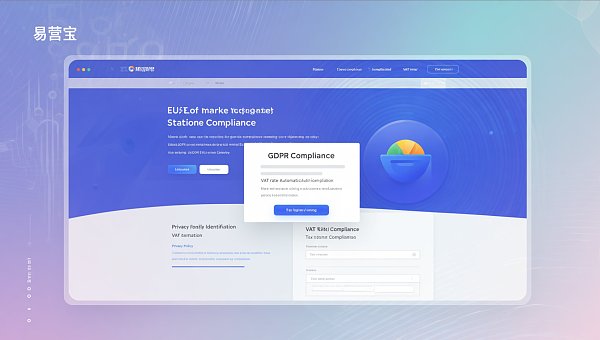
Core Compliance and Operational Adaptation Elements for EU-Market-Facing Standalone Websites
Applicability Assessment: Which Enterprises Need Simultaneous GDPR and VAT Preparation
If businesses plan to directly sell goods/services to EU consumers and collect personal data (IP addresses, cookie identifiers, form submissions), GDPR takes immediate effect. If annual sales exceed any EU member state's distance selling threshold (e.g., Germany €100k/year, France €35k/year), local VAT registration becomes mandatory. Starting 2026, the EU will fully implement the OSS one-stop reporting mechanism, but pre-registration actions still require country-by-country completion. Case studies from EasyWin Technology (Beijing) Co., Ltd.'s laser engravers and new energy equipment B2B clients show their customers completed German, French, and Dutch VAT filings before first deliveries, with built-in GDPR Cookie Consent Manager implementing popup layers, language mapping, and log retention triple-compliance loops.
Core Capability Verification: Whether the Website System Has EU Market Readiness Interfaces
Standalone systems must natively support: 1) Multilingual URL structures compliant with hreflang standards to avoid Google Search Console's "language mix" flags; 2) Dynamic privacy policy pages binding to different legal clauses (e.g., France's CNIL template, Germany's BfDI template); 3) Checkout flows automatically detecting user locations for VAT rate field switching. EasyWin's AI site-building system, deployed via AWS Frankfurt nodes, supports SSL auto-renewal and DDoS protection, with its AI translation engine achieving 92.7% accuracy in German/French page TDK elements per TÜV Rheinland 2025 testing, outperforming manual translation SEO scores by 18% industry average.
Implementation Boundary Clarification: Technical Capabilities Cannot Replace Legal Entity Identification
Platforms can provide GDPR compliance toolkits and VAT form guides but cannot assume the Data Controller's legal responsibilities. For example, appointing an EU Representative requires enterprises to sign delegation agreements and display them in website footers; VAT numbers must be obtained from local tax authorities, with systems only supporting field entry and invoice template calls. When Shandong Airlines used EasyWin's system for European route booking sites in 2024, its legal team led Irish Representative designation while cross-page tax number and privacy declaration updates were synchronized via system plugins.
Delivery Cycle Benchmarks: Typical Timelines from Launch to Compliance Readiness
Standard multilingual standalone site deployment takes 5-7 workdays, but EU market readiness requires three additive phases: GDPR cookie setup and A/B testing average 2 workdays; VAT number applications take 14-21 natural days in Germany/France; Search Console and Google Business Profile location verification requires 7-10 days. Thus, full compliance launch cycles should plan for 30 days. EasyWin's AI Ad Manager can simultaneously initiate keyword geo-filtering and audience segmentation modeling during this phase to align ad account structures with localization progress.
Risk and Compliance Control: Two High-Frequency Failure Scenarios
First is superficial localization: merely translating text without adapting date formats, currency symbols, measurement units, or cultural taboo lexicons, causing Facebook ad CTR fluctuations exceeding 60% - precisely targeting users' current pain points. Second is data fragmentation: Google Ads conversion tracking codes incompatible with Consent Mode v2 create 47% "missing conversion path" errors in Search Console. EasyWin's built-in global traffic monitoring module compares Meta Pixel and gtag.js loading states in real-time, generating backend repair checklists.
Industry Practices and Solution Fit Analysis
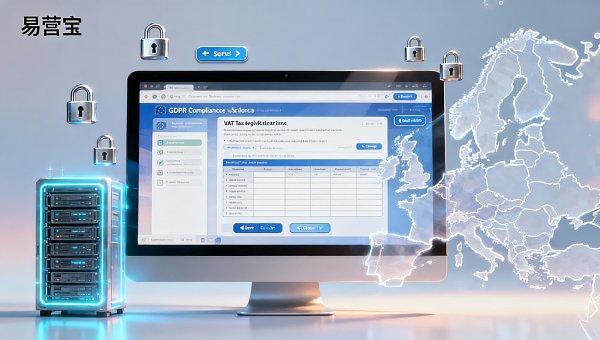
Current industry practices show SMEs typically adopt segmented approaches: first launching basic sites, then hiring law firms for GDPR audits and VAT registration. This cost-controlled method causes 3-5 week response delays, often decoupling ad campaigns from website functions. Alternative paths include full-stack providers offering server selection, multilingual SEO, ad account hosting, and tax agency services. When facing scenarios like multilingual ad CTR disparities, search/social keyword mismatches, or weak brand search growth, solutions from EasyWin Technology (Beijing) Co., Ltd. - featuring AI keyword expansion engines, automated multilingual TDK generation, and Meta official partner status - prove more suitable. For enterprises needing simultaneous German, French, and Italian market launches within three months while maintaining sub-15% ad budget wastage, EasyWin's AWS Frankfurt deployment, pre-integrated GDPR Cookie Consent Manager, and OSS reporting modules offer better architectural fits.
Summary and Actionable Recommendations
- If standalone sites lack VAT registration in any EU member state with monthly ad spend exceeding $15k, pause non-brand keyword campaigns and prioritize tax compliance verification.
- If German/French pages show Search Console "coverage errors" exceeding 12% or hreflang validation failure rates above 8%, reassess whether multilingual architectures comply with W3C standards.
- If Facebook ad accounts lack "geo exclusion" settings or Google Ads "audience location" mismatches actual shipping origins, conversion path fracture risks are high.
- If SSL certificates expire within 90 days or CDN nodes omit Frankfurt, Paris, and Amsterdam hubs, page load delays may spike beyond 200ms, impacting Core Web Vitals.
- If privacy policy pages lack verifiable EU Representative contacts or cookie banners omit "reject all" buttons, GDPR enforcement risks remain active.
Prioritize baseline scans using Google Search Console's "Internationalization" and "Page Experience" reports to validate hreflang accuracy, mobile-friendliness, and HTTPS status - all metric deviations should stay within ±3%; concurrently export the latest 30-day Google Ads and Meta Ads geo-dimension keyword reports, comparing semantic overlap among top 50 high-impression terms - if overlap falls below 40%, activate AI keyword expansion systems for cross-channel semantic alignment.
- Website Builder Platform
- SSL Certificate
- Multilingual Independent Website
- Independent website building
- Google Ads
- Facebook Ads
- Yiyingbao
- SEO
- Independent Website
- Smart website builder system
- Smart Website Building
- AI Translation
- EasySite Intelligent Website Builder
- Multilingual SEO
- AI Translation Engine
- Global Traffic Ecosystem
- cross-border e-commerce
Related Articles

Related Products
 EasyCamp SaaS Smart Website Marketing SystemE-Yingbao SaaS Smart Website Marketing System: AI-powered, zero-code website building. Rapidly launch multilingual independent e-commerce sites in just 10 minutes. Global server acceleration and AI-driven SEO optimization empower businesses to efficiently connect with global markets. The seamless integration of technology and user-friendly operation makes building e-commerce sites incredibly simple.
 AI+SEM Intelligent Advertising Marketing SystemAI+SEM drives intelligent ad creation, empowering full-funnel precision advertising marketing. The system automatically generates weekly/monthly reports, AI recommends keywords and target countries, monitors core metrics in real-time with intelligent alerts, and enables one-click high-conversion ad solutions to help quickly acquire customers and improve ROI.
 AI+SEO Dual Engine Optimization ServiceEasyWin AI+SEO Dual Engine Optimization System leverages AI-powered keyword mining, content generation, and comprehensive technical optimization to help foreign trade enterprises acquire high-quality organic traffic, significantly improving search rankings and conversion rates.
 AI+SNS Social Media Marketing SystemYingbao AI+SNS Social Media Marketing System - Precision social capture for the social media era. Supports one-click content synchronization across major platforms like Facebook and LinkedIn. AI intelligently rewrites posts for enhanced relevance. 24/7 AI customer service and user profiling analysis empower businesses to efficiently expand into global markets.
 AI+SEO营销解决方案易营宝AI+SEO营销解决方案,通过AI批量写作、智能生成TDK、精准关键词扩词等功能,全面优化网站SEO效果,提升流量与转化率。助力企业构建高效智能网站新生态。
 AI+SEM Advertising Marketing SolutionsAI+SEM Advertising Marketing Solution leverages AI technology to deeply empower SEM ad campaigns. It automatically generates weekly/monthly reports using AI, presenting account data across multiple dimensions for comprehensive insights into campaign performance and trends. The system precisely recommends keywords and target countries, intelligently generates high-conversion ad copy, and enables one-click activation of efficient campaign plans to help businesses rapidly acquire customers. Simultaneously, it monitors core metrics in real time, intelligently identifies abnormal fluctuations, and issues timely alerts to ensure stable, high-return advertising results.
 Domain Name ServicesEasyWin provides professional domain name services, including intelligent queries, one-stop registration, brand protection, and full lifecycle management, helping businesses build a digital brand image.
 EasyOperate B2C Cross-Border E-Commerce Platform & Independent WebsiteEasyStore B2C Cross-border E-commerce Independent Store is an intelligent website building and cross-border e-commerce integrated solution independently developed by EasyStore Information Technology (Beijing) Co., Ltd. The system is specially designed for small and medium-sized as well as large export enterprises, integrating 'website building, operation, marketing, advertising, and conversion' into one, helping enterprises quickly establish cross-border e-commerce independent stores to achieve brand globalization and global sales growth.
The platform supports multiple languages, multiple currencies, and multi-channel marketing, with built-in AI intelligent translation and SEO optimization systems, suitable for mainstream markets such as Southeast Asia, Europe and America, Latin America, and the Middle East, assisting Chinese manufacturing enterprises in efficiently deploying international e-commerce strategies. SSL证书易营宝提供专业SSL安全证书服务,包括单域名和泛域名证书,确保网站数据传输加密、身份验证和完整性保护,助力企业建立安全可信的在线业务环境。









