









- Which channel has the highest ROI in the global traffic ecosystem? Comparative analysis of search, social media, and advertisingJul 10, 2026View details
- What multilingual website services are available in Sanya? Which model is more suitable for local businesses going global?Jul 08, 2026View details
- How to view the complete list of China SaaS companies in the top 100? Practical methods for screening website-building and marketing service providersJul 08, 2026View details
- How to view pricing in the global traffic ecosystem? Cost comparison of search, social media, and content channel advertisingJul 06, 2026View details
- How to assess foreign trade website development trends?Looking at 2026 changes from multilingual,AI content to conversion pathsJul 04, 2026View details
- What are the new trends in multilingual marketing data analytics tools in 2026? Focus on attribution、automation and complianceJul 04, 2026View details
AI Website vs Traditional Website Cost Comparison: First-Year Cost Difference Exceeds ¥23,800? Detailed Breakdown of 6 Items Including Domain, SSL, Hosting, and Maintenance
How much does AI website building really cost compared to traditional methods? First-year investment gap exceeds ¥23,800! This article deeply analyzes 6 core cost items including domain, SSL, hosting, and maintenance, combined with real-world cases like Yiyunbao's foreign trade website services, responsive B2B website development (Shenzhen/Hangzhou suppliers), Portuguese standalone site construction, and LinkedIn marketing automation, revealing how AI website building reduces costs, boosts efficiency, accelerates SEO optimization, and enables global delivery.
1. Detailed Cost Comparison of 6 Website Construction Items: Full Lifecycle Accounting from Procurement to Operation
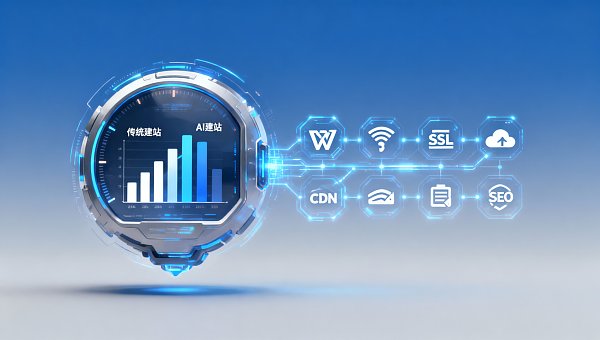
Traditional website building is often mistakenly considered a "one-time investment," but in reality, hidden first-year costs are extremely high. Using a mid-sized foreign trade enterprise's multilingual standalone site as a benchmark, we compare six major expenses: domain registration, SSL certificates, cloud server hosting, CDN acceleration, manual maintenance, and basic SEO optimization—contrasting traditional outsourced development (including custom development + annual maintenance contracts) with Yiyunbao's AI website building system (SaaS subscription model):
Total cost difference reaches ¥23,860. Notably, this comparison excludes common secondary development fees for traditional websites (e.g., €5,200 localization adaptation fees for Portuguese standalone sites by Hangzhou vendors) and mobile-end dynamic effect surcharges (¥3,500) for responsive B2B websites from Shenzhen suppliers, as well as SEO ranking losses due to loading delays—Ahrefs' 2024 industry report shows pages taking >3 seconds to load suffer 47% lower conversion rates. Yiyunbao's global edge node deployment makes website speed optimization an inherent capability, with average first-screen load times of just 1.2 seconds.
2. Beyond Cost Savings: How AI Website Building Redefines Marketing Performance Boundaries
Cost differences are merely superficial—the essence lies in technological paradigm shifts. Yiyunbao's AI system doesn't simply replace website workflows but reconstructs enterprise digital asset operations as an "AI-driven all-in-one intelligent marketing platform." For example, in LinkedIn automation scenarios, traditional solutions require manual creation of role-specific outreach copy, scheduling, and comment responses, while Yiyunbao automatically extracts industry keywords (e.g., manufacturing/e-commerce/education) from public job postings to generate B2B decision-maker-appropriate long-form content, coupled with AI writing judgment models—proven effective for standardized content (product pages, FAQs, multilingual descriptions) while reserving human review for high-emotion scenarios like brand storytelling and crisis PR.
More crucially, AI website SEO has evolved from "post-facto fixes" to "real-time evolution." The system daily captures Google Search Console data, combines NLP models trained on billions of search terms to dynamically identify long-tail opportunities, and auto-updates page titles, H2 tags, and semantic paragraphs. One Hangzhou cross-border e-commerce client achieved 210% organic traffic growth for Portuguese standalone site pages within 30 days, with core keyword "portuguese ecommerce website" ranking jumping from #47 to #3—powered by Yiyunbao's proprietary AI algorithm platform with 12 annual iterations, not reactive dependence on external SEO tools.
3. Real-World Validation: From Responsive B2B Websites to Global Delivery Closed Loops
A Shenzhen industrial filter exporter previously worked with three vendors: a Shenzhen supplier for PC-end responsive B2B website development, a Hangzhou team for Portuguese standalone sites, and a third-party for LinkedIn automation—resulting in version inconsistencies, data silos, and response delays. After adopting Yiyunbao, all Chinese/English/Portuguese/Spanish sites deployed via one backend, with AI translation engine enforcing industry glossary accuracy (e.g., "oil filter" must be "filtro de óleo" in Brazil, not literal translation), while sharing user behavior data pools. Crucially, during peak traffic surges, the system automatically deducts website traffic packages, saving 37.2% versus pay-as-you-go ECS and CLB fees, with 24/7 anomaly detection intercepting malicious crawler attacks during major promotions.
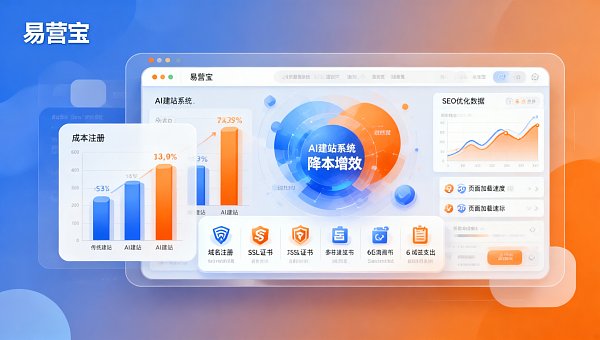
This integrated capability underpins Yiyunbao's recognition as a "China SaaS Top 100" enterprise, with 15 core AI patents covering multimodal generation, cross-language semantic alignment, and ad CTR prediction. When clients ask "How good is Yiyunbao's foreign trade website service?", the answer isn't feature lists but quantifiable growth: among 100,000 enterprise clients, AI website users achieve 52% lower first-year customer acquisition costs and 68% compound organic traffic growth rates.
4. Future-Oriented Decision Advice: Choosing Tools Means Choosing Growth Paradigms
The AI vs. traditional website cost comparison fundamentally represents linear versus exponential thinking. Procurement staff focusing solely on quote numbers may overlook traditional websites' annual maintenance inflation (industry average +12.3%); executives underestimating LinkedIn automation's sales lead quality improvements risk losing high-value B2B clients; distributors should note Yiyunbao's "HQ+regional partners" model now covers 30+ provinces, providing localized responsive B2B website development solutions without needing in-house tech teams.
Emphatically, AI doesn't replace humans but amplifies their value. When AI handles standardized content production, marketers focus on strategy and customer relationships; when system-automated website speed optimization frees IT teams for data governance and model tuning—this embodies Yiyunbao's "customer success above all" philosophy.
Contact us now for exclusive "AI Website Cost-Benefit Analysis Reports" and industry-customized solutions, helping your brand truly realize "making the world choose Chinese brands."
- Website Development
- Foreign Trade Website Development
- Foreign Trade Website Development
- SSL Certificate
- SEO Ranking
- Multilingual Independent Website
- Website traffic
- AI Writing
- AI Smart Website Building
- AI Batch Article Generation
- LinkedIn Marketing
- Domain Registration
- Standalone website development
- Yiyingbao
- SEO
- Independent Website
- Smart website builder system
- SEO Optimization
- Smart Website Building
- AI Translation
- AI Translation Engine
- EasyStore AI Intelligent Website System
- AI Website Building
- cross-border e-commerce
- Marketing Automation
- Portuguese Standalone Website Development
- Responsive B2B Export Website Development
Related Articles
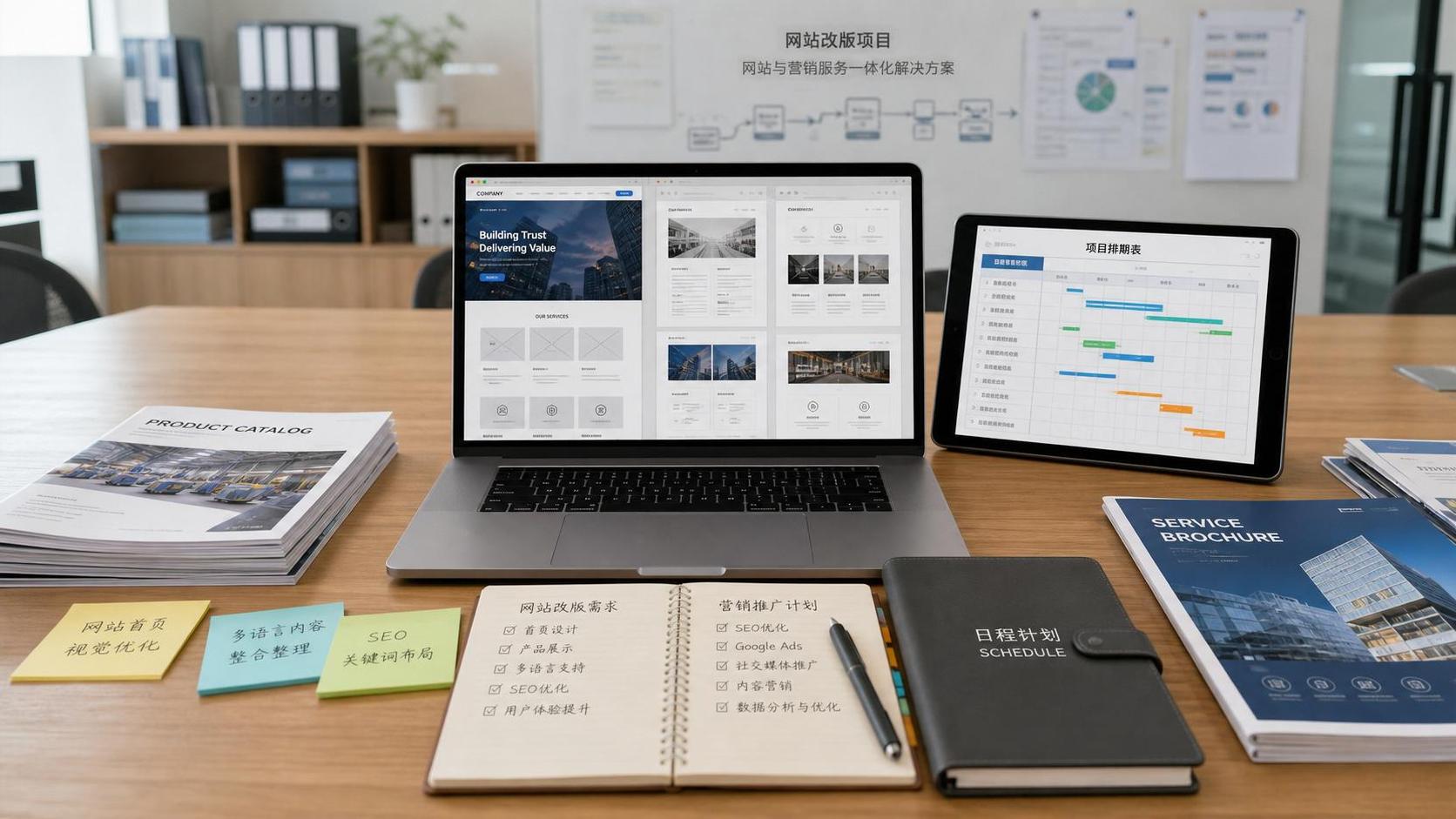
 How long does a foreign trade independent website redesign cycle generally take? Learn more about the scheduling details
 What do I need to prepare to configure payment in a WeChat Mini Program? Merchant ID, certificate, and review process explained.
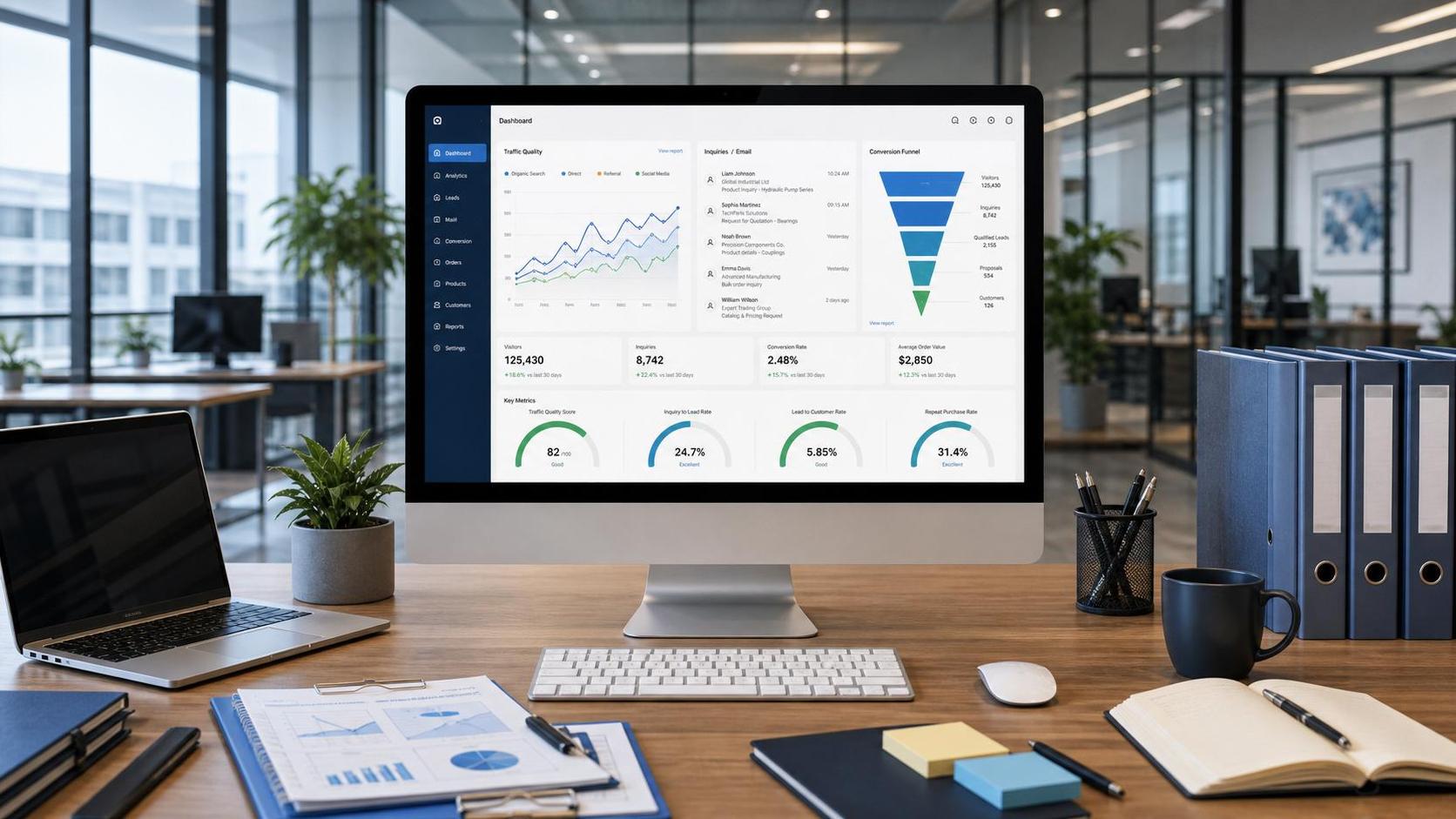
 Is 20 inquiries per month for a foreign trade website considered low? First look at traffic quality、average order value and conversion rate

Related Products
 EasyCamp SaaS Smart Website Marketing SystemE-Yingbao SaaS Smart Website Marketing System: AI-powered, zero-code website building. Rapidly launch multilingual independent e-commerce sites in just 10 minutes. Global server acceleration and AI-driven SEO optimization empower businesses to efficiently connect with global markets. The seamless integration of technology and user-friendly operation makes building e-commerce sites incredibly simple.
 AI+SEM Intelligent Advertising Marketing SystemAI+SEM drives intelligent ad creation, empowering full-funnel precision advertising marketing. The system automatically generates weekly/monthly reports, AI recommends keywords and target countries, monitors core metrics in real-time with intelligent alerts, and enables one-click high-conversion ad solutions to help quickly acquire customers and improve ROI.
 AI+SEO Dual Engine Optimization ServiceEasyWin AI+SEO Dual Engine Optimization System leverages AI-powered keyword mining, content generation, and comprehensive technical optimization to help foreign trade enterprises acquire high-quality organic traffic, significantly improving search rankings and conversion rates.
 AI+SNS Social Media Marketing SystemYingbao AI+SNS Social Media Marketing System - Precision social capture for the social media era. Supports one-click content synchronization across major platforms like Facebook and LinkedIn. AI intelligently rewrites posts for enhanced relevance. 24/7 AI customer service and user profiling analysis empower businesses to efficiently expand into global markets.
 AI+SEO营销解决方案易营宝AI+SEO营销解决方案,通过AI批量写作、智能生成TDK、精准关键词扩词等功能,全面优化网站SEO效果,提升流量与转化率。助力企业构建高效智能网站新生态。
 AI+SEM Advertising Marketing SolutionsAI+SEM Advertising Marketing Solution leverages AI technology to deeply empower SEM ad campaigns. It automatically generates weekly/monthly reports using AI, presenting account data across multiple dimensions for comprehensive insights into campaign performance and trends. The system precisely recommends keywords and target countries, intelligently generates high-conversion ad copy, and enables one-click activation of efficient campaign plans to help businesses rapidly acquire customers. Simultaneously, it monitors core metrics in real time, intelligently identifies abnormal fluctuations, and issues timely alerts to ensure stable, high-return advertising results.
 Domain Name ServicesEasyWin provides professional domain name services, including intelligent queries, one-stop registration, brand protection, and full lifecycle management, helping businesses build a digital brand image.
 EasyOperate B2C Cross-Border E-Commerce Platform & Independent WebsiteEasyStore B2C Cross-border E-commerce Independent Store is an intelligent website building and cross-border e-commerce integrated solution independently developed by EasyStore Information Technology (Beijing) Co., Ltd. The system is specially designed for small and medium-sized as well as large export enterprises, integrating 'website building, operation, marketing, advertising, and conversion' into one, helping enterprises quickly establish cross-border e-commerce independent stores to achieve brand globalization and global sales growth.
The platform supports multiple languages, multiple currencies, and multi-channel marketing, with built-in AI intelligent translation and SEO optimization systems, suitable for mainstream markets such as Southeast Asia, Europe and America, Latin America, and the Middle East, assisting Chinese manufacturing enterprises in efficiently deploying international e-commerce strategies. SSL证书易营宝提供专业SSL安全证书服务,包括单域名和泛域名证书,确保网站数据传输加密、身份验证和完整性保护,助力企业建立安全可信的在线业务环境。









