









- Can Zhejiang foreign trade independent websites still be developed today? Look at changes in traffic and lead generationJul 28, 2026View details
- What New Signals Are Emerging in Enterprise Services SaaS Marketing ReportsJul 27, 2026View details
- What Does a Global Traffic Ecosystem Service Provider Do? What Are the Differences from a Single Advertising AgencyJul 16, 2026View details
- What should you focus on in the latest enterprise SaaS report? From renewal rates and delivery costs to overseas growth opportunitiesJul 12, 2026View details
- What signals are worth paying attention to in a cross-border marketing trend report? B2B companies should look at these 6 signalsJul 11, 2026View details
- How to Read a Cross-Border Marketing Trends Report? Five Key Dimensions for Evaluating Channel OpportunitiesJul 11, 2026View details
Inquiry Conversion Optimization: Which Step Should Be Improved? Landing Page, Form, and Follow-up Cadence Action Checklist
Don't rush to change the form yet; first, see which layer the inquiry conversion optimization is at
Inquiry conversion optimization is not about a single button.
On many pages, traffic looks normal, and the form is also online.
But the real problem often lies in the handoff being disconnected.
After users click in, if they do not understand, do not trust, and have no motivation, they naturally will not leave a lead.
So when doing inquiry conversion optimization, the first step is not to blindly focus on the submission rate.
Instead, break it down into the landing page, form, and follow-up rhythm, three parts.
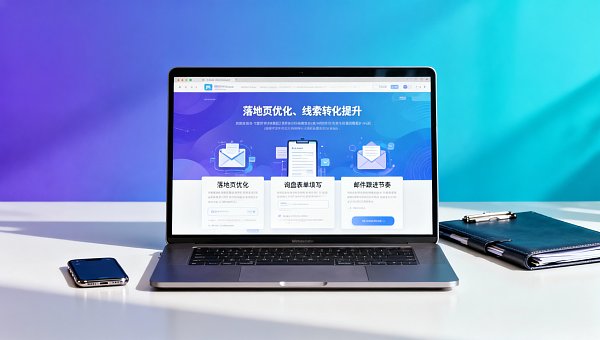
If the landing page handoff is weak, a shorter form is useless.
If the form is too heavy, even strong intent will still be lost.
If the follow-up rhythm is slow, the inquiry you get may also be wasted.
This is also why many companies clearly run ads, yet always feel the conversion is relatively low.
From recent business changes, inquiry conversion optimization places greater emphasis on the coordination of the entire process.
Especially in the integrated website and marketing service scenario, the page, content, data, and sales actions must be connected.
Step 1: First check the landing page's handoff capability, not just the traffic volume
A common misconception in inquiry conversion optimization is to treat a high bounce rate as inaccurate traffic.
In reality, many losses happen within the first ten seconds after a user enters.
Whether the page can quickly answer three questions determines whether the user will continue reading.
- What do you do.
- What problems can you solve.
- Why should I contact you now.
If the first-screen information is too scattered, inquiry conversion optimization will be hard to scale.
It is recommended to first review this landing page execution checklist.
- Does the first-screen headline directly address customer needs, rather than using an empty brand slogan.
- Does the subheadline clearly state the scope of delivery, target service audience, and core outcomes.
- Is there a clear primary CTA, and is the copy specific.
- Are there case studies, certifications, delivery process details, and other trust-building information.
- Can the first screen on mobile still make the key points clear.
In real business, one of the product display logics that industrial products and foreign trade sites most easily overlook is product display logic.
For example, laser equipment pages have many parameters, but purchasing decision-makers do not only look at parameters.
Customers care more about suitable materials, sample results, delivery cycle, and after-sales capabilities.
In this kind of scenario, you can refer to the website building approach of the laser engraving machine industry solution.
Through professional website building, intelligent category navigation, and optimized product presentation, first improve browsing efficiency.
Only when the page handoff is stable can the subsequent inquiry conversion optimization have a foundation.
Step 2: The form should collect valid information, not block people at the door
When it comes to inquiry conversion optimization, many people first think of shortening the form.
That direction is not wrong, but it cannot be simply understood as the fewer fields, the better.
The key is to make users feel it is easy to fill out, while also enabling sales to judge lead value.
An efficient form usually follows three principles.
- Only collect the information currently necessary for follow-up.
- Start with the easy ones and then move to the harder ones, reducing psychological burden.
- Make the field copy direct and do not make users guess.
For example, name, email, and needs description can usually be kept.
But company name, detailed address, and budget range do not necessarily need to be asked in the first step.
A more obvious signal is that many form issues are not about service conversion; they are just causing internal inefficiency.
This kind of design often directly lowers the effectiveness of inquiry conversion optimization.
Form execution checklist
- Keep the field count around 5, with priority on contact method and core needs.
- Do not use "Submit" for the button; change it to "Get a Solution" or "Request a Quote".
- Add reassurance information, such as "Reply within 24 hours".
- Write error messages clearly and avoid making users try repeatedly.
- The mobile input boxes should be large enough to avoid accidental taps.
If it is a multilingual website, also pay attention to whether the semantics of the form and the field order match local habits.
This also means that inquiry conversion optimization cannot rely only on Chinese website experience.
For overseas lead generation, the form experience itself is part of trust.
Step 3: Follow-up rhythm determines whether an inquiry has a chance to become a deal
Many teams stop inquiry conversion optimization at the submission success page.
In fact, what really affects deal closure is the 48 hours after submission.
Slow response, empty wording, and chaotic rhythm are the most common reasons for losing orders.
It is recommended to break follow-up into three time points.
- Confirm receipt within 5 minutes and build initial trust.
- Provide a targeted response within 24 hours rather than a standard template.
- Complete a second touch within 48 hours to drive the next action.
The key here is not just speed, but relevance.
Prioritize the issues users care about when leaving their information, and the follow-up should first respond to those.
For example, for price quote leads, first respond with delivery time, price range, and sample policy.
For data request leads, first provide case studies, parameter sheets, and compatibility solutions.
Only when inquiry conversion optimization reaches this step does it truly begin to approach deal optimization.
Follow-up rhythm checklist
- Is there an automated reminder to avoid lead piling up.
- Are different scripts set for leads from different sources.
- Are reasons for unsuccessful deals recorded to feedback page and form issues.
- Is there a second wake-up mechanism, rather than giving up after one unanswered message.
Step 4: Use data to find problems, do not keep revising based on feeling
The thing inquiry conversion optimization fears most is "making big changes for one round, but the result remains unclear".
If there is no key data, the team can easily fall into repeated arguments.
A more stable method is to keep watching a few metrics.
When the page, form, and follow-up data can be viewed together, inquiry conversion optimization will have more direction.
Platforms like EasyYingbao, which integrate website and marketing services, have the advantage of combining website building, SEO, ads, social media, and lead management into a closed loop.
When revising in this way, it is not just about changing the page style, but also synchronously optimizing the lead generation and conversion path.
If you belong to manufacturing or foreign trade, you can also combine the thinking of such vertical solutions as the laser engraving machine industry solution to improve the consistency of product presentation and lead handoff.
Finally, here is a directly actionable inquiry conversion optimization sequence
If time is limited right now, do not change too many things at once.
Proceed in the order below, and you will usually see results more easily.
- First check the first-screen information and primary CTA to improve handoff clarity.
- Then streamline the form fields to optimize the submission experience.
- After that, standardize the 5-minute, 24-hour, and 48-hour follow-up actions.
- Finally, use data to review and retain effective changes.
The real key to inquiry conversion optimization is not how many tricks there are.
It is that every step loses a little less, and gains a little more certainty.
When the landing page speaks clearly, the form is easy to fill out, and the follow-up is timely, lead conversion efficiency will naturally increase.
If you are preparing to systematically do inquiry conversion optimization, you may as well start by reviewing this checklist item by item, and then decide what to change next.
Related Articles
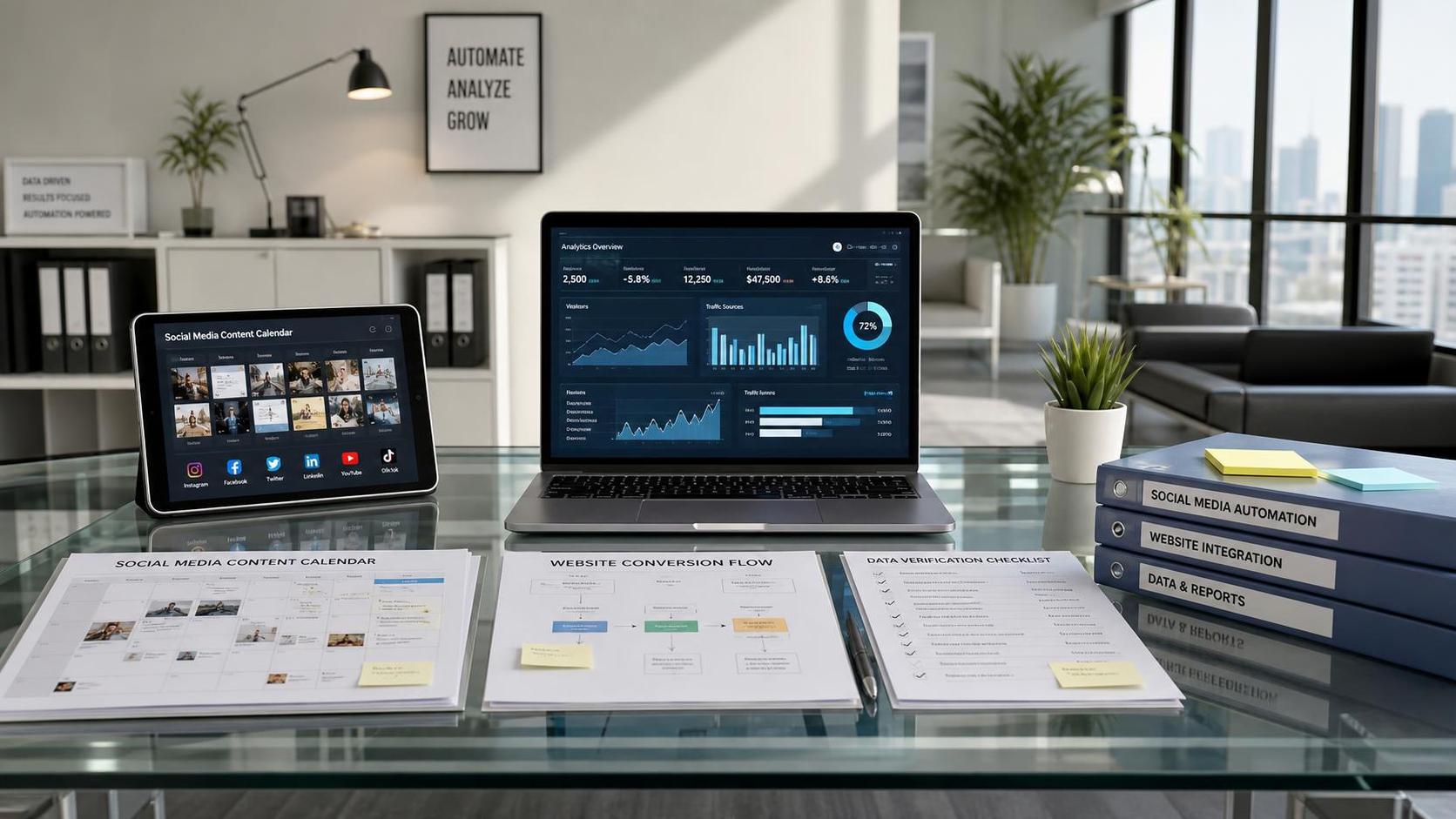
 What are the pitfalls of outsourcing social media automation marketing? Check these 5 areas first
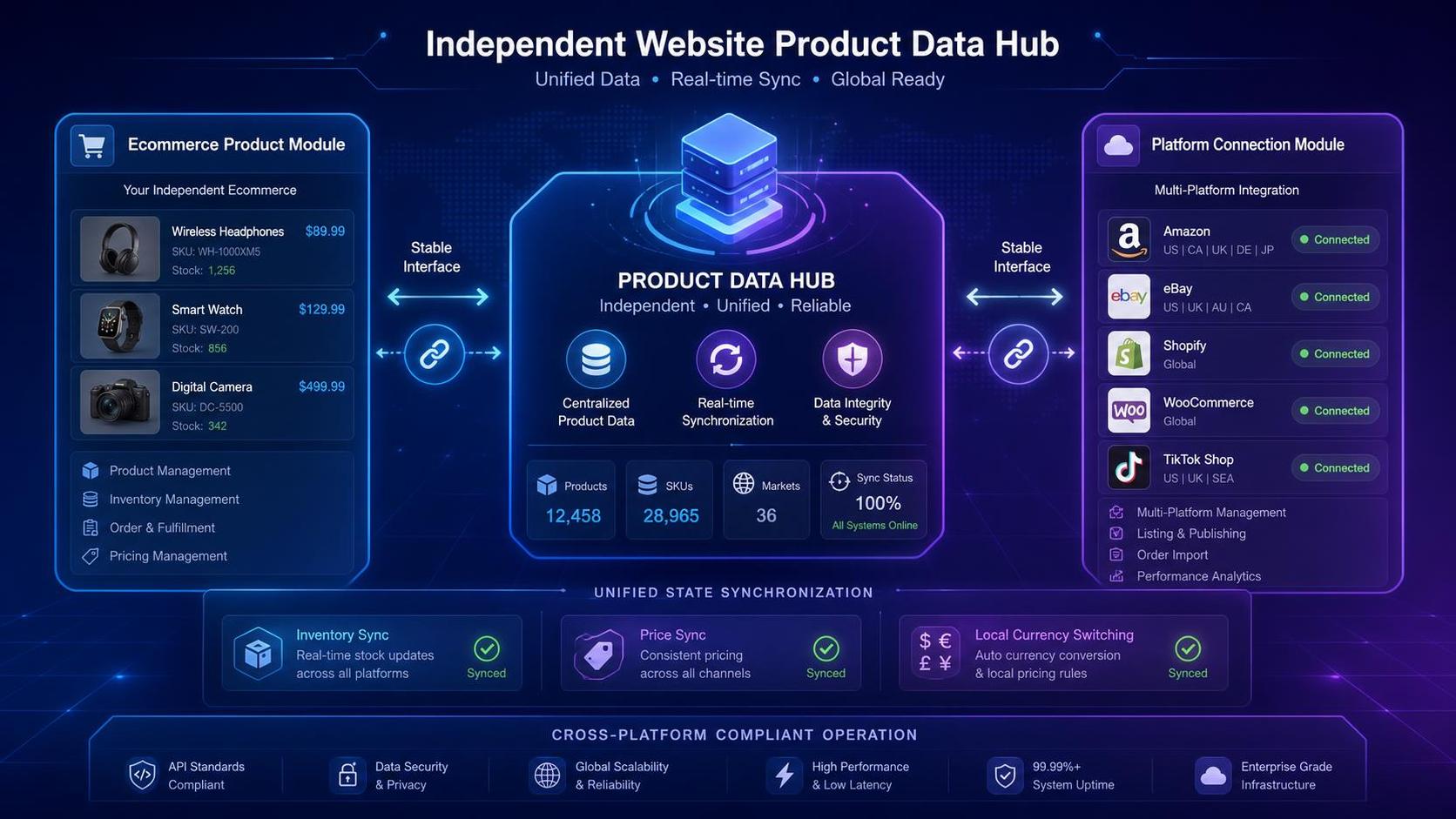
 New E-commerce Regulations Take Effect in Southeast Asia: Independent Site Sellers Must Sync Inventory and Prices via API Within 72 Hours
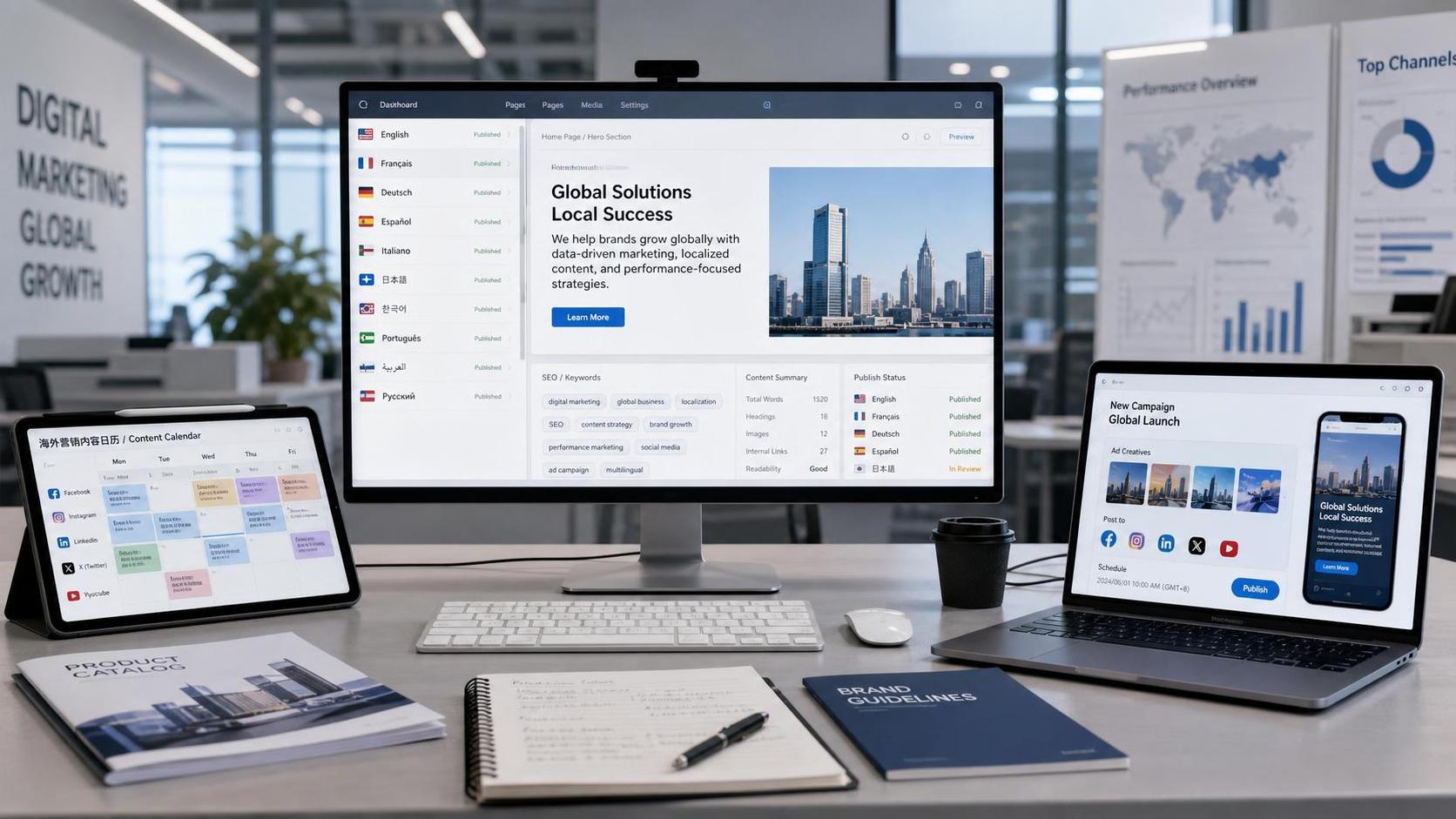
 How Can AI-Powered Multilingual Translation Support Global Marketing
Related Products
 EasyCamp SaaS Smart Website Marketing SystemE-Yingbao SaaS Smart Website Marketing System: AI-powered, zero-code website building. Rapidly launch multilingual independent e-commerce sites in just 10 minutes. Global server acceleration and AI-driven SEO optimization empower businesses to efficiently connect with global markets. The seamless integration of technology and user-friendly operation makes building e-commerce sites incredibly simple.
 AI+SEM Intelligent Advertising Marketing SystemAI+SEM drives intelligent ad creation, empowering full-funnel precision advertising marketing. The system automatically generates weekly/monthly reports, AI recommends keywords and target countries, monitors core metrics in real-time with intelligent alerts, and enables one-click high-conversion ad solutions to help quickly acquire customers and improve ROI.
 AI+SEO Dual Engine Optimization ServiceEasyWin AI+SEO Dual Engine Optimization System leverages AI-powered keyword mining, content generation, and comprehensive technical optimization to help foreign trade enterprises acquire high-quality organic traffic, significantly improving search rankings and conversion rates.
 AI+SNS Social Media Marketing SystemYingbao AI+SNS Social Media Marketing System - Precision social capture for the social media era. Supports one-click content synchronization across major platforms like Facebook and LinkedIn. AI intelligently rewrites posts for enhanced relevance. 24/7 AI customer service and user profiling analysis empower businesses to efficiently expand into global markets.
 AI+SEO营销解决方案易营宝AI+SEO营销解决方案,通过AI批量写作、智能生成TDK、精准关键词扩词等功能,全面优化网站SEO效果,提升流量与转化率。助力企业构建高效智能网站新生态。
 AI+SEM Advertising Marketing SolutionsAI+SEM Advertising Marketing Solution leverages AI technology to deeply empower SEM ad campaigns. It automatically generates weekly/monthly reports using AI, presenting account data across multiple dimensions for comprehensive insights into campaign performance and trends. The system precisely recommends keywords and target countries, intelligently generates high-conversion ad copy, and enables one-click activation of efficient campaign plans to help businesses rapidly acquire customers. Simultaneously, it monitors core metrics in real time, intelligently identifies abnormal fluctuations, and issues timely alerts to ensure stable, high-return advertising results.
 Domain Name ServicesEasyWin provides professional domain name services, including intelligent queries, one-stop registration, brand protection, and full lifecycle management, helping businesses build a digital brand image.
 EasyOperate B2C Cross-Border E-Commerce Platform & Independent WebsiteEasyStore B2C Cross-border E-commerce Independent Store is an intelligent website building and cross-border e-commerce integrated solution independently developed by EasyStore Information Technology (Beijing) Co., Ltd. The system is specially designed for small and medium-sized as well as large export enterprises, integrating 'website building, operation, marketing, advertising, and conversion' into one, helping enterprises quickly establish cross-border e-commerce independent stores to achieve brand globalization and global sales growth.
The platform supports multiple languages, multiple currencies, and multi-channel marketing, with built-in AI intelligent translation and SEO optimization systems, suitable for mainstream markets such as Southeast Asia, Europe and America, Latin America, and the Middle East, assisting Chinese manufacturing enterprises in efficiently deploying international e-commerce strategies. SSL证书易营宝提供专业SSL安全证书服务,包括单域名和泛域名证书,确保网站数据传输加密、身份验证和完整性保护,助力企业建立安全可信的在线业务环境。









