









- Can Zhejiang foreign trade independent websites still be developed today? Look at changes in traffic and lead generationJul 28, 2026View details
- What New Signals Are Emerging in Enterprise Services SaaS Marketing ReportsJul 27, 2026View details
- What Does a Global Traffic Ecosystem Service Provider Do? What Are the Differences from a Single Advertising AgencyJul 16, 2026View details
- What should you focus on in the latest enterprise SaaS report? From renewal rates and delivery costs to overseas growth opportunitiesJul 12, 2026View details
- What signals are worth paying attention to in a cross-border marketing trend report? B2B companies should look at these 6 signalsJul 11, 2026View details
- How to Read a Cross-Border Marketing Trends Report? Five Key Dimensions for Evaluating Channel OpportunitiesJul 11, 2026View details
What are the pitfalls of outsourcing social media automation marketing? Check these 5 areas first
What Pitfalls Should You Watch Out for When Outsourcing Social Media Automation Marketing? Check These 5 Items First
Outsourcing social media automation marketing may seem time-saving and efficient, but it can actually hide risks such as loss of process control, inaccurate data, and poor conversion results. Before evaluating a service provider, be sure to check these five key issues first to avoid turning your budget into ineffective spending.
In the past two years, more and more companies have sought service providers for outsourced social media automation marketing. The reasons are straightforward: limited staffing, fast-paced content requirements, multiple platforms, and dispersed overseas markets make it difficult for in-house teams to manage account operations, content production, lead follow-up, and data analysis at the same time. This is also where the problems arise. Many projects are not short of investment; rather, after outsourcing, they may appear busy and generate substantial backend data, yet produce very little in terms of inquiries, deals, or repeat purchases.
If you are evaluating providers from a business perspective, do not focus only on whether the proposal is comprehensive. The key question is whether the company can truly connect “automation” to business results. The following five areas are among the most common pitfalls in actual selection processes and the issues most worth clarifying first.
1. First Determine Whether It Delivers “Bulk Content Publishing” or “Manageable Automated Operations”
Many suppliers claim to provide automation, but their actual deliverables are limited to scheduled posts, timed publishing, and simple direct-message replies. This does not constitute complete outsourced social media automation marketing. What is truly worth paying for is a basic closed loop that connects content planning, audience segmentation, form handling, lead tagging, follow-up reminders, and data attribution.
During the evaluation, you can ask three direct questions: First, which stages are covered by automation? Second, which actions are triggered by the system and which still require manual execution? Third, who is responsible for handling exceptions? For example, negative feedback in the comments, declining advertising lead quality, or a lack of follow-up after a form submission cannot be resolved simply because “the system is running.”
Experienced teams generally do not present automation as fully automatic. They will clearly explain that social media platform rules may change, audience engagement may fluctuate, and differences in time zones and languages across countries can also affect processes. Therefore, automation is more like a “systematic mechanism for improving execution efficiency,” rather than something that can consistently deliver results without supervision.
- If the provider emphasizes only “publishing frequency” and “number of platforms covered” but cannot explain the conversion path, it is likely focused on execution outsourcing rather than results-oriented operations.
- If the flow of leads, data definitions, and points of manual intervention are not clearly explained, it can easily lead to mutual blame later.
- For B2B inquiry-driven companies, content exposure does not equal lead generation. You must determine whether the process can connect with your website, forms, customer service, or sales system.

2. Attractive Data Does Not Mean You Have Purchased Qualified Leads
This is the most common misconception. Outsourcing providers may report strong engagement, view counts, and follower growth, and business teams can easily be influenced by these figures. However, during the selection stage, you should focus more closely on two questions: Can the data be verified, and are the results aligned with your business objectives?
If your goal is to generate overseas inquiries, you should examine form submissions, qualified conversations, email inquiries, landing page dwell time, and the proportion of leads by source, rather than simply looking at likes and views. If the goal is to drive traffic to a cross-border e-commerce store, you should examine post-click on-site behavior, add-to-cart actions, checkout initiation, and other downstream data. One of the biggest problems with outsourced social media automation marketing is that the on-platform data looks good, while off-platform conversions cannot be effectively captured.
Go one step further and clarify who owns the reporting permissions. If backend data can only be exported by the service provider, and you do not have access to the original platform permissions, advertising account views, or website analytics interfaces, it will be difficult to independently assess advertising and operational performance later. This risk becomes particularly obvious when changing providers. Many companies do not discover until the handover stage that their historical data is incomplete or that there is no consistent naming convention, making the data of little value for analysis.
3. Without Understanding Your Market and Products, Automation Will Only Amplify Low-Quality Content
When selecting an outsourced social media automation marketing provider, many companies ask only, “Can you work in multiple languages?” or “Can you cover Facebook, LinkedIn, Instagram, and TikTok?” These questions are certainly important, but the more critical issue is whether the provider understands how your customers make decisions.
The content logic for export manufacturing, B2B equipment, cross-border retail, and brands expanding overseas is completely different. The former place greater emphasis on professional credibility, application scenarios, delivery capabilities, certification documents, and inquiry handling. The latter may rely more on visual content, promotional schedules, influencer collaboration, or short-video conversion. If a supplier uses the same content factory for mass production without considering product complexity or target-market differences, automation will only produce unsuitable content faster.
Here, do not look only at the covers of case studies. Examine how the provider breaks down requirements. For example, does it distinguish between communication styles in the North American and Middle Eastern markets? Does it unify website landing pages, advertising materials, and social media content into a consistent information framework? Does it understand that B2B customers care more about specifications, delivery times, certifications, and cooperation procedures? If this preliminary understanding is inadequate, subsequent automated replies, content distribution, and remarketing processes will be difficult to make truly effective.
One point deserves special attention: when content involves industry certifications, performance parameters, regulatory compliance, or cross-border commitments, it must not be generated directly by AI and published in bulk. Any details that may affect purchasing decisions require accurate information from your side and manual verification. If the information is uncertain, it is better to mark it as 【To be Verified】 than to force an unclear statement into the content.
4. Unclear Ownership of Accounts, Content Assets, and Leads Will Inevitably Cause Problems Later
This issue is often overlooked, but it is a fundamental matter that must be clearly specified in the contract. Outsourced social media automation marketing involves more than simply purchasing services. It also involves a complete set of digital assets, including account permissions, content assets, tracking pixels, advertising accounts, customer information, form leads, and automation workflow configurations. Once ownership is unclear, risks have already been embedded even if the project appears to be progressing.
The safest approach is for the company to retain control of core accounts and administrative permissions, while the supplier collaborates according to assigned roles. This includes, but is not limited to: administrator permissions for social media pages, advertising account access, website analytics tool permissions, form data download permissions, and integration permissions for the customer relationship management system. In this way, even if the team is changed later, historical data and operational assets will not be lost.
Another detail often causes problems: content copyright and secondary-use rights. In some outsourced services, video editing, image design, copywriting scripts, and automation workflow templates are not automatically granted to the client for long-term use. Before signing, it is best to include the deliverables list, ownership of source files, and handover procedures in the contract. Do not wait until six months into the project to discover that many assets cannot be taken with you after the service ends.
5. A Lower Quote Does Not Necessarily Mean Greater Savings; What Matters Is Whether Website and Backend Handling Are Included
If outsourced social media automation marketing covers only front-end operations, a common situation can easily arise: the content is published and traffic arrives, but the website loads slowly, the landing page fails to convert, the form design is confusing, and no one handles inquiry allocation. You may eventually find that the problem is not with social media itself, but with a break in the middle of the entire marketing chain.
Therefore, when evaluating a provider, do not compare only “how many pieces of content are published per month,” “how many platforms are covered,” or “customer service response time.” A more practical question is whether the provider can connect social media activities with an independent website, SEO, advertising, remarketing, and lead follow-up. If you are generating leads from overseas markets, website development, conversion components, multilingual pages, SEO foundations, advertising landing pages, and data tracking should not be treated as isolated components.
This is also why many companies eventually prefer teams that integrate website development and marketing services, rather than assigning website development, content, advertising, social media, and data analysis to different suppliers. A service model like Yiyingbao’s, which covers AI-powered website development, multilingual websites, Google SEO, advertising, overseas social media operations, and AI search optimization, creates value not merely through the number of services offered, but because it makes it easier to unify the upstream and downstream processes. It also makes it easier to verify responsibility boundaries and result metrics during business evaluation. Of course, whether it is suitable still depends on whether your current objective is brand exposure, B2B inquiries, or cross-border transactions.
A Simplified Checklist for Business Evaluators
- Ask the provider to map out the complete process, from content publishing to sales lead entry, rather than discussing concepts alone.
- Request verifiable data definitions and an explanation of backend permissions.
- Verify whether the provider understands your industry, regional markets, and customer decision-making process.
- Specify ownership of accounts, content assets, data, and workflow configurations in the contract.
- When evaluating the quote, include website handling, data tracking, conversion optimization, and handover costs in the calculation.
In one sentence: the real challenge of outsourced social media automation marketing is not “whether content can be published automatically,” but “whether the business becomes clearer and conversions more controllable after automation.” Clarifying these five issues first can help you avoid most subsequent rework, disputes, and budget waste in advance.
Related Articles
 What are the pitfalls of outsourcing social media automation marketing? Check these 5 areas first
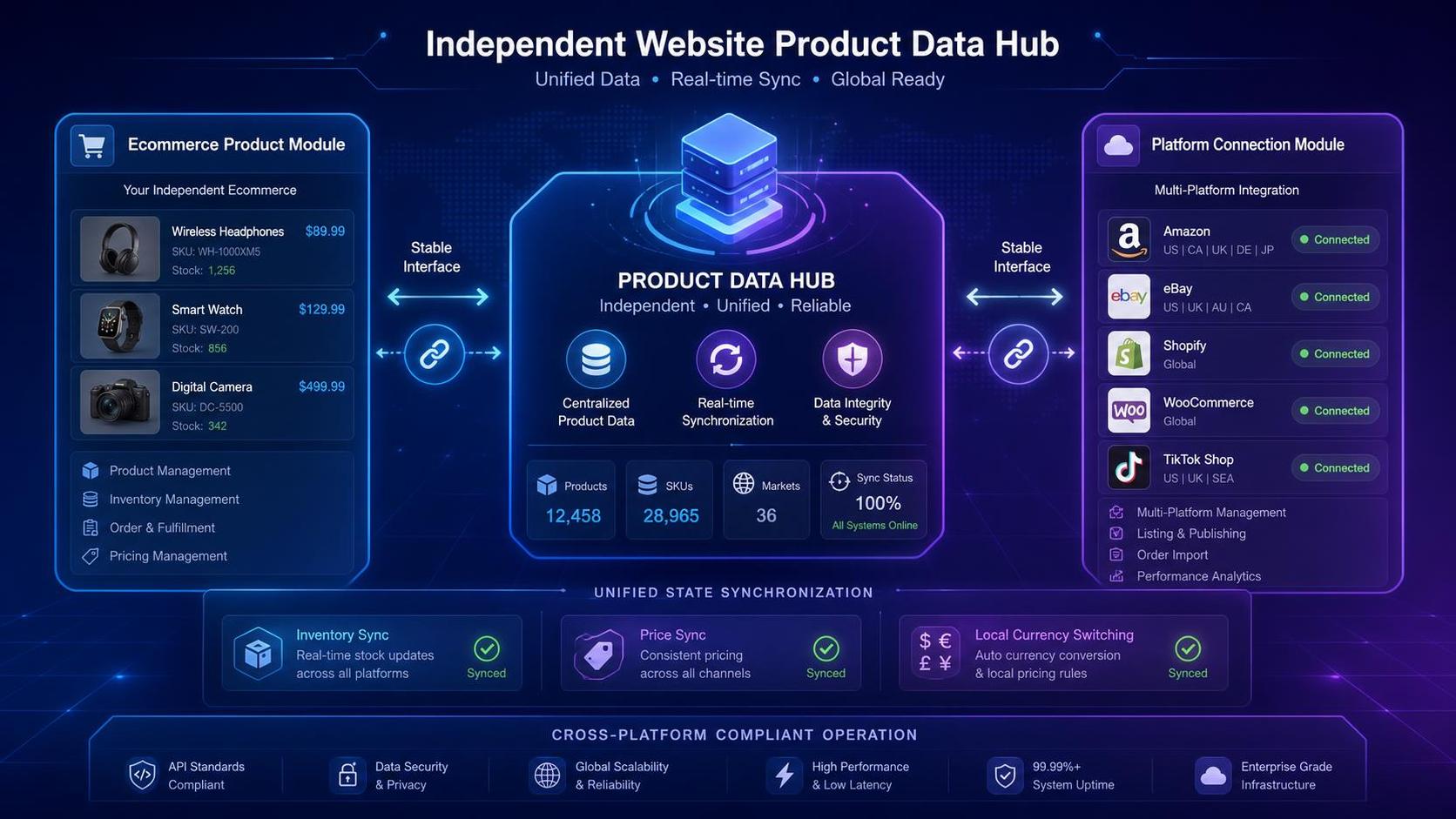
 New E-commerce Regulations Take Effect in Southeast Asia: Independent Site Sellers Must Sync Inventory and Prices via API Within 72 Hours
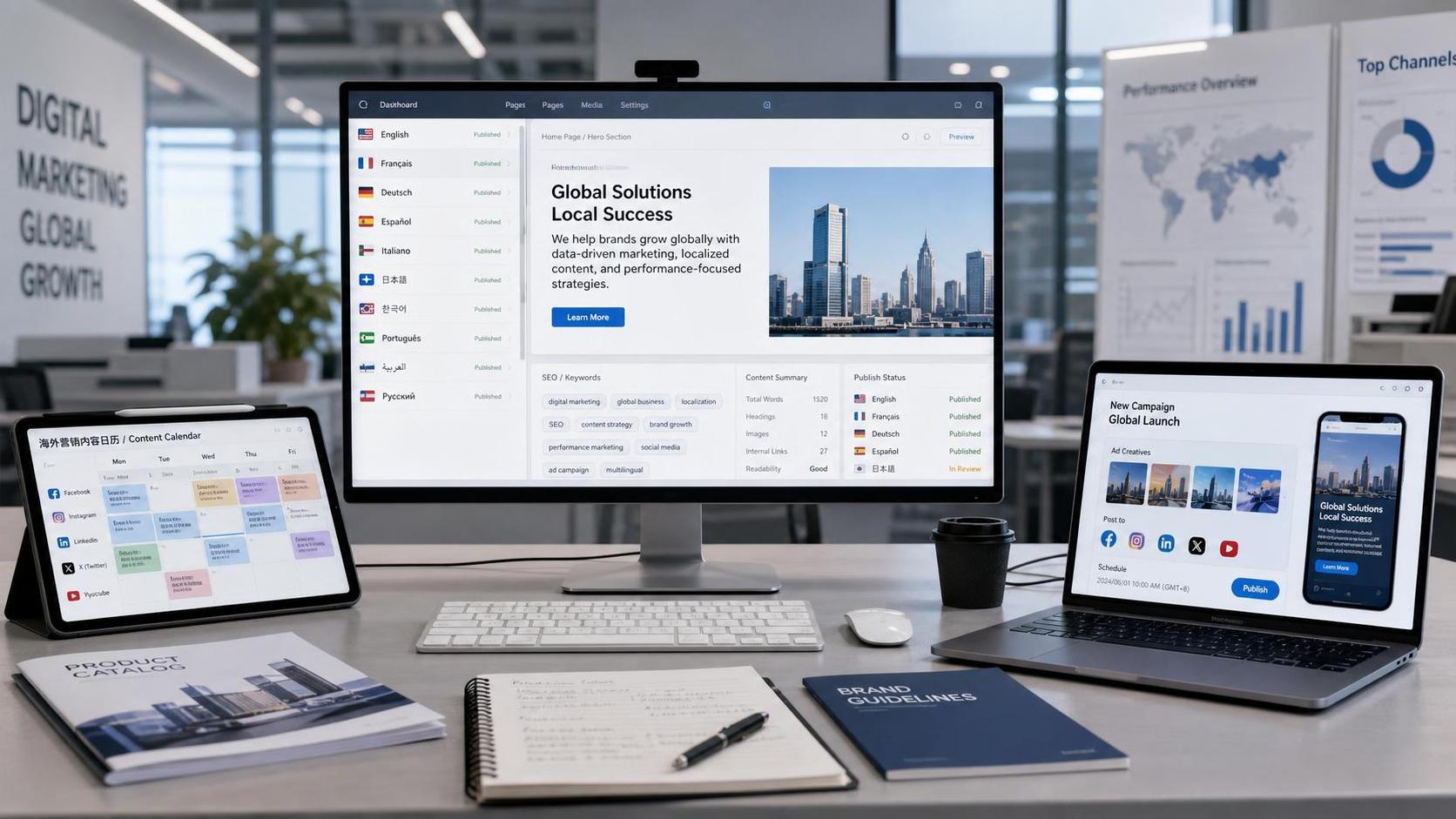
 How Can AI-Powered Multilingual Translation Support Global Marketing

Related Products
 EasyCamp SaaS Smart Website Marketing SystemE-Yingbao SaaS Smart Website Marketing System: AI-powered, zero-code website building. Rapidly launch multilingual independent e-commerce sites in just 10 minutes. Global server acceleration and AI-driven SEO optimization empower businesses to efficiently connect with global markets. The seamless integration of technology and user-friendly operation makes building e-commerce sites incredibly simple.
 AI+SEM Intelligent Advertising Marketing SystemAI+SEM drives intelligent ad creation, empowering full-funnel precision advertising marketing. The system automatically generates weekly/monthly reports, AI recommends keywords and target countries, monitors core metrics in real-time with intelligent alerts, and enables one-click high-conversion ad solutions to help quickly acquire customers and improve ROI.
 AI+SEO Dual Engine Optimization ServiceEasyWin AI+SEO Dual Engine Optimization System leverages AI-powered keyword mining, content generation, and comprehensive technical optimization to help foreign trade enterprises acquire high-quality organic traffic, significantly improving search rankings and conversion rates.
 AI+SNS Social Media Marketing SystemYingbao AI+SNS Social Media Marketing System - Precision social capture for the social media era. Supports one-click content synchronization across major platforms like Facebook and LinkedIn. AI intelligently rewrites posts for enhanced relevance. 24/7 AI customer service and user profiling analysis empower businesses to efficiently expand into global markets.
 AI+SEO营销解决方案易营宝AI+SEO营销解决方案,通过AI批量写作、智能生成TDK、精准关键词扩词等功能,全面优化网站SEO效果,提升流量与转化率。助力企业构建高效智能网站新生态。
 AI+SEM Advertising Marketing SolutionsAI+SEM Advertising Marketing Solution leverages AI technology to deeply empower SEM ad campaigns. It automatically generates weekly/monthly reports using AI, presenting account data across multiple dimensions for comprehensive insights into campaign performance and trends. The system precisely recommends keywords and target countries, intelligently generates high-conversion ad copy, and enables one-click activation of efficient campaign plans to help businesses rapidly acquire customers. Simultaneously, it monitors core metrics in real time, intelligently identifies abnormal fluctuations, and issues timely alerts to ensure stable, high-return advertising results.
 Domain Name ServicesEasyWin provides professional domain name services, including intelligent queries, one-stop registration, brand protection, and full lifecycle management, helping businesses build a digital brand image.
 EasyOperate B2C Cross-Border E-Commerce Platform & Independent WebsiteEasyStore B2C Cross-border E-commerce Independent Store is an intelligent website building and cross-border e-commerce integrated solution independently developed by EasyStore Information Technology (Beijing) Co., Ltd. The system is specially designed for small and medium-sized as well as large export enterprises, integrating 'website building, operation, marketing, advertising, and conversion' into one, helping enterprises quickly establish cross-border e-commerce independent stores to achieve brand globalization and global sales growth.
The platform supports multiple languages, multiple currencies, and multi-channel marketing, with built-in AI intelligent translation and SEO optimization systems, suitable for mainstream markets such as Southeast Asia, Europe and America, Latin America, and the Middle East, assisting Chinese manufacturing enterprises in efficiently deploying international e-commerce strategies. SSL证书易营宝提供专业SSL安全证书服务,包括单域名和泛域名证书,确保网站数据传输加密、身份验证和完整性保护,助力企业建立安全可信的在线业务环境。









