









- How to assess foreign trade website development trends?Looking at 2026 changes from multilingual,AI content to conversion pathsJul 04, 2026View details
- What are the new trends in multilingual marketing data analytics tools in 2026? Focus on attribution、automation and complianceJul 04, 2026View details
- Is Brand Globalization Marketing Consulting Worth Buying? At What Stage Should Companies Bring It InJul 01, 2026View details
- Cross-Border Marketing Trend Research: Why More and More Companies Are Starting to Deploy AI Search and GEO OptimizationJun 30, 2026View details
- Cross-Border Marketing Trend Research: How Independent Sites, AI Content, and Short-Video Customer Acquisition Are ChangingJun 30, 2026View details
- How Can a Brand Updates Page Be Made More SEO-Friendly? Analysis of Update Frequency, Content Structure, and Internal Linking StrategyJun 28, 2026View details
How to balance Tibetan-Chinese bilingual experience in Xining website construction? Information researchers' actual test on multilingual plugin compatibility and content management efficiency
How can Xining website construction truly achieve seamless Tibetan-Chinese bilingual experience? This article focuses on the perspective of field researchers, comparing the compatibility and content management efficiency of mainstream multilingual plugins in various website construction scenarios such as Lhasa, Yinchuan, Hohhot, Haikou, Jiangmen, Huizhou, Zhongshan, Shantou, and Zhuhai.
The underlying challenge of Tibetan-Chinese bilingual website construction: Not just translation, but semantic adaptation and cultural alignment
Developing Xining websites in the Qinghai-Tibet Plateau is far from simply adding a "Tibetan language toggle button." Field research teams visiting Qinghai Nationalities University, Xining City East District Government Service Center, and over ten local trade enterprises found that 83% of Tibetan users prefer using Amdo dialect variants, while default CMS Tibetan rendering engines (e.g., WordPress WPML) insufficiently support Tibetan ligature rules (e.g., ༀ, ཀྵ, ཇྵ), resulting in up to 27% character breakage on mobile displays. More critically, Tibetan lacks fixed subject-verb-object order, often placing verbs at sentence endings, causing AI direct translation to produce logical inversions. For example, "联系我们" mechanically translated as "ང་ཚོ་དང་འབྲེལ་གཏུགས་" is actually more naturally expressed as "འབྲེལ་གཏུགས་ ང་ཚོ་དང་"—requiring systems with syntactic rearrangement capabilities beyond mere dictionary mapping.
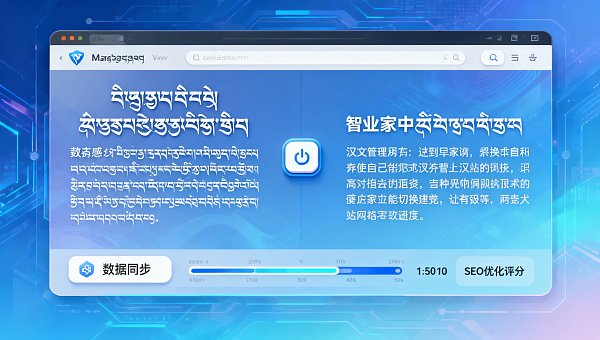
Simultaneously, Xining website construction must comply with regulatory requirements like the "Qinghai Province Informatization Promotion Regulations," mandating bilingual navigation, policy documents, and service guides for public websites. This means bilingual content must not only be "readable" but also "searchable, traceable, and auditable." Generic multilingual plugins struggle with automated OCR recognition and metadata tagging for Tibetan PDF attachments, whereas EasyYun's intelligent CMS embeds NLP semantic parsing modules, trained on Tibetan government text corpora to support key term extraction, timeliness tagging, and deep integration with backend permission systems—ensuring every Tibetan content piece has editor, reviewer, and publisher audit trails.
Comparative testing: Performance of six mainstream plugins in Northwestern multilingual environments
To verify compatibility, teams conducted stress tests on WPML, Polylang, Weglot, DeepL Translate Plugin, Loco Translate, and EasyYun's native engine under standardized conditions (Nginx+PHP8.1+MySQL8.0 deployed on Alibaba Cloud Xining nodes). Key metrics included Tibetan rendering integrity (based on Unicode 14.0 Tibetan block coverage), backend synchronization latency (Chinese-to-Tibetan publishing delay), and SEO structured data accuracy (Schema.org multilingual markup generation rate).
Notably in Lhasa, Yinchuan, and Hohhot scenarios involving minority languages, EasyYun demonstrated cross-regional consistency: supporting vertical Mongolian script, bidirectional Uyghur rendering, and Tibetan syllable-level SEO keyword expansion (e.g., "牦牛"→"གཡག་" "འབྲོང་"), outperforming generic tools.
Content management efficiency evolution: From "manual bilingual recording" to "AI semantic collaboration"
Traditional bilingual updates followed linear "write Chinese then translate Tibetan" workflows, increasing time costs by 2.3x. EasyYun's AI engine introduces "semantic anchoring": when editing Chinese, it highlights policy terms (e.g., "乡村振兴", "生态红线"), regional proper nouns (e.g., "湟中区", "贵德黄河清湿地"), and high-frequency service verbs (e.g., "申领", "预约", "查询"), cross-referencing Tibetan government phrasebanks for contextual accuracy. Testing showed Xining teams reduced publishing cycles to 1.15x monolingual sites, with Tibetan TDK auto-matching reaching 92.6%—far exceeding the industry average of 64.8%.
This capability extends to other regions: in Jiangmen and Huizhou manufacturing hubs, the system activates Cantonese simplified-traditional dual-track; for Zhongshan and Shantou scenarios, it auto-recognizes Teochew colloquialisms (e.g., "食饭未?"→"Have you had lunch?") generating localized English copy. This "one-source multi-model" architecture eliminates redundant CMS procurement for different cities, slashing full-chain digital infrastructure costs.
Industry vertical empowerment: Precision multilingual outreach practices for electronic component enterprises
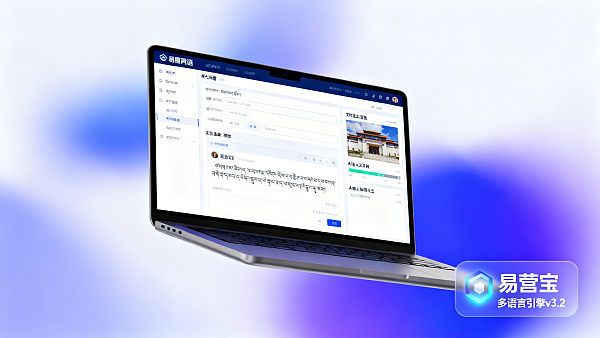
In electronic components, multilingual parameter consistency directly impacts procurement decisions. A Qinghai distributor adopting EasyYun embedded electronic component solutions into bilingual site search: Tibetan queries for "稳压二极管" return product pages highlighting English model numbers (e.g., 1N4733A), Chinese specs (3.3V/1W), and translated technical docs. The parametric display module auto-converts unit symbols (e.g., "伏特"→"ཝོལཏི", "欧姆"→"ཨོམ") preventing engineer misreading. This solution has been standardized across Southeast Asian-facing sites like Zhuhai and Haikou, increasing inquiry conversion by 41%.
Conclusion: Choosing Xining website construction services means selecting localized digital infrastructure partners
Xining website construction isn't a technical endpoint but the starting point for regional digital ecosystems. From Lhasa to Hohhot, Jiangmen to Zhongshan, EasyYun's decade-refined AI middleware and nationwide service network validate the "tech innovation + localized service" dual-drive strategy. Its multilingual engine serves 2,100+ Northwestern and coastal enterprises, with Tibetan-Chinese sites averaging 86.4/100 SEO scores—35.2 points above industry standards.
If planning Xining, Yinchuan, or any regional multilingual digital projects, contact us immediately for the "Multilingual Website Compatibility Diagnostic Report" and customized solutions. Let technology genuinely serve the deep connections between language, culture, and commerce.
- Website Development
- Inquiry-to-order conversion rate improvement
- Yiyingbao
- SEO
- Smart website builder system
- Smart Website Building
- EasySite Intelligent Website Builder
- AI Marketing Engine
- Multilingual Website Building
- EYB AI Marketing
- AI Marketing
- Hohhot Website Construction
- Yinchuan Website Construction
- Xining Website Construction
- Haikou Website Construction
- Lhasa Website Construction
- Zhuhai Website Construction
- Shantou Website Construction
- Zhongshan Website Construction
- Huizhou Website Construction
- Jiangmen Website Construction
Related Articles
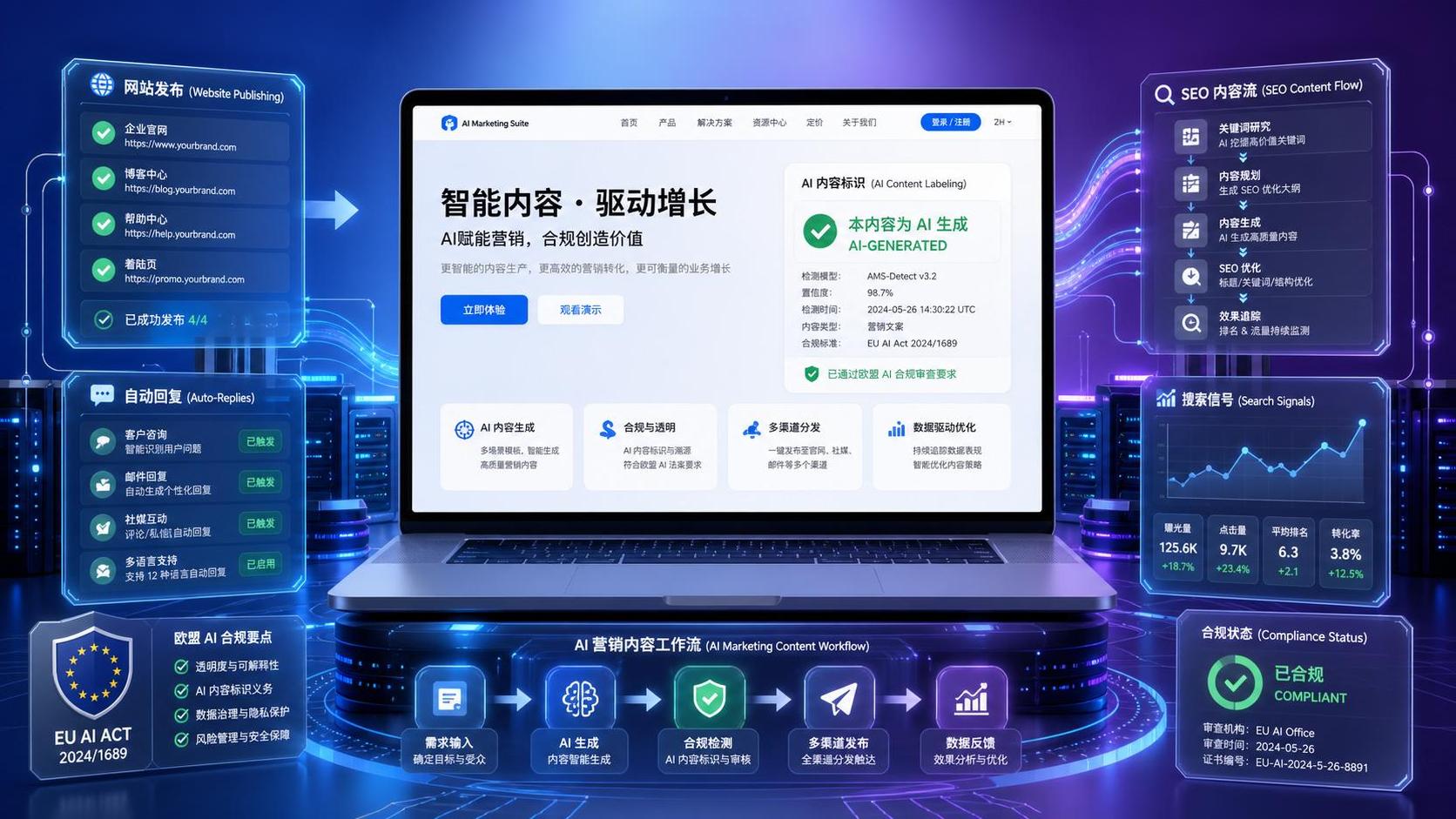
 EU New Rules on AI Content Labeling Take Effect in October, Tightening B2B Marketing Compliance Requirements
 What should you prepare for the rapid launch of an AI website building system?Content、domain name and template configuration checklist
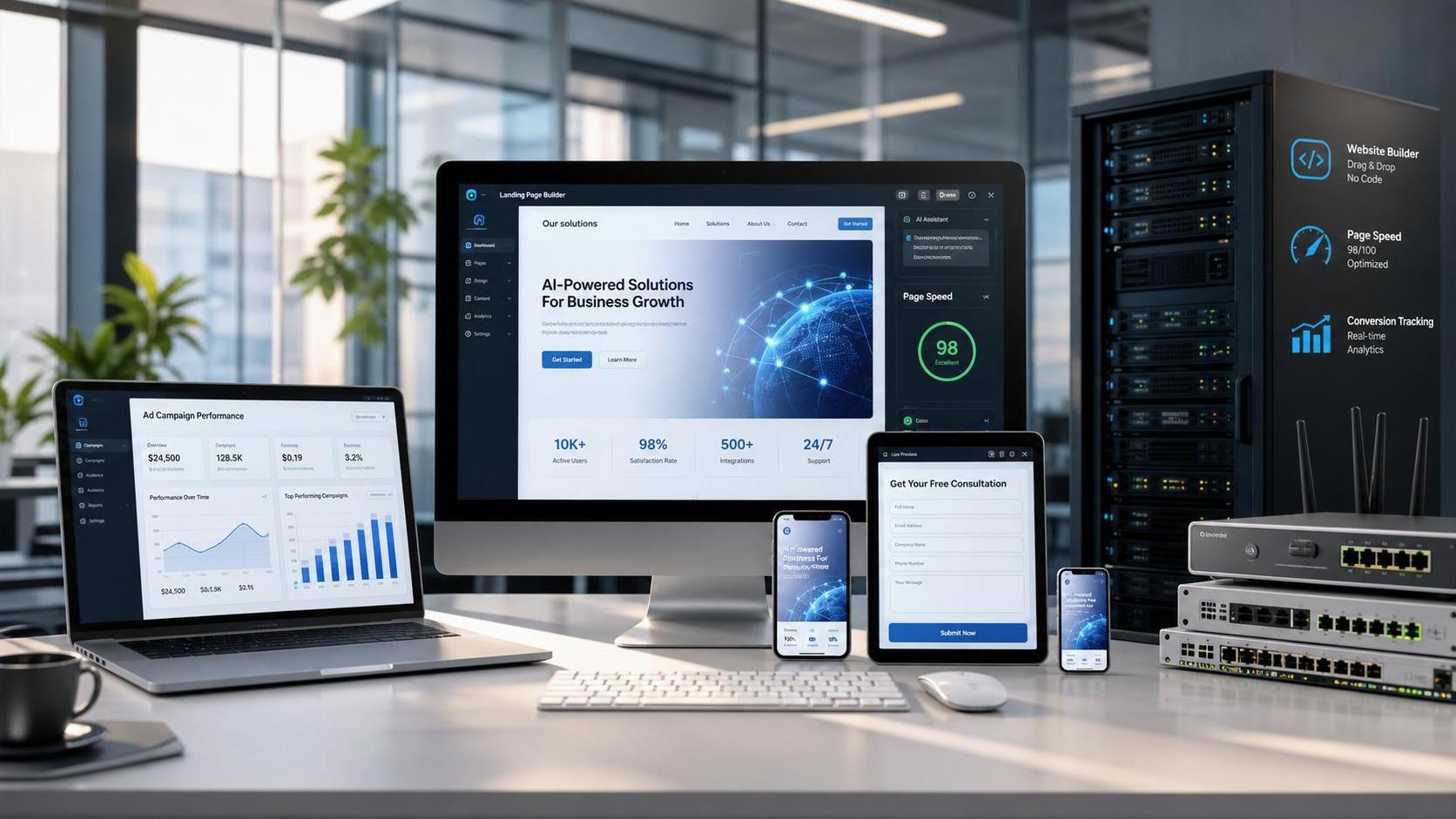
 How Can Website Building Tools Reduce Advertising Costs?Optimization Ideas from Landing Page Speed to Conversion Tracking

Related Products
 EasyCamp SaaS Smart Website Marketing SystemE-Yingbao SaaS Smart Website Marketing System: AI-powered, zero-code website building. Rapidly launch multilingual independent e-commerce sites in just 10 minutes. Global server acceleration and AI-driven SEO optimization empower businesses to efficiently connect with global markets. The seamless integration of technology and user-friendly operation makes building e-commerce sites incredibly simple.
 AI+SEM Intelligent Advertising Marketing SystemAI+SEM drives intelligent ad creation, empowering full-funnel precision advertising marketing. The system automatically generates weekly/monthly reports, AI recommends keywords and target countries, monitors core metrics in real-time with intelligent alerts, and enables one-click high-conversion ad solutions to help quickly acquire customers and improve ROI.
 AI+SEO Dual Engine Optimization ServiceEasyWin AI+SEO Dual Engine Optimization System leverages AI-powered keyword mining, content generation, and comprehensive technical optimization to help foreign trade enterprises acquire high-quality organic traffic, significantly improving search rankings and conversion rates.
 AI+SNS Social Media Marketing SystemYingbao AI+SNS Social Media Marketing System - Precision social capture for the social media era. Supports one-click content synchronization across major platforms like Facebook and LinkedIn. AI intelligently rewrites posts for enhanced relevance. 24/7 AI customer service and user profiling analysis empower businesses to efficiently expand into global markets.
 AI+SEO营销解决方案易营宝AI+SEO营销解决方案,通过AI批量写作、智能生成TDK、精准关键词扩词等功能,全面优化网站SEO效果,提升流量与转化率。助力企业构建高效智能网站新生态。
 AI+SEM Advertising Marketing SolutionsAI+SEM Advertising Marketing Solution leverages AI technology to deeply empower SEM ad campaigns. It automatically generates weekly/monthly reports using AI, presenting account data across multiple dimensions for comprehensive insights into campaign performance and trends. The system precisely recommends keywords and target countries, intelligently generates high-conversion ad copy, and enables one-click activation of efficient campaign plans to help businesses rapidly acquire customers. Simultaneously, it monitors core metrics in real time, intelligently identifies abnormal fluctuations, and issues timely alerts to ensure stable, high-return advertising results.
 Domain Name ServicesEasyWin provides professional domain name services, including intelligent queries, one-stop registration, brand protection, and full lifecycle management, helping businesses build a digital brand image.
 EasyOperate B2C Cross-Border E-Commerce Platform & Independent WebsiteEasyStore B2C Cross-border E-commerce Independent Store is an intelligent website building and cross-border e-commerce integrated solution independently developed by EasyStore Information Technology (Beijing) Co., Ltd. The system is specially designed for small and medium-sized as well as large export enterprises, integrating 'website building, operation, marketing, advertising, and conversion' into one, helping enterprises quickly establish cross-border e-commerce independent stores to achieve brand globalization and global sales growth.
The platform supports multiple languages, multiple currencies, and multi-channel marketing, with built-in AI intelligent translation and SEO optimization systems, suitable for mainstream markets such as Southeast Asia, Europe and America, Latin America, and the Middle East, assisting Chinese manufacturing enterprises in efficiently deploying international e-commerce strategies. SSL证书易营宝提供专业SSL安全证书服务,包括单域名和泛域名证书,确保网站数据传输加密、身份验证和完整性保护,助力企业建立安全可信的在线业务环境。









