









- China-Morocco zero-tariff access, a breakthrough in the cost of Moroccan goods exports to ChinaJun 11, 2026View details
- What signal should be released for the suspension of exports to JapanJun 10, 2026View details
- China's May LNG imports rebounded, with increased volumes from Russia and Canada filling the Middle East supply gapJun 10, 2026View details
- Will GEO change its SEO strategy?Jun 04, 2026View details
- What types of businesses are end-to-end solutions suitable for?Jun 03, 2026View details
- 2026 Global Growth Channel TrendsJun 02, 2026View details
- Changes in Search Engine Ranking Factors in 2026Jun 06, 2026View details
- Which stages is the brand visibility enhancement service suitable forMay 29, 2026View details
I’ve read many website SEO optimization tutorials, so why are the rankings still not improving
Have you gone through many website SEO optimization tutorials, yet your rankings still show no improvement? The problem is often not a lack of effort, but a lack of strategic focus. Truly effective search engine optimization services need to combine search engine ranking factors, website traffic analytics tools, and site speed optimization in order to turn traffic into growth.
Why is it that after reading so many tutorials, website SEO optimization still delivers no results?
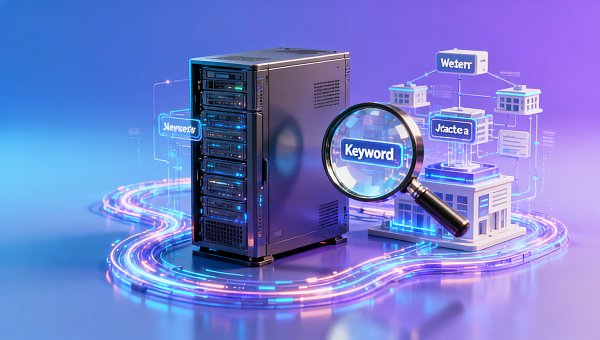
Many companies go off track from the very first step when doing website SEO optimization. Operators follow tutorials to change titles, publish articles, and build internal links. In the short term, it may seem like a lot of work has been done, yet keyword rankings still remain on pages 2 to 5. The reason is usually not poor execution, but a lack of diagnosis, goal layering, and a closed business loop.
Today, search engines no longer judge websites solely by single-page keywords. Instead, they evaluate content relevance, page experience, crawl efficiency, site speed, conversion signals, and the ability to keep content updated. If a company focuses only on “how many articles to publish” while ignoring the technical foundation, ranking improvements often take 8 to 16 weeks, or even longer.
For business decision-makers, the most common misconception is treating SEO as a single-point task; for project owners, the issue is a lack of cross-department collaboration; for distributors and agents, the biggest pain point is that traffic comes in but cannot be absorbed steadily. The core of an integrated website + marketing service is not optimization alone, but enabling website building, content, advertising, and data to operate in coordination.
Since its establishment in 2013, Easy-Biz Information Technology (Beijing) Co., Ltd. has long served global enterprise growth scenarios. Leveraging artificial intelligence and big data capabilities, it integrates smart website building, SEO optimization, social media marketing, and advertising into a full-chain solution. For many websites with stagnant rankings, what is truly needed is not another tutorial, but a fresh systematic diagnosis.
Common ineffective optimization usually falls into these 4 categories
- Only doing on-page keyword stuffing, without building category structures, topic clusters, and search intent mapping, which results in pages being indexed but rankings remaining unstable.
- Only focusing on content publishing without checking crawl logs, index status, bounce rate, and conversion paths, causing traffic data to become disconnected from business goals.
- The desktop version works, but the mobile version loads slowly and offers poor interaction. In particular, if the above-the-fold homepage load time exceeds 3 seconds, it usually directly affects user retention and conversion.
- Treating SEO separately from website building, advertising, and social media, without creating combined coverage of brand keywords, category keywords, and scenario keywords.
If the website is in a redesign phase, promotion phase, or cross-border expansion phase, the above problems will be amplified further. At this stage, optimization is not just about patching content, but also involves site load capacity, traffic cost control, and data return efficiency.
First determine where the problem lies: when rankings do not improve, which 3 core types of metrics should usually be examined?
When companies invest in search engine optimization services, they cannot look only at “whether there are rankings.” Instead, they should break the analysis into 3 core layers of metrics: technical, content, and conversion. Different stages require completely different judgment logic. If an indexing issue is treated as a content issue, the cycle may be unnecessarily extended by 2 to 6 weeks.
The following table is more suitable for decision-makers, operators, and project managers to align their understanding: is the issue that the website foundation is weak, that the keyword strategy is off, or that traffic entering the site lacks the ability to convert? Only by classifying the issue first and optimizing afterward can SEO investment deliver procurement and review value.
Among these 3 categories of metrics, the technical foundation usually determines whether stable crawling can happen, the content strategy determines whether rankings can be obtained, and conversion handling determines whether traffic has commercial value. For many companies whose rankings do not move, there are often at least 2 weak links at the same time.
Why does site speed directly affect SEO performance?
Site speed optimization is not an optional add-on, but a foundational condition for website SEO optimization. Especially in scenarios such as major e-commerce promotions, media content distribution, and global business operations, images, videos, campaign pages, and multi-region visits will significantly increase bandwidth demand and access fluctuations. If server traffic capacity and access load preparation are insufficient, rankings may just start to rise while user experience is already declining.
In such scenarios, many companies consider basic resource allocation together with marketing growth. For example, by using a website traffic package to lock in directional traffic costs in advance, combined with real-time monitoring and alerts, they can avoid unstable response, budget loss of control, or increasingly complex multi-account settlement during promotion periods caused by sudden traffic surges.
For project managers, what is truly worth paying attention to is not a single traffic peak, but traffic fluctuations, resource consumption, and business data return completeness over a continuous period of 7 to 30 days. Only by incorporating website performance, traffic cost, and data analytics together can SEO avoid remaining at the stage of “rankings that merely look good on the surface.”
What exactly is the difference between tutorial-style SEO and an integrated growth solution?
Tutorial-style SEO emphasizes isolated tactics, such as writing titles, revising descriptions, and building backlinks; an integrated growth solution, however, advances in coordination across 4 layers: “can it be found, can it be understood, can it generate inquiries, and can it be converted into deals.” Although both seem to be doing optimization, the results may differ by an entire quarter.
For business decision-makers, the most important thing is not how many tactics they learn, but determining whether the current stage is more suitable for “internal execution” or “professional external collaboration.” If the website is already carrying brand promotion, channel recruitment, or overseas inquiries, it is usually more suitable to adopt a solution that links website building, SEO, content, and advertising.
The comparison table below can help companies make a quick judgment: why is it that while both are using search engine optimization services, some websites begin accumulating effective inquiries after 3 months, while others only gain ineffective traffic?
For companies with longer service chains, an integrated solution is more suitable. Easy-Biz has long served website building and marketing collaboration scenarios, and can combine technological innovation with localized services to reduce information silos. This kind of system capability is especially relied upon by multi-region businesses, lead-generation websites, and content-driven websites.
Which scenarios are more likely to lead to “a lot was done, but there were still no results”?
Scenario 1: The first 30 days after a website redesign
After URL changes, category migration, and old content removal, if there is no redirect setup, sitemap update, and index repair, short-term ranking fluctuations are very common. At this stage, the biggest mistake is making frequent secondary changes.
Scenario 2: The phase when advertising and SEO run in parallel
Advertising can quickly drive a large volume of visits, but if the landing page experience is poor and page load capacity is weak, user retention and interaction data will drag down organic traffic performance, creating the problem of “paying for visits, but the website cannot keep users.”
Scenario 3: The phase of cross-border or multi-region expansion
Different markets have different access paths, language habits, compliance requirements, and server resource conditions. If the website is still built with a single-market mindset, both SEO and conversion will be limited. At this stage, data governance, access stability, and localized content strategy should all be considered in sync.
When enterprises procure SEO and website building services, what should they focus on to avoid common pitfalls?
When procuring website SEO optimization services, the biggest concern is “a lot of promises, but unclear boundaries.” A truly professional supplier will usually first confirm the current website status, industry competition level, content assets, target markets, and timeline expectations, rather than offering a standard quote upfront. For B2B companies, there are at least 5 key checkpoints to review.
If a company is in the stage of channel recruitment, going global, brand upgrading, or content growth, it should also evaluate website load resources at the same time. For example, how to control costs after traffic growth, how to monitor anomalies, and how to integrate with BI systems will all affect long-term return on investment. This is also an issue many teams only realize in the later stages of growth.
For teams that require automated procurement or multi-account settlement management, resource-related capabilities are also critical. For example, seamless integration with cloud website-building systems, support for API-based process procurement, and balance monitoring alerts can reduce manual communication costs during promotion periods, especially for organizations running major campaigns, media distribution, and global business in parallel.
5 procurement checkpoints recommended for confirmation before project initiation
- Whether diagnosis is conducted before proposing a plan, at least distinguishing technical issues, content issues, and conversion issues instead of moving directly into execution.
- Whether phased goals are clearly defined, for example, using the first 2 weeks for technical fixes, the next 4 to 8 weeks for keyword planning and content development, and only then moving into conversion optimization.
- Whether website building, SEO, social media, and advertising can be coordinated so that channels do not conflict with one another, especially in the traffic allocation of brand keywords and category keywords.
- Whether a practical data tracking plan is provided, including source identification, page paths, inquiry entry points, and lead attribution.
- Whether there is long-term resource coordination capability, for example, when traffic scales up, whether tools such as a website traffic package can be used to plan costs and monitoring strategies in advance.
Easy-Biz’s advantage in such integrated scenarios lies not only in single execution actions, but in its ability to connect technology, content, marketing, and data. For teams with limited budgets but clear growth goals, this model is more conducive to phased investment, step-by-step validation, and continuous scaling.
Common misconceptions and FAQ: if rankings do not improve, what should be fixed first?
Many companies do not lack SEO knowledge; rather, they do not know what to do first and what to do next. The following questions basically cover the most frequent concerns of users, managers, and buyers during implementation. If investigated in sequence, they are usually more effective than blindly adding more content.
How long does it usually take to see changes from website SEO optimization?
If the website foundation is relatively complete, indexing and crawling improvements may first become visible 2 to 4 weeks after technical fixes; obvious changes in keyword rankings are commonly observed over 8 to 16 weeks. The higher the competition and the larger the content gap, the longer the cycle usually is. If there is absolutely no change after 3 months, the strategy and execution boundaries usually need to be reviewed again.
Does publishing more content always lead to better rankings?
Not necessarily. Content volume is only a surface-level metric. More important factors are whether the topics are focused, whether the pages match search intent, and whether the category structure is clear. Publishing 30 broad articles per month is often less effective than building content clusters around 10 core scenarios.
If a website is slow, is that only a technical issue and unrelated to marketing?
Quite the opposite. Slow speed affects crawl efficiency, time on page, bounce rate, and inquiry conversion, ultimately impacting both SEO and advertising performance at the same time. Especially during campaign periods or periods of fluctuating overseas traffic, technical issues often directly turn into marketing cost issues.
How should companies choose between doing SEO themselves and working with an external team?
If a company already has a content team, development resources, and a clear data framework, it can lead internally with external support; if it involves multiple languages, multiple regions, redesigns, advertising coordination, or channel recruitment conversion, then introducing a service provider with integrated capabilities is more advisable. The criterion is not “who is cheaper,” but who can reduce the trial-and-error cycle.
Why choose us: how can you move more steadily from ranking improvement to growth conversion?
If you have already read many website SEO optimization tutorials but still face unstable rankings, imprecise traffic, and unclear conversions, what is more worth doing is not continuing fragmented attempts, but first clarifying the current situation. Easy-Biz can provide a more business-goal-oriented execution path around website diagnosis, keyword planning, site speed optimization, content strategy, data analytics, and traffic conversion handling.
For business decision-makers, we can first help confirm the investment cycle, phased priorities, and budget structure; for project owners, we can sort out the implementation order among website building, content, technology, and advertising; for distributors, agents, and end-business teams, we can focus on optimizing lead acquisition paths and page conversion efficiency.
If you are evaluating search engine optimization services, it is recommended to prioritize communication around 6 items: current website issue diagnosis, target keyword layering, delivery timeline arrangement, traffic cost control, data tracking methods, and whether a customized solution is needed. This is more effective than directly comparing prices in avoiding later rework.
Whether you are preparing for a redesign, building brand growth, expanding into overseas markets, or hoping to turn existing traffic into more stable inquiries, you can further consult on parameter confirmation, product selection, implementation pace, traffic resource allocation, quotation communication, and customized solution recommendations, so that website SEO optimization truly serves business growth rather than merely staying at the level of ranking numbers.
Related Articles



Related Products
 EasyCamp SaaS Smart Website Marketing SystemE-Yingbao SaaS Smart Website Marketing System: AI-powered, zero-code website building. Rapidly launch multilingual independent e-commerce sites in just 10 minutes. Global server acceleration and AI-driven SEO optimization empower businesses to efficiently connect with global markets. The seamless integration of technology and user-friendly operation makes building e-commerce sites incredibly simple.
 AI+SEM Intelligent Advertising Marketing SystemAI+SEM drives intelligent ad creation, empowering full-funnel precision advertising marketing. The system automatically generates weekly/monthly reports, AI recommends keywords and target countries, monitors core metrics in real-time with intelligent alerts, and enables one-click high-conversion ad solutions to help quickly acquire customers and improve ROI.
 AI+SEO Dual Engine Optimization ServiceEasyWin AI+SEO Dual Engine Optimization System leverages AI-powered keyword mining, content generation, and comprehensive technical optimization to help foreign trade enterprises acquire high-quality organic traffic, significantly improving search rankings and conversion rates.
 AI+SNS Social Media Marketing SystemYingbao AI+SNS Social Media Marketing System - Precision social capture for the social media era. Supports one-click content synchronization across major platforms like Facebook and LinkedIn. AI intelligently rewrites posts for enhanced relevance. 24/7 AI customer service and user profiling analysis empower businesses to efficiently expand into global markets.
 AI+SEO营销解决方案易营宝AI+SEO营销解决方案,通过AI批量写作、智能生成TDK、精准关键词扩词等功能,全面优化网站SEO效果,提升流量与转化率。助力企业构建高效智能网站新生态。
 AI+SEM Advertising Marketing SolutionsAI+SEM Advertising Marketing Solution leverages AI technology to deeply empower SEM ad campaigns. It automatically generates weekly/monthly reports using AI, presenting account data across multiple dimensions for comprehensive insights into campaign performance and trends. The system precisely recommends keywords and target countries, intelligently generates high-conversion ad copy, and enables one-click activation of efficient campaign plans to help businesses rapidly acquire customers. Simultaneously, it monitors core metrics in real time, intelligently identifies abnormal fluctuations, and issues timely alerts to ensure stable, high-return advertising results.
 Domain Name ServicesEasyWin provides professional domain name services, including intelligent queries, one-stop registration, brand protection, and full lifecycle management, helping businesses build a digital brand image.
 EasyOperate B2C Cross-Border E-Commerce Platform & Independent WebsiteEasyStore B2C Cross-border E-commerce Independent Store is an intelligent website building and cross-border e-commerce integrated solution independently developed by EasyStore Information Technology (Beijing) Co., Ltd. The system is specially designed for small and medium-sized as well as large export enterprises, integrating 'website building, operation, marketing, advertising, and conversion' into one, helping enterprises quickly establish cross-border e-commerce independent stores to achieve brand globalization and global sales growth.
The platform supports multiple languages, multiple currencies, and multi-channel marketing, with built-in AI intelligent translation and SEO optimization systems, suitable for mainstream markets such as Southeast Asia, Europe and America, Latin America, and the Middle East, assisting Chinese manufacturing enterprises in efficiently deploying international e-commerce strategies. SSL证书易营宝提供专业SSL安全证书服务,包括单域名和泛域名证书,确保网站数据传输加密、身份验证和完整性保护,助力企业建立安全可信的在线业务环境。









