









- Cross-Border Marketing Trend Research: Why More and More Companies Are Starting to Deploy AI Search and GEO OptimizationJun 30, 2026View details
- Cross-Border Marketing Trend Research: How Independent Sites, AI Content, and Short-Video Customer Acquisition Are ChangingJun 30, 2026View details
- How Can a Brand Updates Page Be Made More SEO-Friendly? Analysis of Update Frequency, Content Structure, and Internal Linking StrategyJun 28, 2026View details
- What stages does the cross-border services ecosystem include? How do website building, promotion, payment, and compliance work togetherJun 22, 2026View details
- How will email marketing costs change in 2026Jun 22, 2026View details
- The China-US tariff arrangement has reached a preliminary consensus, and the trade association will be establishedJun 15, 2026View details
How to Make Website Content Discoverable and Recommended by AI? Operational-Focused Structured Content Guidelines

How to Make Website Content Recommended by AI Search? Operators need to master structured content rules, performance, and security to enhance indexing and conversion. Being recommended by AI is not accidental but the result of systematic work combining technology and content strategy. Operators must focus on four dimensions simultaneously: information architecture, semantic annotation, structured data, and page performance, while precisely matching industry pain points with user intent. This article provides actionable steps and decision-making criteria for users, operational staff, corporate decision-makers, quality control and security managers, project managers, and after-sales support teams, helping teams grasp key details such as "what kind of websites are more likely to gain customer trust" and "what foundational technologies are needed for corporate websites," ultimately improving inquiry volume and conversion efficiency.
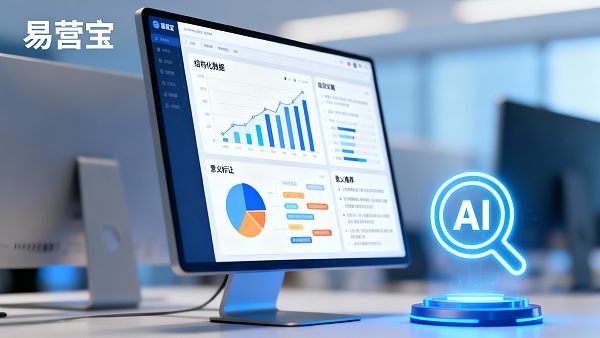
Definition and Overview: The Relationship Between Structured Content and AI Search Recommendations
Structured content refers to presenting website information in a machine-readable format through unified data models, semantic annotations, and easily parsable page layouts. AI search engines prefer pages with clear entities, well-defined relationships, and high-quality semantic context, as such pages facilitate understanding user intent and generating summary recommendations. Operators should focus on three tasks: 1) using schema markup and open graphs to supplement entity information; 2) ensuring logical clarity in the main text with short sentences and lists for readability; and 3) establishing search-friendly URLs and breadcrumb navigation to clarify page hierarchy. Simultaneously, consider "how website experience affects conversion rates," maintaining consistency and trust elements such as company information, certifications, and customer case studies—all of which directly influence AI’s judgment of page authority and recommendation priority.
Industry Background and Application Scenarios: The Middle East Market and Multilingual Coverage

In global competition, language and localization are key determinants of traffic quality. For the Middle East market, right-to-left layouts, Arabic keyword research, and local social media habits must be incorporated into content strategies. Many operators ask, "Can AI help quickly build independent sites?" The answer is yes, but the platform must support multilingual templates and AI translation validation workflows. For example, one implementation approach includes adding localized trust badges, payment logistics information, and localized FAQs to the website, then using structured data markup for products, prices, and service terms to enhance visibility in local search and AI recommendation systems. For industry solutions, refer to our Arabic Website Development and Marketing Solutions, which covers Arabic website construction, right-to-left layouts, AI-powered translation localization, and Middle East social media marketing consultation, significantly shortening market entry preparation time.
Technical Performance and Security: Core Metrics and Optimization Recommendations
Website performance directly impacts crawl efficiency and user experience, often prompting questions like "Why is page load speed critical?" "Does performance affect inquiry volume?" and "How does CDN improve access speed?" Optimization strategies include using global CDN nodes to reduce time-to-first-byte (TTFB), enabling HTTP/2 or HTTP/3, optimizing images with WebP or AVIF formats, implementing smart caching, and resource preloading. Meanwhile, website security significantly affects SEO—missing SSL, injected malicious code, or blacklisting can lead to ranking drops. Deployment should combine automated monitoring with security baselines, regular penetration testing, and log audits. EasyWin adopts AWS and Alibaba Cloud CDN nodes with auto-SSL issuance and DDoS protection, serving as a reference for foundational technical safeguards for corporate websites, ensuring standardized solutions for issues like slow overseas access.

Case Studies, Pitfalls, and Action Guide: Implementation Steps and Contact Us
Common pitfalls during implementation include focusing solely on keyword density while ignoring semantic structure, writing for search engines rather than users, and neglecting performance and security in content publishing workflows. Successful practices include: 1) creating content templates with unified schema markup; 2) performing accessibility and performance tests before publishing; 3) using A/B testing to validate how page experience affects conversion rates; and 4) incorporating monitoring results into weekly reports for executive review. Below are quick-reference FAQs: 1) Does website security affect SEO? Answer: Yes, significantly; 2) How to address slow overseas website access? Answer: Use multi-region CDN with local caching and optimized DNS resolution; 3) What kind of websites gain customer trust more easily? Answer: Those with complete company info, compliant certifications, clear after-sales policies, and authentic case studies. Final call to action: If you represent a brand or channel seeking rapid global expansion and scalable growth, EasyWin InfoTech offers end-to-end support from AI-powered site building to marketing, driven by technological innovation and localized services. We’ve helped over 100,000 businesses achieve global growth. Contact us for scenario-based implementation plans and timelines.
Related Articles
 What types of websites is an AI-powered site generator with drag and drop suitable for?
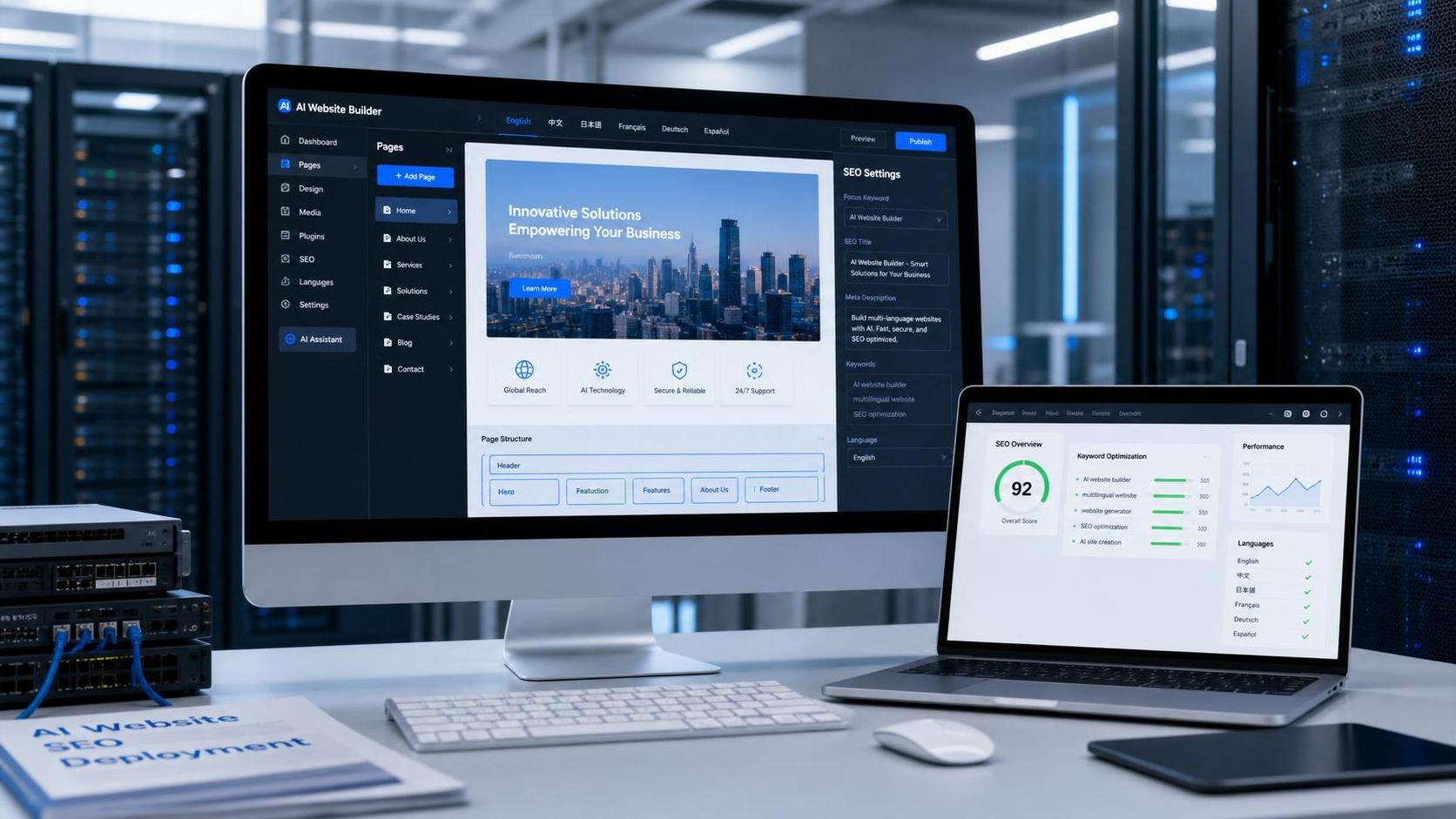
 What Does an AI Website Building Service Include? A Breakdown of the Delivery Scope from Page Generation to SEO Deployment
 What Is the Difference Between Free Websites and Paid Websites? A Comprehensive Comparison of Features, SEO, and Long-Term Costs

Related Products
 EasyCamp SaaS Smart Website Marketing SystemE-Yingbao SaaS Smart Website Marketing System: AI-powered, zero-code website building. Rapidly launch multilingual independent e-commerce sites in just 10 minutes. Global server acceleration and AI-driven SEO optimization empower businesses to efficiently connect with global markets. The seamless integration of technology and user-friendly operation makes building e-commerce sites incredibly simple.
 AI+SEM Intelligent Advertising Marketing SystemAI+SEM drives intelligent ad creation, empowering full-funnel precision advertising marketing. The system automatically generates weekly/monthly reports, AI recommends keywords and target countries, monitors core metrics in real-time with intelligent alerts, and enables one-click high-conversion ad solutions to help quickly acquire customers and improve ROI.
 AI+SEO Dual Engine Optimization ServiceEasyWin AI+SEO Dual Engine Optimization System leverages AI-powered keyword mining, content generation, and comprehensive technical optimization to help foreign trade enterprises acquire high-quality organic traffic, significantly improving search rankings and conversion rates.
 AI+SNS Social Media Marketing SystemYingbao AI+SNS Social Media Marketing System - Precision social capture for the social media era. Supports one-click content synchronization across major platforms like Facebook and LinkedIn. AI intelligently rewrites posts for enhanced relevance. 24/7 AI customer service and user profiling analysis empower businesses to efficiently expand into global markets.
 AI+SEO营销解决方案易营宝AI+SEO营销解决方案,通过AI批量写作、智能生成TDK、精准关键词扩词等功能,全面优化网站SEO效果,提升流量与转化率。助力企业构建高效智能网站新生态。
 AI+SEM Advertising Marketing SolutionsAI+SEM Advertising Marketing Solution leverages AI technology to deeply empower SEM ad campaigns. It automatically generates weekly/monthly reports using AI, presenting account data across multiple dimensions for comprehensive insights into campaign performance and trends. The system precisely recommends keywords and target countries, intelligently generates high-conversion ad copy, and enables one-click activation of efficient campaign plans to help businesses rapidly acquire customers. Simultaneously, it monitors core metrics in real time, intelligently identifies abnormal fluctuations, and issues timely alerts to ensure stable, high-return advertising results.
 Domain Name ServicesEasyWin provides professional domain name services, including intelligent queries, one-stop registration, brand protection, and full lifecycle management, helping businesses build a digital brand image.
 EasyOperate B2C Cross-Border E-Commerce Platform & Independent WebsiteEasyStore B2C Cross-border E-commerce Independent Store is an intelligent website building and cross-border e-commerce integrated solution independently developed by EasyStore Information Technology (Beijing) Co., Ltd. The system is specially designed for small and medium-sized as well as large export enterprises, integrating 'website building, operation, marketing, advertising, and conversion' into one, helping enterprises quickly establish cross-border e-commerce independent stores to achieve brand globalization and global sales growth.
The platform supports multiple languages, multiple currencies, and multi-channel marketing, with built-in AI intelligent translation and SEO optimization systems, suitable for mainstream markets such as Southeast Asia, Europe and America, Latin America, and the Middle East, assisting Chinese manufacturing enterprises in efficiently deploying international e-commerce strategies. SSL证书易营宝提供专业SSL安全证书服务,包括单域名和泛域名证书,确保网站数据传输加密、身份验证和完整性保护,助力企业建立安全可信的在线业务环境。









