









- Cross-Border Marketing Trend Research: Why More and More Companies Are Starting to Deploy AI Search and GEO OptimizationJun 30, 2026View details
- Cross-Border Marketing Trend Research: How Independent Sites, AI Content, and Short-Video Customer Acquisition Are ChangingJun 30, 2026View details
- How Can a Brand Updates Page Be Made More SEO-Friendly? Analysis of Update Frequency, Content Structure, and Internal Linking StrategyJun 28, 2026View details
- What stages does the cross-border services ecosystem include? How do website building, promotion, payment, and compliance work togetherJun 22, 2026View details
- How will email marketing costs change in 2026Jun 22, 2026View details
- The China-US tariff arrangement has reached a preliminary consensus, and the trade association will be establishedJun 15, 2026View details
What to do if overseas website access is slow? Cross-border acceleration and node deployment practical guide
What to do if your overseas website loads slowly? This article provides an in-depth explanation of cross-border acceleration CDN and node deployment strategies to help you improve loading speed and conversion rates while reducing customer churn and inquiry drop-off risks. This section defines the problem and provides an overview to help you quickly identify root causes and prioritize solutions. When businesses notice overseas users experiencing page delays, interaction lag, or resource loading failures, the issues may stem from three categories: 1) Unstable long-distance network paths, 2) Insufficient origin server bandwidth or response capacity, and 3) Inadequate local node coverage and DNS optimization. Why website loading speed matters: It directly impacts user experience, search rankings, and commercial conversion rates. Slow access decreases page dwell time, increases bounce rates, reduces inquiries, and diminishes sales opportunities. Therefore, addressing cross-border latency requires simultaneous efforts across three dimensions: architecture, optimization, and operations. The following content combines definitions, technical parameters, practical recommendations, and procurement guidance to help users, operators, and decision-makers develop executable solutions.
Industry Background and Market Analysis
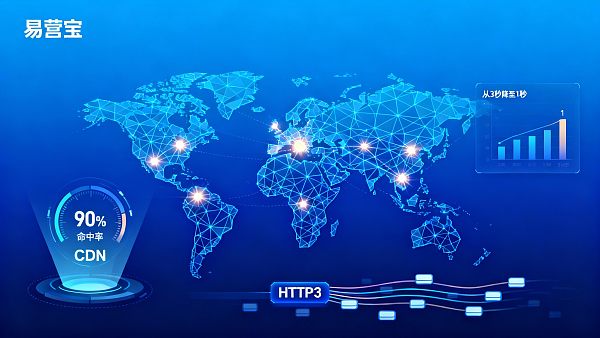
Globalized business growth brings worldwide traffic challenges. As e-commerce, marketing, and content distribution expand internationally, network latency becomes a conversion bottleneck. Beyond local compliance with laws, regulations, payments, and logistics, the more pressing issue lies in technical disparities in user experience. Drawing from Easy Treasure's service practices, typical transformation approaches include intelligent website building, multilingual adaptation, and global CDN node deployment. Founded in 2013 and headquartered in Beijing, Easy Treasure leverages AI and big data as core drivers. With a decade of industry expertise, the company employs a dual strategy of technological innovation and localized services, offering comprehensive solutions covering intelligent website building, SEO optimization, social media marketing, and ad placement. Having served over 100,000 enterprises in achieving global growth, Easy Treasure was recognized among China's Top 100 SaaS Companies in 2023, with an average annual growth rate exceeding 30%, establishing itself as an industry innovation leader. This context demonstrates that resolving overseas access latency is both an engineering challenge and a competitive differentiator.
Key Technologies and Performance Features
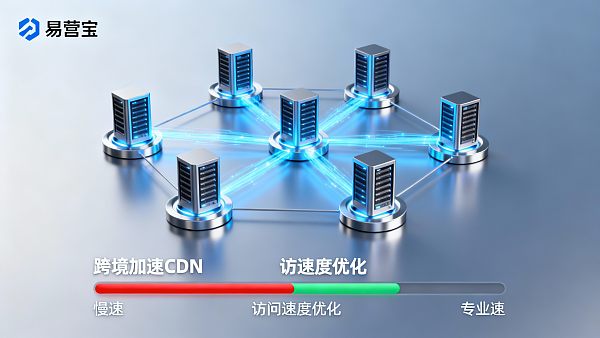
For cross-border acceleration, key technologies include edge CDN node deployment, intelligent routing, TCP tuning, and IPv6 compatibility. Well-designed node distribution and origin pull strategies minimize long-distance transmission latency. During implementation, we recommend validating these technical parameters: 1) Cache hit rate (target ≥90%), 2) TLS handshake optimization (enable OCSP stapling and session reuse), 3) Static resource separation with compression and consolidation strategies, 4) HTTP2/HTTP3 adoption to reduce round trips, 5) DNS and Anycast routing optimization ensuring nearest-node priority. For enterprise network upgrades, we strongly recommend evaluating Internet Protocol Version 6 (IPv6) deployment. IPv6's 128-bit addressing enables faster speeds, native security (built-in IPSec and end-to-end encryption), and reduces NAT-related latency while improving concurrent connection stability. When selecting nodes, consider bandwidth allocation, origin bandwidth limits, and interconnection SLAs with cloud providers.
Application Scenarios, Comparative Analysis, and Procurement Guidance
Different business scenarios prioritize distinct cross-border acceleration aspects: B2C e-commerce focuses on landing page loading and payment stability; B2B websites emphasize form submissions and file downloads; media platforms require high-concurrency optimization and video distribution. Comparing self-built nodes with cloud CDN services: Self-built solutions offer customization, compliance control, and private network advantages but incur higher maintenance and expansion costs. Cloud CDNs enable rapid deployment, global PoP coverage, integrated DDoS protection, and automated certificate management. Procurement should evaluate these indicators: 1) Node geographic coverage (including target market edge PoPs), 2) Origin optimization capabilities (redundant backhaul links and uplink bandwidth), 3) Management and monitoring (real-time analytics, visual alerts, log exports), 4) Third-party ecosystem compatibility (load balancing, firewalls, WAF), 5) Cost structure (volume-based vs. peak bandwidth pricing). During selection, we recommend project managers and QA personnel jointly establish acceptance criteria and retain baseline performance data for benchmarking.

Case Studies, Cost Alternatives, Common Mistakes, and Actionable Recommendations
In practice, our multi-node acceleration implementation for an overseas e-commerce client reduced average landing page load time by 40%, improved page response speed significantly, increased SEO scores by ~30%, and boosted both inquiry volume and conversion rates. This demonstrates rapid ROI from node investment and optimization. For cost alternatives: Local caching and third-party CDNs can operate in parallel. Budget-sensitive projects may deploy key market PoPs first, then expand coverage using traffic scheduling. Common mistakes include: 1) Assuming single-cloud providers solve all latency issues, 2) Neglecting DNS optimization, 3) Overlooking mobile weak-network experiences - all compromising optimization results. For security personnel: Website security impacts SEO - being flagged or blacklisted severely damages rankings and user trust. Finally, we propose five executable steps: 1) Conduct comprehensive website performance baseline testing, 2) Plan key market nodes and budgets, 3) Deploy CDN with caching rules, 4) Upgrade origin infrastructure with IPv6, 5) Establish monitoring and incident response mechanisms.
Why Choose Us | Contact Us
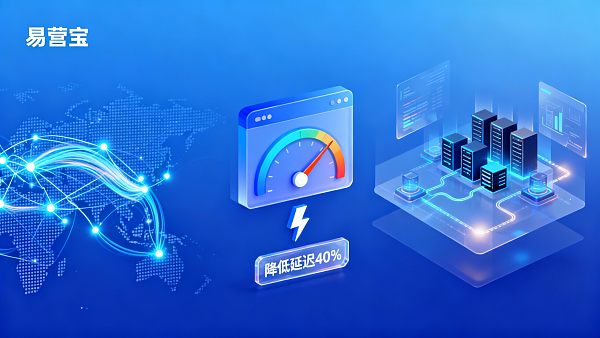
Choose Easy Treasure for our integrated technological innovation and localized services. Our intelligent website system supports multilingual standalone site construction with AI translation engines and global server clusters, improving independent site loading speed by ~40% while increasing average SEO scores by ~30%. Our AI marketing engine automates keyword expansion, TDK generation, and content production at scale. As a Google Premier Partner and Meta official agent with global alliances, we provide closed-loop services from website construction to conversion. For rapid resolution of overseas website latency issues, we offer end-to-end services from diagnosis and recommendations to node deployment and long-term operations. Contact us for free performance assessments and customized acceleration solutions. Click [Contact Method] or visit our product link for technical whitepapers and localized support. We look forward to transforming global traffic into tangible business growth together.
Related Articles
 TrustLink 2.0 Incorporates Independent E-commerce Site Credit Scores into the Review Process for Cross-Border Market Entry in Southeast Asia
 How Is the Price of Building a Zhejiang Foreign Trade Website Calculated? Features, Number of Languages, and Promotion Needs Are Key
 How should Chinese companies choose overseas marketing solutions?An evaluation from channel planning to local execution


Related Products
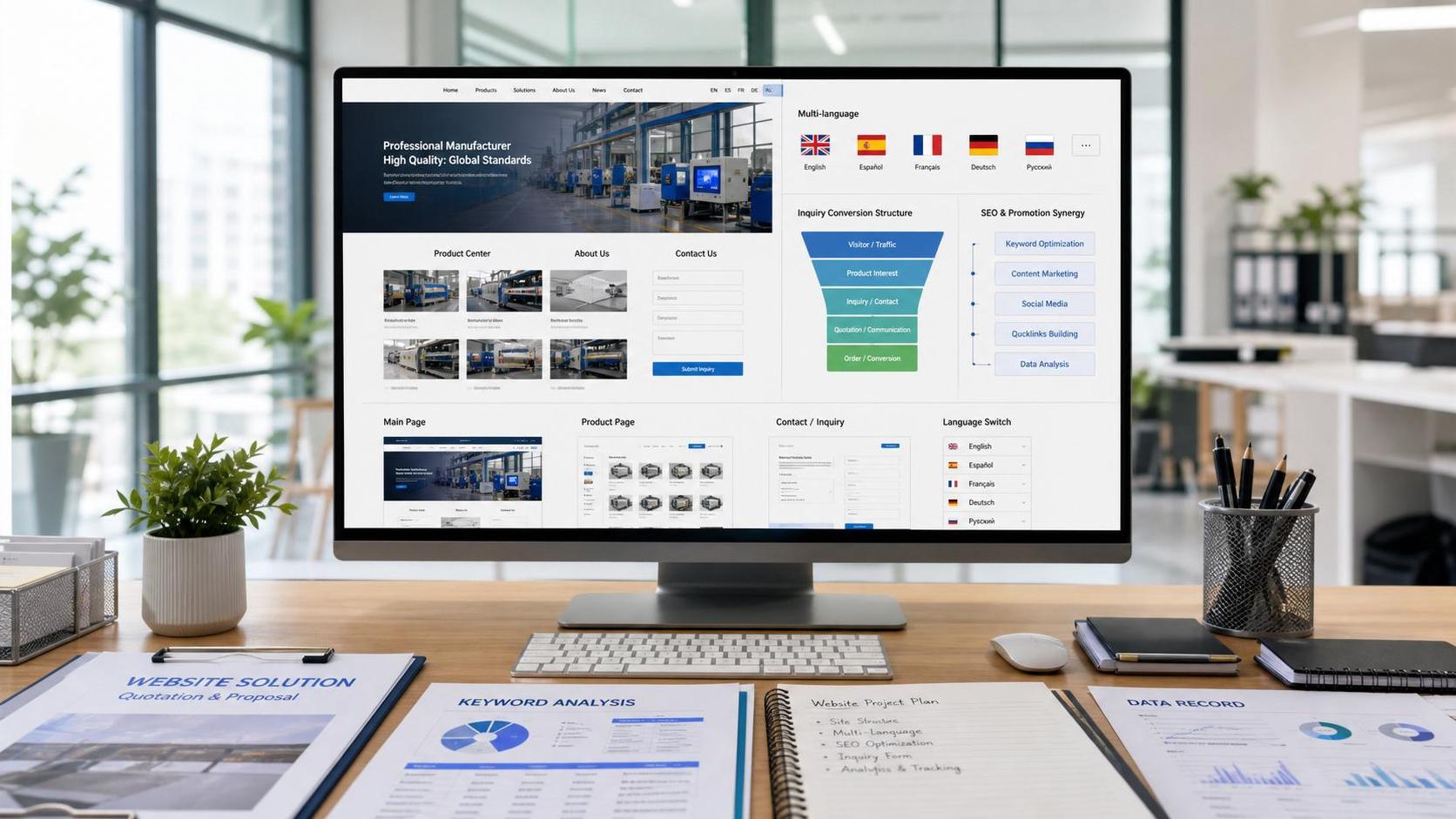
 EasyCamp SaaS Smart Website Marketing SystemE-Yingbao SaaS Smart Website Marketing System: AI-powered, zero-code website building. Rapidly launch multilingual independent e-commerce sites in just 10 minutes. Global server acceleration and AI-driven SEO optimization empower businesses to efficiently connect with global markets. The seamless integration of technology and user-friendly operation makes building e-commerce sites incredibly simple.
 AI+SEM Intelligent Advertising Marketing SystemAI+SEM drives intelligent ad creation, empowering full-funnel precision advertising marketing. The system automatically generates weekly/monthly reports, AI recommends keywords and target countries, monitors core metrics in real-time with intelligent alerts, and enables one-click high-conversion ad solutions to help quickly acquire customers and improve ROI.
 AI+SEO Dual Engine Optimization ServiceEasyWin AI+SEO Dual Engine Optimization System leverages AI-powered keyword mining, content generation, and comprehensive technical optimization to help foreign trade enterprises acquire high-quality organic traffic, significantly improving search rankings and conversion rates.
 AI+SNS Social Media Marketing SystemYingbao AI+SNS Social Media Marketing System - Precision social capture for the social media era. Supports one-click content synchronization across major platforms like Facebook and LinkedIn. AI intelligently rewrites posts for enhanced relevance. 24/7 AI customer service and user profiling analysis empower businesses to efficiently expand into global markets.
 AI+SEO营销解决方案易营宝AI+SEO营销解决方案,通过AI批量写作、智能生成TDK、精准关键词扩词等功能,全面优化网站SEO效果,提升流量与转化率。助力企业构建高效智能网站新生态。
 AI+SEM Advertising Marketing SolutionsAI+SEM Advertising Marketing Solution leverages AI technology to deeply empower SEM ad campaigns. It automatically generates weekly/monthly reports using AI, presenting account data across multiple dimensions for comprehensive insights into campaign performance and trends. The system precisely recommends keywords and target countries, intelligently generates high-conversion ad copy, and enables one-click activation of efficient campaign plans to help businesses rapidly acquire customers. Simultaneously, it monitors core metrics in real time, intelligently identifies abnormal fluctuations, and issues timely alerts to ensure stable, high-return advertising results.
 Domain Name ServicesEasyWin provides professional domain name services, including intelligent queries, one-stop registration, brand protection, and full lifecycle management, helping businesses build a digital brand image.
 EasyOperate B2C Cross-Border E-Commerce Platform & Independent WebsiteEasyStore B2C Cross-border E-commerce Independent Store is an intelligent website building and cross-border e-commerce integrated solution independently developed by EasyStore Information Technology (Beijing) Co., Ltd. The system is specially designed for small and medium-sized as well as large export enterprises, integrating 'website building, operation, marketing, advertising, and conversion' into one, helping enterprises quickly establish cross-border e-commerce independent stores to achieve brand globalization and global sales growth.
The platform supports multiple languages, multiple currencies, and multi-channel marketing, with built-in AI intelligent translation and SEO optimization systems, suitable for mainstream markets such as Southeast Asia, Europe and America, Latin America, and the Middle East, assisting Chinese manufacturing enterprises in efficiently deploying international e-commerce strategies. SSL证书易营宝提供专业SSL安全证书服务,包括单域名和泛域名证书,确保网站数据传输加密、身份验证和完整性保护,助力企业建立安全可信的在线业务环境。









