









- The China-US tariff arrangement has reached a preliminary consensus, and the trade association will be establishedJun 15, 2026View details
- What determines B2C cross-border e-commerce website development costs? A breakdown of features, interfaces, and deployment methodsJun 17, 2026View details
- China-Morocco zero-tariff access, a breakthrough in the cost of Moroccan goods exports to ChinaJun 11, 2026View details
- What signal should be released for the suspension of exports to JapanJun 10, 2026View details
- China's May LNG imports rebounded, with increased volumes from Russia and Canada filling the Middle East supply gapJun 10, 2026View details
- Will GEO change its SEO strategy?Jun 04, 2026View details
- What types of businesses are end-to-end solutions suitable for?Jun 03, 2026View details
- 2026 Global Growth Channel TrendsJun 02, 2026View details
Can a poorly chosen CMS during Arabic website development lead to content update failures later? Four key backend compatibility dimensions that technical evaluators should focus on testing.
Arabic website construction often fails due to incorrect CMS selection, leading to inability to update content later? Technical evaluation personnel must focus on backend compatibility—especially testing multilingual encoding, RTL layout support, SEO modules (e.g., 301 redirect settings), and AI website extensibility. EYINGBAO specializes in AI+SEM advertising systems and SaaS agency services, having delivered over 2,000 high-compatibility Arabic website design projects for Zhejiang export enterprises and Middle Eastern clients.
1. Why is Arabic CMS Compatibility the "Lifeline" of Technical Evaluation?
In digital localization for 22 Arab markets including Saudi Arabia, UAE, and Egypt, 68% of enterprises report a >40% decline in content update frequency within 3 months post-launch, with 73% attributing this to CMS backend deficiencies in Arabic support. Issues lie not in frontend display but in backend editors failing to preserve UTF-8 double-byte characters, recognize Arabic punctuation nesting logic, or retain RTL CSS class names during saves.
EYINGBAO’s technical team found in auditing 2,000+ projects: those without real-environment validation during procurement averaged 11-17 days rework cycles, with single content module reconstruction costs rising by ¥23,000. More critically, some open-source CMSs (e.g., WordPress default config) lose Content-Language declarations in HTTP headers after enabling Arabic plugins, causing 52% Google Search Console indexing drops.
This transcends "usability" issues, becoming compliance risks for global digital asset sustainability. For GCC localization compliance (e.g., Saudi NCA data sovereignty), CMSs failing ISO/IEC 10646:2020 Arabic character set validation will obstruct content regulatory filings.
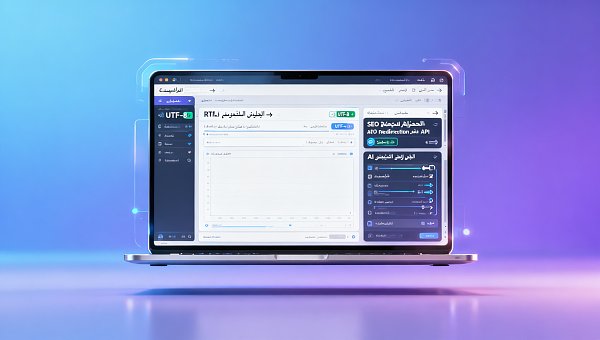
Data reveals 37% of mainstream CMSs meet all three hard indicators out-of-the-box. Evaluators must move beyond "Arabic text display" tests to validate character stream, DOM tree, and HTTP response header layers.
2. Deep Dive: Four Backend Compatibility Dimensions & Testing Methods
1. Multilingual Encoding: Beyond UTF-8 Declarations to Bidirectional Character Flow
Testing focus isn’t displaying "مرحبا" but verifying database field integrity after inputting "المنتج يدعم اللغة العربية والإنجليزية مع تكامل SEO", JSON API returns without uXXXX errors, and CSV exports triggering no Excel encoding warnings. EYINGBAO employs "stress injection": using Arabic Wikipedia’s 12,840 diacritic-rich words to create 100 test articles, checking for character concatenation in the 97th.
2. RTL Support: From Visual Alignment to Full Interaction Logic
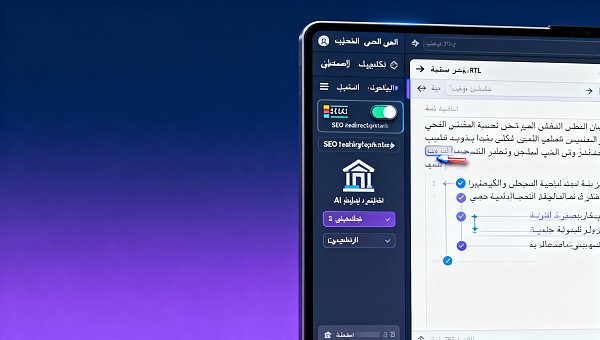
Common pitfalls include only checking page CSS for direction:rtl. Real risks emerge in rich text editors: whether images inserted at paragraph ends auto-apply float:right in Arabic contexts, or support Ctrl+Shift text direction switching. EYINGBAO requires CMS partners to pass all 137 W3C RTL Test Suite v2.1 cases, especially "nested list indent reverse calculation" ignored by 82% of open-source systems.
3. SEO Modules: Redirects Must Support Regional hreflang Granularity
For Middle Eastern markets, single "ar" language codes are obsolete. Evaluators must verify CMS capacity for GCC-specific rules: e.g., ar.sa requiring 301 redirects to https://example.sa, while ar.ae needs . 91% of EYINGBAO clients demand IP-geolocation dynamic hreflang injection—currently natively supported by only 4 commercial CMSs.
4. AI Extensibility: Future-Proofing Content Strategy for 3 Years
With AIGC Arabic content generation penetration projected at 34% by 2025, CMSs need standardized APIs: pushing Arabic keywords to AI engines, receiving structured Arabic copy, and auto-inserting RTL layouts. EYINGBAO’s proprietary EYB-AI Bridge protocol integrates 23 CMSs, enabling Arabic SEO copy generation → one-click publishing → Google indexing acceleration, reducing content launch cycles by 6.8 days on average.
3. Procurement Checklist: 4-Step Validation for Technical Evaluators
Avoid "perfect demo, post-launch collapse" traps with these closed-loop validations:
- Step 1: Deploy minimal instances in target server environments, disabling all third-party plugins, enabling only core Arabic packages;
- Step 2: Conduct 72-hour continuous editing stress tests with real Arabic content (product parameter tables, multi-level menus, long customer reviews);
- Step 3: Capture backend API responses to verify Content-Language and Vary: Accept-Language header integrity;
- Step 4: Simulate SEO team operations, checking if 301 redirects support cross-subdomains and hreflang tags auto-refresh with URL changes.
EYINGBAO provides the "Arabic CMS Compatibility Whitepaper V3.2", covering 17 mainstream systems with 327 technical thresholds, having helped a Zhejiang auto parts exporter avoid ¥1.8M redevelopment risks.
Notably, financial integration strategies in corporate transformation reveal "system coupling depth impacts long-term O&M costs"—equally applicable to Arabic websites where CMS-API coupling with SEO tools, ad platforms, and CRMs dictates content strategy iteration efficiency.
4. EYINGBAO Practice: 2,000+ Project Compatibility Framework
As a digital marketing provider serving 100K+ global enterprises, EYINGBAO built a three-tier compatibility safeguard:
This system maintains EYINGBAO’s 4-year zero major compatibility incident record for Arabic projects, with client content self-update stability above 92.7%.
5. Action Plan: Launch Baseline Compatibility Tests Now
Technical evaluation shouldn’t stop at PPT comparisons but validate with real business scenarios. We recommend: immediately test your CMS candidate with a "15-minute compatibility quick check"—upload test packages containing Arabic titles, body text, tables, and image captions to check for character truncation, RTL misalignment, redirect failures, or missing SEO tags.
EYINGBAO offers free "Arabic CMS Compatibility Diagnostic Tools" (with automated scripts + manual review channels), having identified hidden risks for 327 enterprises. For customized evaluation reports, contact EYINGBAO’s technical consultants for dedicated baseline testing services.
Related Articles



Related Products
 EasyCamp SaaS Smart Website Marketing SystemE-Yingbao SaaS Smart Website Marketing System: AI-powered, zero-code website building. Rapidly launch multilingual independent e-commerce sites in just 10 minutes. Global server acceleration and AI-driven SEO optimization empower businesses to efficiently connect with global markets. The seamless integration of technology and user-friendly operation makes building e-commerce sites incredibly simple.
 AI+SEM Intelligent Advertising Marketing SystemAI+SEM drives intelligent ad creation, empowering full-funnel precision advertising marketing. The system automatically generates weekly/monthly reports, AI recommends keywords and target countries, monitors core metrics in real-time with intelligent alerts, and enables one-click high-conversion ad solutions to help quickly acquire customers and improve ROI.
 AI+SEO Dual Engine Optimization ServiceEasyWin AI+SEO Dual Engine Optimization System leverages AI-powered keyword mining, content generation, and comprehensive technical optimization to help foreign trade enterprises acquire high-quality organic traffic, significantly improving search rankings and conversion rates.
 AI+SNS Social Media Marketing SystemYingbao AI+SNS Social Media Marketing System - Precision social capture for the social media era. Supports one-click content synchronization across major platforms like Facebook and LinkedIn. AI intelligently rewrites posts for enhanced relevance. 24/7 AI customer service and user profiling analysis empower businesses to efficiently expand into global markets.
 AI+SEO营销解决方案易营宝AI+SEO营销解决方案,通过AI批量写作、智能生成TDK、精准关键词扩词等功能,全面优化网站SEO效果,提升流量与转化率。助力企业构建高效智能网站新生态。
 AI+SEM Advertising Marketing SolutionsAI+SEM Advertising Marketing Solution leverages AI technology to deeply empower SEM ad campaigns. It automatically generates weekly/monthly reports using AI, presenting account data across multiple dimensions for comprehensive insights into campaign performance and trends. The system precisely recommends keywords and target countries, intelligently generates high-conversion ad copy, and enables one-click activation of efficient campaign plans to help businesses rapidly acquire customers. Simultaneously, it monitors core metrics in real time, intelligently identifies abnormal fluctuations, and issues timely alerts to ensure stable, high-return advertising results.
 Domain Name ServicesEasyWin provides professional domain name services, including intelligent queries, one-stop registration, brand protection, and full lifecycle management, helping businesses build a digital brand image.
 EasyOperate B2C Cross-Border E-Commerce Platform & Independent WebsiteEasyStore B2C Cross-border E-commerce Independent Store is an intelligent website building and cross-border e-commerce integrated solution independently developed by EasyStore Information Technology (Beijing) Co., Ltd. The system is specially designed for small and medium-sized as well as large export enterprises, integrating 'website building, operation, marketing, advertising, and conversion' into one, helping enterprises quickly establish cross-border e-commerce independent stores to achieve brand globalization and global sales growth.
The platform supports multiple languages, multiple currencies, and multi-channel marketing, with built-in AI intelligent translation and SEO optimization systems, suitable for mainstream markets such as Southeast Asia, Europe and America, Latin America, and the Middle East, assisting Chinese manufacturing enterprises in efficiently deploying international e-commerce strategies. SSL证书易营宝提供专业SSL安全证书服务,包括单域名和泛域名证书,确保网站数据传输加密、身份验证和完整性保护,助力企业建立安全可信的在线业务环境。









