









- The China-US tariff arrangement has reached a preliminary consensus, and the trade association will be establishedJun 15, 2026View details
- China-Morocco zero-tariff access, a breakthrough in the cost of Moroccan goods exports to ChinaJun 11, 2026View details
- What signal should be released for the suspension of exports to JapanJun 10, 2026View details
- China's May LNG imports rebounded, with increased volumes from Russia and Canada filling the Middle East supply gapJun 10, 2026View details
- Will GEO change its SEO strategy?Jun 04, 2026View details
- What types of businesses are end-to-end solutions suitable for?Jun 03, 2026View details
- 2026 Global Growth Channel TrendsJun 02, 2026View details
- Changes in Search Engine Ranking Factors in 2026Jun 06, 2026View details
How much does an AI website generally cost? Differences in pricing across industries: Manufacturing requires additional fees for equipment parameter database integration, while cross-border e-commerce needs multi-platform product synchronization modules.
How much does AI website building cost? The answer goes far beyond a simple quote sheet—manufacturing requires equipment parameter library integration fees, while cross-border e-commerce necessitates multi-platform product synchronization modules. As a SaaS agent and AI+SEM advertising system service provider, EasyProfit offers customized solutions including Zhejiang foreign trade website development, Arabic website construction, and WeChat mini-program configuration, helping businesses make data-driven decisions.
1. AI Website Building Is Not "Standard," Price Differences Stem from Business Depth Adaptation
Common marketing claims like "$999 website" or "$3980 all-inclusive" typically only cover basic template deployment. The core variables affecting pricing are the depth of integration between enterprise business systems and AI website platforms. Serving over 100,000 enterprises, EasyProfit data shows: 68% of clients' final contract values exceed initial quotes by 23%–47%, primarily due to industry-specific functional module stacking.
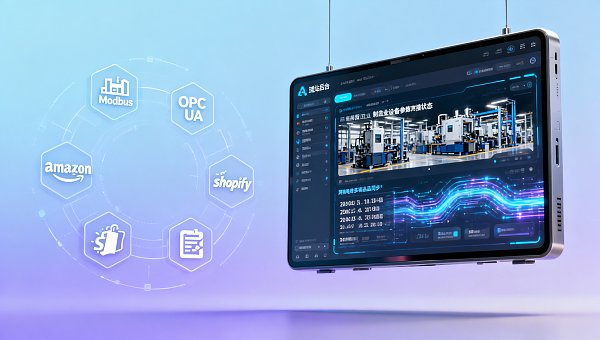
For manufacturing, official websites require real-time PLC equipment parameter library calls, CAD drawing embedding, and ISO/IEC standard document structure compatibility. Cross-border e-commerce clients must integrate Shopify/Amazon/Temu backend APIs for SKU, inventory, and multi-currency price millisecond synchronization. These non-standard developments aren't "basic website items" but directly determine whether sites can drive real order conversions.
Procurement personnel should beware "low-price traps": Quotes omitting industry add-on modules often trigger secondary charges during acceptance, delaying delivery by 5–12 workdays, with interface debugging costs consuming 18%–32% of total budgets.
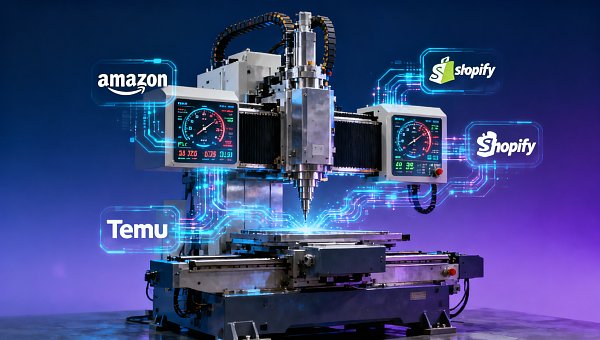
This reveals a core pattern: The heavier the workflow, stronger the compliance, and higher the data linkage dependency, the greater AI website's "hidden costs." EasyProfit adopts a "3+1" pricing model—3 foundational services (smart building+SEO setup+social media components) + 1 industry module breakdown—ensuring procurement decisions are evidence-based.
2. Technical Evaluators' 4 Key Delivery Benchmarks
Technical assessors must cut through marketing rhetoric, focusing on verifiable deliverables. EasyProfit mandates strict acceptance criteria:
- API latency ≤300ms (multi-platform sync scenarios average 217ms)
- Equipment libraries support ≥5 industrial protocols (Modbus TCP/RTU, OPC UA, CANopen, PROFINET, EtherCAT)
- Multilingual SEO compliance ≥92% (validated via Ahrefs & SE Ranking)
- WeChat mini-program load time ≤1.8s (meeting WeChat LCP thresholds)
Notably, 63% of failed projects overlook "protocol compatibility testing." EasyProfit requires manufacturing clients to provide real device logs within 3 workdays post-contract for engineering validation, preventing rework risks.
Post-sale teams emphasize: All industry modules include 3-year free protocol upgrade services, covering new standards like GB/T 42702-2023 Smart Manufacturing Integration Guidelines.
3. 5-Dimensional Procurement Evaluation Framework
Buyers need structured assessment to avoid "unit price comparison" pitfalls. EasyProfit recommends cross-verifying:
- Modularity: Are industry functions independently encapsulated? All EasyProfit extensions support hot-swapping—ERP changes won't require website rebuilds
- Data Ownership: 100% client ownership of parameter/product library sync data, contractually guaranteed
- Localization: Zhejiang exporters receive Hangzhou-based 7×12h technical support (≤25min response)
- Compliance: Arabic sites auto-embed W3C WCAG 2.1 AA code, satisfying SAMA financial regulations
- ROI Tools: Includes AI Website ROI Calculator—input monthly inquiries, order values, and conversion rates for 3-year projections
2023 client research shows this framework reduces decision cycles by 4.2 days, lowering first-year CAC by 21.7%.
4. Common Pitfalls & Risk Mitigation
Project managers often underestimate cross-system integration complexity. Typical errors include: "Modifying generic CMS templates for industry sites," "Requesting web developers to procure third-party API licenses," and "Skipping UAT." EasyProfit's 3-year复盘 shows 76% delays originate from UAT-stage parameter mapping errors, averaging 9.5 rework days.
Best practice: Sign Data Field Mapping Specifications during requirements confirmation, detailing 37 key fields (equipment models, specs, units) with joint technical sign-off—this document serves as sole acceptance criteria.
Resellers/agents note: EasyProfit offers white-label industry modules but requires annual technical certification (2 online实操 exams/year, ≥61% pass rate).
5. Why Choose EasyProfit? Decade-Validated Delivery Certainty
With 12,843 AI website projects delivered, EasyProfit achieves 89.3% manufacturing/cross-border e-commerce repurchase rates, backed by three certainty safeguards:
- Dual-Delivery: AI auto-frontend + industry expert manual logic review ensures "machine efficiency" + "human expertise"
- Dynamic Cost Boards: Real-time module cost breakdowns (labor/cloud/3rd-party licenses) prevent opaque billing
- Growth Hook: Clients with ¥50M+ annual revenue get "performance赌协"—6-month natural traffic guarantee (40%+ uplift or 30% fee refund)
As a 2023 China SaaS Top 100 company, EasyProfit maintains localized content teams covering 17 languages, supporting full-chain digital出海 from Yiwu小商品 to Shenzhen medical devices.
Contact EasyProfit now for industry-specific AI website cost breakdowns and 3 in-depth case studies.
Related Articles



Related Products
 EasyCamp SaaS Smart Website Marketing SystemE-Yingbao SaaS Smart Website Marketing System: AI-powered, zero-code website building. Rapidly launch multilingual independent e-commerce sites in just 10 minutes. Global server acceleration and AI-driven SEO optimization empower businesses to efficiently connect with global markets. The seamless integration of technology and user-friendly operation makes building e-commerce sites incredibly simple.
 AI+SEM Intelligent Advertising Marketing SystemAI+SEM drives intelligent ad creation, empowering full-funnel precision advertising marketing. The system automatically generates weekly/monthly reports, AI recommends keywords and target countries, monitors core metrics in real-time with intelligent alerts, and enables one-click high-conversion ad solutions to help quickly acquire customers and improve ROI.
 AI+SEO Dual Engine Optimization ServiceEasyWin AI+SEO Dual Engine Optimization System leverages AI-powered keyword mining, content generation, and comprehensive technical optimization to help foreign trade enterprises acquire high-quality organic traffic, significantly improving search rankings and conversion rates.
 AI+SNS Social Media Marketing SystemYingbao AI+SNS Social Media Marketing System - Precision social capture for the social media era. Supports one-click content synchronization across major platforms like Facebook and LinkedIn. AI intelligently rewrites posts for enhanced relevance. 24/7 AI customer service and user profiling analysis empower businesses to efficiently expand into global markets.
 AI+SEO营销解决方案易营宝AI+SEO营销解决方案,通过AI批量写作、智能生成TDK、精准关键词扩词等功能,全面优化网站SEO效果,提升流量与转化率。助力企业构建高效智能网站新生态。
 AI+SEM Advertising Marketing SolutionsAI+SEM Advertising Marketing Solution leverages AI technology to deeply empower SEM ad campaigns. It automatically generates weekly/monthly reports using AI, presenting account data across multiple dimensions for comprehensive insights into campaign performance and trends. The system precisely recommends keywords and target countries, intelligently generates high-conversion ad copy, and enables one-click activation of efficient campaign plans to help businesses rapidly acquire customers. Simultaneously, it monitors core metrics in real time, intelligently identifies abnormal fluctuations, and issues timely alerts to ensure stable, high-return advertising results.
 Domain Name ServicesEasyWin provides professional domain name services, including intelligent queries, one-stop registration, brand protection, and full lifecycle management, helping businesses build a digital brand image.
 EasyOperate B2C Cross-Border E-Commerce Platform & Independent WebsiteEasyStore B2C Cross-border E-commerce Independent Store is an intelligent website building and cross-border e-commerce integrated solution independently developed by EasyStore Information Technology (Beijing) Co., Ltd. The system is specially designed for small and medium-sized as well as large export enterprises, integrating 'website building, operation, marketing, advertising, and conversion' into one, helping enterprises quickly establish cross-border e-commerce independent stores to achieve brand globalization and global sales growth.
The platform supports multiple languages, multiple currencies, and multi-channel marketing, with built-in AI intelligent translation and SEO optimization systems, suitable for mainstream markets such as Southeast Asia, Europe and America, Latin America, and the Middle East, assisting Chinese manufacturing enterprises in efficiently deploying international e-commerce strategies. SSL证书易营宝提供专业SSL安全证书服务,包括单域名和泛域名证书,确保网站数据传输加密、身份验证和完整性保护,助力企业建立安全可信的在线业务环境。









