









- How Can a Brand Updates Page Be Made More SEO-Friendly? Analysis of Update Frequency, Content Structure, and Internal Linking StrategyJun 28, 2026View details
- What stages does the cross-border services ecosystem include? How do website building, promotion, payment, and compliance work togetherJun 22, 2026View details
- How will email marketing costs change in 2026Jun 22, 2026View details
- The China-US tariff arrangement has reached a preliminary consensus, and the trade association will be establishedJun 15, 2026View details
- Should overseas brand marketing start with ads or contentJun 21, 2026View details
- What determines B2C cross-border e-commerce website development costs? A breakdown of features, interfaces, and deployment methodsJun 17, 2026View details
- China-Morocco zero-tariff access, a breakthrough in the cost of Moroccan goods exports to ChinaJun 11, 2026View details
- What signal should be released for the suspension of exports to JapanJun 10, 2026View details
How to build a Headless CMS for global websites, and which going-global scenarios is it suitable for?
How to build a Headless CMS for global websites, the key lies in balancing multilingual support, multi-site management, and marketing growth efficiency. For companies planning to expand overseas, choosing the right architecture not only affects content collaboration and localized operations, but also directly impacts global customer acquisition and conversion performance.
For business decision-makers, the question is not simply “whether to adopt a Headless CMS,” but rather “whether it can support multi-region launches, content reuse, SEO implementation, and subsequent marketing expansion within 3–6 months.” If the underlying architecture is disconnected from business goals, it often leads to a chain of problems such as extended development cycles, rising site maintenance costs, and low localization efficiency.
In an integrated website + marketing services scenario, Headless CMS is better suited to coordinated planning with website development, search optimization, content distribution, advertising landing pages, and data analytics. Digital marketing service providers like Eybang Information Technology (Beijing) Co., Ltd., which have long served global growth, usually help enterprises upgrade from “being able to launch” to “being able to sustain growth” from four dimensions: technical architecture, content workflows, search visibility, and conversion paths.
Why overseas-oriented enterprises are paying increasing attention to Headless CMS architecture
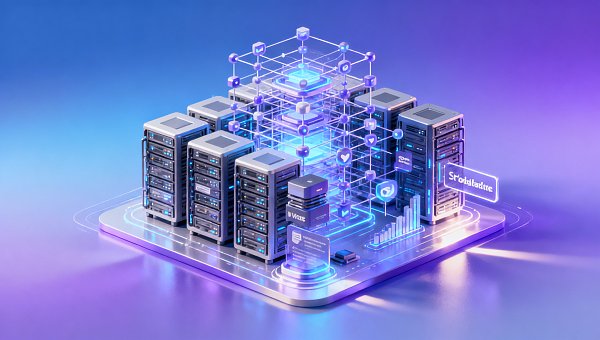
To understand how to build a Headless CMS for global websites, one must first understand that it solves not a single website issue, but a global content operations issue. Traditional CMSs usually couple the frontend, templates, and content management together, making them suitable for a single site or a single language. However, when an enterprise enters 2 or more regional markets and supports 5 or more language versions, scalability efficiency declines significantly.
What is the core value of a Headless CMS
The core of a Headless CMS is the “separation of content and presentation.” Content is distributed via APIs to official websites, campaign pages, mobile platforms, standalone sites, or third-party touchpoints, and the same product information can be reused across 3–8 channels. For companies that need to continuously invest in SEO, social media marketing, and advertising, this capability can significantly reduce repetitive production costs.
For management, the most intuitive benefits are usually reflected in 4 aspects: faster replication of multiple sites, more centralized multilingual updates, more flexible frontend experiences, and more agile launch of marketing campaigns. This is especially noticeable for teams with frequent new product launches, or those that need to update more than 20 pieces of content per month, where the efficiency gains brought by architectural differences are more apparent.
Typical scenarios suitable for decision-maker evaluation
Not every company must use a Headless CMS, but the following scenarios are usually a better fit: first, planning to build 2 or more country-specific websites; second, operating a brand site, product site, and landing pages in parallel; third, requiring front-end and back-end collaboration; fourth, placing importance on global SEO and the update frequency of localized content; fifth, hoping to connect the website with CRM, advertising data, and marketing automation tools.
The table below is suitable for enterprises to use as a basis for internal discussion when evaluating “traditional CMS” and “Headless CMS” in the early stage, focusing on launch speed, content governance, and marketing adaptability, rather than only looking at initial development costs.
From a decision-making perspective, a Headless CMS may not necessarily deliver the lowest upfront investment, but it makes it easier to turn global website development from a one-time delivery into a sustainable growth system. For companies planning to launch new regional sites, strengthen SEO, or build a content hub within the next 12 months, this architecture is usually more forward-looking.
Common enterprise misconceptions
- Only looking at website development costs while ignoring content operation costs over the following 12–24 months.
- Understanding multilingual capability as simple translation, without planning URLs, metadata, and regional keywords.
- Letting only the technical team choose the solution, without involving SEO, content teams, and marketing teams in the decision-making process.
- Adding marketing automation only after the official website goes live, resulting in broken data tracking and conversion paths.
How to build a Headless CMS for global websites: 5 steps from architecture to launch
If a company hopes that a Headless CMS will truly serve overseas growth, it is recommended not to start with “choosing a CMS tool,” but to work backward from the business model. A relatively sound implementation cycle is usually between 4–12 weeks, depending on the number of languages, number of sites, content volume, and complexity of system integration.
Step 1: Define the site model and regional strategy
First define whether it is a single primary domain with multiple languages, or multiple country-specific sites operating in parallel. If the target markets are within 3 countries and brand information is highly unified, a primary domain + language directory structure can be prioritized; if product lines, pricing systems, and conversion paths vary greatly across countries, then an independent regional site model is more suitable.
It is recommended to confirm at least 4 basic strategies
- Number of languages and priority, with a recommendation to advance 2–5 languages in the first year.
- Site structure, clearly defining the rules for using directories, subdomains, or independent domains.
- Content permissions, distinguishing between globally unified content from headquarters and the editable scope for local teams.
- Conversion goals, such as inquiry forms, demo bookings, resource downloads, or e-commerce orders.
Step 2: Design the content model, not the pages first
The efficiency of a Headless CMS comes from structured content. Product pages, case study pages, solution pages, FAQs, blogs, and regional pages should all be broken down into fields rather than being directly created as static pages. Common fields include title, summary, body text, SEO title, description, language version, industry tags, CTA copy, and regional attributes. Usually, each type of content model contains 8–15 core fields.
If this stage is planned properly, the reuse rate of multilingual content can be significantly improved later. For large organizations, the content model not only determines website efficiency, but also affects the synchronization of sales materials, the production of landing pages, and the iteration speed of advertising content. Some enterprises even include white papers, case studies, and industry insights in the content hub to form a unified asset repository. A similar knowledge governance logic is also commonly seen in the process-oriented management thinking emphasized in Research on the Construction of Internal Control Systems in Public Institutions Based on Risk Prevention and Control.
Step 3: Plan the frontend framework and SEO capabilities simultaneously
When building a Headless site, what many enterprises most easily overlook is search visibility. The frontend framework should support server-side rendering or static generation to ensure page crawling, loading speed, and structured output. For B2B official websites, it is recommended to prioritize these 6 fundamentals: above-the-fold loading, URL readability, hreflang deployment, breadcrumb navigation, sitemap, and meta tag management.
The table below lists the key modules that enterprises need to pay attention to simultaneously when implementing how to build a Headless CMS for global websites, making it easier for technical, marketing, and management teams to conduct unified evaluations.
For enterprises, what is truly worth investing in is not a flashy frontend effect, but whether “after the technology goes live, SEO, lead collection, and content operations can connect smoothly.” If these three are disconnected, even the most advanced architecture will struggle to generate sustainable returns.
Step 4: Establish a localized operations workflow
The common failure point of overseas websites is often not in website building, but in operations. It is recommended to establish a dual-layer mechanism of “headquarters unification + regional adaptation”: headquarters is responsible for the brand, core product narrative, and primary keyword framework, while regional teams are responsible for local case studies, industry-specific expression, and promotional content. Usually, a mature process should include 5 stages: content creation, translation proofreading, SEO review, legal review, and pre-launch testing.
If the enterprise involves multiple business departments, the publishing process is best controlled within 2 levels of approval to avoid content backlog caused by cross-department waiting. Especially during peak advertising campaign seasons, the timeliness of landing page launches often needs to be completed within 24–72 hours. The heavier the process, the higher the cost of missed marketing opportunities.
Step 5: Use data to drive continuous optimization
A Headless CMS is not a one-time project. After launch, at least 3 categories of metrics should be tracked: traffic metrics, content metrics, and conversion metrics. Traffic metrics focus on organic visit trends across country-specific sites; content metrics focus on page indexing, bounce rate, dwell time, and update frequency; conversion metrics focus on form submission rates, lead quality, and inquiry cost across different channels. It is recommended to conduct reviews at 30-day, 90-day, and 180-day stages.
Which overseas expansion scenarios are best suited for adopting a Headless CMS
For enterprise decision-makers, whether adopting a Headless CMS is worthwhile depends mainly on business complexity and future expansion plans, rather than simply following technology trends. The following types of scenarios usually realize investment value faster.
Scenario 1: Simultaneous development of multiple country-specific sites
If an enterprise plans to continuously launch 3 or more country websites within 6–12 months, a Headless CMS has greater advantages. It can modularize common content, reduce repetitive development, and allow each regional site to make differentiated adjustments only to pricing, case studies, contact methods, and部分 copy, thereby shortening the secondary launch cycle.
Scenario 2: Official website and marketing landing pages operating in parallel
Many B2B companies, in addition to their official websites, also need to create a large number of landing pages for advertising, trade shows, white paper downloads, and demo bookings. If every launch depends on development scheduling, marketing response speed will be significantly constrained. After combining a Headless CMS with a component-based page system, the launch time for landing pages can often be shortened from 1–2 weeks to 2–5 days.
Scenario 3: Customer acquisition driven by content marketing
If an enterprise values the long-term accumulation of blogs, case studies, industry insights, and solution pages, a Headless CMS is more suitable for building content assets. It not only improves publishing efficiency, but more importantly enables continuous expansion across different regions and product lines under a unified framework. For teams that need to publish professional content at high frequency, this systematic capability is more critical than a one-time website build.
Scenario 4: Need for system integration and compliance management
When a website needs to connect with CRM, customer service systems, email automation, product databases, or even internal knowledge platforms, the interface capabilities of a Headless CMS are easier to scale. For organizations with stricter process requirements, they can also draw on the node control thinking emphasized in Research on the Construction of Internal Control Systems in Public Institutions Based on Risk Prevention and Control to integrate permissions, approvals, and content traceability into the publishing workflow.
The 4 risk points enterprises should pay most attention to when selecting a solution
How to build a Headless CMS for global websites is not finished by simply purchasing a system. What truly affects success or failure is often the control of key risks during implementation.
Risk 1: Focusing only on technology, not on the marketing chain
If after launch the website lacks clear CTAs, form tracking, and channel attribution, even the best performance will be difficult to convert into sales leads. It is recommended to involve SEO, advertising, and content operations teams early in the project to avoid a disconnect between technical delivery and marketing goals.
Risk 2: Content model design is too shallow
Many companies only migrated pages in the early stage without decomposing them into fields, so when adding new languages, campaign pages, or product combinations later, extensive manual redesign is still required. Once the content model needs rework, the cost is often higher than spending an additional 1–2 weeks on planning in the early stage.
Risk 3: Ignoring regional SEO differences
Search habits differ across markets. Keywords that work for an English site may not be suitable for German, Spanish, or Southeast Asian markets. During decision-making, it is important to confirm whether the supplier has multilingual content planning and localization optimization capabilities, rather than staying only at the technical level.
Risk 4: Lack of a long-term operations and maintenance mechanism
An overseas website is not a digital business card left idle after delivery. It is recommended that enterprises establish at least a quarterly content update mechanism, a monthly data review mechanism, and an annual architecture audit mechanism. If internal team resources are limited, it is more suitable to choose a service model that balances website building, SEO, content, and advertising collaboration.
For enterprises preparing to expand overseas or upgrade their global official websites, the value of a Headless CMS lies not in chasing new concepts, but in building a global content and customer acquisition foundation that is replicable, scalable, and continuously optimizable. It is especially suitable for B2B companies with multilingual needs, multiple sites, strong content marketing, and strong lead conversion requirements.
If you are evaluating how to build a Headless CMS for global websites, or hope to integrate website building, SEO, localized content, and advertising-driven growth, it is recommended to clarify business goals, regional strategies, and technical boundaries as early as possible. With the integrated experience of Eybang Information Technology (Beijing) Co., Ltd. in intelligent website development, SEO optimization, social media marketing, and advertising placement, enterprises can more easily avoid detours and shorten the trial-and-error cycle. Contact us now to get customized solutions and implementation recommendations that are better suited to your overseas business.
Related Articles
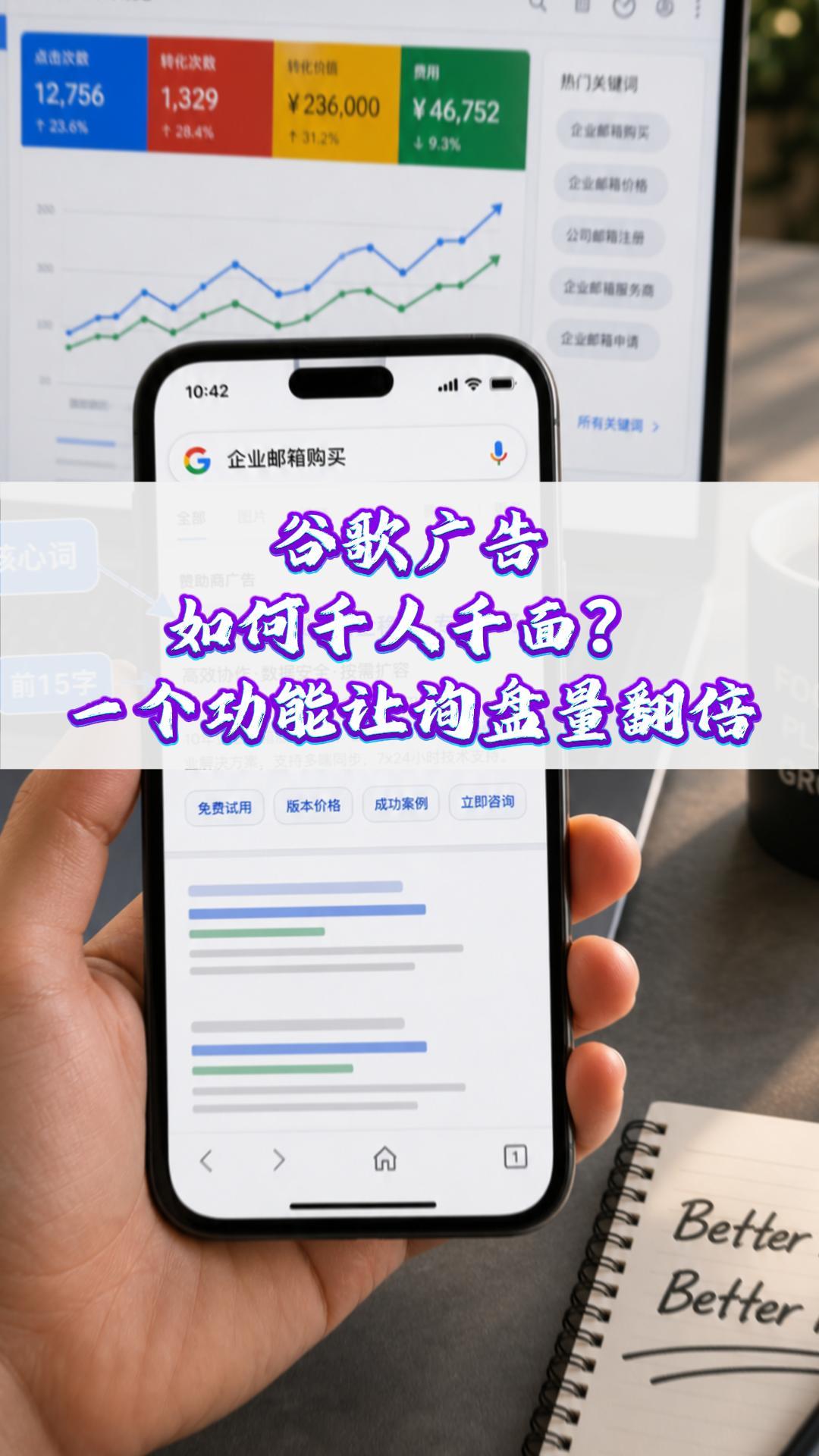
 How Can Google Ads Personalize Content for Every User? One Feature That Doubles Your Inquiry Volume
 Why a Google-optimized independent website is essential for trailer exports
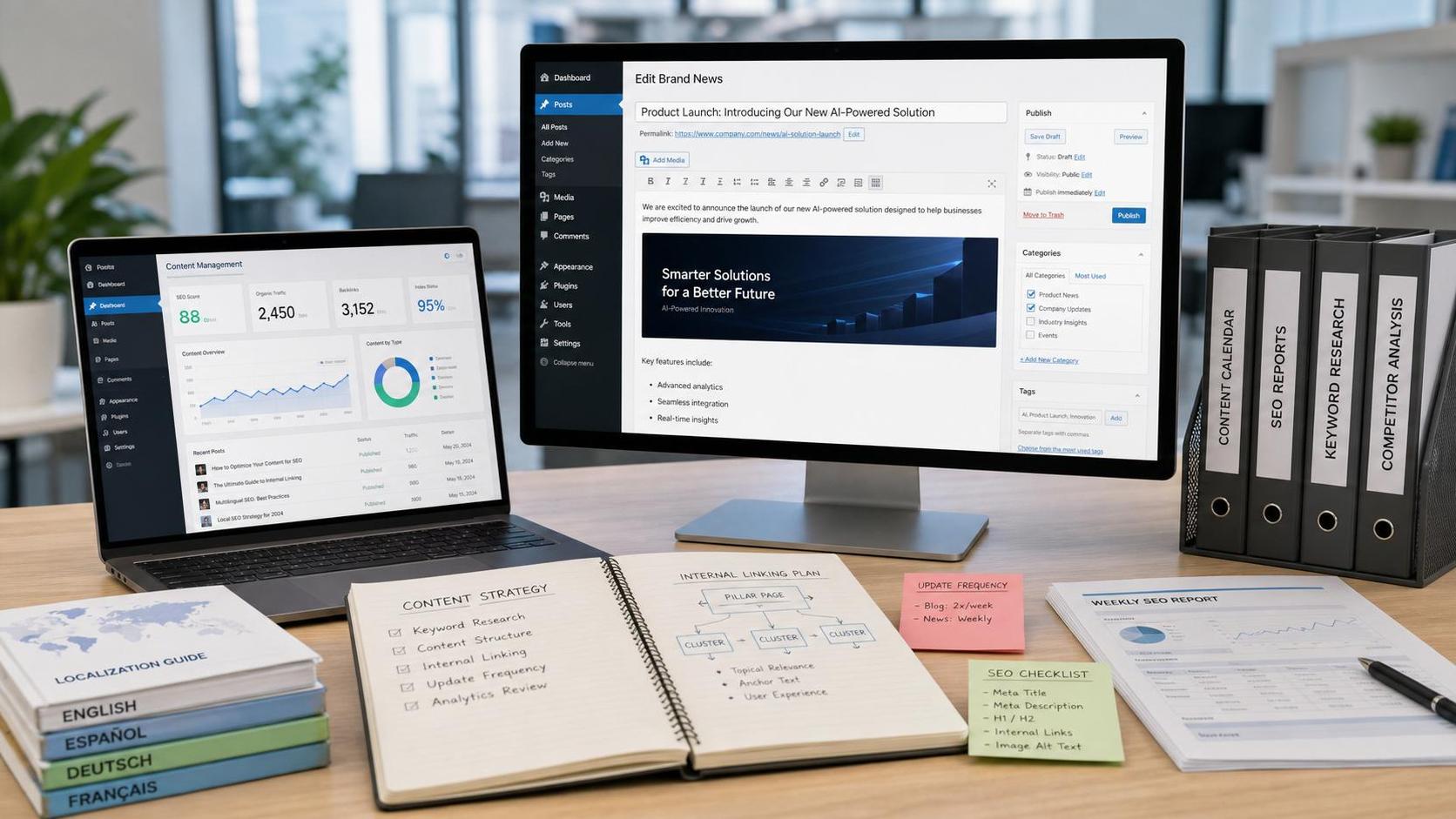
 How Can a Brand Updates Page Be Made More SEO-Friendly? Analysis of Update Frequency, Content Structure, and Internal Linking Strategy

Related Products
 EasyCamp SaaS Smart Website Marketing SystemE-Yingbao SaaS Smart Website Marketing System: AI-powered, zero-code website building. Rapidly launch multilingual independent e-commerce sites in just 10 minutes. Global server acceleration and AI-driven SEO optimization empower businesses to efficiently connect with global markets. The seamless integration of technology and user-friendly operation makes building e-commerce sites incredibly simple.
 AI+SEM Intelligent Advertising Marketing SystemAI+SEM drives intelligent ad creation, empowering full-funnel precision advertising marketing. The system automatically generates weekly/monthly reports, AI recommends keywords and target countries, monitors core metrics in real-time with intelligent alerts, and enables one-click high-conversion ad solutions to help quickly acquire customers and improve ROI.
 AI+SEO Dual Engine Optimization ServiceEasyWin AI+SEO Dual Engine Optimization System leverages AI-powered keyword mining, content generation, and comprehensive technical optimization to help foreign trade enterprises acquire high-quality organic traffic, significantly improving search rankings and conversion rates.
 AI+SNS Social Media Marketing SystemYingbao AI+SNS Social Media Marketing System - Precision social capture for the social media era. Supports one-click content synchronization across major platforms like Facebook and LinkedIn. AI intelligently rewrites posts for enhanced relevance. 24/7 AI customer service and user profiling analysis empower businesses to efficiently expand into global markets.
 AI+SEO营销解决方案易营宝AI+SEO营销解决方案,通过AI批量写作、智能生成TDK、精准关键词扩词等功能,全面优化网站SEO效果,提升流量与转化率。助力企业构建高效智能网站新生态。
 AI+SEM Advertising Marketing SolutionsAI+SEM Advertising Marketing Solution leverages AI technology to deeply empower SEM ad campaigns. It automatically generates weekly/monthly reports using AI, presenting account data across multiple dimensions for comprehensive insights into campaign performance and trends. The system precisely recommends keywords and target countries, intelligently generates high-conversion ad copy, and enables one-click activation of efficient campaign plans to help businesses rapidly acquire customers. Simultaneously, it monitors core metrics in real time, intelligently identifies abnormal fluctuations, and issues timely alerts to ensure stable, high-return advertising results.
 Domain Name ServicesEasyWin provides professional domain name services, including intelligent queries, one-stop registration, brand protection, and full lifecycle management, helping businesses build a digital brand image.
 EasyOperate B2C Cross-Border E-Commerce Platform & Independent WebsiteEasyStore B2C Cross-border E-commerce Independent Store is an intelligent website building and cross-border e-commerce integrated solution independently developed by EasyStore Information Technology (Beijing) Co., Ltd. The system is specially designed for small and medium-sized as well as large export enterprises, integrating 'website building, operation, marketing, advertising, and conversion' into one, helping enterprises quickly establish cross-border e-commerce independent stores to achieve brand globalization and global sales growth.
The platform supports multiple languages, multiple currencies, and multi-channel marketing, with built-in AI intelligent translation and SEO optimization systems, suitable for mainstream markets such as Southeast Asia, Europe and America, Latin America, and the Middle East, assisting Chinese manufacturing enterprises in efficiently deploying international e-commerce strategies. SSL证书易营宝提供专业SSL安全证书服务,包括单域名和泛域名证书,确保网站数据传输加密、身份验证和完整性保护,助力企业建立安全可信的在线业务环境。









