









- Cross-Border Marketing Trend Research: Why More and More Companies Are Starting to Deploy AI Search and GEO OptimizationJun 30, 2026View details
- Cross-Border Marketing Trend Research: How Independent Sites, AI Content, and Short-Video Customer Acquisition Are ChangingJun 30, 2026View details
- How Can a Brand Updates Page Be Made More SEO-Friendly? Analysis of Update Frequency, Content Structure, and Internal Linking StrategyJun 28, 2026View details
- What stages does the cross-border services ecosystem include? How do website building, promotion, payment, and compliance work togetherJun 22, 2026View details
- How will email marketing costs change in 2026Jun 22, 2026View details
- The China-US tariff arrangement has reached a preliminary consensus, and the trade association will be establishedJun 15, 2026View details
- Should overseas brand marketing start with ads or contentJun 21, 2026View details
- What determines B2C cross-border e-commerce website development costs? A breakdown of features, interfaces, and deployment methodsJun 17, 2026View details
How to Build an Enterprise Multilingual CMS for Effective Multi-site Management
How should an enterprise multilingual CMS be built to balance multi-site management? For scenarios where a corporate website, regional site clusters, and marketing landing pages run in parallel, the key does not lie in how many standalone features it has, but in whether the underlying model supports unified governance, flexible scalability, and efficient localization. For integrated website and marketing service development, a suitable multilingual content platform must not only serve brand consistency, but also support search growth, lead conversion, and cross-regional operational collaboration.
1. The Core Definition of How to Build an Enterprise Multilingual CMS

To understand how to build an enterprise multilingual CMS, the first thing to clarify is that the target is not a single-language website, but an enterprise-level content system that supports unified management across multiple countries, multiple brands, and multiple business lines. It usually connects website building, content publishing, search optimization, lead collection, and data analytics.
A truly practical architecture is not just about translating pages. It must also solve issues such as site template reuse, synchronization of language versions, permission approval, regional content differences, technical performance, and marketing collaboration.
Therefore, how to build an enterprise multilingual CMS is essentially about designing a digital content governance model of “unified foundation + local autonomy.” Headquarters must be able to control, regions must be able to adapt, marketing must move fast, and technology must remain sustainable—this is the reasonable goal.
2. Industry Development Context and Current Focus Areas
As companies expand overseas, regional advertising increases, and competition for search traffic intensifies, multi-site management has shifted from a technical supporting need to growth infrastructure. Especially under the integrated website + marketing service model, the content platform needs to serve both brand communication and customer acquisition conversion at the same time.
When evaluating how to build an enterprise multilingual CMS today, attention is usually focused on the following points:
- Whether it supports shared content models and component libraries across multiple sites
- Whether it includes language version mapping and translation workflow tracking
- Whether it supports independently configured forms, navigation, and landing pages for different regions
- Whether it balances search friendliness, page performance, and deployment efficiency
- Whether it enables parallel collaboration among marketing, content, and technical teams
For a website system intended for long-term operation, how to build an enterprise multilingual CMS should also take into account the accumulation of content assets over time. If the model design is too fragmented, maintenance costs will rise quickly when new sites are added later.
Correspondence Between Key Construction Focuses and Implementation Requirements
3. Business Value of Balancing Multi-Site Management
How to build an enterprise multilingual CMS should not be judged only by development difficulty, but also by operational efficiency. A mature platform can incorporate content production, page updates, search optimization, and site expansion into the same workflow, reducing duplicated construction.
First, it can improve the speed of global content delivery. After headquarters produces standard content, regional sites can translate, rewrite, and locally supplement it based on the same content model, shortening the launch cycle.
Second, it can reduce the risk of losing control over the brand. Through unified components, navigation rules, page frameworks, and asset libraries, different sites can still maintain visual and information consistency even when operating independently.
Third, it can strengthen the linkage between search and marketing. Each language site can configure titles, descriptions, structured content, and conversion paths according to local search habits, thereby improving the quality of organic traffic.
In actual digital transformation, many companies also pay simultaneous attention to governance standards and growth methodology. Relevant research materials such as Analysis of Implementation Paths for ESG to Support the Development of New Quality Productive Forces in Enterprises can also provide a reference perspective for process standardization and long-term value evaluation in platform development.
4. Typical Architectures and Classification of Applicable Scenarios
How to build an enterprise multilingual CMS usually does not have only one answer. Different business stages have different requirements for multilingual site clusters. Common approaches can generally be divided into three types.
1. Headquarters-Unified Model
Suitable for enterprises with high requirements for brand control. Content models, templates, domain rules, and approval workflows are managed in a unified manner, while regional sites are mainly responsible for local translation and minor copy adjustments.
2. Regional Autonomous Model
Suitable for industries with significant market differences. Headquarters retains the design system, master data, and security standards, while regional teams can independently configure sections, campaign pages, forms, and marketing content.
3. Hybrid Collaborative Model
This is the more common approach. Core pages and product pages are produced centrally by headquarters, while news, case studies, and campaign pages are updated autonomously by regions, balancing efficiency and local conversion.
5. Six Key Capabilities That Should Be Prioritized During Implementation
If the question is how to build an enterprise multilingual CMS, the most valuable part lies in capability prioritization. It is recommended to build the foundation first and then create the pages, to avoid later restructuring.
- Unified content modeling. Break products, case studies, news, and landing pages into structured fields.
- Language version mapping. Each piece of content should clearly associate the source language with the target language.
- Site-level configuration. Support switching navigation, domains, forms, and footer information for different countries.
- Permission approval mechanism. Layered control for editing, translation, legal, operations, and technical functions.
- Search-friendly capability. Including URL rules, tag management, sitemaps, and metadata configuration.
- Marketing integration capability. Connect to lead forms, analytics tools, and marketing automation platforms.
These capabilities determine whether how to build an enterprise multilingual CMS can truly serve the business, rather than merely forming a backend that can publish pages.
6. Practical Recommendations and Common Precautions
In project implementation, the most common issue is not that the technology cannot do it, but that the early-stage rules are unclear. To avoid losing control of multi-site management later, progress can be made from the following aspects.
- First define the boundaries of the main site, regional sites, and campaign sites, and do not mix responsibilities.
- First establish a terminology database and translation standards, then expand language coverage.
- Standardize page components as much as possible to reduce custom development for individual sites.
- Set up preview, review, and rollback processes before publishing to reduce the risk of operational errors.
- Write search rules into the site-building process instead of patching them after launch.
If an enterprise is moving from scattered sites to a unified platform, it can also combine the governance thinking in Analysis of Implementation Paths for ESG to Support the Development of New Quality Productive Forces in Enterprises to strengthen the collaborative relationship among systems, processes, and technology.
7. The Next Implementation Path for Execution
Returning to the question of how to build an enterprise multilingual CMS, it is recommended to proceed in “three steps.” First, sort out the existing sites, languages, content types, and system interfaces. Second, determine the unified content model, template system, and permission workflows. Third, choose a pilot region to go live first, and then expand to more sites.
For enterprises pursuing global growth, an enterprise-level multilingual content platform is not only a website tool, but also a data hub connecting brand, search, advertising, and conversion. When the platform is built properly, multi-site management is no longer a burden, but becomes a foundational capability for continuously amplifying marketing efficiency.
E-Marketing Information Technology (Beijing) Co., Ltd. has long focused on the coordination of intelligent website building, SEO optimization, social media marketing, and advertising placement, driving integrated website and marketing service development through artificial intelligence and big data. Faced with growth demands across multiple languages, multiple regions, and multiple objectives running in parallel, clear platform planning and an executable implementation path often determine the final results more than any single function.
Related Articles
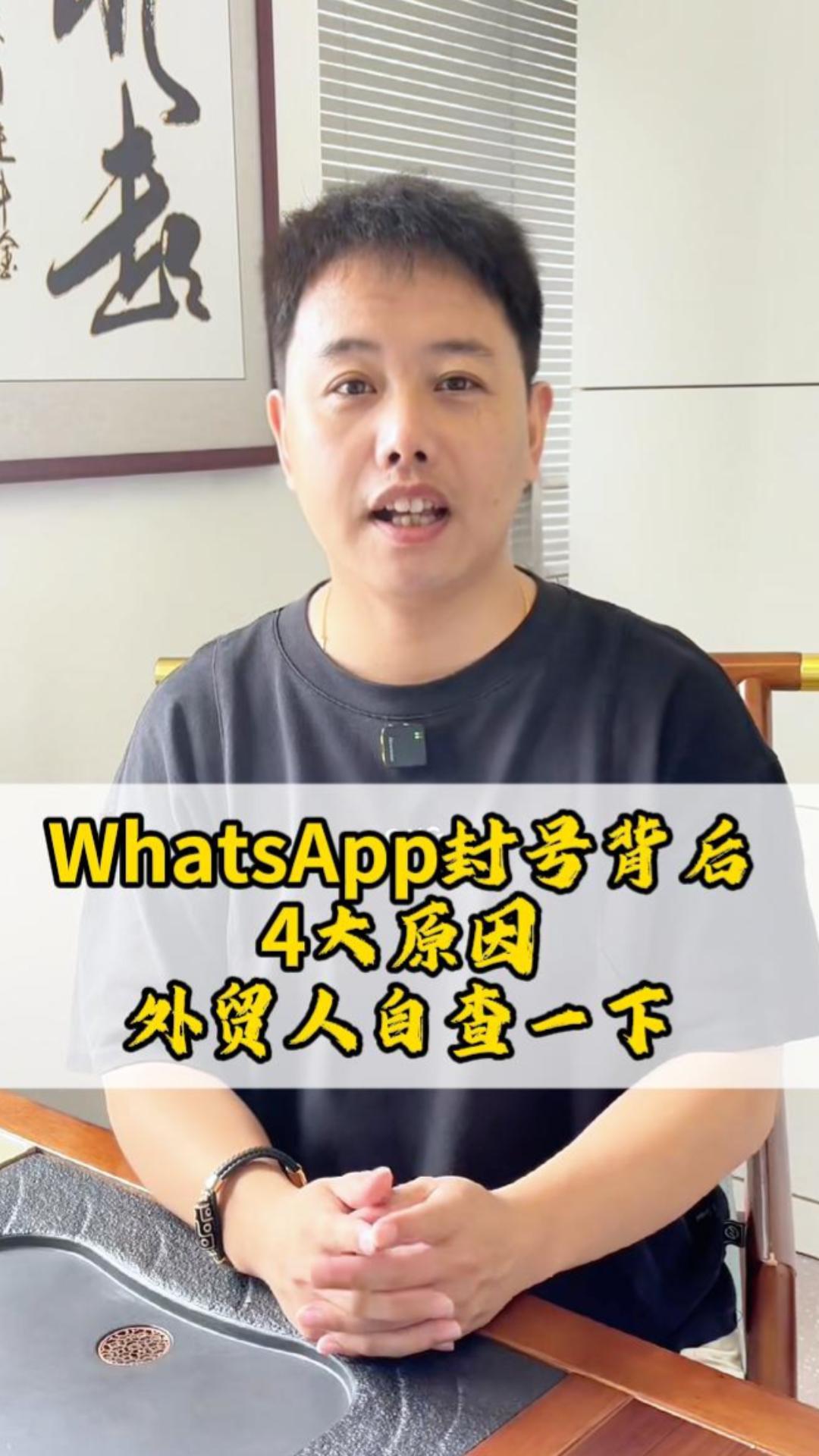
 4 Major Reasons Behind WhatsApp Account Bans, A Quick Self-Check for Foreign Trade Professionals
 Cross-Border Marketing Trend Research: Why More and More Companies Are Starting to Deploy AI Search and GEO Optimization
 Cross-Border Marketing Trend Research: How Independent Sites, AI Content, and Short-Video Customer Acquisition Are Changing


Related Products
 EasyCamp SaaS Smart Website Marketing SystemE-Yingbao SaaS Smart Website Marketing System: AI-powered, zero-code website building. Rapidly launch multilingual independent e-commerce sites in just 10 minutes. Global server acceleration and AI-driven SEO optimization empower businesses to efficiently connect with global markets. The seamless integration of technology and user-friendly operation makes building e-commerce sites incredibly simple.
 AI+SEM Intelligent Advertising Marketing SystemAI+SEM drives intelligent ad creation, empowering full-funnel precision advertising marketing. The system automatically generates weekly/monthly reports, AI recommends keywords and target countries, monitors core metrics in real-time with intelligent alerts, and enables one-click high-conversion ad solutions to help quickly acquire customers and improve ROI.
 AI+SEO Dual Engine Optimization ServiceEasyWin AI+SEO Dual Engine Optimization System leverages AI-powered keyword mining, content generation, and comprehensive technical optimization to help foreign trade enterprises acquire high-quality organic traffic, significantly improving search rankings and conversion rates.
 AI+SNS Social Media Marketing SystemYingbao AI+SNS Social Media Marketing System - Precision social capture for the social media era. Supports one-click content synchronization across major platforms like Facebook and LinkedIn. AI intelligently rewrites posts for enhanced relevance. 24/7 AI customer service and user profiling analysis empower businesses to efficiently expand into global markets.
 AI+SEO营销解决方案易营宝AI+SEO营销解决方案,通过AI批量写作、智能生成TDK、精准关键词扩词等功能,全面优化网站SEO效果,提升流量与转化率。助力企业构建高效智能网站新生态。
 AI+SEM Advertising Marketing SolutionsAI+SEM Advertising Marketing Solution leverages AI technology to deeply empower SEM ad campaigns. It automatically generates weekly/monthly reports using AI, presenting account data across multiple dimensions for comprehensive insights into campaign performance and trends. The system precisely recommends keywords and target countries, intelligently generates high-conversion ad copy, and enables one-click activation of efficient campaign plans to help businesses rapidly acquire customers. Simultaneously, it monitors core metrics in real time, intelligently identifies abnormal fluctuations, and issues timely alerts to ensure stable, high-return advertising results.
 Domain Name ServicesEasyWin provides professional domain name services, including intelligent queries, one-stop registration, brand protection, and full lifecycle management, helping businesses build a digital brand image.
 EasyOperate B2C Cross-Border E-Commerce Platform & Independent WebsiteEasyStore B2C Cross-border E-commerce Independent Store is an intelligent website building and cross-border e-commerce integrated solution independently developed by EasyStore Information Technology (Beijing) Co., Ltd. The system is specially designed for small and medium-sized as well as large export enterprises, integrating 'website building, operation, marketing, advertising, and conversion' into one, helping enterprises quickly establish cross-border e-commerce independent stores to achieve brand globalization and global sales growth.
The platform supports multiple languages, multiple currencies, and multi-channel marketing, with built-in AI intelligent translation and SEO optimization systems, suitable for mainstream markets such as Southeast Asia, Europe and America, Latin America, and the Middle East, assisting Chinese manufacturing enterprises in efficiently deploying international e-commerce strategies. SSL证书易营宝提供专业SSL安全证书服务,包括单域名和泛域名证书,确保网站数据传输加密、身份验证和完整性保护,助力企业建立安全可信的在线业务环境。









