









- How Can a Brand Updates Page Be Made More SEO-Friendly? Analysis of Update Frequency, Content Structure, and Internal Linking StrategyJun 28, 2026View details
- What stages does the cross-border services ecosystem include? How do website building, promotion, payment, and compliance work togetherJun 22, 2026View details
- How will email marketing costs change in 2026Jun 22, 2026View details
- The China-US tariff arrangement has reached a preliminary consensus, and the trade association will be establishedJun 15, 2026View details
- Should overseas brand marketing start with ads or contentJun 21, 2026View details
- What determines B2C cross-border e-commerce website development costs? A breakdown of features, interfaces, and deployment methodsJun 17, 2026View details
Does website security affect SEO? Vulnerability fixes and priority guidelines for quality control personnel
Does website security affect SEO? This article approaches the issue from quality control, vulnerability remediation, and prioritization to help businesses enhance trust and conversion rates. Faced with rising traffic acquisition costs, international compliance requirements, and declining user trust, security incidents can not only lead to website demotion or removal from search indexes but also directly impact user dwell time, bounce rates, and conversion paths. This article targets users/operators, corporate decision-makers, quality control/security managers, project managers, after-sales support staff, and channel partners, focusing on actionable risk prioritization, remediation workflows, and validation methods while balancing performance optimization and compliance requirements. The goal is to transform security work from "passive firefighting" to "active safeguarding."

Definition and Industry Context: Why Is Security the Cornerstone of SEO?
By definition, website security is an integrated engineering effort to ensure data integrity, availability, and confidentiality, encompassing SSL, application-layer hardening, access control, vulnerability response, and DDoS mitigation. From an industry perspective, search engines' sensitivity to user experience and security signals continues to rise: HTTPS, malware-free content, absence of phishing material, and fast, stable access experiences all influence indexing and rankings. Conversely, websites flagged for compromise or marked as risky often face indexing penalties. Cross-border e-commerce platforms and B2B corporate sites now confront heightened compliance and regional access challenges, making website security and performance optimization essential growth prerequisites. To answer "What kind of websites earn customer trust more easily?"—beyond visuals and content—stable and secure access, transparent privacy policies, certificate strategies, and rapid recovery capabilities are core trust elements.
Technical Performance and Corporate Capabilities: EasyYunbao's End-to-End Assurance
At the technical level, key metrics include TLS implementation, certificate chain integrity, default security headers (e.g., HSTS, CSP), subresource security, Core Web Vitals (CLS, LCP, FID/INP), and page crawlability. For slow overseas website access, solutions like strategic CDN deployment, edge caching, and intelligent routing can significantly reduce first-byte time and latency, addressing "How does CDN improve website access speed?"

As context, EasyYunbao Information Technology (Beijing) Co., Ltd., founded in 2013 and headquartered in Beijing, leverages AI and big data as core drivers. With a decade of expertise, it offers full-chain solutions spanning intelligent site building, SEO optimization, social media marketing, and ad placement, serving over 100,000 enterprises and earning a spot in the 2023 "China SaaS Top 100." Its products emphasize multilingual support, global acceleration, AI-powered marketing engines, and automated monitoring, with its technical backend iterating 12 times annually. Holding multiple patents and partnering with AWS and Alibaba Cloud, it provides automated SSL and DDoS protection. This capability enables the platform to generate actionable optimization suggestions upon detecting security issues, synchronizing security upgrades with SEO strategies through data-driven approaches to markedly reduce inquiry losses and ranking drops caused by security flaws. A directly applicable service entry is showcased here: SEO Optimization.
QC Personnel's Vulnerability Remediation and Prioritization Guide (Practical Checklist)
For security incidents, QC teams need a quantifiable prioritization matrix. We recommend scoring based on "impact scope × exploitability × urgency" alongside business sensitivity. Practical steps include:
- Top Priority: Eliminate passive risks—remove compromised pages, malicious scripts, and restore tampered index pages;
- Second Priority: Fix crawl/indexing defects—enforce HTTPS redirects, repair robots.txt/sitemap, clean up 404 loops and redirect chains;
- Third Priority: Enhance usability/speed—enable global CDN nodes, activate GZIP/Brotli compression, optimize lazy-loaded images and preload critical resources;
- Fourth Priority: Strengthen access control/monitoring—implement WAF rules, 2FA, log aggregation, and alert workflows;
- Validation & Regression: Post-remediation, run automated regression tests in production and staging to confirm Core Web Vitals, crawl status, and search console metrics.
During remediation, QC and project managers should use unified ticketing and change windows to avoid high-risk releases and SEO index volatility. After-sales and Ops must continuously monitor attack patterns and feed samples into the threat intelligence platform to refine rule libraries. Resource-constrained enterprises can adopt interim measures like WAF whitelisting, temporary page isolation, and hosted certificate management to minimize business impact while planning thorough fixes.

Case Studies, Common Pitfalls, and Contact Us (Trends & Call to Action)
Client case: After synchronizing security fixes and optimizing load paths, a cross-border e-commerce site achieved 40% faster page loads, 35% higher SEO scores, and significant growth in inquiries and conversions within three months. Common misconceptions include "encryption alone guarantees invulnerability" or "speed and security are mutually exclusive"—in reality, they are complementary. FAQs: Why does page load speed matter? Because first-screen time and interaction delays directly affect bounce and conversion rates. What foundational safeguards do corporate sites need? At minimum: TLS certificates, WAF, anti-phishing measures, CDN, and monitoring alerts. With AI search and semantic indexing gaining traction, how can content be AI-recommended? The answer lies in structured data, semantic-friendly pages, and verified credibility markers. Why choose us? EasyYunbao combines "tech innovation + localized service" with AI-driven diagnostics and global node deployment, offering closed-loop security and SEO assurance from site-building to lead generation. To turn security into a growth driver, request a free security/SEO health audit or explore tailored solutions and success cases via our official site.
- Corporate website
- Website Security
- Social Media Marketing
- Yiyingbao
- SEO
- Independent Website
- SEO Optimization
- Smart Website Building
- AI Marketing Engine
- cross-border e-commerce
- How can website content be recommended by AI search?
- Why is website loading speed so important?
- What should I do if my overseas website loads slowly?
- How does CDN improve website access speed?
- Does website security affect SEO?
- What basic technical safeguards are required for a corporate website?
- What kind of website is more likely to gain customer trust?
Related Articles
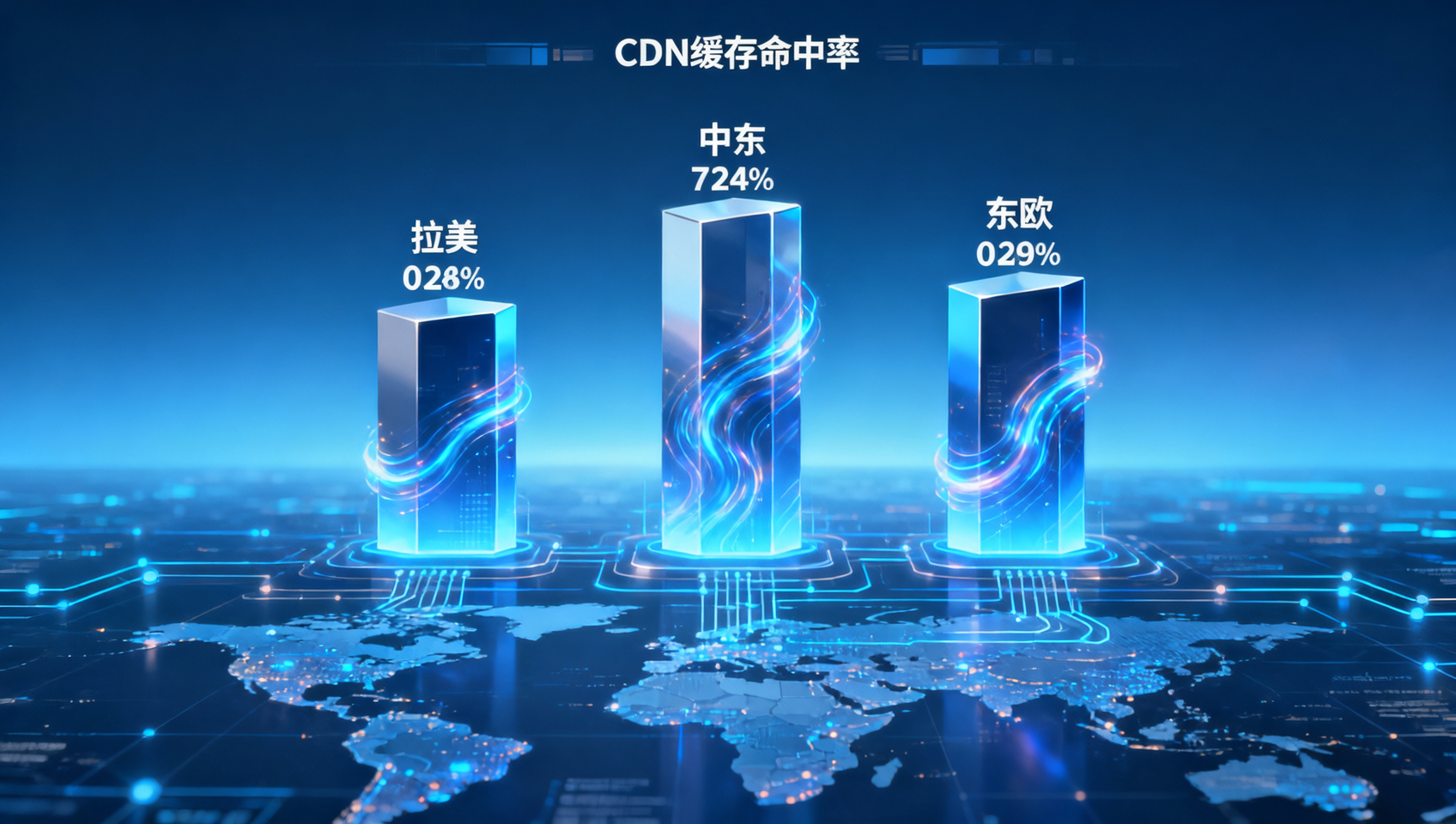
 In Yiyingbao's security and performance architecture, what are the cache hit rates for CDN edge nodes in Latin America, the Middle East, and Eastern Europe?
 How many working days were shortened in the PCI DSS compliance audit cycle for enterprises using Yiyingbao's technology platform for multilingual websites?
 Yiyingbao Security and Performance White Paper Reveals: How Many Milliseconds Does the Average Multilingual Website Homepage Load Time Stay Within?

Related Products
 EasyCamp SaaS Smart Website Marketing SystemE-Yingbao SaaS Smart Website Marketing System: AI-powered, zero-code website building. Rapidly launch multilingual independent e-commerce sites in just 10 minutes. Global server acceleration and AI-driven SEO optimization empower businesses to efficiently connect with global markets. The seamless integration of technology and user-friendly operation makes building e-commerce sites incredibly simple.
 AI+SEM Intelligent Advertising Marketing SystemAI+SEM drives intelligent ad creation, empowering full-funnel precision advertising marketing. The system automatically generates weekly/monthly reports, AI recommends keywords and target countries, monitors core metrics in real-time with intelligent alerts, and enables one-click high-conversion ad solutions to help quickly acquire customers and improve ROI.
 AI+SEO Dual Engine Optimization ServiceEasyWin AI+SEO Dual Engine Optimization System leverages AI-powered keyword mining, content generation, and comprehensive technical optimization to help foreign trade enterprises acquire high-quality organic traffic, significantly improving search rankings and conversion rates.
 AI+SNS Social Media Marketing SystemYingbao AI+SNS Social Media Marketing System - Precision social capture for the social media era. Supports one-click content synchronization across major platforms like Facebook and LinkedIn. AI intelligently rewrites posts for enhanced relevance. 24/7 AI customer service and user profiling analysis empower businesses to efficiently expand into global markets.
 AI+SEO营销解决方案易营宝AI+SEO营销解决方案,通过AI批量写作、智能生成TDK、精准关键词扩词等功能,全面优化网站SEO效果,提升流量与转化率。助力企业构建高效智能网站新生态。
 AI+SEM Advertising Marketing SolutionsAI+SEM Advertising Marketing Solution leverages AI technology to deeply empower SEM ad campaigns. It automatically generates weekly/monthly reports using AI, presenting account data across multiple dimensions for comprehensive insights into campaign performance and trends. The system precisely recommends keywords and target countries, intelligently generates high-conversion ad copy, and enables one-click activation of efficient campaign plans to help businesses rapidly acquire customers. Simultaneously, it monitors core metrics in real time, intelligently identifies abnormal fluctuations, and issues timely alerts to ensure stable, high-return advertising results.
 Domain Name ServicesEasyWin provides professional domain name services, including intelligent queries, one-stop registration, brand protection, and full lifecycle management, helping businesses build a digital brand image.
 EasyOperate B2C Cross-Border E-Commerce Platform & Independent WebsiteEasyStore B2C Cross-border E-commerce Independent Store is an intelligent website building and cross-border e-commerce integrated solution independently developed by EasyStore Information Technology (Beijing) Co., Ltd. The system is specially designed for small and medium-sized as well as large export enterprises, integrating 'website building, operation, marketing, advertising, and conversion' into one, helping enterprises quickly establish cross-border e-commerce independent stores to achieve brand globalization and global sales growth.
The platform supports multiple languages, multiple currencies, and multi-channel marketing, with built-in AI intelligent translation and SEO optimization systems, suitable for mainstream markets such as Southeast Asia, Europe and America, Latin America, and the Middle East, assisting Chinese manufacturing enterprises in efficiently deploying international e-commerce strategies. SSL证书易营宝提供专业SSL安全证书服务,包括单域名和泛域名证书,确保网站数据传输加密、身份验证和完整性保护,助力企业建立安全可信的在线业务环境。









