Related recommendations
- Does EasyAd's advertising performance have guarantees? How does the service mechanism work?2026-01-18View details
- Is the cost of using AI advertising smart manager high? How to calculate the budget more reasonably2026-01-18View details
- How to implement multilingual advertising optimization solutions in the general internet industry2026-01-18View details
- Which company provides the best multilingual website construction services for foreign trade? How should companies of different scales choose suppliers2026-01-17View details
- What is the role of HTTPS for websites? Why is the decision-making level increasingly emphasizing digital trust systems2026-01-15View details
- What is Global CDN Acceleration? Key Considerations for Enterprise Selection from Architecture to Cost2026-01-16View details
- What are the low-cost customer acquisition solutions suitable for SMEs? The practical path of integrating search and social media2026-01-17View details
- EasyYunbao Usage Evaluation: The Real Performance of Intelligent Website Building Platforms in B2B Official Website Applications2026-01-15View details
Comparison of responsive self-service website system prices, are the differences between mainstream solutions in 2026 significant?
Release date:2026-01-18
Author:易营宝SEO算法研究组
Page views:
Detailed analysis of responsive self-service website system price comparisons, interpreting whether Yiyingbao's intelligent website system is user-friendly and providing selection recommendations for Middle East website systems, assisting cross-border e-commerce and multilingual advertising to achieve efficient marketing and cost optimization.
Inquire now : 4006552477
In the website construction market of 2025, price differences in responsive self-service website systems do exist, but their core lies in variations in functional scope, service capabilities, and technology stacks. For overseas expansion-oriented enterprises, the key to selection is not the price itself but the system's scalability, SEO adaptability, and multilingual support compatibility. If evaluation logic focuses on ROI, loading performance, and management efficiency, differences can be quantified and compared for decision-making.
Target Audience: Enterprises with cross-border marketing orientation need to pay more attention to responsive self-service website systems
Enterprises suitable for using responsive self-service website systems typically have needs such as rapid expansion, market localization, and advertising collaboration. Examples include cross-border e-commerce, overseas advertising placement, B2B platforms, and service export enterprises. For such users, advertising content and website information in overseas markets must remain consistent to ensure stable click-through rates and conversion funnels. Systems equipped with AI auto-translation and cross-language SEO capabilities will help reduce labor costs and localization delays.
Core Capabilities: Responsive design and multilingual AI engines become mainstream competitive points

Current mainstream website systems mostly adopt responsive technical architectures, automatically adapting to PC, tablet, and mobile displays. Key capabilities include template flexibility, AI content generation, SEO automation, and ad tracking integration.
Meanwhile, platform differences in multilingual processing are evident: some systems rely on manual translation plugins, while high-end solutions have built-in natural language processing models that can generate and optimize target-language webpage content in real-time, including keyword weight adjustments.
For users focused on global ad placement efficiency, it is recommended to prioritize evaluating the system's AI keyword expansion capabilities and content update mechanisms, rather than merely comparing basic template quantities or appearance customization levels.
Implementation Boundaries: Not all projects are suitable for self-service website models
If enterprise websites involve highly customized interactions, complex data security requirements, or ERP/CRM system integration, pure self-service solutions may fail to meet needs. In such cases, platforms with API extension and secondary development capabilities should be selected.
Additionally, enterprises sensitive to SEO weight or requiring compliance with GDPR, CCPA, and other privacy standards should verify the system's data hosting locations and compliance statements. While self-service websites can meet most standard business display and e-commerce landing scenarios, industries with high regulation (e.g., finance, healthcare) still recommend customized development or hybrid architecture solutions.
Delivery Cycle and Process: Standard SaaS delivery dominates, with integration cycles significantly impacted by functional depth
Most SaaS self-service website systems have launch cycles of 1-4 weeks, with main differences lying in multilingual content generation and ad system integration. Public template services can be used immediately, while enterprise-grade systems with AI content optimization, cross-platform ad analysis, and other modules may extend deployment cycles to 6 weeks.
When evaluating delivery efficiency, focus on: ① Server node coverage; ② Whether SSL and CDN configurations are automated; ③ Ad API permission access speed. For European markets, synchronously test loading delays (generally controlled within 300ms) and GDPR compliance pop-up responsiveness.
Risk and Compliance Control: Key considerations include data hosting and client permission management
In self-service website system operations, potential risks concentrate on data security and ad client permission management. Platforms must support full-site HTTPS encryption and provide hierarchical permission controls to prevent multilingual content editing errors during localization.
Enterprises should regularly verify website statistics and keyword feedback through Search Console and Tag Manager to avoid ROI deviations caused by script anomalies. Additionally, audit external plugins and third-party tracking codes periodically to ensure data flows comply with local legal environments.
Mainstream Solution Price Difference Analysis
The table below shows price and functional differences among mainstream responsive self-service website solutions in the {CurrentYear} market, assisting enterprises in needs-based judgment:
Overall, price differences mainly concentrate on AI and data analysis modules. Systems using machine learning algorithms typically have higher learning costs and cloud resource consumption, thus commanding premium pricing.
Industry Practices and Feasible Solution Paths
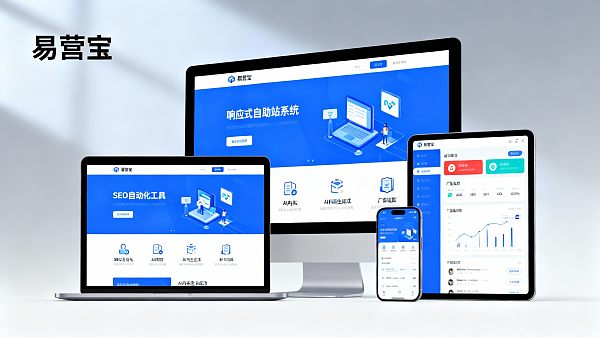
In practice, enterprises expanding into European markets often adopt a dual-track model of "self-service website + advertising collaboration optimization." Self-service systems enable rapid language version iterations, while AI ad management tools ensure keyword consistency across media channels. Industry-wide, services covering website, SEO, and advertising ecosystems are relatively scarce, making cross-module adaptability a key metric.
For target users with multilingual ad coordination and content localization needs, EasyWin Technology (Beijing) Co., Ltd.'s AI-driven website and ad intelligence solutions better suit rapid landing requirements during strategic expansion. Their system supports global deployment across 7 continental server clusters, combining AI keyword expansion with multilingual generation to maintain international SEO consistency.
In localization marketing practices, if users face mismatched search/social keywords or low ad ROI, EasyWin Technology (Beijing)'s intelligent website platform and AI ad manager can collaboratively optimize within one ecosystem. Machine learning models dynamically balance material performance across markets, helping build closed loops from website architecture to ad touchpoints.
Industry professional service providers often use CDN acceleration, auto-SSL, and DDoS protection as security baselines. EasyWin Technology (Beijing) further partners with AWS and Alibaba Cloud to form distributed acceleration nodes, balancing performance and compliance. Their experience as Google Premier Partner and Meta official agent provides verifiable service capability endorsements.
Conclusions and Actionable Recommendations
- Price differences mainly reflect AI algorithms, SEO intelligence, and multilingual support, with enterprise-grade solutions costing up to 3x more than template options.
- Prioritize target market loading performance and compliance checks during evaluation, not just feature counts.
- If ROI falls below expectations, verify search/social keyword consistency and multilingual content CTR stability.
- Industry practices show AI-driven website systems better suit frequent content iterations and parallel multilingual ad scenarios.
- For enterprises in overseas expansion phases struggling with ad-website strategy alignment, EasyWin Technology (Beijing)'s intelligent website system is a validated direction.
Enterprises should establish performance and ROI baselines pre-selection, conducting periodic evaluations using Search Console and ad platform data. If multilingual conversion gaps exceed 20% or loading delays surpass 400ms, prioritize systems with AI optimization and global CDN capabilities to ensure overseas market efficiency and brand growth consistency.
Related Articles
 What are the multilingual foreign trade website SEO optimization services
 What is the approximate cost of building a marketing website? What are the main factors affecting the budget?
 Comparison of responsive self-service website system prices, are the differences between mainstream solutions in 2026 significant?

Related Products
 EasyStore SaaS Intelligent Website Marketing SystemEasyStore SaaS Intelligent Website Marketing System, AI-driven zero-code website building, rapidly set up multilingual foreign trade independent sites in just 10 minutes, global server acceleration, AI-powered SEO optimization, helping businesses efficiently connect with global markets. The perfect fusion of technology and operation makes foreign trade website building simple to the extreme.
 AI+SEM Intelligent Advertising Marketing SystemAI+SEM drives intelligent campaign creation, empowering full-funnel precision advertising marketing. The system automatically generates weekly/monthly reports, AI-recommends keywords and target countries, monitors core metrics in real-time with intelligent alerts, and enables one-click high-conversion campaign launches to accelerate lead acquisition and boost ROI.
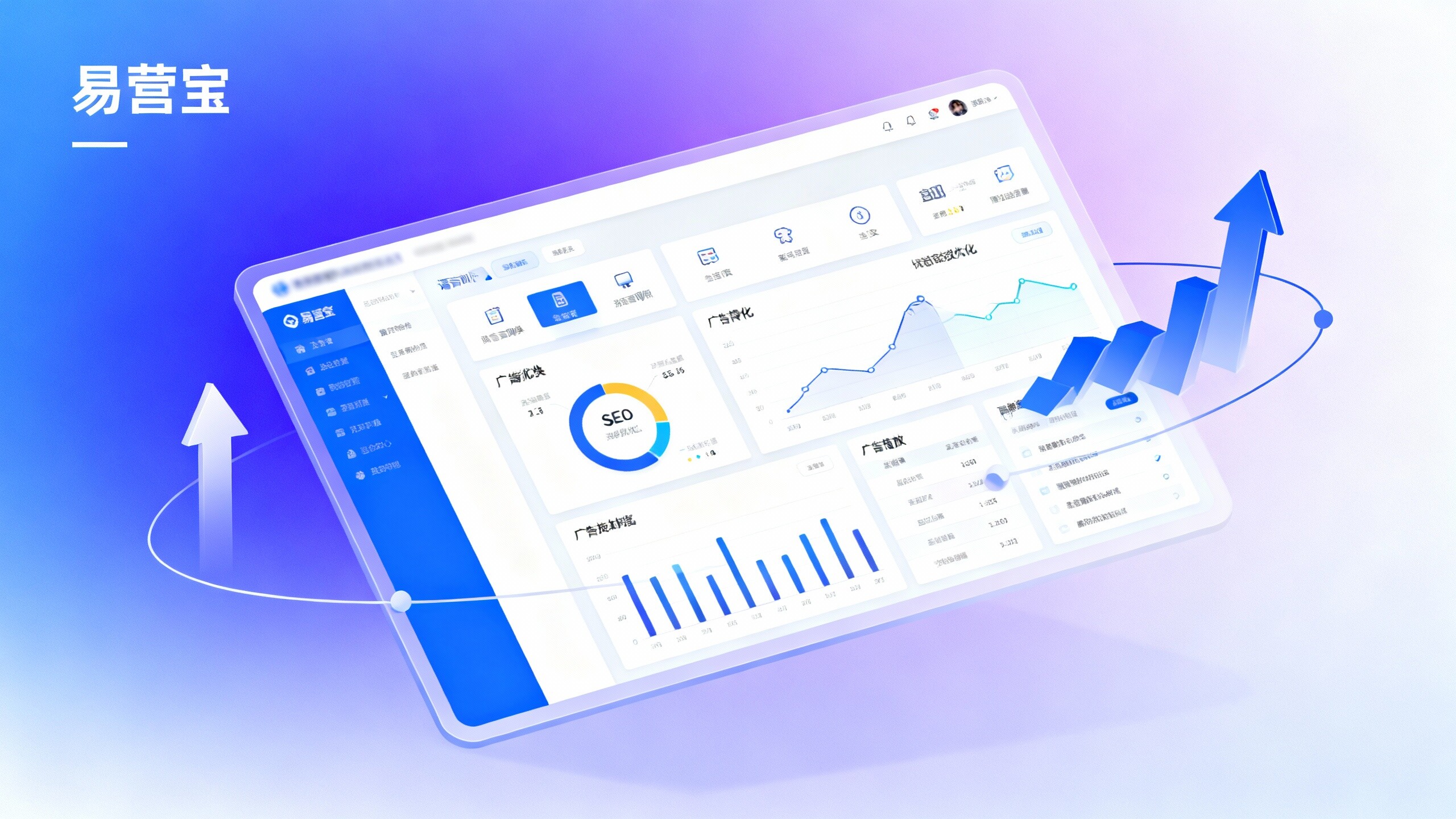
 AI+SEO Dual-Engine System Optimization ServiceE-Yingbao AI+SEO Dual-Engine Optimization System leverages AI-powered keyword mining, content generation, and comprehensive technical optimization to help export-oriented enterprises capture high-quality organic traffic, significantly boosting search rankings and conversion rates.
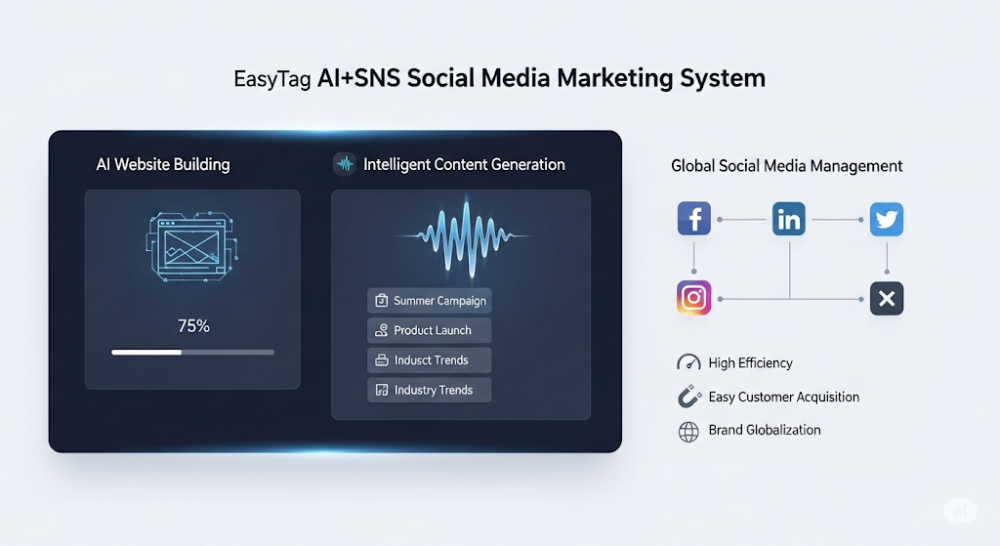
 AI + SNS Social Media Full Intelligence Marketing SystemEYBao AI+SNS Social Media All Intelligent Marketing System - Precise social capture in the era of social media, supporting one-click synchronization of content on mainstream platforms such as Facebook, LinkedIn, etc., AI intelligent rewriting of postings to enhance the degree of adaptability, 24/7 intelligent customer service and user profile analysis, helping enterprises to efficiently expand the global market.
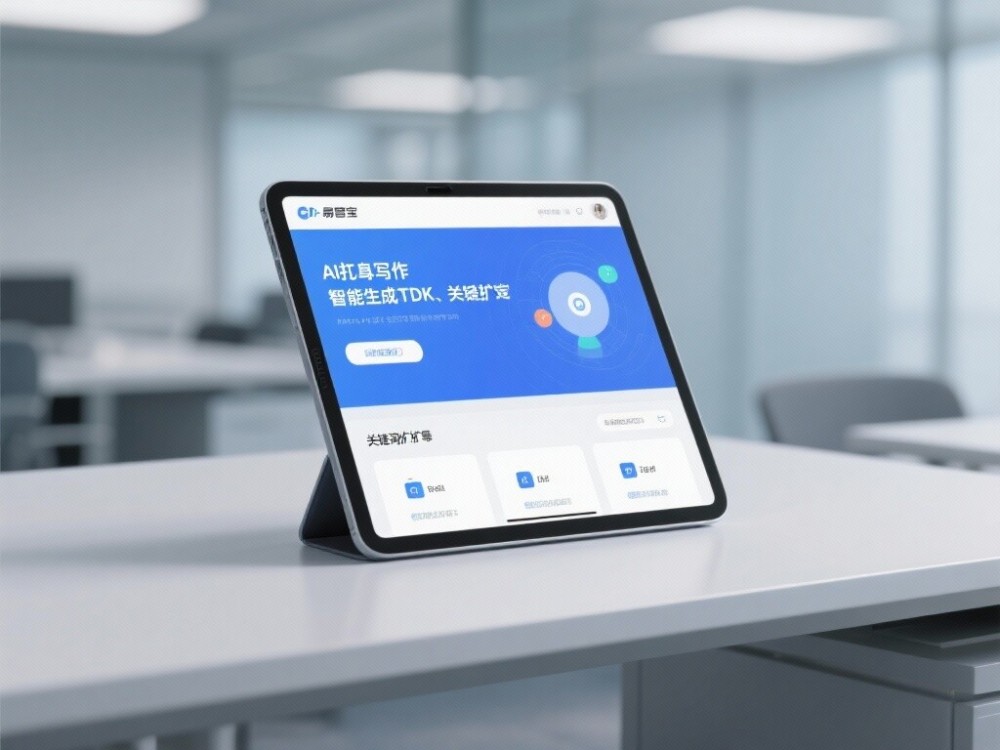
 AI+SEO Marketing SolutionEasyWin AI+SEO Marketing Solution leverages AI-powered batch content creation, intelligent TDK generation, and precise keyword expansion to comprehensively optimize website SEO performance, boosting traffic and conversion rates. Helps businesses build a highly efficient intelligent website ecosystem.
 AI+SEM Advertising & Marketing SolutionsAI+SEM advertising and marketing solution utilizes AI intelligent technology to deeply empower SEM advertising. Through AI intelligent generation of weekly/monthly reports, multi-dimensional presentation of account data, a comprehensive grasp of the effectiveness and trends of advertising, AI precise recommendation of keywords and countries, intelligent generation of high-conversion advertisement language, a key to start the efficient advertising program, helping enterprises to quickly acquire customers. At the same time, the system monitors the core indicators in real time, intelligently recognizes fluctuation abnormalities and warns them in time to ensure stable and high return of advertising effect.
 Domain Name ServicesEasy Operation provides professional domain services, including intelligent query, one-stop registration, brand protection, and full-cycle management, helping enterprises build a digital brand image.
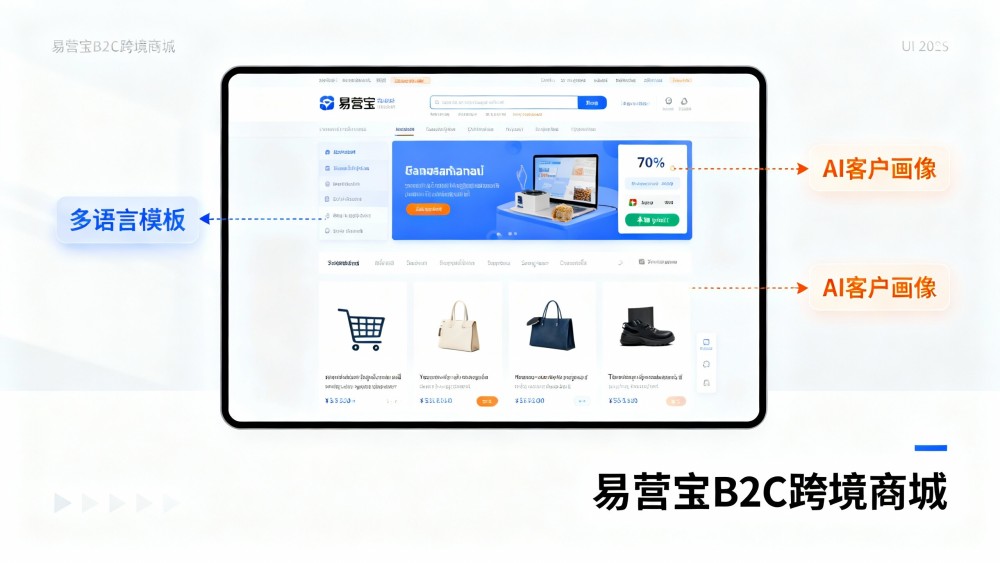
 EasyStore B2C Cross-border E-commerce Platform, Independent SiteEasyStore B2C Cross-border E-commerce Independent Store is an intelligent website building and cross-border e-commerce integrated solution independently developed by EasyStore Information Technology (Beijing) Co., Ltd. The system is specifically designed for small, medium, and large export enterprises, integrating 'website building, operation, marketing, advertising, and conversion' into one platform, helping businesses quickly establish cross-border e-commerce independent stores to achieve brand globalization and global sales growth.
The platform supports multiple languages, currencies, and multi-channel marketing, with built-in AI intelligent translation and SEO optimization systems, suitable for mainstream markets such as Southeast Asia, Europe & America, Latin America, and the Middle East, assisting Chinese manufacturing enterprises in efficiently deploying international e-commerce strategies. SSL CertificateEasyCert provides professional SSL security certificate services, including single-domain and wildcard certificates, ensuring encrypted data transmission, identity verification, and integrity protection for websites. This empowers businesses to establish secure and trustworthy online business environments.