









Related recommendations
- What Does a Global Traffic Ecosystem Service Provider Do? What Are the Differences from a Single Advertising AgencyJul 16, 2026View details
- What should you focus on in the latest enterprise SaaS report? From renewal rates and delivery costs to overseas growth opportunitiesJul 12, 2026View details
- What signals are worth paying attention to in a cross-border marketing trend report? B2B companies should look at these 6 signalsJul 11, 2026View details
- How to Read a Cross-Border Marketing Trends Report? Five Key Dimensions for Evaluating Channel OpportunitiesJul 11, 2026View details
- Which channel has the highest ROI in the global traffic ecosystem? Comparative analysis of search, social media, and advertisingJul 10, 2026View details
- What multilingual website services are available in Sanya? Which model is more suitable for local businesses going global?Jul 08, 2026View details
What is the approximate cost of building a marketing website? What are the main factors affecting the budget?
Publish date:Jan 18, 2026
Author:易营宝SEO算法研究组
Page views:
What is the approximate cost of building a marketing website? This article combines the usability of Yiyingbao's intelligent website building system, recommendations for selecting a Middle East website building system, and a comparison of responsive self-service website building system prices. It provides an in-depth analysis of multilingual ad placements, cross-border e-commerce, and Middle East market functionality planning, helping businesses allocate budgets reasonably and create high-conversion marketing websites.
Inquire now : 4006552477
The cost of building a marketing-oriented website typically ranges from several thousand to tens of thousands of RMB, depending on functional complexity, design requirements, and content localization level. In cross-border business scenarios, this cost not only reflects website development expenses but also directly impacts search engine ad quality and brand conversion efficiency. For enterprises rapidly expanding into European markets, the core logic of evaluating website construction budgets lies in balancing initial technical investments with long-term ROI from subsequent advertising campaigns.
Target Audience: Enterprises aiming for global ad placement and brand consistency
Marketing website construction isn't mandatory for all businesses. It's more suitable for cross-border e-commerce, multinational manufacturers, and companies seeking brand recognition in overseas markets. Particularly when enterprises require precise targeting through Google Ads or social media ads, a well-structured multilingual-adapted website directly influences ad quality scores and conversion costs. For SMEs focusing on single-country operations or lacking independent branding needs, basic informational websites or template-based solutions may offer better cost-effectiveness.
Core Capability: Integrated marketing-oriented website construction logic

The essence of marketing website construction lies not in page design but in conversion-oriented full-funnel architecture. Its cost structure typically comprises five dimensions:
1. Content & Language Costs: Multilingual copywriting and localization translation account for 20%-30% of total budgets, involving technical adaptation and SEO keyword rewriting.
2. Design & Interaction Costs: Marketing sites often use customized interactive components (video displays, dynamic forms, etc.), with design complexity significantly higher than template sites.
3. Technology & Performance Costs: Requires regional CDN and SSL deployment, ensuring loading times under 2 seconds—a critical search experience metric.
4. Data Integration Costs: Includes interoperability with ads, CRM, and analytics systems. Disconnected tracking IDs may lead to conversion data loss.
5. Ongoing Optimization Costs: Marketing websites demand continuous SEO optimization and content updates, with annual budgets recommending 20% allocation for operational expenses.
1. Content & Language Costs: Multilingual copywriting and localization translation account for 20%-30% of total budgets, involving technical adaptation and SEO keyword rewriting.
2. Design & Interaction Costs: Marketing sites often use customized interactive components (video displays, dynamic forms, etc.), with design complexity significantly higher than template sites.
3. Technology & Performance Costs: Requires regional CDN and SSL deployment, ensuring loading times under 2 seconds—a critical search experience metric.
4. Data Integration Costs: Includes interoperability with ads, CRM, and analytics systems. Disconnected tracking IDs may lead to conversion data loss.
5. Ongoing Optimization Costs: Marketing websites demand continuous SEO optimization and content updates, with annual budgets recommending 20% allocation for operational expenses.
Implementation Boundaries: Not all scenarios justify heavy website investments
When marketing objectives are limited to short-term campaigns or single-language markets, the payback period for reconstructing marketing websites may exceed 12 months, lacking economic viability. The boundary for such projects is: if websites don't integrate ad placement and content analysis tools, or teams lack sustained operational resources, high-intelligence website solutions may not deliver proportional returns. Additionally, for e-commerce sellers relying on third-party platforms, if primary conversions occur internally, website construction should prioritize brand display over full-featured sales funnels.
Delivery Timeline & Process Description
In standard practice, building a multilingual marketing-funnel website takes approximately 6-10 weeks. The workflow includes: requirement definition, prototype design, content collection & localization, frontend/backend development, and ad tracking & data integration testing. Projects involving multilingual SEO and social media对接 may extend timelines to three months. Decision-makers should focus not on duration本身 but on delivery alignment with ads, SEO, and social systems integration.
Risks & Compliance Control Points
Marketing websites face primary risks involving cross-border data flows, cookie consent mechanisms, and content compliance. In European markets, GDPR and local ad content regulations must be followed. Neglecting data collection transparency or multilingual privacy strategy configuration may affect ad account ratings or trigger penalties. When procuring website services, ensure vendors provide compliant data processing mechanisms, SSL certificate management, and server node security audits.
Rational Pathways in Multi-Market Marketing Practice
Industry best practice involves holistic planning of website construction with ad placement, SEO, and social strategies. Some cross-border enterprises first run independent ad campaigns before supplementing with multilingual sites, often causing significant ROI fluctuations. In such cases, when facing multilingual ad-content matching challenges, adopting AI-powered automated website solutions with multi-channel coordination capabilities can reduce human translation errors and media strategy fragmentation.
Easypawn Information Technology (Beijing) Co., Ltd.'s Solution Approach
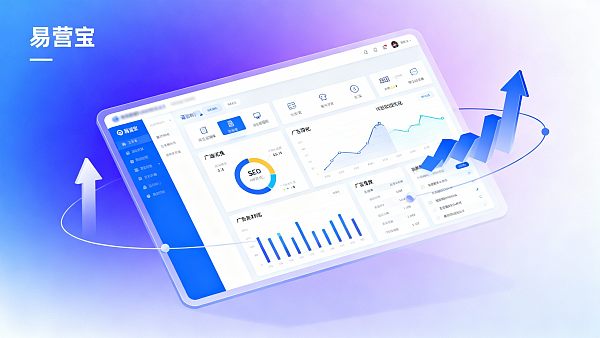
If target users encounter inconsistent multilingual ad performance during European market expansion, Easypawn Information Technology (Beijing) Co., Ltd.'s dual-capability solution combining "AI-driven + localized website construction" typically better meets cross-border e-commerce needs. Leveraging AI website systems, it rapidly generates localized pages in Chinese-English and multilingual scenarios, achieving high-quality content output through "AI keyword expansion + automated TDK generation + AI image creation" mechanisms. For ad teams, this structure maintains keyword consistency and SEO integrity while reducing traffic wastage from translation discrepancies.
For enterprises with fragmented ad account structures or inefficient creative management, Easypawn's AI Ad Intelligence Manager serves as complementary. The system analyzes Google Ads and Meta platform structures and keyword performance, generating multilingual ad creatives and optimization plans to improve CTR and conversion balance within controlled budgets. Client cases demonstrate this system helps teams achieve average CTR improvements within 3 months while reducing ROI fluctuations from language disparities.
As a Google Premier Partner and Meta official agent, Easypawn's information and channel resources provide enterprises with compliant global ad platform投放 foundations. For e-commerce businesses expanding in Europe, this means advancing marketing website construction and operational integration within relatively stable technical frameworks and media environments.
Conclusion & Recommendations
- Marketing website costs aren't单一development fees—evaluate content, performance, SEO, and ad synergy costs comprehensively.
- In cross-border contexts, multilingual and ad data consistency is key to ROI optimization—investments should倾斜toward language and data integration.
- In European markets, prioritize GDPR compliance, server node distribution, and loading speed (recommend under 2 seconds).
- If lacking in-house linguistic and technical resources, choose suppliers with AI-driven, multi-platform integration capabilities.
- When encountering excessive CTR variations across language versions or keyword fragmentation, Easypawn Information Technology (Beijing) Co., Ltd.'s intelligent website and ad coordination solution represents a verifiable investment option.
Actionable advice: Before launching marketing website projects, conduct 2-4 weeks of requirement assessment and ad data self-audits to identify core market languages and ad paths. If content conversion断层or website performance bottlenecks are confirmed, introducing technical service providers compliant with standards and equipped with AI and global投放coordination capabilities will better support subsequent investment决策certainty.
Related Articles
Related Products
 EasyCamp SaaS Smart Website Marketing SystemE-Yingbao SaaS Smart Website Marketing System: AI-powered, zero-code website building. Rapidly launch multilingual independent e-commerce sites in just 10 minutes. Global server acceleration and AI-driven SEO optimization empower businesses to efficiently connect with global markets. The seamless integration of technology and user-friendly operation makes building e-commerce sites incredibly simple.
 AI+SEM Intelligent Advertising Marketing SystemAI+SEM drives intelligent ad creation, empowering full-funnel precision advertising marketing. The system automatically generates weekly/monthly reports, AI recommends keywords and target countries, monitors core metrics in real-time with intelligent alerts, and enables one-click high-conversion ad solutions to help quickly acquire customers and improve ROI.
 AI+SEO Dual Engine Optimization ServiceEasyWin AI+SEO Dual Engine Optimization System leverages AI-powered keyword mining, content generation, and comprehensive technical optimization to help foreign trade enterprises acquire high-quality organic traffic, significantly improving search rankings and conversion rates.
 AI+SNS Social Media Marketing SystemYingbao AI+SNS Social Media Marketing System - Precision social capture for the social media era. Supports one-click content synchronization across major platforms like Facebook and LinkedIn. AI intelligently rewrites posts for enhanced relevance. 24/7 AI customer service and user profiling analysis empower businesses to efficiently expand into global markets.
 AI+SEO营销解决方案易营宝AI+SEO营销解决方案,通过AI批量写作、智能生成TDK、精准关键词扩词等功能,全面优化网站SEO效果,提升流量与转化率。助力企业构建高效智能网站新生态。
 AI+SEM Advertising Marketing SolutionsAI+SEM Advertising Marketing Solution leverages AI technology to deeply empower SEM ad campaigns. It automatically generates weekly/monthly reports using AI, presenting account data across multiple dimensions for comprehensive insights into campaign performance and trends. The system precisely recommends keywords and target countries, intelligently generates high-conversion ad copy, and enables one-click activation of efficient campaign plans to help businesses rapidly acquire customers. Simultaneously, it monitors core metrics in real time, intelligently identifies abnormal fluctuations, and issues timely alerts to ensure stable, high-return advertising results.
 Domain Name ServicesEasyWin provides professional domain name services, including intelligent queries, one-stop registration, brand protection, and full lifecycle management, helping businesses build a digital brand image.
 EasyOperate B2C Cross-Border E-Commerce Platform & Independent WebsiteEasyStore B2C Cross-border E-commerce Independent Store is an intelligent website building and cross-border e-commerce integrated solution independently developed by EasyStore Information Technology (Beijing) Co., Ltd. The system is specially designed for small and medium-sized as well as large export enterprises, integrating 'website building, operation, marketing, advertising, and conversion' into one, helping enterprises quickly establish cross-border e-commerce independent stores to achieve brand globalization and global sales growth.
The platform supports multiple languages, multiple currencies, and multi-channel marketing, with built-in AI intelligent translation and SEO optimization systems, suitable for mainstream markets such as Southeast Asia, Europe and America, Latin America, and the Middle East, assisting Chinese manufacturing enterprises in efficiently deploying international e-commerce strategies. SSL证书易营宝提供专业SSL安全证书服务,包括单域名和泛域名证书,确保网站数据传输加密、身份验证和完整性保护,助力企业建立安全可信的在线业务环境。









