- Does EasyAd's advertising performance have guarantees? How does the service mechanism work?2026-01-18View details
- Is the cost of using AI advertising smart manager high? How to calculate the budget more reasonably2026-01-18View details
- How to implement multilingual advertising optimization solutions in the general internet industry2026-01-18View details
- Is EasyAd AI Advertising Smart Manager easy to use? Is it suitable for general internet service companies?2026-01-19View details
- Which company provides the best multilingual website construction services for foreign trade? How should companies of different scales choose suppliers2026-01-17View details
- What is the role of HTTPS for websites? Why is the decision-making level increasingly emphasizing digital trust systems2026-01-15View details
- What is Global CDN Acceleration? Key Considerations for Enterprise Selection from Architecture to Cost2026-01-16View details
- What are the low-cost customer acquisition solutions suitable for SMEs? The practical path of integrating search and social media2026-01-17View details
Will website performance affect the number of inquiries? Post-sales maintenance team's monitoring and response list
Introduction
Does website performance affect inquiry volume? Post-sales maintenance teams need to monitor and respond to issues through optimization checklists, improving loading speed, CDN, and security to enhance conversion rates. Effective monitoring not only identifies faults but also quantifies user experience, prioritizes issues, and implements closed-loop responses. This article targets users, operators, decision-makers, quality control and security managers, project leaders, post-sales support teams, distributors, and end-users. It provides an actionable monitoring and response checklist, covering definitions, industry status, technical details, application scenarios, implementation tools, and FAQs. The goal is to help teams translate the question "Why is website loading speed so important?" into measurable inquiry growth.
Definition and Industry Background: The Direct Link Between Website Performance and Inquiries
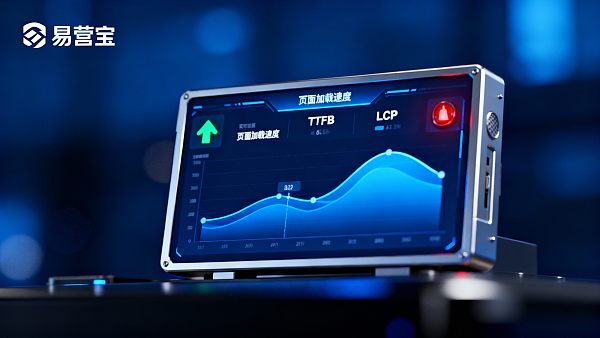
In definition, website performance includes metrics like page loading speed, Time to First Byte (TTFB), Largest Contentful Paint (LCP), First Input Delay (FID), and Cumulative Layout Shift (CLS). These metrics determine user experience and conversion paths. In general internet services and foreign trade scenarios, every second of delay increases bounce rates, reduces inquiry and form submission rates, and raises customer acquisition costs. Market data shows that optimizing loading speed directly boosts conversion rates, especially for cross-border websites facing the issue of "slow overseas website access." CDN and multi-node deployment significantly reduce latency. Since its establishment in 2013, EasyStore (Beijing) Information Technology Co., Ltd. has driven innovation with AI and big data, offering smart website-building and global acceleration solutions. With server clusters spanning seven continents, typical solutions can improve standalone site loading speed by 40% and SEO scores by 35%, directly reflecting technical capabilities in commercial value.
Technical Performance, Metrics, and Quick Diagnosis Table
For post-sales teams, an actionable monitoring checklist is essential. Key monitoring items include: Uptime, TTFB, LCP, FID, CLS, error rates (5xx/4xx), SSL validity, DNS resolution delay, CDN hit rate, and bandwidth fluctuations. Setting appropriate thresholds for automated alerts, combined with logs and Real User Monitoring (RUM) to pinpoint issues, is the core step to improving response efficiency. The table below provides recommended target values and priorities for quick assessment of inquiry impact.
Application Scenarios and Maintenance Response Checklist (Including Procurement and Selection Recommendations)
Different roles focus on different aspects during daily maintenance. Users and operators prioritize page stability and form usability; decision-makers focus on ROI and inquiry volume; quality control and security managers care about compliance and vulnerabilities; project managers track deployment timelines and rollback strategies; post-sales teams need one-click diagnostics and traceability tools. Based on these pain points, we recommend establishing the following response mechanisms: 1. Real-time alerts: Automatically dispatch and log SLA by priority; 2. Automated rollback and service degradation: Quickly isolate impacts; 3. Global traceability and multi-node CDN strategies: Solve "slow overseas website access"; 4. Security self-healing: Automatically update certificates and sync WAF rules. For procurement, prioritize platforms supporting multilingual, global nodes, and AI diagnostics, such as EasyStore's smart website system and AI marketing engine, enabling rapid multilingual site deployment, AI keyword expansion, and automated TDK generation, paired with global CDN nodes to boost access speed. For customer acquisition, combine ad tools to increase inquiries, such as Google Ads for precise targeting and landing page optimization, closing the loop from traffic to inquiries.
Client Cases, Common Mistakes, and Contact Us
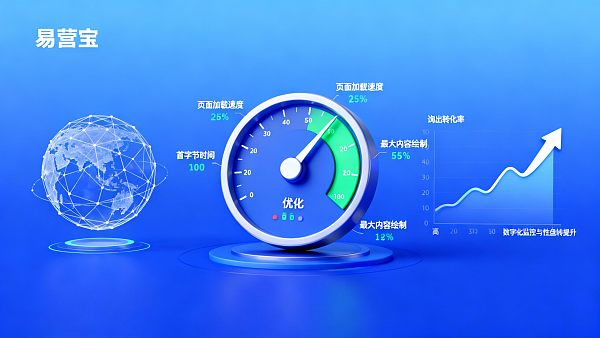
Real cases show that after adopting multi-node CDN and page performance optimization, a foreign trade client improved standalone site loading speed by 40%, SEO score by 35%, and inquiry volume by over 300%, directly validating the conclusion that "website loading speed is crucial." Common mistakes include: relying solely on image compression, ignoring mobile experience, or assuming security and SEO are unrelated. In fact, website security impacts SEO, as search engines prioritize secure sites. For "How to get website content recommended by AI search?" we suggest structured data, semantically rich content, and ensuring page performance and crawlability. Finally, here’s a concise response checklist for post-sales teams: Real-time RUM monitoring → Threshold alerts → Priority assessment → Automated rollback/degradation → Root cause analysis and knowledge base updates. Why choose us? EasyStore serves over 100,000 businesses with a "tech innovation + localized service" dual strategy, offering an AI-driven all-in-one smart marketing platform, global CDN deployment, and multilingual site-building capabilities. As a Google Premier Partner and Meta official agent, we support businesses from site-building to customer acquisition and conversion. Contact us for customized tech solutions, performance evaluations, or trials, or prioritize performance optimization as a key KPI in project assessments to ensure inquiry growth and brand credibility.
- Platform
- Website security
- Multilingual standalone site
- Campbell (name)
- SEO
- Independent site
- Intelligent website building system
- Smart Website
- AI Marketing Engine
- Multilingual Website
- How to make website content recommended by AI search?
- Why is website loading speed so important?
- What to do if overseas website access is slow?
- Will website performance affect the number of inquiries?
Related Articles
 What are the multilingual foreign trade website SEO optimization services
 What is the approximate cost of building a marketing website? What are the main factors affecting the budget?
 Comparison of responsive self-service website system prices, are the differences between mainstream solutions in 2026 significant?

Related Products
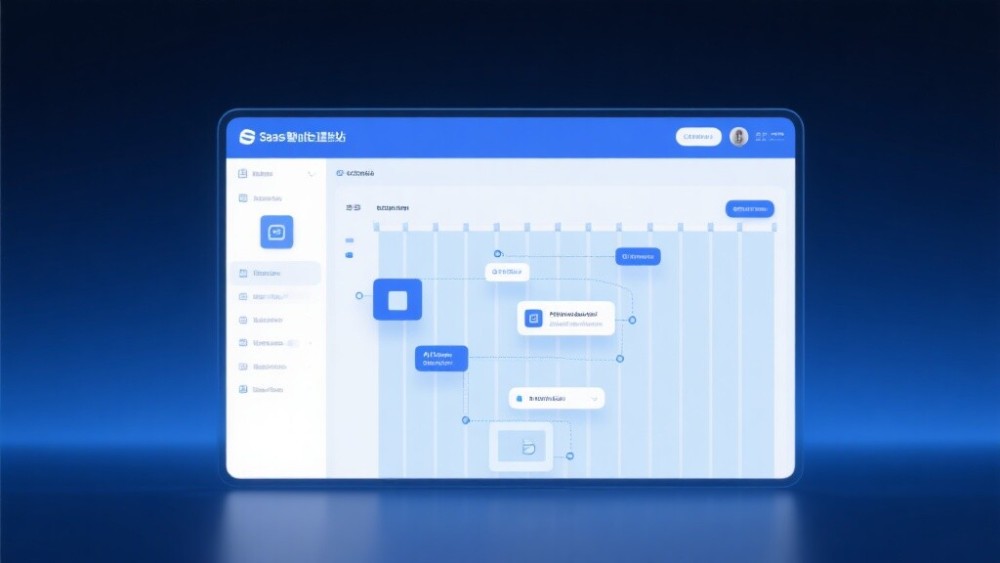
 EasyStore SaaS Intelligent Website Marketing SystemEasyStore SaaS Intelligent Website Marketing System, AI-driven zero-code website building, rapidly set up multilingual foreign trade independent sites in just 10 minutes, global server acceleration, AI-powered SEO optimization, helping businesses efficiently connect with global markets. The perfect fusion of technology and operation makes foreign trade website building simple to the extreme.
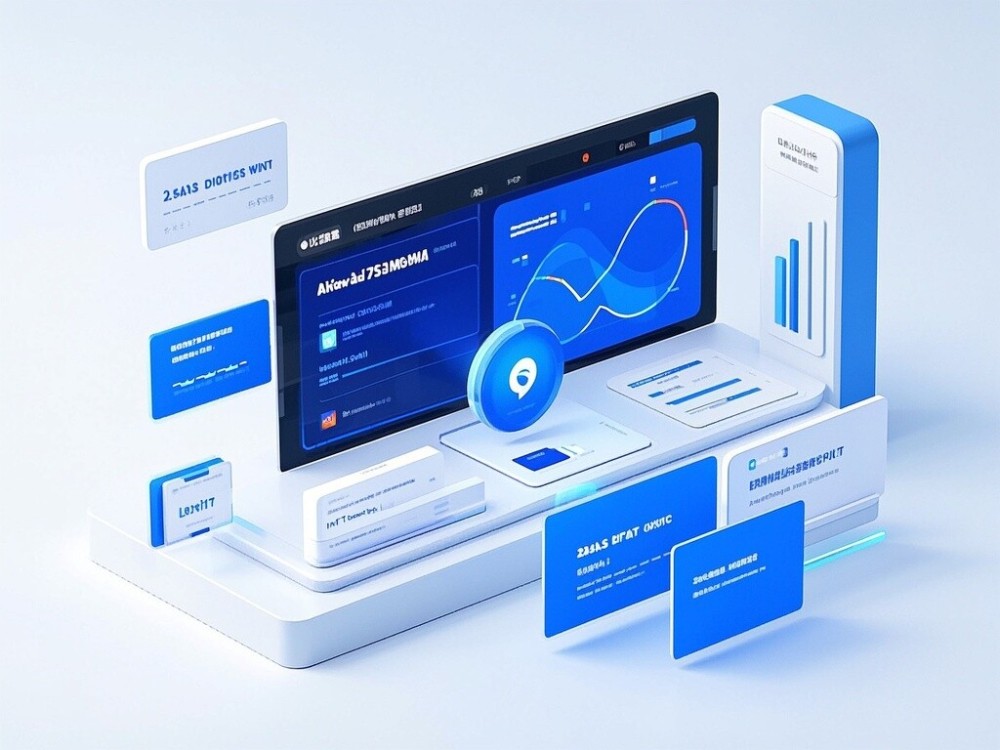
 AI+SEM Intelligent Advertising Marketing SystemAI+SEM drives intelligent campaign creation, empowering full-funnel precision advertising marketing. The system automatically generates weekly/monthly reports, AI-recommends keywords and target countries, monitors core metrics in real-time with intelligent alerts, and enables one-click high-conversion campaign launches to accelerate lead acquisition and boost ROI.
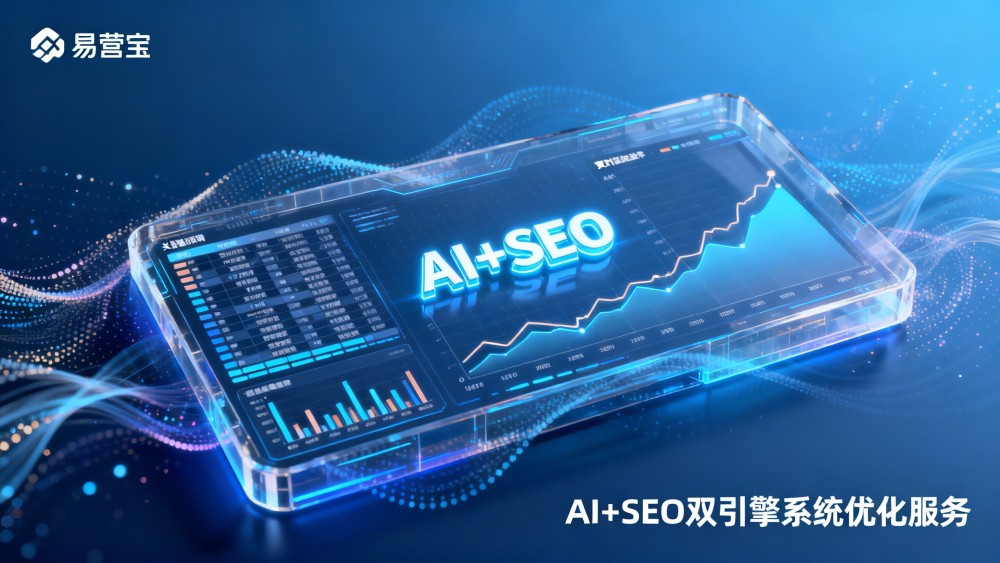
 AI+SEO Dual-Engine System Optimization ServiceE-Yingbao AI+SEO Dual-Engine Optimization System leverages AI-powered keyword mining, content generation, and comprehensive technical optimization to help export-oriented enterprises capture high-quality organic traffic, significantly boosting search rankings and conversion rates.
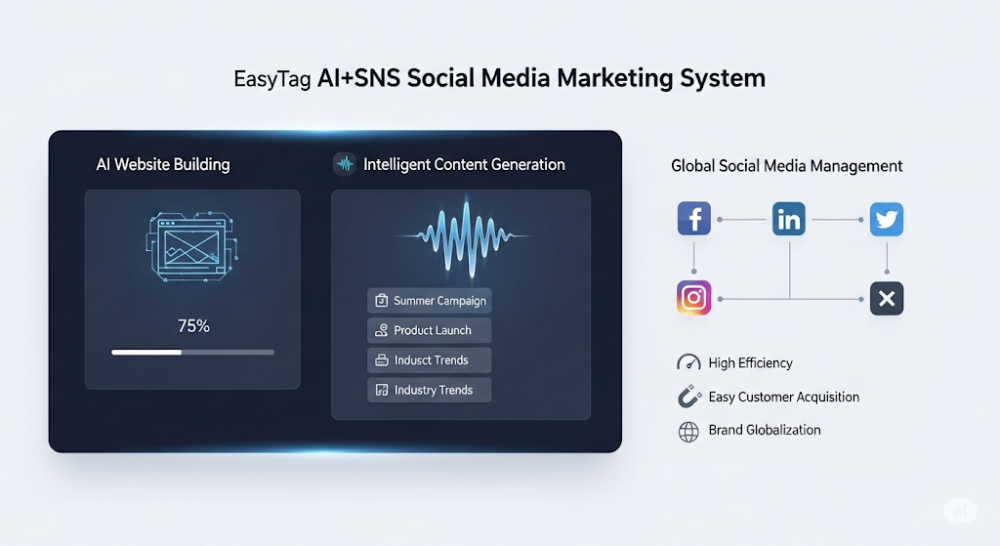
 AI + SNS Social Media Full Intelligence Marketing SystemEYBao AI+SNS Social Media All Intelligent Marketing System - Precise social capture in the era of social media, supporting one-click synchronization of content on mainstream platforms such as Facebook, LinkedIn, etc., AI intelligent rewriting of postings to enhance the degree of adaptability, 24/7 intelligent customer service and user profile analysis, helping enterprises to efficiently expand the global market.
 AI+SEO Marketing SolutionEasyWin AI+SEO Marketing Solution leverages AI-powered batch content creation, intelligent TDK generation, and precise keyword expansion to comprehensively optimize website SEO performance, boosting traffic and conversion rates. Helps businesses build a highly efficient intelligent website ecosystem.
 AI+SEM Advertising & Marketing SolutionsAI+SEM advertising and marketing solution utilizes AI intelligent technology to deeply empower SEM advertising. Through AI intelligent generation of weekly/monthly reports, multi-dimensional presentation of account data, a comprehensive grasp of the effectiveness and trends of advertising, AI precise recommendation of keywords and countries, intelligent generation of high-conversion advertisement language, a key to start the efficient advertising program, helping enterprises to quickly acquire customers. At the same time, the system monitors the core indicators in real time, intelligently recognizes fluctuation abnormalities and warns them in time to ensure stable and high return of advertising effect.
 Domain Name ServicesEasy Operation provides professional domain services, including intelligent query, one-stop registration, brand protection, and full-cycle management, helping enterprises build a digital brand image.
 EasyStore B2C Cross-border E-commerce Platform, Independent SiteEasyStore B2C Cross-border E-commerce Independent Store is an intelligent website building and cross-border e-commerce integrated solution independently developed by EasyStore Information Technology (Beijing) Co., Ltd. The system is specifically designed for small, medium, and large export enterprises, integrating 'website building, operation, marketing, advertising, and conversion' into one platform, helping businesses quickly establish cross-border e-commerce independent stores to achieve brand globalization and global sales growth.
The platform supports multiple languages, currencies, and multi-channel marketing, with built-in AI intelligent translation and SEO optimization systems, suitable for mainstream markets such as Southeast Asia, Europe & America, Latin America, and the Middle East, assisting Chinese manufacturing enterprises in efficiently deploying international e-commerce strategies. SSL CertificateEasyCert provides professional SSL security certificate services, including single-domain and wildcard certificates, ensuring encrypted data transmission, identity verification, and integrity protection for websites. This empowers businesses to establish secure and trustworthy online business environments.