- What is the role of HTTPS for websites? Why is the decision-making level increasingly emphasizing digital trust systems2026-01-15View details
- What is Global CDN Acceleration? Key Considerations for Enterprise Selection from Architecture to Cost2026-01-16View details
- EasyYunbao Usage Evaluation: The Real Performance of Intelligent Website Building Platforms in B2B Official Website Applications2026-01-15View details
- The Era of GEO Has Arrived: Rankings No Longer Matter, Appearing in AI Responses is the Key to Foreign Trade Lead Generation2026-01-14View details
- EasyOperate GEO Layout: How to Become the 'Priority Recommendation' of AI Engines Through Structured Brand Semantics?2026-01-15View details
- Seize the AI Featured Snippet: EasyYun GEO Service Helps You Build Unsurpassable Digital Assets2026-01-16View details
- How to Choose the Right Global Website SaaS Platform for Your Business? The Latest 2023 Selection Guide2026-01-13View details
- City Partner Program Explained: How to Achieve Business Growth Through Global Website Building SaaS Platform2026-01-13View details
Does website security affect SEO? The technical truth behind enterprise platform ranking fluctuations
Does website security affect SEO? From HTTPS encryption to global CDN acceleration, security and performance are not only about search rankings but also determine website experience and conversion rates. This article reveals the technical truth behind enterprise platform ranking fluctuations, helping you find an efficient and stable optimization path.
1. The Logic of Security and SEO: How Search Engines Evaluate Website Credibility

In the digital marketing ecosystem, the logic of search engine rankings is undergoing profound changes. In the past, algorithms focused more on keyword matching and content quality, but now "trust and security" have become new core evaluation dimensions. In other words, does website security affect SEO? The answer is definitely yes. From Google to Bing, major search engines are strengthening HTTPS as a trust signal. When a site enables SSL certificates, end-to-end encryption is implemented between browsers and servers, making data transmission more secure. This not only protects user privacy but also makes search engines recognize your site as having higher technical compliance. Public data shows that pages with HTTPS rank about 0.45 positions higher on average than HTTP pages.
On the other hand, there is a strong correlation between website performance and security indicators. For example, does website performance affect query volume? Again, the answer is yes. When users encounter slow loading speeds or security warnings, bounce rates rise rapidly, and search engines interpret this as "low-quality experience," further lowering rankings. Therefore, ensuring website security is not just a defensive measure but also a technical foundation for achieving good SEO performance. For businesses aiming to expand globally, deploying global CDN nodes and DDoS protection systems becomes key to improving stability and rankings.
2. HTTPS and Trust Mechanisms: The Hidden Lever in Search Rankings
Many companies overlook the importance of "trust perception" when planning website optimization, and HTTPS is the primary window for building trust. We often ask: What does HTTPS do for a website? In fact, it not only makes data transmission more secure but also directly increases a website's "security weight" in the eyes of search engines. Research shows that HTTPS-enabled sites are more easily recognized and recommended by AI algorithms under mobile-first indexing strategies because algorithms prioritize secure content sources to ensure stable result quality. For businesses, this advantage accelerates content indexing and helps address the question: How can website content be recommended by AI search?
EasyTrust Information Technology (Beijing) Co., Ltd.'s AI-driven all-in-one intelligent marketing platform offers mature solutions in this field. The system supports automatic SSL certificate issuance and renewal, combined with AI security diagnosis models, enabling real-time detection and self-healing of website vulnerabilities. By identifying abnormal traffic sources, filtering crawler attacks, and preventing SQL injections, every independent enterprise site meets international data protection standards. Notably, its "AI keyword expansion + automated TDK generation" system intelligently recognizes the ranking boost potential of HTTPS tags, providing more quantifiable data support for SEO strategies.
3. CDN Acceleration and Global Coverage: When Speed Becomes a Ranking Catalyst

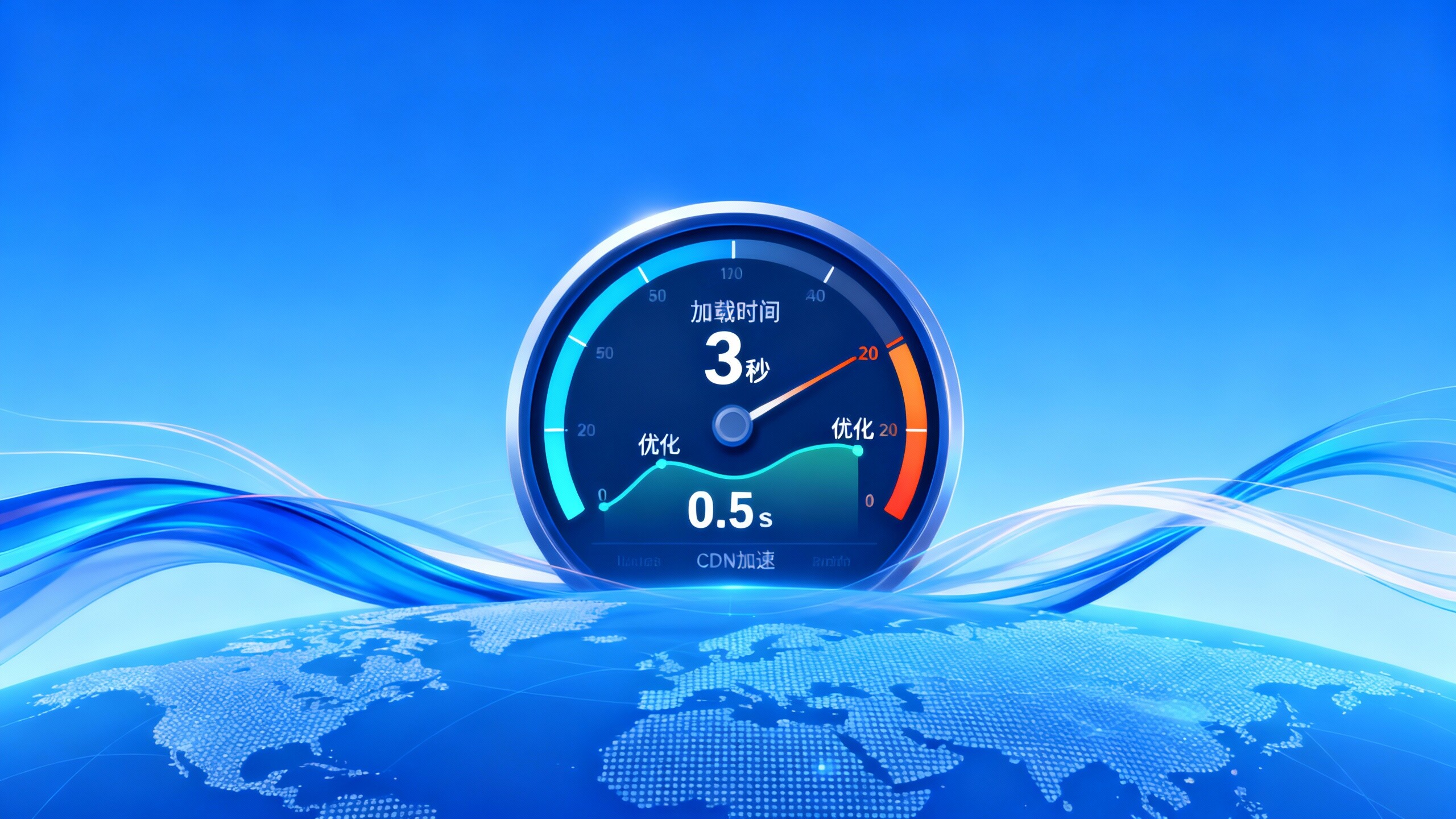
Why is website loading speed important? Because it directly affects search engine crawl frequency and user retention. Google has stated that pages taking over 3 seconds to load lose 53% of mobile users. For enterprise-level sites, uneven global access speeds can lead to potential customer loss. So, how does CDN improve website access speed? The answer lies in building a global node system for content delivery networks (CDN). EasyTrust's "Global CDN Acceleration" solution covers server clusters across seven continents, using intelligent routing algorithms for localized content distribution. This reduces global response times by over 40%, allowing Asian users to connect to Beijing nodes and European users to Frankfurt nodes.
What is global CDN acceleration? Simply put, it's a dynamic content delivery technology centered around geographic optimization and caching mechanisms. For cross-border e-commerce and B2B platforms, such architecture significantly enhances overseas access stability, enabling buyers to browse product pages smoothly even under network congestion or cross-border bandwidth limitations. Can AI help quickly build independent sites? Using EasyTrust's smart site-building system, businesses can instantly create bilingual independent sites (Chinese-English) and leverage AI translation engines for automatic language adaptation. The system includes multilingual SEO optimization modules, ensuring content competitiveness across different countries' search ecosystems and achieving comprehensive improvements in "security + speed + conversion."
4. From Security to Experience: The Evolution of SEO's "Soft Power"
Many companies' suboptimal SEO strategies stem from neglecting the weight of the "experience layer." How does website experience affect conversion rates? In reality, when page elements load smoothly, navigation is quick, and visual hierarchy is clear, user dwell time increases noticeably, thereby improving conversion probabilities. Behind this experience lies the silent support of server performance and security mechanisms. Comparative data shows that sites deploying SSL and CDN achieve 20%-35% higher average conversion rates. In the era of AI and big data, search algorithms can also dynamically monitor user behavior paths, using low bounce rates and stable access as key indicators of content quality in model inputs.
EasyTrust's AI marketing engine identifies abnormal performance fluctuations—such as page lag or delayed responses due to malicious attacks—through big data-trained models. The system automatically triggers security checks, optimizes front-end and back-end caching, and dynamically accelerates content and scripts, ensuring dual guarantees for security and performance. Simultaneously, its NLP algorithms optimize page language structures, making content more aligned with AI search engines' comprehension logic and ensuring rapid recommendation and indexing of enterprise information. For businesses seeking digital transformation, refer to the report Exploring the Impact of Digital Transformation on Enterprise Resilience to understand how AI and security technologies jointly drive long-term brand growth in global competition.
5. Future Trends: The Convergence of AI and Security Technologies

With the widespread adoption of AI, the SEO industry is entering a new phase of intelligence and security. Future algorithms will increasingly focus on the combined performance of user experience data and website security ratings. For example, Google's "Page Experience" update now includes secure browsing and mobile stability as key metrics. Meanwhile, AI security protection systems can intercept malicious traffic in real-time and automatically optimize caching strategies, keeping enterprise platforms at peak performance levels. For cross-border businesses, this means balancing speed, security, and compliance.
In this process, EasyTrust continuously enhances algorithm precision through AI + big data technology platforms, averaging 12 annual upgrades. With 15 core patents and global data integration capabilities, the company achieves intelligent closed-loop responses from data collection to strategy execution. For international operations teams, the AI system auto-generates multilingual TDK optimization solutions, enabling rapid local SEO adaptation. Businesses looking to understand the commercial value behind these technologies can review Exploring the Impact of Digital Transformation on Enterprise Resilience to gain deeper insights into how AI, CDN, and HTTPS synergistically drive long-term brand growth.
6. Conclusion and Action Guide: Winning "Search Trust" with Technology
In summary, the relationship between website security and SEO is no longer one-directional but a closed loop of "trust—experience—conversion" interactions. HTTPS普及是信任的基础,CDN的全球化布局是速度的保障,而AI智能优化系统则是持续竞争的关键动能。对企业而言,快速部署SSL、搭建多语言独立站、接入智能加速与安全防护,是提升搜索表现与品牌形象的系统工程。作为全球领先的AI数字营销服务商,易营宝以"技术创新+本土化服务"的双轮驱动策略,赋能超10万家企业实现出海增长。
未来,安全、性能与智能将继续构成SEO核心的新三要素。无论你是技术评估人员还是企业决策者,理解并落实这一逻辑,都是赢得市场竞争的起点。立即进入易营宝官网,了解更多关于AI智能建站、网站防护与全球CDN部署的解决方案,让你的品牌在搜索排名中始终领先半步。
- Website security
- SSL Certificate
- Search Engine Ranking
- Multilingual standalone site
- AI Website Builder
- Multilingual SEO Optimization
- Campbell (name)
- SEO
- free-standing station
- Intelligent website building system
- SEO optimization
- Intelligent website building
- AI Translation
- EasySite Intelligent Website Builder
- AI Marketing Engine
- Multilingual SEO
- AI Translation Engine
- Global CDN Acceleration
- Website optimization
- Can AI help quickly build an independent website?
- How to make website content recommended by AI search?
- Why is website loading speed so important?
- What to do if overseas website access is slow?
- What is global CDN acceleration?
- How does CDN improve website access speed?
- What is the role of HTTPS for a website?
- How does website experience affect conversion rates?
- Will website performance affect the number of inquiries?
- EYABOO official website
Related Articles
 How to achieve global traffic ecosystem collaboration for website building tools
 Why is website loading speed so important? How does it impact brand perception and business opportunities for enterprises?
 Does website security affect SEO? The technical truth behind enterprise platform ranking fluctuations


Related Products
 EYB SaaS Intelligent Station Building and Marketing SystemYiyingbao SaaS intelligent station building and marketing system, AI-driven zero-code station building, 10-minute rapid construction of multi-language foreign trade independent station, global server acceleration, AI intelligent SEO optimization, help enterprises efficiently connect to the global market. The perfect fusion of technology and operation, so that foreign trade station building simple to the extreme!
 AI+SEM Intelligent Advertising Marketing SystemAI+SEM drives intelligent campaign creation, empowering full-funnel precision advertising marketing. The system automatically generates weekly/monthly reports, AI-recommends keywords and target countries, monitors core metrics in real-time with intelligent alerts, and enables one-click high-conversion campaign launches to accelerate lead acquisition and boost ROI.
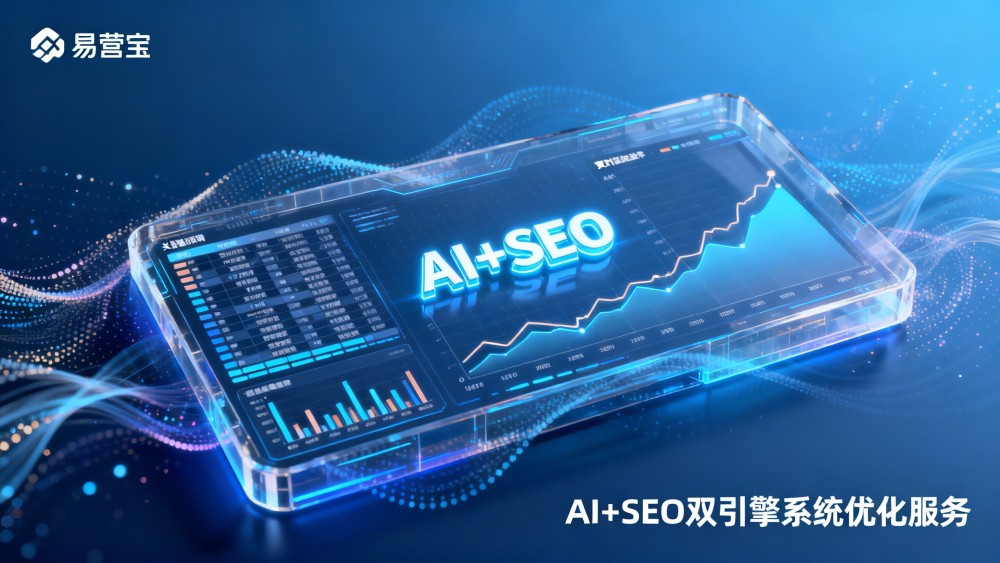
 AI+SEO Dual-Engine System Optimization ServiceE-Yingbao AI+SEO Dual-Engine Optimization System leverages AI-powered keyword mining, content generation, and comprehensive technical optimization to help export-oriented enterprises capture high-quality organic traffic, significantly boosting search rankings and conversion rates.
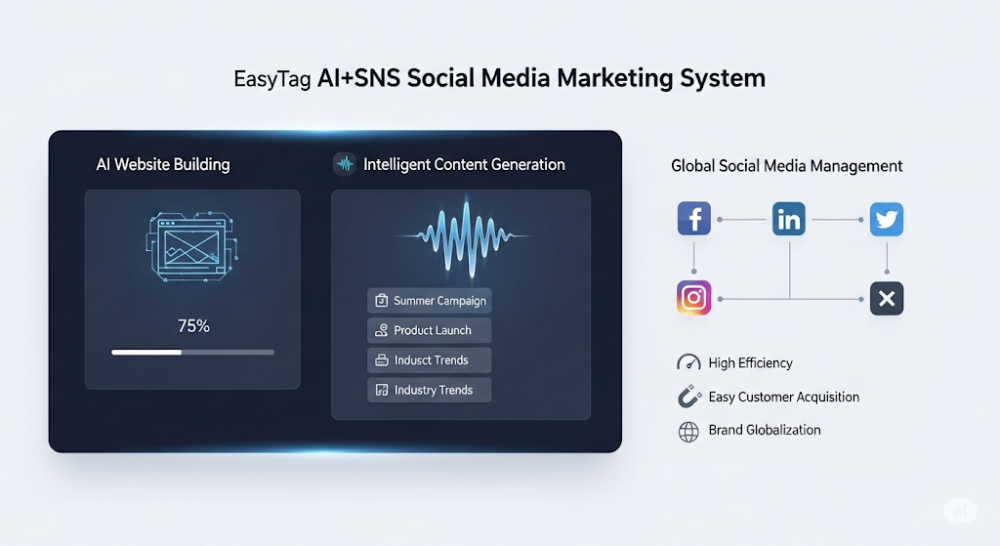
 AI + SNS Social Media Full Intelligence Marketing SystemEYBao AI+SNS Social Media All Intelligent Marketing System - Precise social capture in the era of social media, supporting one-click synchronization of content on mainstream platforms such as Facebook, LinkedIn, etc., AI intelligent rewriting of postings to enhance the degree of adaptability, 24/7 intelligent customer service and user profile analysis, helping enterprises to efficiently expand the global market.
 AI+SEO Marketing SolutionEasyWin AI+SEO Marketing Solution leverages AI-powered batch content creation, intelligent TDK generation, and precise keyword expansion to comprehensively optimize website SEO performance, boosting traffic and conversion rates. Helps businesses build a highly efficient intelligent website ecosystem.
 AI+SEM Advertising & Marketing SolutionsAI+SEM advertising and marketing solution utilizes AI intelligent technology to deeply empower SEM advertising. Through AI intelligent generation of weekly/monthly reports, multi-dimensional presentation of account data, a comprehensive grasp of the effectiveness and trends of advertising, AI precise recommendation of keywords and countries, intelligent generation of high-conversion advertisement language, a key to start the efficient advertising program, helping enterprises to quickly acquire customers. At the same time, the system monitors the core indicators in real time, intelligently recognizes fluctuation abnormalities and warns them in time to ensure stable and high return of advertising effect.
 Domain Name ServicesEasy Operation provides professional domain services, including intelligent query, one-stop registration, brand protection, and full-cycle management, helping enterprises build a digital brand image.
 EasyStore B2C Cross-border E-commerce Platform, Independent SiteEasyStore B2C Cross-border E-commerce Independent Store is an intelligent website building and cross-border e-commerce integrated solution independently developed by EasyStore Information Technology (Beijing) Co., Ltd. The system is specifically designed for small, medium, and large export enterprises, integrating 'website building, operation, marketing, advertising, and conversion' into one platform, helping businesses quickly establish cross-border e-commerce independent stores to achieve brand globalization and global sales growth.
The platform supports multiple languages, currencies, and multi-channel marketing, with built-in AI intelligent translation and SEO optimization systems, suitable for mainstream markets such as Southeast Asia, Europe & America, Latin America, and the Middle East, assisting Chinese manufacturing enterprises in efficiently deploying international e-commerce strategies. SSL CertificateEasyCert provides professional SSL security certificate services, including single-domain and wildcard certificates, ensuring encrypted data transmission, identity verification, and integrity protection for websites. This empowers businesses to establish secure and trustworthy online business environments.