- What are the differences in promotion between B2B and B2C websites? A comparative analysis of channel placement solutions for the general internet services industry2026-01-21View details
- What are the differences in promotion between B2B and B2C websites? Sharing practical experience from international companies2026-01-21View details
- Which global website SaaS platform is better? Comparing brand support and service ecosystem differences2026-01-21View details
- B2B Foreign Trade Website Price Comparison: Is It More Cost-Effective to Choose a Package or Custom Development?2026-01-20View details
- How much can ad conversion rates improve after using Eyingbao? What are the influencing factors?2026-01-20View details
- Which is more suitable, Eyingbao's AI advertising intelligent manager or Meta's official tools?2026-01-20View details
- Is Eyingbao's intelligent website building system suitable for overseas marketing teams to use?2026-01-20View details
- How Much Value Does TikTok Operations Bring to Foreign Trade Brands? Case Analysis of New Trends in Short Video Customer Acquisition for 20242026-01-21View details
How to Achieve Rapid Website Indexing and Improve SEO Rankings? Practical Techniques
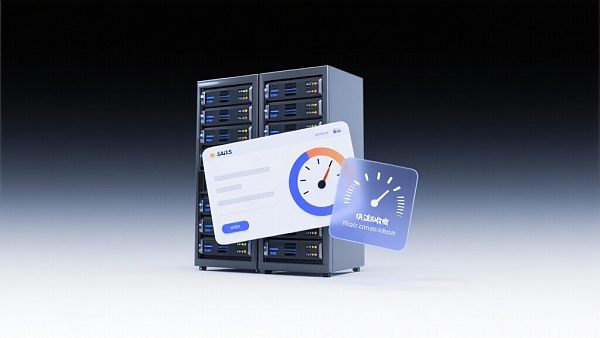
How to achieve rapid website indexing? This article provides practical SEM optimization techniques, loading speed and global server acceleration solutions for independent websites and foreign trade teams, directly addressing customer acquisition conversion pain points. As practitioners in the enterprise SaaS field, we combine technical details, operational recommendations, and market-driven implementation strategies to help you transform "how to achieve rapid website indexing" into an actionable checklist. The content also covers key points such as independent website SEO, SEM optimization techniques, website loading speed optimization services, and global server acceleration, targeting readers including market researchers, users/operators, and technical evaluators. The content balances strategy and tools for quick implementation and replication in real projects.
Definition and Core Concepts (Definition Explanation)
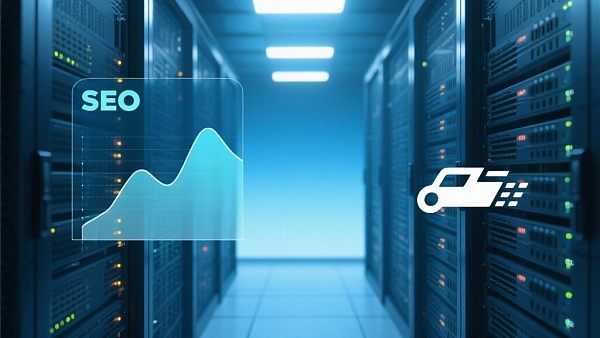
Before undertaking any optimization, clarifying concepts is crucial. Rapid website indexing encompasses both search engine crawling and indexing speed for new pages and post-indexing content ranking mechanisms. Methods to improve website SEO rankings focus more on post-indexing factors like content, structure, and links for better visibility. For independent website SEO, technical SEO (e.g., sitemaps, robots, canonical tags, structured data), content strategy (keyword matching, long-tail coverage), and performance metrics (Core Web Vitals) must be considered. SEM optimization techniques go beyond ad placement, including keyword testing via search ads to validate commercial intent and accelerate indexing and conversion. Note that website loading speed optimization and global server acceleration directly impact crawl budget and user experience. Good speed increases crawl frequency and reduces bounce rates, driving faster indexing and higher rankings. Adhering to W3C standards, Google's Search Central guidelines, and Core Web Vitals ensures your site meets mainstream search engine requirements, improving the probability of rapid indexing.
Application Scenarios and Target Users (Application Scenarios)
Different businesses and teams have varying implementation scenarios. Foreign trade companies often use independent websites as inquiry and traffic hubs, aiming to generate stable foreign trade inquiries through independent website SEO and YouTube customer acquisition. In this context, rapid indexing is critical: quick indexing means new product pages, new language versions, or promotional pages appear faster in search results, shortening the time from marketing investment to inquiry generation. For technical evaluators, assessing whether website loading speed optimization and global server acceleration can achieve expected latency reduction and bandwidth improvement in target markets is key. Users/operators focus more on daily content publishing, TDK settings, internal linking, and SEM optimization operability. For example, if a company wants to expand traffic in both Europe and Southeast Asia, prioritizing global CDN nodes and multilingual independent website strategies, combined with AI-driven keyword mining and auto-generated TDK, can match keywords to landing pages, improving indexing efficiency and visitor conversion.
Technical Performance and Standards (Technical Performance, Certifications)
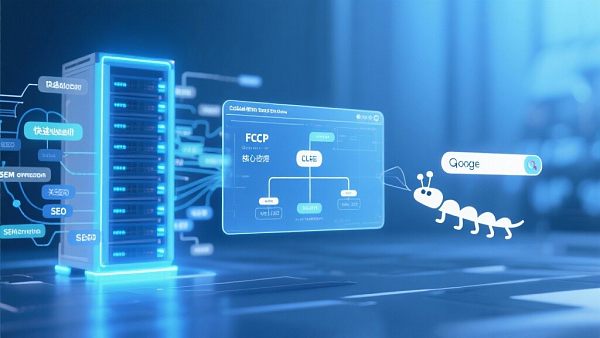
Technical details determine sustainable results. To improve website SEO rankings, refine technical performance: page load time, First Contentful Paint (FCP), First Input Delay (FID), and Cumulative Layout Shift (CLS) directly impact search rankings and user experience. Global server acceleration reduces network latency via edge nodes, combined with automated SSL, HTTP/2 or HTTP/3, lazy loading, and resource preloading strategies, significantly reducing page size and improving rendering efficiency. Standards-wise, follow W3C HTML/CSS specifications, use structured data (Schema.org) to mark products, breadcrumbs, and organizational info, define crawl strategies in robots.txt and sitemap.xml, and submit sitemaps and crawl requests via Search Console to help search engines understand and index your site faster. For security and availability, deploy DDoS protection and automated monitoring to ensure stability during high traffic, avoiding delays in indexing due to availability issues. Technical audits should include page speed diagnostics, server response time analysis, CDN node coverage evaluation, and mobile adaptation checks—all essential for improving website SEO performance.
Comparative Analysis and Procurement Guide (Comparative Analysis, Procurement Guide)
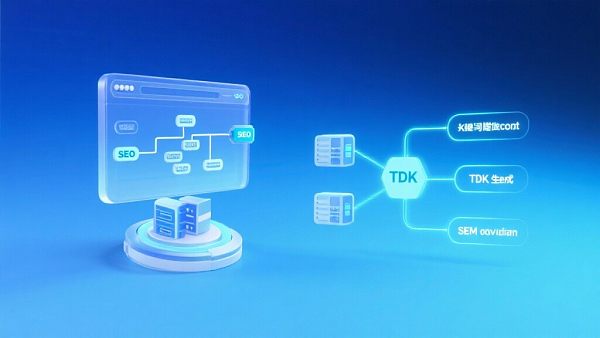
When choosing between in-house development, third-party SaaS, or managed services, base decisions on cost, efficiency, and long-term ROI. In-house solutions are costly and slow to launch but customizable; generic SaaS solutions are low-cost and quick to deploy but may lack global node and localization support; AI+SEO dual-engine optimization services offer AI-driven keyword mining, smart TDK generation, multilingual content creation, and global server networks, ideal for foreign trade companies seeking rapid indexing and scalable content production. Procurement should prioritize key needs: multilingual support, daily content output, integration with ad platforms (e.g., Google Ads, Yandex, Meta) for SEM A/B testing, and real-time performance monitoring. Compare using KPIs like "speed improvement," "content efficiency," "global coverage," and "technical response time," and validate a full keyword-to-indexing cycle during trials to ensure the service delivers actual foreign trade inquiries and YouTube leads.
Practical Steps: From Publishing to Indexing (SEM Optimization Techniques, Independent Website SEO)
Below is an actionable checklist to turn theory into practice: First, before publishing new pages, use AI keyword tools to confirm target terms and generate TDK and meta descriptions, ensuring titles and descriptions clearly include target keywords. Second, ensure technical compliance: submit updated sitemaps to Search Console, check robots.txt for crawl permissions, and enable gzip/brotli compression. Third, optimize page performance: use global server acceleration and CDN nodes to reduce latency, convert images to WebP with lazy loading, and preload/prefetch key resources. Fourth, implement internal and external linking strategies: build smart internal links, mark product info with structured data, and accelerate trust-building via high-quality backlinks and social media (including YouTube lead generation). Fifth, validate keywords via SEM: use paid search to quickly test commercial intent and apply successful terms to organic pages for higher conversion and indexing rates. Sixth, set up monitoring and regression checks: closely observe crawl frequency, indexing status, and conversion data post-launch, using Search Console's URL inspection tool to request recrawls if needed, ensuring pages are indexed and ranked quickly.
Common Misconceptions and Clarifications (Misconception Clarifications)
Misconceptions need clarification. Many teams believe mass content publishing alone ensures rapid indexing and rankings, but quality trumps quantity—low-quality content not only delays indexing but also reduces overall crawl budget and site authority. Another misconception is treating website speed optimization as purely frontend, ignoring server architecture, DNS resolution, and CDN configuration impacts. Some think SEM alone can replace SEO, but while paid traffic validates markets short-term, stable foreign trade inquiries rely on systematic independent website SEO and global server acceleration. For YouTube leads, combine content distribution strategies with on-site landing page optimization, as single channels rarely sustain long-term assets. Understanding these misconceptions helps decision-makers allocate resources efficiently, turning website SEO improvements into tangible business gains.
Client Cases and Implementation Results (Client Cases)
Many success stories are worth referencing. One cross-border e-commerce client achieved a reduction in average new category page indexing time from 15 days to under 3 days after adopting AI-driven keyword matrices and global server acceleration, with significant SEO score improvements, over 40% monthly foreign trade inquiry growth, and higher-quality video-driven inquiries after integrating YouTube promotions with optimized landing pages. Another manufacturing independent website reduced mobile bounce rates by 30% and rose from page 3 to page 1 in target markets through page performance optimization and structured data markup, creating a stable search conversion channel. Similar scenarios show that AI-generated TDK and batch AI content production can double output while maintaining quality, forming scalable, replicable customer acquisition mechanisms.
Trend Analysis and Strategic Recommendations (Trend Analysis)
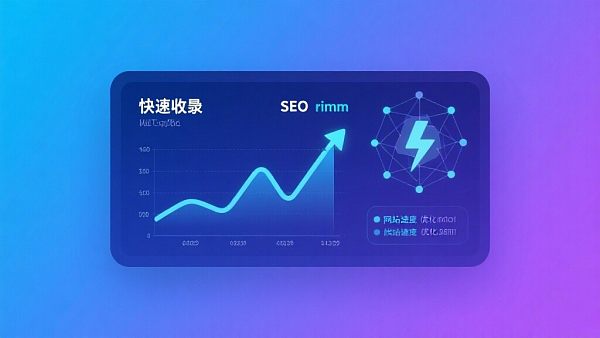
Looking ahead, SEO and SEM boundaries will blur further, with AI-generated content, model-driven keyword prediction, and automated technical optimizations becoming norms. Global server acceleration and multilingual independent websites will become foreign trade staples, while mobile-first and privacy compliance (e.g., GDPR) will continue influencing strategy. Companies should invest in reusable tech platforms (e.g., AI+SEO dual-engine systems for keyword matrices and performance monitoring) while reserving trial budgets for short-term SEM validation. This accelerates rapid indexing execution while ensuring long-term SEO stability.
FAQ (Frequently Asked Questions)
Q: How long does new page indexing typically take? A: With compliant tech and content, global server acceleration, and sitemap submission, initial indexing can complete in hours to days. Q: How to combine SEM for faster indexing? A: Use SEM to quickly validate high-commercial-value keywords and feed successful terms back into organic content to boost search engine attention. Q: How much does website speed impact indexing? A: Significantly—page speed affects crawl frequency and user experience; improvements usually boost indexing and rankings. Q: How to assess foreign trade inquiry quality? A: Combine lead conversion rates, contract values, and long-term client value, prioritizing quality and reachability over volume.
Why Choose Us / Contact Us (Call to Action)
To implement these strategies quickly, our AI+SEO solution offers end-to-end support from keyword mining and smart TDK generation to page diagnostics and global server acceleration. With a decade of industry experience, global nodes, and patented tech, we help foreign trade companies shorten the time from deployment to indexing, improving inquiry quality and sustainable growth. Learn more or request a trial by clicking: AI+SEO Dual-Engine Optimization Service. Contact our consultants for customized solutions based on your industry and target markets, helping you achieve rapid indexing while steadily improving website SEO rankings.
Supplementary Notes
This article combines industry best practices and standardized technical approaches, covering rapid website indexing, SEM optimization techniques, methods to improve website SEO rankings, website loading speed optimization services, strategies to enhance website SEO performance, independent website SEO, global server acceleration, and core topics like foreign trade inquiries and YouTube customer acquisition. For deeper technical audits or trial support, contact our expert team to co-create implementation plans.
- Campbell (name)
- free-standing station
- SEO optimization
- Independent site SEO
- Inquiry quality
- Global Server Acceleration
- Website seo optimization
- Mobile Compatibility
- Multilingual Independent Site
- Youtube
- SEO optimization effect
- Website loading speed
- Google Ads
- SEO
- SEO ranking optimization
- Trade inquiry
- YouTube Lead Generation
- Ways to Improve Your Website's SEO Results
- How to achieve rapid website indexing
- SEM Optimization Tips
- Website Load Speed Optimization Service
- Ways to boost your website's SEO ranking
Related Articles
 How much does fast website indexing help SEO? Should general internet service companies invest in acceleration solutions?
 What technical support is needed for international website development? How can general internet service enterprises build a multilingual architecture
 Are B2B website development costs high? Should general internet service companies outsource development in their budget planning?

Related Products
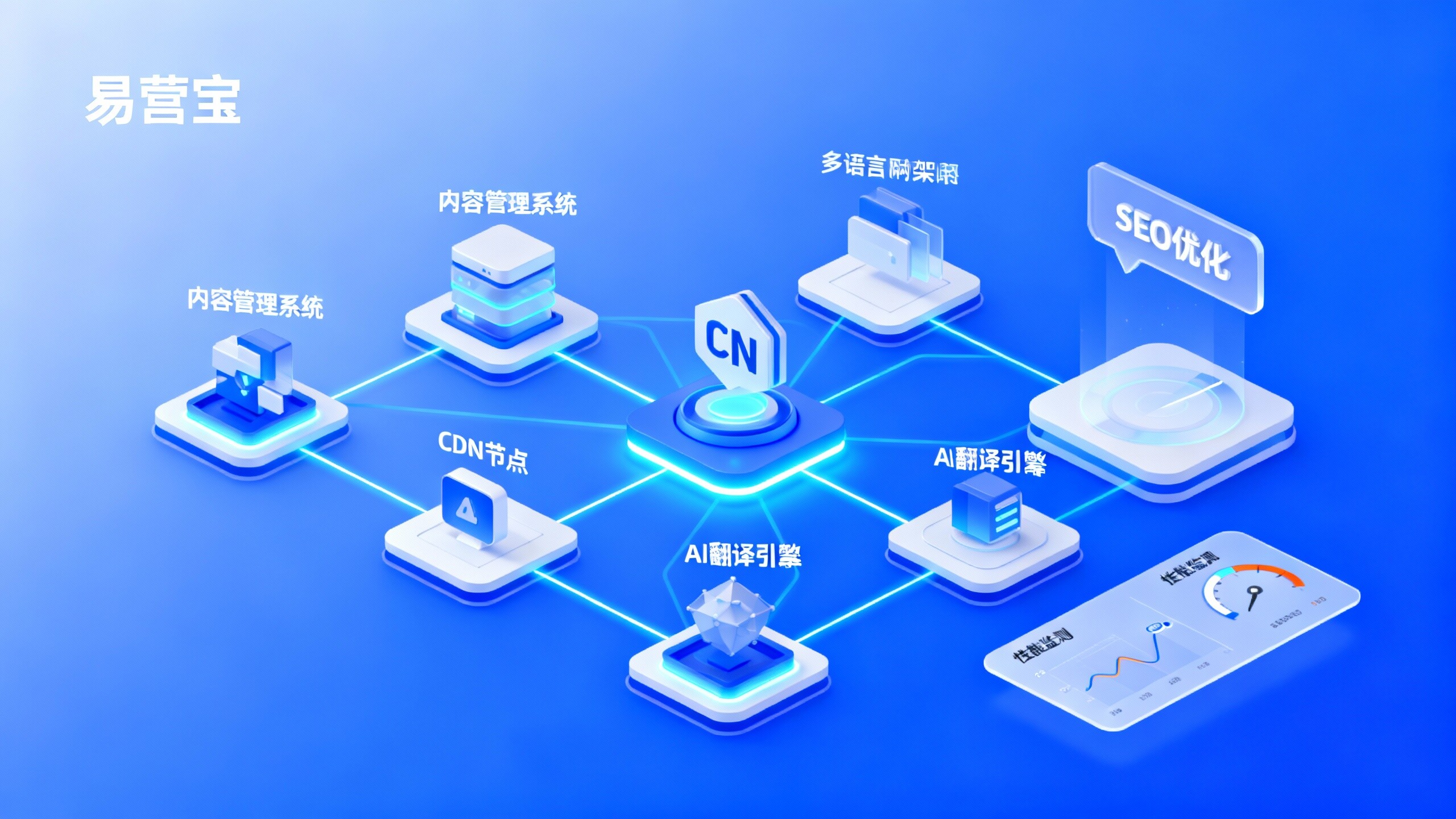
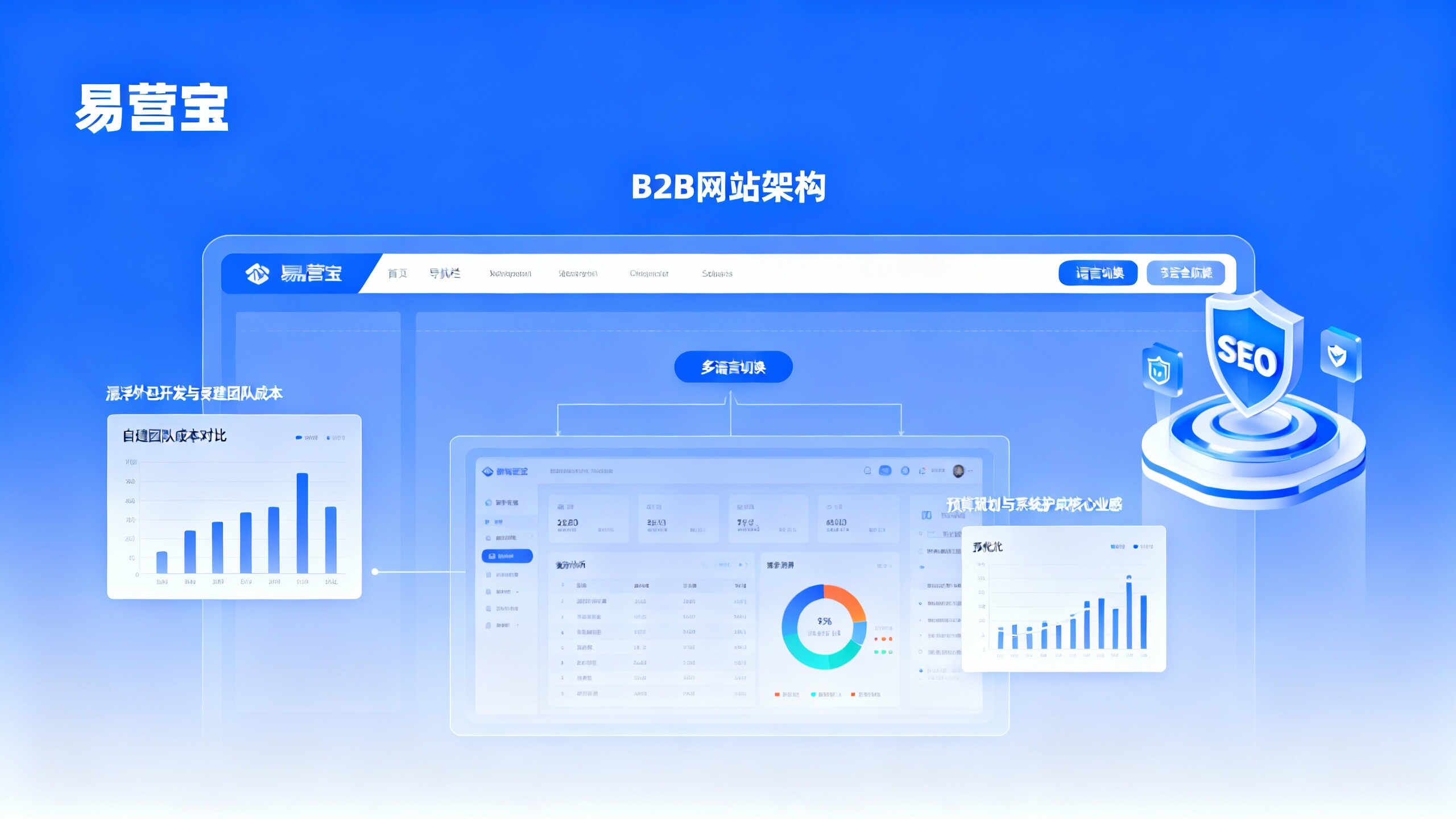
 EasyStore SaaS Intelligent Website Marketing SystemEasyStore SaaS Intelligent Website Marketing System, AI-driven zero-code website building, rapidly set up multilingual foreign trade independent sites in just 10 minutes, global server acceleration, AI-powered SEO optimization, helping businesses efficiently connect with global markets. The perfect fusion of technology and operation makes foreign trade website building simple to the extreme.
 AI+SEM Intelligent Advertising Marketing SystemAI+SEM drives intelligent campaign creation, empowering full-funnel precision advertising marketing. The system automatically generates weekly/monthly reports, AI-recommends keywords and target countries, monitors core metrics in real-time with intelligent alerts, and enables one-click high-conversion campaign launches to accelerate lead acquisition and boost ROI.
 AI+SEO Dual Engine Optimization ServiceEasyOperate AI+SEO dual engine optimization system leverages AI-powered keyword mining, content generation, and comprehensive technical optimization to help foreign trade enterprises acquire high-quality organic traffic, significantly improving search rankings and conversion rates.
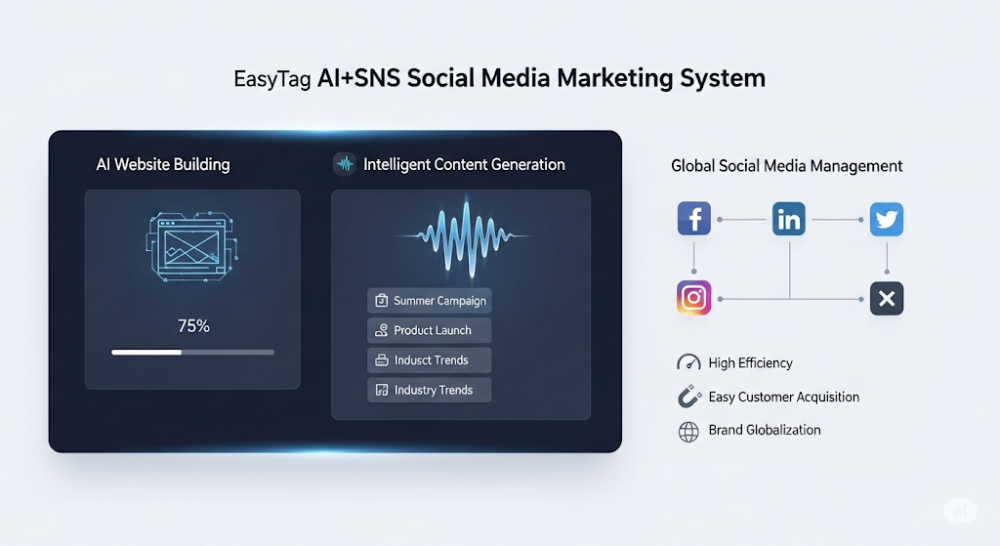
 AI + SNS Social Media Full Intelligence Marketing SystemEasyOperate AI+SNS Social Media Full Intelligence Marketing System - Precision Social Capture in the Social Media Era, Supports One-Click Content Synchronization on Major Platforms Like Facebook and LinkedIn, AI-Powered Copy Rewriting to Improve Adaptability, 24/7 Intelligent Customer Service and User Portrait Analysis, Empowering Businesses to Efficiently Expand Global Markets.
 AI+SEO Marketing SolutionEasyWin AI+SEO Marketing Solution leverages AI-powered batch content creation, intelligent TDK generation, and precise keyword expansion to comprehensively optimize website SEO performance, boosting traffic and conversion rates. Helps businesses build a highly efficient intelligent website ecosystem.
 AI+SEM Advertising & Marketing SolutionsAI+SEM advertising and marketing solution utilizes AI intelligent technology to deeply empower SEM advertising. Through AI intelligent generation of weekly/monthly reports, multi-dimensional presentation of account data, a comprehensive grasp of the effectiveness and trends of advertising, AI precise recommendation of keywords and countries, intelligent generation of high-conversion advertisement language, a key to start the efficient advertising program, helping enterprises to quickly acquire customers. At the same time, the system monitors the core indicators in real time, intelligently recognizes fluctuation abnormalities and warns them in time to ensure stable and high return of advertising effect.
 Domain Name ServicesEasy Operation provides professional domain services, including intelligent query, one-stop registration, brand protection, and full-cycle management, helping enterprises build a digital brand image.
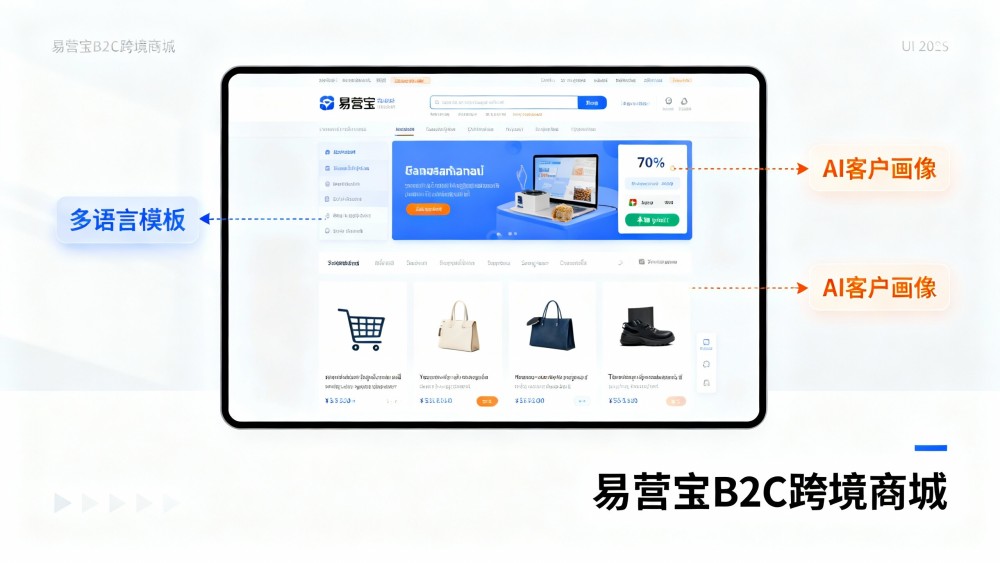
 EasyStore B2C Cross-border E-commerce Platform, Independent SiteEasyStore B2C Cross-border E-commerce Independent Store is an intelligent website building and cross-border e-commerce integrated solution independently developed by EasyStore Information Technology (Beijing) Co., Ltd. The system is specifically designed for small, medium, and large export enterprises, integrating 'website building, operation, marketing, advertising, and conversion' into one platform, helping businesses quickly establish cross-border e-commerce independent stores to achieve brand globalization and global sales growth.
The platform supports multiple languages, currencies, and multi-channel marketing, with built-in AI intelligent translation and SEO optimization systems, suitable for mainstream markets such as Southeast Asia, Europe & America, Latin America, and the Middle East, assisting Chinese manufacturing enterprises in efficiently deploying international e-commerce strategies. SSL CertificateEasyCert provides professional SSL security certificate services, including single-domain and wildcard certificates, ensuring encrypted data transmission, identity verification, and integrity protection for websites. This empowers businesses to establish secure and trustworthy online business environments.