- Does EasyAd's advertising performance have guarantees? How does the service mechanism work?2026-01-18View details
- Is the cost of using AI advertising smart manager high? How to calculate the budget more reasonably2026-01-18View details
- How to implement multilingual advertising optimization solutions in the general internet industry2026-01-18View details
- Is EasyAd AI Advertising Smart Manager easy to use? Is it suitable for general internet service companies?2026-01-19View details
- Which company provides the best multilingual website construction services for foreign trade? How should companies of different scales choose suppliers2026-01-17View details
- What is the role of HTTPS for websites? Why is the decision-making level increasingly emphasizing digital trust systems2026-01-15View details
- What is Global CDN Acceleration? Key Considerations for Enterprise Selection from Architecture to Cost2026-01-16View details
- What are the low-cost customer acquisition solutions suitable for SMEs? The practical path of integrating search and social media2026-01-17View details
Smart Website Platform Recommendation List for Procurement Personnel: TCO and After-Sales Service Comparison

Must-Read for Procurement: Smart Website Platform Recommendation List, including EasyShop competitive product comparisons, TCO and post-sales service analysis to help you make quick decisions. In the context of enterprise digitalization and overseas expansion, procurement, technical evaluation, and operations teams typically focus most on total cost of ownership (TCO), post-sales responsiveness and localization capabilities, platform SEO and performance, as well as supplier compliance and security when assessing smart website platforms. This document systematically breaks down core considerations for smart website platforms across three stages: project implementation, commercialization operations, and long-term investment, providing an actionable comparison and evaluation checklist for decision-makers, technical evaluators, procurement teams, and post-sales personnel to facilitate rapid decision-making during tenders, POCs, and supplier negotiations.
1. TCO Breakdown: Quantitative Methodology from Initial Investment to Long-Term Sustainable Costs

When evaluating a smart website platform's TCO, procurement teams should categorize costs into five areas: implementation costs (template customization, migration, and secondary development), infrastructure and hosting costs (CDN, servers, SSL, bandwidth), content and marketing costs (multilingual translation, SEO and ad placements), operations and support costs (SLA, backups, patches), and hidden costs (conversion losses due to performance drops, compliance penalties, re-migration costs). A recommended quantification method is the three-year total cost approach: amortizing all one-time fees over three years plus cumulative infrastructure and labor costs to derive the three-year TCO. Comparisons should focus on variable cost ratios (e.g., ad spend, translation services) versus automation levels (e.g., AI content generation, automated TDK creation), where highly automated platforms typically show significant advantages in content and marketing costs. Industry benchmarks—such as estimating that each 0.1-second improvement in page load speed increases SEO scores and conversions—can directly translate performance gains into monetary returns, helping align stakeholders during tenders and forming quantifiable ROI justification. Beyond feature comparisons, smart platform evaluations must incorporate the above TCO model into scoring sheets, requiring suppliers to provide itemized quotes to prevent pricing traps or hidden add-ons.
2. Post-Sales Service & SLA: Key Comparison Points for Localized Response, Incident Handling, and Upgrade Strategies
Post-sales service quality directly impacts platform stability and business continuity. Procurement teams should validate three key capabilities when comparing vendors: response and resolution capabilities (ticketing systems, phone support, on-site assistance), localized support and training (Chinese documentation, regional engineers, industry templates), and version iteration/security update strategies (patch release cycles, zero-day vulnerability response). Effective SLA terms must specify fault severity levels, response times, resolution deadlines, and compensation mechanisms, with regular drills and backup verification. For foreign trade website systems and cross-border scenarios, additionally assess suppliers' overseas node/CDN coverage and payment/compliance integration capabilities. Supplier-provided technical whitepapers, client case studies, and third-party evaluation reports can serve as post-sales capability references. Based on actual needs from operations and QA teams, consider adding knowledge transfer clauses and training plans to contracts to ensure capability handover from deployment to independent operations. As a benchmark, industry-leading platforms often provide enhanced support for 90 days post-launch and include common issue databases/automated operation scripts in deliverables to significantly reduce long-term operational costs and downtime. For marketing funnels involving smart ad placements and attribution, evaluate and integrate closed-loop tools like AI+SEM intelligent ad marketing systems to reduce tool integration and cross-team coordination costs from website building to ad campaigns.
3. Technical Evaluation Checklist: Quantified Scoring Template for SEO, Performance, Security & AI Capabilities
Technical evaluations should start with verifiable metrics. Build a scoring framework covering these dimensions: page performance (first-screen time, fully loaded time, core web vitals), SEO friendliness (structured data, automated TDK, language tags and multi-site management), content generation and richness (AI keyword expansion, automated TDK/multilingual translation quality), data privacy and compliance (data residency, encryption/DDoS protection), and platform extensibility (API capabilities, plugin ecosystem, concurrency). For global multilingual websites and foreign trade marketing systems, additionally evaluate machine translation with human review support, localized SEO strategies (search engine differences by country), and local domain/hosting deployment strategies. Require vendors to provide POC reports with quantifiable targets (e.g., month-one traffic lift, conversion goals, page load improvements) and testing methodologies, using data instead of vague promises. For example, when selecting a smart website platform, vendors proving their AI marketing engine increases SEO scores by 30%+ while improving page speed by 40% should receive higher weights in scoring models. Technical evaluations must balance explainability—platforms providing AI decision paths and causality prompts increase trust among technical and QA teams, reducing deployment resistance and audit costs.

4. Procurement Process & Competitive Analysis: Tender Essentials, POC Design, and Negotiation Tactics
In actual procurement, divide smart website platform evaluations into four phases: pre-selection (3-5 vendors filtered by feature checklists and compliance), POC (three quantifiable targets like month-one traffic lift, conversion rates, page speed improvements with agreed testing methods and data ownership), negotiations (TCO models and SLA terms as pricing cores, requiring hidden add-ons in contract annexes), and signing (emphasizing knowledge transfer, code/data export capabilities, and exit strategies). Comparison matrices should include feature dimensions, TCO estimates, SLA commitments, compliance credentials, client cases, and product roadmaps to facilitate weighted scoring by decision committees. For supply chain/agent models (distributors/resellers/agents), verify regional service systems and authorization mechanisms to ensure localization and post-sales quality aren't compromised by intermediary layers. Common procurement pitfalls include over-prioritizing feature coverage while ignoring long-term operational costs or neglecting closed-loop efficiencies across multilingual and ad funnel integrations. Tender documents should evaluate integrated "build-acquire-convert" capabilities to reduce later tool integration and cross-team friction.
Conclusion: When selecting smart website platforms, procurement decisions should center on quantified TCO, strict SLAs, localized post-sales capabilities, and verifiable technical metrics, supplemented by POC data and multidimensional competitive analysis to effectively reduce project risks and achieve sustainable growth. As an AI and big data service provider, a supplier's technical backend, global CDN, and partner ecosystem directly impact cross-border project launch speeds and operational costs. For customized TCO models, POC templates, or further benchmarking, we offer professional evaluation and implementation consulting services to expedite vendor selection and contract negotiations. Contact us now for smart website platform recommendations and competitive analysis reports tailored to your business scenario, or schedule a free POC consultation to explore solutions and implementation pathways.
- Platform
- Foreign Trade Website
- Search Engine Optimization
- Campbell (name)
- SEO
- Smart Website
- AI Marketing Engine
- AI+SEM Smart Advertising Marketing System
- Global multilingual website
- Foreign Trade Website System
- Foreign Trade Marketing System
- Smart Website Platform Recommendation
- Smart Website Platform
- 智能建站平台竞品分析
- EasyStore product competition comparison
- Multilingual Website
Related Articles
 What are the multilingual foreign trade website SEO optimization services
 What is the approximate cost of building a marketing website? What are the main factors affecting the budget?
 Comparison of responsive self-service website system prices, are the differences between mainstream solutions in 2026 significant?


Related Products
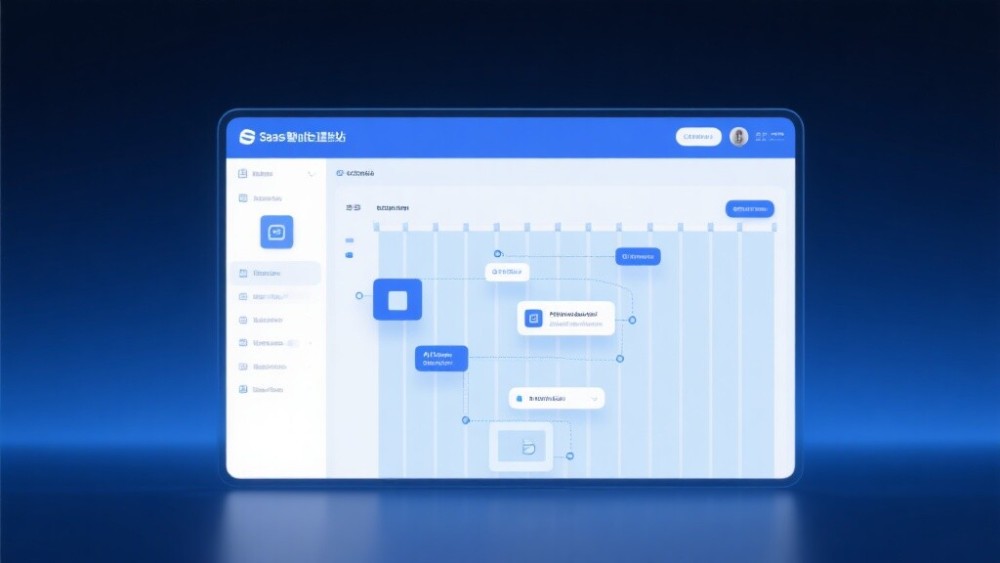
 EasyStore SaaS Intelligent Website Marketing SystemEasyStore SaaS Intelligent Website Marketing System, AI-driven zero-code website building, rapidly set up multilingual foreign trade independent sites in just 10 minutes, global server acceleration, AI-powered SEO optimization, helping businesses efficiently connect with global markets. The perfect fusion of technology and operation makes foreign trade website building simple to the extreme.
 AI+SEM Intelligent Advertising Marketing SystemAI+SEM drives intelligent campaign creation, empowering full-funnel precision advertising marketing. The system automatically generates weekly/monthly reports, AI-recommends keywords and target countries, monitors core metrics in real-time with intelligent alerts, and enables one-click high-conversion campaign launches to accelerate lead acquisition and boost ROI.
 AI+SEO Dual-Engine System Optimization ServiceE-Yingbao AI+SEO Dual-Engine Optimization System leverages AI-powered keyword mining, content generation, and comprehensive technical optimization to help export-oriented enterprises capture high-quality organic traffic, significantly boosting search rankings and conversion rates.
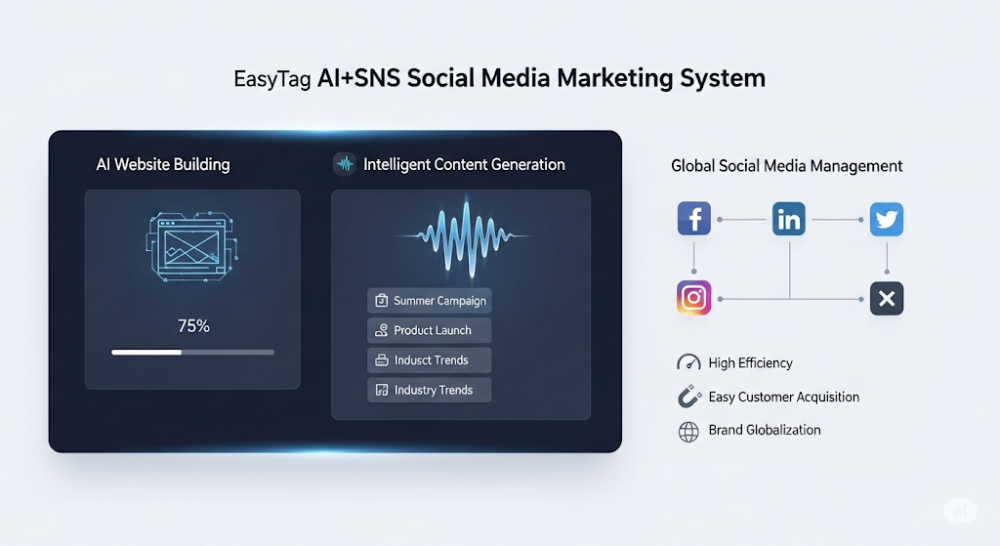
 AI + SNS Social Media Full Intelligence Marketing SystemEYBao AI+SNS Social Media All Intelligent Marketing System - Precise social capture in the era of social media, supporting one-click synchronization of content on mainstream platforms such as Facebook, LinkedIn, etc., AI intelligent rewriting of postings to enhance the degree of adaptability, 24/7 intelligent customer service and user profile analysis, helping enterprises to efficiently expand the global market.
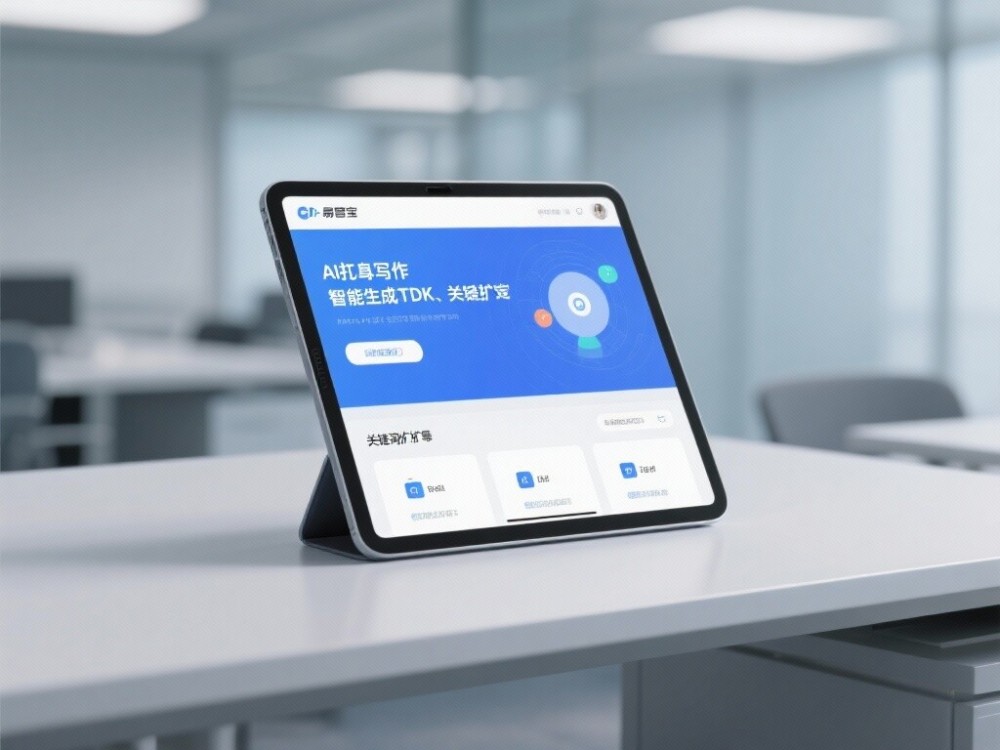
 AI+SEO Marketing SolutionEasyWin AI+SEO Marketing Solution leverages AI-powered batch content creation, intelligent TDK generation, and precise keyword expansion to comprehensively optimize website SEO performance, boosting traffic and conversion rates. Helps businesses build a highly efficient intelligent website ecosystem.
 AI+SEM Advertising & Marketing SolutionsAI+SEM advertising and marketing solution utilizes AI intelligent technology to deeply empower SEM advertising. Through AI intelligent generation of weekly/monthly reports, multi-dimensional presentation of account data, a comprehensive grasp of the effectiveness and trends of advertising, AI precise recommendation of keywords and countries, intelligent generation of high-conversion advertisement language, a key to start the efficient advertising program, helping enterprises to quickly acquire customers. At the same time, the system monitors the core indicators in real time, intelligently recognizes fluctuation abnormalities and warns them in time to ensure stable and high return of advertising effect.
 Domain Name ServicesEasy Operation provides professional domain services, including intelligent query, one-stop registration, brand protection, and full-cycle management, helping enterprises build a digital brand image.
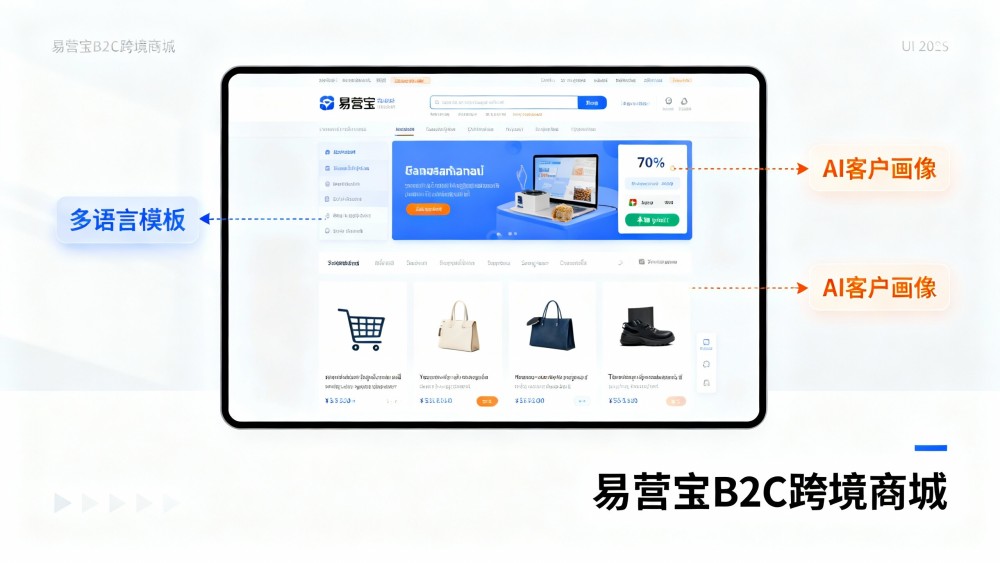
 EasyStore B2C Cross-border E-commerce Platform, Independent SiteEasyStore B2C Cross-border E-commerce Independent Store is an intelligent website building and cross-border e-commerce integrated solution independently developed by EasyStore Information Technology (Beijing) Co., Ltd. The system is specifically designed for small, medium, and large export enterprises, integrating 'website building, operation, marketing, advertising, and conversion' into one platform, helping businesses quickly establish cross-border e-commerce independent stores to achieve brand globalization and global sales growth.
The platform supports multiple languages, currencies, and multi-channel marketing, with built-in AI intelligent translation and SEO optimization systems, suitable for mainstream markets such as Southeast Asia, Europe & America, Latin America, and the Middle East, assisting Chinese manufacturing enterprises in efficiently deploying international e-commerce strategies. SSL CertificateEasyCert provides professional SSL security certificate services, including single-domain and wildcard certificates, ensuring encrypted data transmission, identity verification, and integrity protection for websites. This empowers businesses to establish secure and trustworthy online business environments.