









- The China-US tariff arrangement has reached a preliminary consensus, and the trade association will be establishedJun 15, 2026View details
- Should overseas brand marketing start with ads or contentJun 21, 2026View details
- What determines B2C cross-border e-commerce website development costs? A breakdown of features, interfaces, and deployment methodsJun 17, 2026View details
- China-Morocco zero-tariff access, a breakthrough in the cost of Moroccan goods exports to ChinaJun 11, 2026View details
- What signal should be released for the suspension of exports to JapanJun 10, 2026View details
- China's May LNG imports rebounded, with increased volumes from Russia and Canada filling the Middle East supply gapJun 10, 2026View details
Reduce customer acquisition costs with integrated SEO+SEM marketing: A five-step execution plan for B2B standalone site optimization
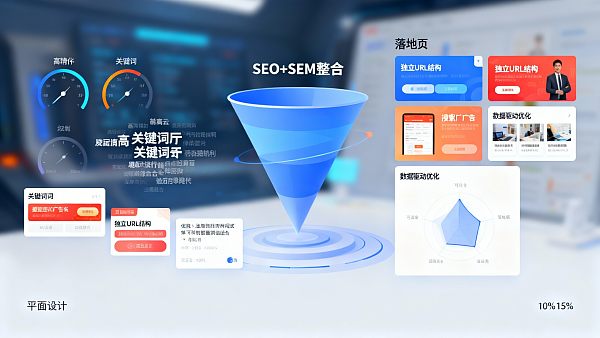
The integrated digital marketing system achieves traffic acquisition, inquiry conversion, and brand building through search engine optimization (SEO), search engine marketing (SEM), and social media advertising.
This system is data-driven at its core, leveraging technology and strategic collaboration to reduce customer acquisition costs while improving inquiry quality.
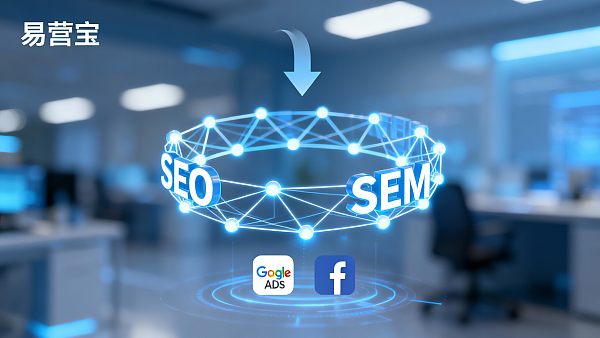
Working Principle or Core Mechanism
- Target segmentation and channel matching: First, define advertising targets based on industry and customer profiles, then select corresponding channels like Google, Yandex, and Facebook for outreach.
- Keyword system and content loop: Build a keyword library and achieve search coverage through SEO and Google Ads, forming a closed loop from keywords to content to page conversion.
- Multilingual and localized adaptation: Use independent URL multilingual structures with automatic translation on standalone sites to ensure consistent indexing and user experience across markets.
- Data-driven iterative optimization: Periodically optimize advertising strategies through conversion tracking, ad diagnostics, and traffic source analysis.
- Security and performance assurance: Global CDN and automatic SSL infrastructure ensure site availability and loading performance to support search rankings and ad quality scores.
Key Features and Highlights
- SEO+SEM integration ensures consistency between search traffic, paid traffic, keywords, and landing pages.
- Independent multilingual URL structures facilitate separate indexing and ranking of localized content by search engines.
- Social media advertising combined with on-site content boosts reach rates among high-intent inquiry users.
- Ad diagnostic tools quickly identify account structure and creative issues while providing actionable optimization recommendations.
- Real-time monitoring and A/B testing are standard methods for improving landing page conversion rates.
Application Scenarios
- Manufacturing exports: Cover overseas buyer search scenarios through multilingual standalone sites and Google Ads.
- Cross-border e-commerce: Combine SEO with social media to reduce CAC while improving repurchase rates.
- B2B wholesale and brand exports: Use content marketing and precision ads to enhance inquiry quality and shorten sales cycles.
- Service exports: Leverage localized content and regional engines like Yandex to meet professional search demands in target markets.
Comparison with Alternative Solutions
- Versus standalone SEO: SEO+SEM integration provides more stable traffic compensation and short-to-long-term coverage strategies.
- Versus pure social ads: Incorporating search engine strategies reduces dependency on single traffic channels.
- Versus generic cross-platform ads: Data-driven channel prioritization improves budget efficiency and inquiry relevance.
- Versus automated site builders: Combining multilingual management with manual localization boosts conversion rates in target markets.
Relationship with Native Products/Services
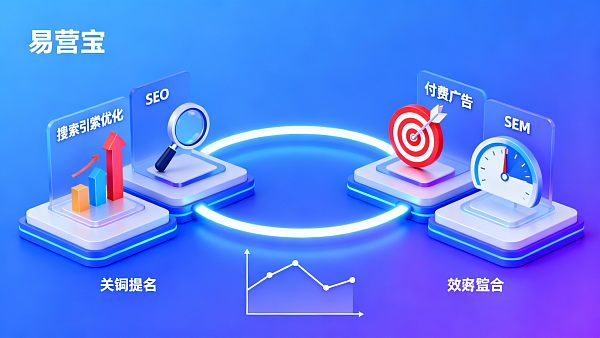
EasyYun's intelligent site-building and ad diagnostic capabilities support technical execution and performance monitoring for channels like Google SEO, Google Ads optimization, and Facebook marketing.
For B2B standalone site optimization, multilingual foreign trade websites, and inquiry quality improvement, the platform's multilingual management, auto-translation, and global server acceleration reduce page loading and indexing barriers, enhancing search visibility and UX.
Native integration includes diagnostics and creative optimization recommendations for Google/Yandex ads and social campaigns, with投放数据回写至站点分析 to form closed-loop integrated marketing.
Implementation may utilize global-accelerated multilingual外贸网站 solutions like EasyYun外贸超级网站 to reduce international latency while supporting multilingual SEO structures.
FAQ
Q: How to evaluate SEO vs. Google Ads budget allocation? A: Base allocations on keyword competition, conversion costs, and long-term goals, with periodic data-driven adjustments.
Q: How to avoid SEO penalties for duplicate content on multilingual sites? A: Use independent URL structures with hreflang and language tags to specify target audiences.
Q: How to improve Facebook inquiry quality? A: Enhance intent alignment through interest/audience segmentation, landing page consistency, and conversion tracking.
Q: Which markets suit Yandex in export strategies? A: Primarily Russian-speaking markets requiring search and display ads.
- Website Development
- Search Engine Marketing
- Multilingual Independent Website
- Standalone site optimization
- Google Ads
- B2B standalone site optimization
- Inquiry quality
- Google SEO
- Global server acceleration
- Google Ads
- Search Engine Optimization
- Google Ads Optimization
- Facebook Marketing
- SEO+SEM Integrated Marketing
- Yandex Promotion
- Multilingual website development
- Yiyingbao
- SEO
- Independent Website
- Smart Website Building
- Multilingual SEO
- Multilingual website
- Multilingual Website Construction for Foreign Trade
- Website Builder
- cross-border e-commerce
Related Articles
 Urgent customs declaration for drone exports starting June 30: 10-digit HS code and domestic manufacturer information required
 Drone export declaration tightening: 5 new required items effective June 30
 What Should You Pay Attention to in SaaS Website Security? A Complete Guide to Permissions, Backups, WAF, and Plugin Risks



Related Products
 EasyCamp SaaS Smart Website Marketing SystemE-Yingbao SaaS Smart Website Marketing System: AI-powered, zero-code website building. Rapidly launch multilingual independent e-commerce sites in just 10 minutes. Global server acceleration and AI-driven SEO optimization empower businesses to efficiently connect with global markets. The seamless integration of technology and user-friendly operation makes building e-commerce sites incredibly simple.
 AI+SEM Intelligent Advertising Marketing SystemAI+SEM drives intelligent ad creation, empowering full-funnel precision advertising marketing. The system automatically generates weekly/monthly reports, AI recommends keywords and target countries, monitors core metrics in real-time with intelligent alerts, and enables one-click high-conversion ad solutions to help quickly acquire customers and improve ROI.
 AI+SEO Dual Engine Optimization ServiceEasyWin AI+SEO Dual Engine Optimization System leverages AI-powered keyword mining, content generation, and comprehensive technical optimization to help foreign trade enterprises acquire high-quality organic traffic, significantly improving search rankings and conversion rates.
 AI+SNS Social Media Marketing SystemYingbao AI+SNS Social Media Marketing System - Precision social capture for the social media era. Supports one-click content synchronization across major platforms like Facebook and LinkedIn. AI intelligently rewrites posts for enhanced relevance. 24/7 AI customer service and user profiling analysis empower businesses to efficiently expand into global markets.
 AI+SEO营销解决方案易营宝AI+SEO营销解决方案,通过AI批量写作、智能生成TDK、精准关键词扩词等功能,全面优化网站SEO效果,提升流量与转化率。助力企业构建高效智能网站新生态。
 AI+SEM Advertising Marketing SolutionsAI+SEM Advertising Marketing Solution leverages AI technology to deeply empower SEM ad campaigns. It automatically generates weekly/monthly reports using AI, presenting account data across multiple dimensions for comprehensive insights into campaign performance and trends. The system precisely recommends keywords and target countries, intelligently generates high-conversion ad copy, and enables one-click activation of efficient campaign plans to help businesses rapidly acquire customers. Simultaneously, it monitors core metrics in real time, intelligently identifies abnormal fluctuations, and issues timely alerts to ensure stable, high-return advertising results.
 Domain Name ServicesEasyWin provides professional domain name services, including intelligent queries, one-stop registration, brand protection, and full lifecycle management, helping businesses build a digital brand image.
 EasyOperate B2C Cross-Border E-Commerce Platform & Independent WebsiteEasyStore B2C Cross-border E-commerce Independent Store is an intelligent website building and cross-border e-commerce integrated solution independently developed by EasyStore Information Technology (Beijing) Co., Ltd. The system is specially designed for small and medium-sized as well as large export enterprises, integrating 'website building, operation, marketing, advertising, and conversion' into one, helping enterprises quickly establish cross-border e-commerce independent stores to achieve brand globalization and global sales growth.
The platform supports multiple languages, multiple currencies, and multi-channel marketing, with built-in AI intelligent translation and SEO optimization systems, suitable for mainstream markets such as Southeast Asia, Europe and America, Latin America, and the Middle East, assisting Chinese manufacturing enterprises in efficiently deploying international e-commerce strategies. SSL证书易营宝提供专业SSL安全证书服务,包括单域名和泛域名证书,确保网站数据传输加密、身份验证和完整性保护,助力企业建立安全可信的在线业务环境。









