









- The China-US tariff arrangement has reached a preliminary consensus, and the trade association will be establishedJun 15, 2026View details
- What determines B2C cross-border e-commerce website development costs? A breakdown of features, interfaces, and deployment methodsJun 17, 2026View details
- China-Morocco zero-tariff access, a breakthrough in the cost of Moroccan goods exports to ChinaJun 11, 2026View details
- What signal should be released for the suspension of exports to JapanJun 10, 2026View details
- China's May LNG imports rebounded, with increased volumes from Russia and Canada filling the Middle East supply gapJun 10, 2026View details
- Will GEO change its SEO strategy?Jun 04, 2026View details
- What types of businesses are end-to-end solutions suitable for?Jun 03, 2026View details
- 2026 Global Growth Channel TrendsJun 02, 2026View details
Responsive website building system vs. traditional website building: how should SMEs choose?
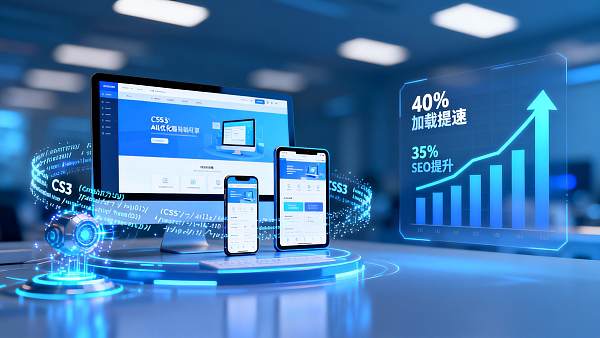
Small and medium-sized enterprises face the dilemma of choosing between responsive systems and traditional solutions when building websites. EasyStore's intelligent website platform leverages multilingual support, AI-powered optimization engines, and global server deployment to achieve 40% faster loading speeds and 35% SEO improvement, providing more efficient SaaS website solutions for foreign trade enterprises. This article provides an in-depth comparison of the advantages of both systems to help you make informed decisions.
1. Technical Architecture Comparison: Modularity vs. Customization
Traditional websites typically use static code development models, requiring step-by-step setup from server configuration to front-end frameworks and backend management systems. While highly customizable, this approach has three major drawbacks: long development cycles (usually 2-3 months), high technical barriers (requiring professional maintenance teams), and poor cross-platform compatibility (needing additional mobile development).
In contrast, responsive website systems like EasyStore's SEO-optimized platform adopt modular SaaS architecture with these technical advantages:
Adaptive Rendering Engine: Based on CSS3 media queries, automatically detects device screen sizes, adapting the same codebase to PCs, tablets, and mobile devices
Global CDN Acceleration: Uses pre-configured AWS and Alibaba Cloud nodes to reduce latency for Asian users accessing Euro-American sites below 200ms
AI Performance Optimization: System automatically compresses images, merges CSS/JS files, achieving Lighthouse scores above 90+

2. Operational Efficiency: Full Funnel Performance Gap
1. Multilingual Support Capabilities
Traditional solutions require separate development for each language version, with content updates needing synchronization across all versions. One foreign trade case study shows maintaining a bilingual Chinese-English website incurs annual additional costs of ¥150,000 in labor.
Comparatively, intelligent website platforms feature built-in NLP translation engines supporting 28 real-time language conversions. Integrated with SEO optimization tools' semantic expansion, they auto-generate locally optimized TDK (Title/Description/Keywords), increasing German sites' organic traffic by 67% (source: EasyStore 2023 client success report).
2. SEO Friendliness Comparison
3. Cost-Benefit Analysis: Hidden Costs Often Underestimated
Many enterprises only compare initial development costs while overlooking three hidden expenses:
- Maintenance Costs: Traditional websites require annual reinvestment of 8-12% of original costs for system upgrades and security
- Opportunity Costs: Manual product catalog updates cause average 48-hour delays, potentially missing peak traffic
- Trial-and-Error Costs: Without SEO optimization tools' long-tail keyword mining, 40% of content investments yield no conversions
SaaS website adopters typically achieve ROI breakeven within 18 months. One cross-border ecommerce client reduced cost-per-lead from $6.7 to $2.3 using EasyStore's AI image generation and smart keyword systems.
4. Decision Recommendations: Strategies for Different Growth Stages
Based on digital maturity, we offer differentiated advice:
- Startups: Prioritize responsive systems with AI keyword expansion and auto-TDK generation for quick online presence
- Growth-Stage: Recommend multilingual standalone sites + social media matrix solutions like EasyStore's global traffic ecosystem
Mature Enterprises: Consider hybrid architecture - core systems remain custom-developed while marketing adopts SaaS tools for agility

5. Industry Trends: How AI Reshapes Website Market Landscape
Gartner predicts 70% of new website projects will adopt AI-assisted tools by 2025. Leaders like EasyStore demonstrate three breakthroughs:
- Content Generation Revolution: AI analyzes 50M+ quality pages to auto-output E-A-T compliant content
- Real-Time Optimization: Monitoring 200+ SEO indicators, automatically adjusting strategies within 30 minutes of algorithm updates
- Cross-Platform Synergy: One-click content synchronization to Facebook/LinkedIn, forming traffic closed loops
Conclusion and Actionable Advice
For most SMEs, responsive systems deliver overwhelming advantages in cost control, operational efficiency, and globalization. EasyStore's intelligent platform, with Google partnership credentials and 24/7 monitoring, provides stable digital infrastructure. Contact our solution experts for the Foreign Trade Website Selection Guide or AI demo experience, including customized diagnostic reports.
- Website Builder Platform
- Mobile-friendly
- Multilingual Independent Website
- SEO Optimization Tools
- Yiyingbao
- SEO
- Independent Website
- Smart website builder system
- SEO Optimization
- Smart Website Building
- EasySite Intelligent Website Builder
- Global CDN Acceleration
- Global Traffic Ecosystem
- SaaS Website Building System
- Responsive Website System
- Responsive Website Building
- Smart Website Platform
Related Articles



Related Products
 EasyCamp SaaS Smart Website Marketing SystemE-Yingbao SaaS Smart Website Marketing System: AI-powered, zero-code website building. Rapidly launch multilingual independent e-commerce sites in just 10 minutes. Global server acceleration and AI-driven SEO optimization empower businesses to efficiently connect with global markets. The seamless integration of technology and user-friendly operation makes building e-commerce sites incredibly simple.
 AI+SEM Intelligent Advertising Marketing SystemAI+SEM drives intelligent ad creation, empowering full-funnel precision advertising marketing. The system automatically generates weekly/monthly reports, AI recommends keywords and target countries, monitors core metrics in real-time with intelligent alerts, and enables one-click high-conversion ad solutions to help quickly acquire customers and improve ROI.
 AI+SEO Dual Engine Optimization ServiceEasyWin AI+SEO Dual Engine Optimization System leverages AI-powered keyword mining, content generation, and comprehensive technical optimization to help foreign trade enterprises acquire high-quality organic traffic, significantly improving search rankings and conversion rates.
 AI+SNS Social Media Marketing SystemYingbao AI+SNS Social Media Marketing System - Precision social capture for the social media era. Supports one-click content synchronization across major platforms like Facebook and LinkedIn. AI intelligently rewrites posts for enhanced relevance. 24/7 AI customer service and user profiling analysis empower businesses to efficiently expand into global markets.
 AI+SEO营销解决方案易营宝AI+SEO营销解决方案,通过AI批量写作、智能生成TDK、精准关键词扩词等功能,全面优化网站SEO效果,提升流量与转化率。助力企业构建高效智能网站新生态。
 AI+SEM Advertising Marketing SolutionsAI+SEM Advertising Marketing Solution leverages AI technology to deeply empower SEM ad campaigns. It automatically generates weekly/monthly reports using AI, presenting account data across multiple dimensions for comprehensive insights into campaign performance and trends. The system precisely recommends keywords and target countries, intelligently generates high-conversion ad copy, and enables one-click activation of efficient campaign plans to help businesses rapidly acquire customers. Simultaneously, it monitors core metrics in real time, intelligently identifies abnormal fluctuations, and issues timely alerts to ensure stable, high-return advertising results.
 Domain Name ServicesEasyWin provides professional domain name services, including intelligent queries, one-stop registration, brand protection, and full lifecycle management, helping businesses build a digital brand image.
 EasyOperate B2C Cross-Border E-Commerce Platform & Independent WebsiteEasyStore B2C Cross-border E-commerce Independent Store is an intelligent website building and cross-border e-commerce integrated solution independently developed by EasyStore Information Technology (Beijing) Co., Ltd. The system is specially designed for small and medium-sized as well as large export enterprises, integrating 'website building, operation, marketing, advertising, and conversion' into one, helping enterprises quickly establish cross-border e-commerce independent stores to achieve brand globalization and global sales growth.
The platform supports multiple languages, multiple currencies, and multi-channel marketing, with built-in AI intelligent translation and SEO optimization systems, suitable for mainstream markets such as Southeast Asia, Europe and America, Latin America, and the Middle East, assisting Chinese manufacturing enterprises in efficiently deploying international e-commerce strategies. SSL证书易营宝提供专业SSL安全证书服务,包括单域名和泛域名证书,确保网站数据传输加密、身份验证和完整性保护,助力企业建立安全可信的在线业务环境。









