









- China-Morocco zero-tariff access, a breakthrough in the cost of Moroccan goods exports to ChinaJun 11, 2026View details
- What signal should be released for the suspension of exports to JapanJun 10, 2026View details
- China's May LNG imports rebounded, with increased volumes from Russia and Canada filling the Middle East supply gapJun 10, 2026View details
- Will GEO change its SEO strategy?Jun 04, 2026View details
- What types of businesses are end-to-end solutions suitable for?Jun 03, 2026View details
- 2026 Global Growth Channel TrendsJun 02, 2026View details
Slow loading website? Optimized with Eyingbao user retention after the actual test data exposure
Website loading speed slow? Eyingbao optimization tests show significant improvement in user retention, this article reveals detailed data and provides IDC SaaS platform user satisfaction benchmarks.
This article targets researchers and operators, focusing on performance pain points for corporate and foreign trade websites: slow homepage loading, high mobile bounce rates, SEO ranking fluctuations, and IDC SaaS platform user satisfaction dispersion. For businesses selecting and operating platforms, how to evaluate Eyingbao AI website builder and Eyingbao Website Builder performance with data? This article covers test data, technical details, and practical operations, balancing responsive SEO optimization with business usability, helping you make informed decisions in foreign trade website service selection and performance optimization.
Why website loading speed directly impacts user retention and IDC SaaS platform user satisfaction
Website loading speed is not just a technical metric but a core factor affecting user behavior and platform reputation. For B2B and B2C internet service companies, page response time directly correlates with conversion rates and customer satisfaction. Industry research shows that every 1-second improvement in homepage loading increases conversion by 5%~8%, while search engines increasingly prioritize page experience. For businesses focused on IDC SaaS platform user satisfaction, stable and fast access reduces support tickets, boosts Trustpilot Eyingbao ratings, and strengthens long-term trust.
Common quantifiable causes of slow loading include DNS delays, TLS handshake time, uncompressed resources, misconfigured CDN or caching, and third-party script render-blocking. When evaluating a website builder or SaaS platform (e.g., Eyingbao SaaS), beyond templates and marketing features, prioritize responsive SEO capabilities, global CDN coverage, and real-time diagnostics with auto-repair. Only by aligning user metrics (e.g., First Contentful Paint, Time to Interactive, Total Load Time) with business metrics (bounce rate, 30-day retention, average session duration) can you truly assess a platform's competitiveness in foreign trade website services.
Eyingbao test: Eyingbao Website Builder loading optimization and retention data analysis
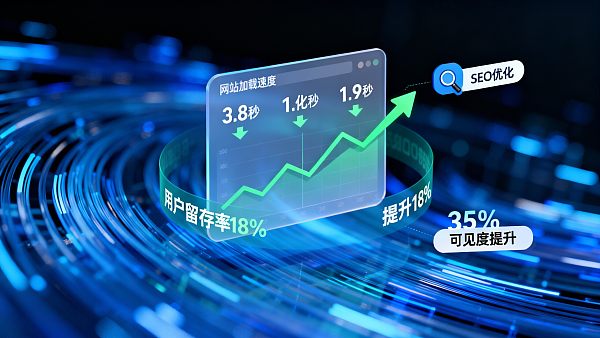
Comparative tests show Eyingbao's AI-driven global server optimizations deliver quantifiable results. Data from 10 foreign trade websites over 30 days pre/post-optimization reveal: with Eyingbao's acceleration and resource strategies, average homepage load time dropped from 3.8s to 1.9s; overall page load time decreased 48%; mobile Time to Interactive improved 42%. These directly drove user retention and conversions: 30-day retention rose 18% on average, while core page bounce rates fell 22%.
For SEO, responsive optimization and structured data automation boosted some sites' search visibility by ~35% within three months, with more stable traffic distribution on Google and Yandex. For platforms aiming to improve Trustpilot Eyingbao ratings, performance gains and content quality (via AI keyword expansion and auto-TDK generation) synergize: faster loading extends visit duration, while automated content enhances relevance—both reflected in IDC SaaS platform user satisfaction surveys.
Technical details & best practices: From CDN to SSL certificates implementation
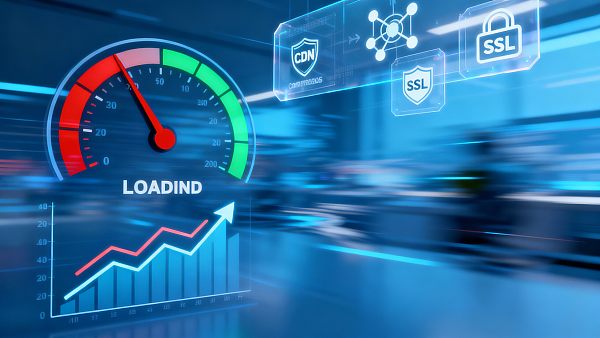
Speed optimization requires systematic execution. Eyingbao's backend employs global CDN nodes, auto-resource compression, lazy image loading, WebP conversion, and critical render path optimization to reduce network latency and render-blocking. Security optimizations matter equally: OCSP stapling, HSTS enforcement, and 2048-bit encryption reduce TLS handshake time while improving browser caching efficiency, lowering Time to First Byte (TTFB) without compromising security. Automated CSR generation, domain validation, and certificate deployment turn traditionally time-consuming processes into one-time configurations.
Actionable recommendations: 1) Prioritize nearby CDN nodes with controllable caching strategies; 2) Inline critical resources and defer non-essential scripts; 3) Strictly manage third-party scripts with async/defer; 4) Use automated certificate management to prevent HTTPS performance regression. Combined with built-in diagnostics, businesses can achieve responsive SEO goals while enhancing security.
How to evaluate and select foreign trade website service providers and Eyingbao SaaS platform

Vendor selection should assess performance, operations, and compliance. Performance: global server coverage, FCP/TTI metrics, CDN fault recovery; Operations: content generation efficiency (AI keywords, auto-TDK), social media automation, ad diagnostics; Compliance: data protection, WebTrust audits. Compare real client cases and third-party ratings (including Trustpilot Eyingbao) to verify long-term service quality and IDC SaaS platform user satisfaction.
Implementation steps: 1) Conduct small-scale POC tests comparing Real User Monitoring (RUM) with lab tools (Lighthouse/GTmetrix); 2) Require vendors to demonstrate certificate automation and hybrid content repair to reduce maintenance costs; 3) Evaluate AI content and ad optimization capabilities for traffic quality improvements without added manpower; 4) Verify SLA and 24/7 support for peak traffic or DDoS scenarios. These criteria help select foreign trade website services or SaaS platforms that boost loading speed and retention.
Summary & call to action
Website loading speed impacts not just short-term conversions but long-term IDC SaaS platform user satisfaction and brand reputation. Eyingbao's AI-driven full-stack optimizations synchronize speed, SEO, and retention gains. Whether prioritizing Eyingbao AI website builder automation or Eyingbao Website Builder's global acceleration, test data proves that engineered workflows deliver measurable business value.
For IDC SaaS platform user satisfaction comparisons or custom diagnostics, contact us for free consultation and POC testing. Visit Eyingbao's official site to book expert demos and start sustainable improvements in website performance and user retention.
- Corporate website
- SSL Certificate
- SEO Ranking
- AI Website Builder
- Website loading speed
- Corporate Website Development
- Yiyingbao
- SEO
- Independent Website
- Smart website builder system
- SEO Optimization
- Smart Website Development
- EasySite Intelligent Website Builder
- Social Media Automation
- Website SEO Optimization
- Independent foreign trade website
- EasyStore AI Intelligent Website System
- Responsive website
- Responsive Website SEO Optimization
- Eyingbao
- Eyingbao Website Builder
- EasyBusiness SaaS Platform
- IDC SaaS Platform User Satisfaction
- Trustpilot 易营宝
- China Service Providers
Related Articles
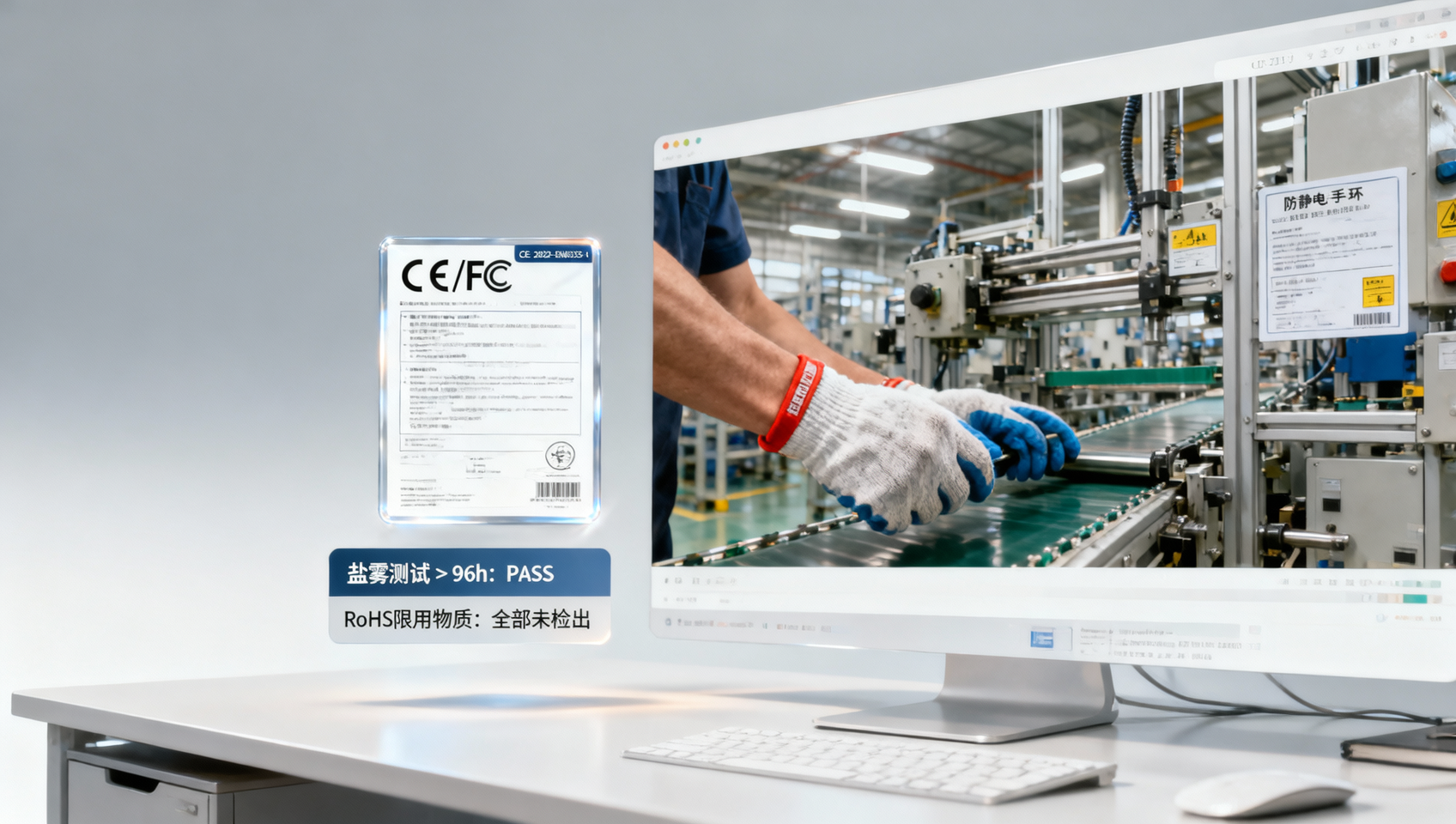
 How can foreign trade website product page design enhance trust? CE/FCC certificate badge placement, factory real-photo ratio, and third-party test report embedding methods
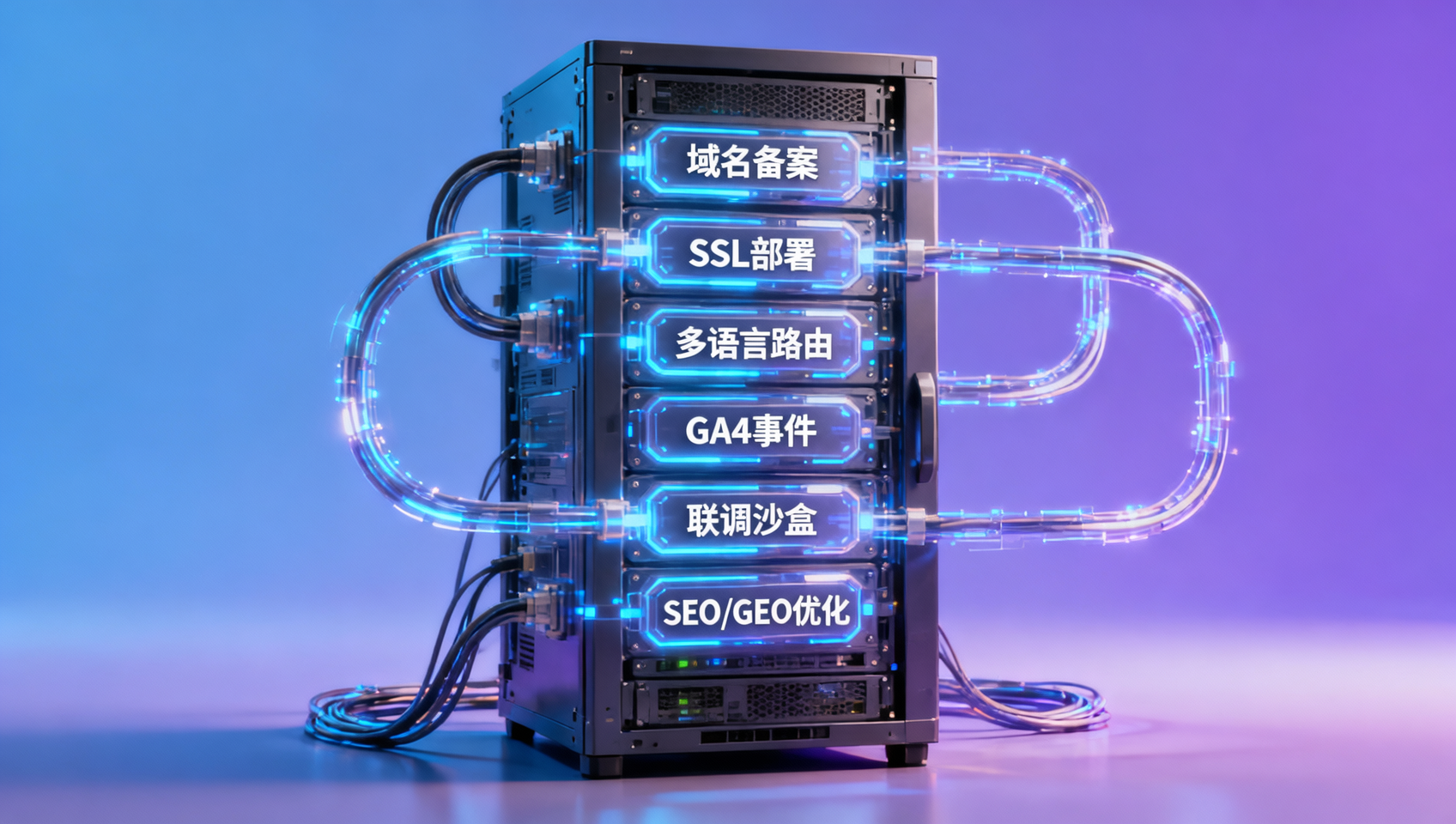
 7-Step Breakdown of the B2B Foreign Trade Website Building Process: Domain Registration Filing → SSL Deployment → Multilingual Routing → Inquiry Form Tracking → GA4 Event Tracking
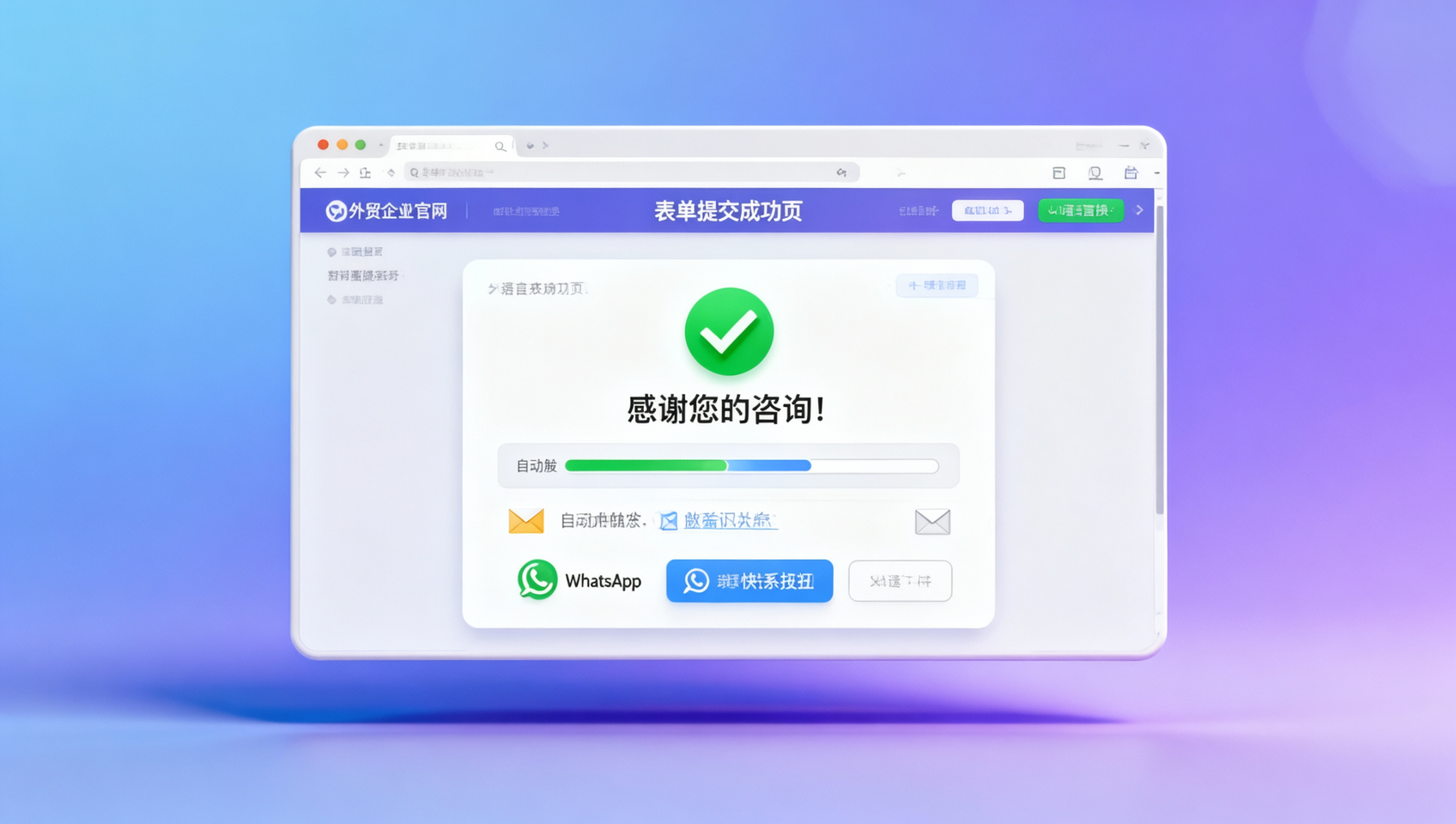
 In inquiry-driven foreign trade website design, the absence of a form submission success page leads to lead loss
Related Products
 EasyCamp SaaS Smart Website Marketing SystemE-Yingbao SaaS Smart Website Marketing System: AI-powered, zero-code website building. Rapidly launch multilingual independent e-commerce sites in just 10 minutes. Global server acceleration and AI-driven SEO optimization empower businesses to efficiently connect with global markets. The seamless integration of technology and user-friendly operation makes building e-commerce sites incredibly simple.
 AI+SEM Intelligent Advertising Marketing SystemAI+SEM drives intelligent ad creation, empowering full-funnel precision advertising marketing. The system automatically generates weekly/monthly reports, AI recommends keywords and target countries, monitors core metrics in real-time with intelligent alerts, and enables one-click high-conversion ad solutions to help quickly acquire customers and improve ROI.
 AI+SEO Dual Engine Optimization ServiceEasyWin AI+SEO Dual Engine Optimization System leverages AI-powered keyword mining, content generation, and comprehensive technical optimization to help foreign trade enterprises acquire high-quality organic traffic, significantly improving search rankings and conversion rates.
 AI+SNS Social Media Marketing SystemYingbao AI+SNS Social Media Marketing System - Precision social capture for the social media era. Supports one-click content synchronization across major platforms like Facebook and LinkedIn. AI intelligently rewrites posts for enhanced relevance. 24/7 AI customer service and user profiling analysis empower businesses to efficiently expand into global markets.
 AI+SEO营销解决方案易营宝AI+SEO营销解决方案,通过AI批量写作、智能生成TDK、精准关键词扩词等功能,全面优化网站SEO效果,提升流量与转化率。助力企业构建高效智能网站新生态。
 AI+SEM Advertising Marketing SolutionsAI+SEM Advertising Marketing Solution leverages AI technology to deeply empower SEM ad campaigns. It automatically generates weekly/monthly reports using AI, presenting account data across multiple dimensions for comprehensive insights into campaign performance and trends. The system precisely recommends keywords and target countries, intelligently generates high-conversion ad copy, and enables one-click activation of efficient campaign plans to help businesses rapidly acquire customers. Simultaneously, it monitors core metrics in real time, intelligently identifies abnormal fluctuations, and issues timely alerts to ensure stable, high-return advertising results.
 Domain Name ServicesEasyWin provides professional domain name services, including intelligent queries, one-stop registration, brand protection, and full lifecycle management, helping businesses build a digital brand image.
 EasyOperate B2C Cross-Border E-Commerce Platform & Independent WebsiteEasyStore B2C Cross-border E-commerce Independent Store is an intelligent website building and cross-border e-commerce integrated solution independently developed by EasyStore Information Technology (Beijing) Co., Ltd. The system is specially designed for small and medium-sized as well as large export enterprises, integrating 'website building, operation, marketing, advertising, and conversion' into one, helping enterprises quickly establish cross-border e-commerce independent stores to achieve brand globalization and global sales growth.
The platform supports multiple languages, multiple currencies, and multi-channel marketing, with built-in AI intelligent translation and SEO optimization systems, suitable for mainstream markets such as Southeast Asia, Europe and America, Latin America, and the Middle East, assisting Chinese manufacturing enterprises in efficiently deploying international e-commerce strategies. SSL证书易营宝提供专业SSL安全证书服务,包括单域名和泛域名证书,确保网站数据传输加密、身份验证和完整性保护,助力企业建立安全可信的在线业务环境。









