









- What stages does the cross-border services ecosystem include? How do website building, promotion, payment, and compliance work togetherJun 22, 2026View details
- How will email marketing costs change in 2026Jun 22, 2026View details
- The China-US tariff arrangement has reached a preliminary consensus, and the trade association will be establishedJun 15, 2026View details
- Should overseas brand marketing start with ads or contentJun 21, 2026View details
- What determines B2C cross-border e-commerce website development costs? A breakdown of features, interfaces, and deployment methodsJun 17, 2026View details
- China-Morocco zero-tariff access, a breakthrough in the cost of Moroccan goods exports to ChinaJun 11, 2026View details
- What signal should be released for the suspension of exports to JapanJun 10, 2026View details
- China's May LNG imports rebounded, with increased volumes from Russia and Canada filling the Middle East supply gapJun 10, 2026View details
Is Search Engine Ranking Improvement Driven by Content or Technology? Many People Get It Backwards
Improving search engine rankings—does it ultimately depend on content or technology? Many companies get the logic backwards. Truly effective growth is often not about choosing one over the other, but about building a solid technical foundation and then using content to amplify value, so that traffic and inquiries can be acquired consistently.
For business decision-makers, rankings are not a single traffic metric, but the combined result of customer acquisition cost, brand credibility, and the stability of sales leads. Especially in an integrated website + marketing services scenario, if the website’s underlying architecture is weak, no matter how much content you produce, it will still be difficult to have it crawled effectively; if there is only technology without content, the pages will also struggle to cover real search demand.
Since its establishment in 2013, Yiyingbao Information Technology (Beijing) Co., Ltd. has continuously provided full-funnel services centered on intelligent website building, SEO optimization, social media marketing, and advertising delivery. For companies seeking global growth, improving search engine rankings is never a one-off action by a single department, but a coordinated effort across four layers: website, content, data, and conversion paths.
Why many companies get the logic of improving search engine rankings backwards

There are two common misunderstandings. First, content is interpreted as “publishing more articles,” with the belief that updating 3 to 5 articles per week will raise rankings; second, technology is interpreted as “the job is done once the website is built,” while ignoring crawl efficiency, page speed, structured paths, and mobile experience. The result is often that content investment keeps increasing, but after 3 to 6 months, organic traffic still shows no obvious improvement.
Misunderstanding 1: There is plenty of content, but the pages cannot be understood efficiently
The prerequisite for improving search engine rankings is that search engines can smoothly access, crawl, parse, and assess the value of a page. If a site has issues such as loading times exceeding 3 seconds, a chaotic above-the-fold mobile structure, URL depth exceeding 4 levels, or too many duplicate titles, then no matter how rich the content is, stable rankings may still be impossible to achieve.
The technical foundation determines whether content has room to scale
In B2B marketing, technical optimization should cover at least 4 basic dimensions: site speed, information architecture, crawl accessibility, and conversion paths. Taking a corporate website as an example, core product pages should usually be kept within 2 to 3 directory levels, and important pages should be reachable within 3 clicks, which is more conducive to authority distribution and user browsing.
The table below can help companies quickly determine why “content investment is significant, but rankings are not improving”:
From the results, what companies truly lack is not “more content,” but a “website system capable of carrying and converting content value.” This is also why improving search engine rankings requires first determining whether the technical foundation meets the standard, and only then deciding the pace of content expansion.
Misunderstanding 2: The technology is in place, but no content assets have been built
Another extreme is also common: companies spend 2 to 4 weeks completing a redesign, launching a responsive website, basic tags, and internal links, and then expect rankings to grow automatically. In reality, technology solves “being discoverable,” while content solves “why you deserve to rank.” Without continuous topical content, case explanations, industry Q&A, and supplementary product pages, it is difficult for a website to cover enough search scenarios.
For example, for companies providing foreign trade services, industrial equipment, or enterprise software, user searches are often not based on a single keyword, but on compound needs such as “price + solution,” “application scenario + problem,” and “delivery cycle + risk.” If the pages remain limited to company introductions and simple product lists, the room for improving search engine rankings will be very limited.
The correct order for improving search engine rankings: build the technical foundation first, then amplify with content
The approach truly suitable for business decision-makers is not to first ask, “Which is more important, content or technology?” but to first clarify the order of investment. Generally speaking, the first 30 days should prioritize a technical audit of the website and structural corrections; the second stage should use 60 to 90 days to build a content matrix; and the third stage should then improve conversion rates and lead quality through data-driven iteration.
Step 1: Complete the underlying technical optimization of the website
The focus of the technical layer is not on piling up complex features, but on creating a crawlable and conversion-friendly environment for sustainable growth. For integrated website + marketing service projects, it is recommended to first review 6 items: page response speed, mobile adaptation, URL standards, internal links, indexing status of core pages, and forms and inquiry paths.
- Keep the loading time of core pages within 2 to 3 seconds whenever possible;
- Products, solutions, case studies, and insights should form at least 4 clearly defined sections;
- Each key page should have a unique title and a clear summary;
- Key conversion entry points should be reachable in no more than 2 steps;
- Buttons, forms, and phone entry points on mobile must be directly operable.
For companies engaged in cross-border or international business, technical optimization must also consider multilingual structures, regional access speed, and content synchronization mechanisms. If such websites rely only on translating a single template, they often run into issues such as high page duplication and insufficient coverage of regional demand, leading to greater ranking fluctuations later on.
Step 2: Build a business-opportunity-driven content structure, rather than updating blindly
Content development fears two things most: only writing about brand updates, or only writing generic industry news. What improving search engine rankings requires is a content structure that is highly relevant, high-intent, and highly convertible. It is recommended that companies deploy at least 3 layers of content: core product pages, solution pages, and question-based content pages.
The following is a content layout approach more suitable for B2B companies:
The key to this type of content system is not the total amount of updates, but whether there is a clear traffic-guiding relationship between pieces of content. In other words, articles should be able to lead into product pages, product pages should be able to capture inquiries, and inquiry paths should be able to be effectively handled by the sales team. Only then can improving search engine rankings truly convert into business opportunities.
Content topics should align with purchasing decisions, not just chase trends
What business decision-makers care about most is usually not the concept itself, but cost, timeline, risk, fit, and replicability. Therefore, content topics can revolve around questions such as “How to choose between a 7-day and 30-day implementation cycle,” “What are the 4 types of risks in an independent website redesign,” and “How to allocate budget between SEO and advertising.” Content like this is more likely to attract qualified visits and is also more conducive to later conversion.
In actual operations, some industry resource pages can also become high-quality content assets. For example, websites targeting foreign trade companies can appropriately expand into topics such as compliance, delivery, and risk control, thereby enhancing the thematic depth of the site through professional content. Topics like Exploring Risk Management and Prevention for International Trade Enterprises, if linked to a company’s cross-border service pages, can also help strengthen industry content coverage.
How companies should determine whether to prioritize content or technology at the current stage
The biggest taboo in decision-making is using a “one-size-fits-all” approach. If a website has fewer than 50 indexed pages per month, slow core page loading, and a significantly high mobile bounce rate, then the top priority must be technology. If the website structure is stable and already has a basic level of indexing, but coverage of high-intent keywords is insufficient, then the priority should shift to content development.
3 types of companies that should prioritize technical optimization
- New websites or redesigned websites that have been live for less than 3 months, with unstable indexing and crawling;
- Websites with complex page hierarchies, scattered product information, and sales entry points buried too deep;
- Businesses advancing multilingual or multi-regional operations simultaneously, but whose site structure has not been split by market.
For these companies, doing technology first can reduce ineffective content investment within a relatively short cycle. Usually, after completing the first round of technical rectification, changes in crawl frequency, indexing efficiency, and core page visibility can be observed within 2 to 6 weeks.
3 types of companies that should prioritize filling out the content system
- Websites that have been live for more than 6 months and have a relatively stable basic structure;
- Brand terms have rankings, but non-brand keyword traffic is relatively low;
- Product pages are complete, but there is a lack of industry scenarios, case logic, and question-based content support.
These companies need to use content more to expand search coverage and fill the gap of “people are searching, but you don’t have a page.” Especially in highly competitive B2B sectors, improvements in search engine rankings often come from the continuous accumulation of dozens or even hundreds of segmented demand keywords, rather than focusing only on 1 major keyword.
From rankings to inquiries, integrated website + marketing services are the ultimate solution
Many companies understand SEO as a traffic project, but in reality, it should be incorporated into a growth system. This is because ranking improvement is only the beginning; what follows includes user engagement, page conversion, lead distribution, sales follow-up, and data review. Without integrated coordination, even high rankings may only create the appearance of “looking busy and popular.”
What disconnects can integrated services solve?
Common disconnects for companies include: website-building companies that do not understand marketing, content teams that do not understand technology, advertising teams that do not care about organic traffic, and sales departments that cannot obtain clear lead sources. The result is fragmented budgets, inconsistent goals, and difficult post-analysis. The value of integrated website + marketing services lies in bringing technology, content, media buying, and conversion metrics into one unified growth framework.
From Yiyingbao’s service approach, intelligent website building, SEO optimization, social media marketing, and advertising delivery are not isolated modules, but can be combined and configured according to the stage a company is in. For example, in the early stage of going global, first build the site foundation and content framework; after entering the growth stage, then strengthen search and social media simultaneously; and once lead volume expands, use data analysis to optimize inquiry quality and follow-up efficiency.
4 outcome metrics business decision-makers should focus on
- The indexing and ranking stability of core business pages;
- The proportion of qualified visits brought by non-brand keywords;
- Whether the conversion path from visit to inquiry is smooth;
- Whether content, technology, and media buying can form a sustainable review and optimization mechanism.
Once these 4 metrics are incorporated into unified management, improving search engine rankings is no longer a “single-month sprint,” but a growth project that can be evaluated quarterly and scaled by stage.
For business decision-makers, the correct answer is never to choose between content and technology, but to first use technology to build the search foundation, then use content to amplify search value, and finally convert traffic into inquiries and orders through integrated operations. If you are currently evaluating a corporate website redesign, SEO growth, or overseas digital marketing strategy, it is recommended to start as early as possible with a synchronized diagnosis of website structure, content matrix, and conversion process. Contact us now to get a tailored solution that better fits your current business stage and learn more about search growth solutions.
Related Articles
 Are you really hitting the right target with Google FB for truck bed exports?
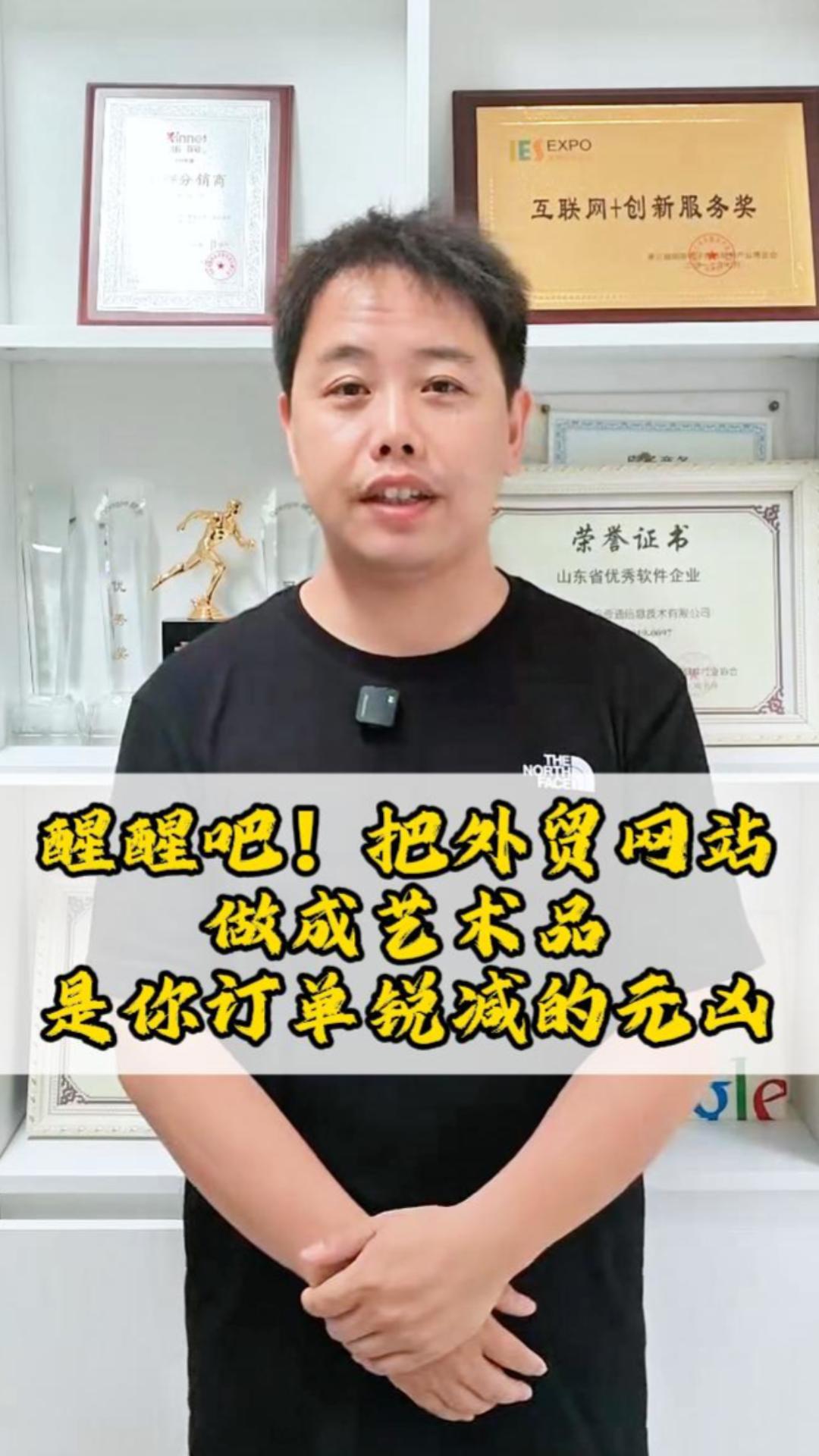
 It's easy to turn a foreign trade website into a piece of art, but it's the ultimate culprit behind your order decline
 Foreign trade website efficiency revolution! Yiyingbao component upgrade + inquiry optimization, inquiries surge!


Related Products
 EasyCamp SaaS Smart Website Marketing SystemE-Yingbao SaaS Smart Website Marketing System: AI-powered, zero-code website building. Rapidly launch multilingual independent e-commerce sites in just 10 minutes. Global server acceleration and AI-driven SEO optimization empower businesses to efficiently connect with global markets. The seamless integration of technology and user-friendly operation makes building e-commerce sites incredibly simple.
 AI+SEM Intelligent Advertising Marketing SystemAI+SEM drives intelligent ad creation, empowering full-funnel precision advertising marketing. The system automatically generates weekly/monthly reports, AI recommends keywords and target countries, monitors core metrics in real-time with intelligent alerts, and enables one-click high-conversion ad solutions to help quickly acquire customers and improve ROI.
 AI+SEO Dual Engine Optimization ServiceEasyWin AI+SEO Dual Engine Optimization System leverages AI-powered keyword mining, content generation, and comprehensive technical optimization to help foreign trade enterprises acquire high-quality organic traffic, significantly improving search rankings and conversion rates.
 AI+SNS Social Media Marketing SystemYingbao AI+SNS Social Media Marketing System - Precision social capture for the social media era. Supports one-click content synchronization across major platforms like Facebook and LinkedIn. AI intelligently rewrites posts for enhanced relevance. 24/7 AI customer service and user profiling analysis empower businesses to efficiently expand into global markets.
 AI+SEO营销解决方案易营宝AI+SEO营销解决方案,通过AI批量写作、智能生成TDK、精准关键词扩词等功能,全面优化网站SEO效果,提升流量与转化率。助力企业构建高效智能网站新生态。
 AI+SEM Advertising Marketing SolutionsAI+SEM Advertising Marketing Solution leverages AI technology to deeply empower SEM ad campaigns. It automatically generates weekly/monthly reports using AI, presenting account data across multiple dimensions for comprehensive insights into campaign performance and trends. The system precisely recommends keywords and target countries, intelligently generates high-conversion ad copy, and enables one-click activation of efficient campaign plans to help businesses rapidly acquire customers. Simultaneously, it monitors core metrics in real time, intelligently identifies abnormal fluctuations, and issues timely alerts to ensure stable, high-return advertising results.
 Domain Name ServicesEasyWin provides professional domain name services, including intelligent queries, one-stop registration, brand protection, and full lifecycle management, helping businesses build a digital brand image.
 EasyOperate B2C Cross-Border E-Commerce Platform & Independent WebsiteEasyStore B2C Cross-border E-commerce Independent Store is an intelligent website building and cross-border e-commerce integrated solution independently developed by EasyStore Information Technology (Beijing) Co., Ltd. The system is specially designed for small and medium-sized as well as large export enterprises, integrating 'website building, operation, marketing, advertising, and conversion' into one, helping enterprises quickly establish cross-border e-commerce independent stores to achieve brand globalization and global sales growth.
The platform supports multiple languages, multiple currencies, and multi-channel marketing, with built-in AI intelligent translation and SEO optimization systems, suitable for mainstream markets such as Southeast Asia, Europe and America, Latin America, and the Middle East, assisting Chinese manufacturing enterprises in efficiently deploying international e-commerce strategies. SSL证书易营宝提供专业SSL安全证书服务,包括单域名和泛域名证书,确保网站数据传输加密、身份验证和完整性保护,助力企业建立安全可信的在线业务环境。









