









- How Can a Brand Updates Page Be Made More SEO-Friendly? Analysis of Update Frequency, Content Structure, and Internal Linking StrategyJun 28, 2026View details
- What stages does the cross-border services ecosystem include? How do website building, promotion, payment, and compliance work togetherJun 22, 2026View details
- How will email marketing costs change in 2026Jun 22, 2026View details
- The China-US tariff arrangement has reached a preliminary consensus, and the trade association will be establishedJun 15, 2026View details
- Should overseas brand marketing start with ads or contentJun 21, 2026View details
- What determines B2C cross-border e-commerce website development costs? A breakdown of features, interfaces, and deployment methodsJun 17, 2026View details
- China-Morocco zero-tariff access, a breakthrough in the cost of Moroccan goods exports to ChinaJun 11, 2026View details
- What signal should be released for the suspension of exports to JapanJun 10, 2026View details
Saudi SASO new regulation takes effect on 5月19日: Importers must publicly disclose the ISO 20400 certification status of Chinese suppliers
【Introduction】On 19 May 2026, the Saudi Standards, Metrology and Quality Organization (SASO) officially implemented the new Importers’ Digital Due Diligence Requirements, for the first time bringing the sustainable procurement compliance of Chinese suppliers into the scope of mandatory online public disclosure. This move marks a shift in Middle Eastern market regulation over supply chain ESG transparency from ‘document filing for review’ to ‘real-time visibility’, directly affecting the compliance pathway, customs clearance efficiency, and long-term market access capability of Chinese exporters to Saudi Arabia.
Event Overview
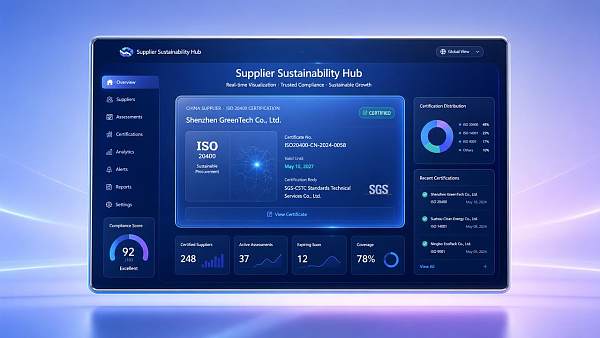
On 19 May 2026, the Saudi Standards, Metrology and Quality Organization (SASO) updated the Importers’ Digital Due Diligence Requirements, mandating that all importers registered in Saudi Arabia establish a dedicated ‘Supplier Sustainability Hub’ section on their official websites to publicly display in real time the ISO 20400 sustainable procurement certification status of their Chinese suppliers, including certificate number, validity period, and the full name of the certification audit body. Failure to disclose as required, or where the disclosed information is inconsistent with the status in the database of a Saudi-recognized body (SASO-recognized body), will result in the Saudi customs automated system identifying the importer as a ‘low-priority declaration entity’, increasing the average inspection rate for its goods to 42%, while disqualifying it from access to fast-track customs clearance channels.
Which Sub-sectors Are Affected
Direct Trading Enterprises
Foreign trade companies that export directly to end customers in Saudi Arabia under their own brands or as agents, although they may not themselves directly hold ISO 20400 certificates, must, as contracting parties and customs declaration entities, ensure that their Chinese suppliers have obtained certification and have authorized accurate disclosure in the Hub. The impact is reflected in: longer document preparation cycles (as certification status must be obtained and verified simultaneously), the addition of compliance guarantee clauses in customer renewal negotiations, and some small and medium-sized buyers shifting to large distributors with complete disclosure capabilities due to rising disclosure costs.
Raw Material Procurement Enterprises
Domestic procurement platforms or centralized sourcing service providers supplying basic raw materials (such as metal ingots, chemical intermediates, and greige fabrics) to downstream Saudi processing enterprises typically serve Saudi local manufacturers. Although such companies are not the final exporters of finished products, Saudi importers, in order to fulfill disclosure obligations, will move ISO 20400 status verification forward to the procurement contract signing stage. The impact is reflected in: new orders requiring additional certification commitment letters; historically uncertified suppliers facing replacement pressure; and bargaining power in procurement pricing tilting in stages toward upstream suppliers with certified qualifications.
Processing and Manufacturing Enterprises
OEM/ODM factories undertaking Saudi orders, especially those in highly regulated sectors such as electronics assembly, medical device contract manufacturing, and automotive parts, will find that ISO 20400 certification is no longer merely an ESG bonus item, but a prerequisite for Saudi importers to fulfill their statutory disclosure responsibilities. The impact is reflected in: abnormal certification status leading to the entire order chain being flagged by the customs system; even if the products themselves comply with SASO technical standards (such as SABER), they may still trigger additional document review or on-site inspection due to ‘questionable supplier sustainability status’.
Supply Chain Service Enterprises
Third-party service providers offering Saudi customs clearance agency services, compliance consulting, and certification guidance are seeing their business models shift from ‘single-point certification support’ to ‘closed-loop disclosure management’. The impact is reflected in: the need to develop API integration capabilities with the official Saudi SASO database to validate clients’ disclosure status in real time; the addition of a new ‘disclosure content compliance audit’ service module; and the risk of client loss for small and medium-sized service providers that have not established international certification tracking mechanisms.
Key Points of Attention and Response Measures for Relevant Enterprises or Practitioners
Confirm Whether You Fall Within the Scope of ‘Disclosed Parties’
Not all Chinese suppliers need to proactively apply for ISO 20400 certification——only when a Saudi importer lists them as a ‘cooperating supplier’ and publicly discloses them in the Hub does the Chinese enterprise become, in the regulatory sense, a ‘disclosed party’. Enterprises should proactively contact their existing Saudi customers to verify whether a Supplier Sustainability Hub has already been set up on their official websites and whether the enterprise itself has been included on the disclosure list. If not yet listed, the mandatory certification obligation is not triggered for the time being; but if already listed and the status is blank or expired, the enterprise must immediately initiate the certification process or negotiate a temporary suspension of disclosure.
Distinguish ISO 20400 Certification from Traditional Management System Certifications
ISO 20400 is a guidance standard for sustainable procurement rather than a mandatory certification standard, but SASO has made it ‘quasi-mandatory’ through importers’ due diligence obligations. Its audit focuses on soft systems such as procurement policies, supplier evaluation procedures, and social and environmental risk control mechanisms, rather than product testing or factory hardware. Enterprises must not substitute ISO 9001 or ISO 14001 certificates for it; nor may they accept an ‘ISO 20400 statement of conformity’ issued by a non-SASO-recognized body (such as a local certification company not listed in the ILAC-MRA mutual recognition directory).
Establish a Dynamic Response Mechanism for Disclosure Status
The certification validity period is usually 3 years, but the certification body may suspend or revoke the certificate in advance due to failure in surveillance audits. Enterprises must agree with the certification body on an immediate notification mechanism for status changes, and simultaneously notify Saudi importers to update the disclosure content on their official websites. It is recommended to clearly specify in the cooperation agreement between both parties: which party bears responsibility for disclosure updates, how inspection losses caused by delayed updates will be shared, and what temporary alternatives will be used during periods of abnormal status (such as activating backup certified suppliers).
Editorial Viewpoint / Industry Observation
Observably, this regulation is not primarily about environmental performance—it functions as a digital gatekeeping tool that shifts due diligence burden from Saudi authorities to importers, and then cascades it upstream to Chinese suppliers. Analysis shows the 42% inspection rate is calibrated not to block trade, but to incentivize transparency: firms with real-time verified sustainability data gain measurable clearance advantage. From an industry perspective, the requirement better reflects a broader Gulf regulatory trend—where ‘trust via verifiability’ replaces ‘trust via reputation’. It is more accurately understood as an early-phase infrastructure for future carbon border adjustments or ESG-linked tariff tiers in GCC markets.
Conclusion
This new SASO regulation is not an isolated technical adjustment, but a critical milestone in the upgrading of supply chain governance logic in the Middle Eastern market. It signals to Chinese enterprises that the focus of export compliance is shifting from ‘product conformity’ to ‘process credibility’, and evolving from ‘passive response to inspections’ to ‘proactively building verifiable digital credentials’. Rationally speaking, in the short term it will raise adaptation costs for small and medium-sized exporters, but in the medium to long term it will help enterprises with systematic management capabilities consolidate their positions in regional markets, while also accelerating the practical implementation of sustainable procurement standards in China.
Notes on Information Sources
- Official announcement on the Saudi Standards, Metrology and Quality Organization (SASO) website: Importers’ Digital Due Diligence Requirements (Version 3.1, effective 19 May 2026)
- List published by the SASO National Accreditation Body (SASO-NAB): Approved Certification Bodies for ISO 20400 in International Supply Chains (April 2026 edition)
- For continued observation: whether SASO will expand the disclosure scope from 2027 onward to importers in other GCC member states; and whether Saudi Customs will realize data linkage between disclosure status and the SABER certification system.
Related Articles
 Why a Google-optimized independent website is essential for trailer exports
 How Can a Brand Updates Page Be Made More SEO-Friendly? Analysis of Update Frequency, Content Structure, and Internal Linking Strategy
 Why is it that your foreign trade peers receive inquiries every day, while you can only wait for exhibitions?


Related Products
 EasyCamp SaaS Smart Website Marketing SystemE-Yingbao SaaS Smart Website Marketing System: AI-powered, zero-code website building. Rapidly launch multilingual independent e-commerce sites in just 10 minutes. Global server acceleration and AI-driven SEO optimization empower businesses to efficiently connect with global markets. The seamless integration of technology and user-friendly operation makes building e-commerce sites incredibly simple.
 AI+SEM Intelligent Advertising Marketing SystemAI+SEM drives intelligent ad creation, empowering full-funnel precision advertising marketing. The system automatically generates weekly/monthly reports, AI recommends keywords and target countries, monitors core metrics in real-time with intelligent alerts, and enables one-click high-conversion ad solutions to help quickly acquire customers and improve ROI.
 AI+SEO Dual Engine Optimization ServiceEasyWin AI+SEO Dual Engine Optimization System leverages AI-powered keyword mining, content generation, and comprehensive technical optimization to help foreign trade enterprises acquire high-quality organic traffic, significantly improving search rankings and conversion rates.
 AI+SNS Social Media Marketing SystemYingbao AI+SNS Social Media Marketing System - Precision social capture for the social media era. Supports one-click content synchronization across major platforms like Facebook and LinkedIn. AI intelligently rewrites posts for enhanced relevance. 24/7 AI customer service and user profiling analysis empower businesses to efficiently expand into global markets.
 AI+SEO营销解决方案易营宝AI+SEO营销解决方案,通过AI批量写作、智能生成TDK、精准关键词扩词等功能,全面优化网站SEO效果,提升流量与转化率。助力企业构建高效智能网站新生态。
 AI+SEM Advertising Marketing SolutionsAI+SEM Advertising Marketing Solution leverages AI technology to deeply empower SEM ad campaigns. It automatically generates weekly/monthly reports using AI, presenting account data across multiple dimensions for comprehensive insights into campaign performance and trends. The system precisely recommends keywords and target countries, intelligently generates high-conversion ad copy, and enables one-click activation of efficient campaign plans to help businesses rapidly acquire customers. Simultaneously, it monitors core metrics in real time, intelligently identifies abnormal fluctuations, and issues timely alerts to ensure stable, high-return advertising results.
 Domain Name ServicesEasyWin provides professional domain name services, including intelligent queries, one-stop registration, brand protection, and full lifecycle management, helping businesses build a digital brand image.
 EasyOperate B2C Cross-Border E-Commerce Platform & Independent WebsiteEasyStore B2C Cross-border E-commerce Independent Store is an intelligent website building and cross-border e-commerce integrated solution independently developed by EasyStore Information Technology (Beijing) Co., Ltd. The system is specially designed for small and medium-sized as well as large export enterprises, integrating 'website building, operation, marketing, advertising, and conversion' into one, helping enterprises quickly establish cross-border e-commerce independent stores to achieve brand globalization and global sales growth.
The platform supports multiple languages, multiple currencies, and multi-channel marketing, with built-in AI intelligent translation and SEO optimization systems, suitable for mainstream markets such as Southeast Asia, Europe and America, Latin America, and the Middle East, assisting Chinese manufacturing enterprises in efficiently deploying international e-commerce strategies. SSL证书易营宝提供专业SSL安全证书服务,包括单域名和泛域名证书,确保网站数据传输加密、身份验证和完整性保护,助力企业建立安全可信的在线业务环境。









