









How to Make Website Content Discoverable and Recommended by AI? Structured Content and Metadata Best Practices for Businesses

How to Make Website Content Discoverable and Recommended by AI? This guide combines structured content with metadata, providing actionable steps and key implementation points for enterprise-level execution.
In the battle for global traffic, businesses are most concerned with "How to make website content discoverable and recommended by AI?". This section addresses users, decision-makers, project managers, and maintenance personnel, outlining core pain points: difficulty in intelligent search system recognition, insufficient structured signals, inconsistent metadata, slow page performance affecting recommendation probability, and unstable cross-border access speeds. Enterprises need to focus on content governance, technical implementation, and operational closed-loop strategies.

First, define clear objectives: enhance site readability and trustworthiness in AI-driven search and recommendation scenarios. Next, quantify metrics: structured data coverage, automated TDK accuracy, First Contentful Paint (FCP), and Time to Interactive (TTI). For teams building or evaluating foreign trade independent sites, common questions include: How to build a foreign trade independent site? What features are needed? How long does it take to launch? These should be addressed in content and metadata strategies. This article provides executable technical and content checklists to help businesses master AI search recommendation workflows, with practical network and security optimization suggestions to reduce overseas latency, improve recommendation accuracy, and ultimately boost conversions and lead generation.
1. Structured Content as Core: Enterprise Workflows for Semantic Layering and Entity Annotation
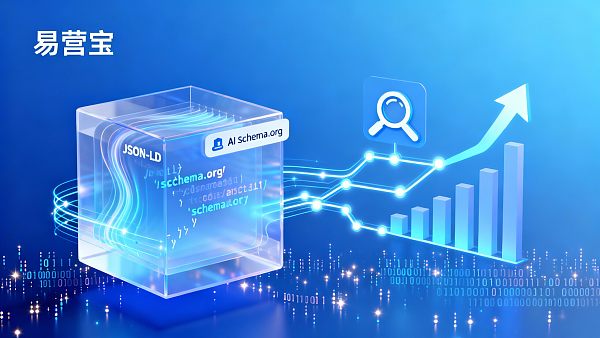
To prioritize page indexing and display in AI search and recommendation systems, structured content is the first gateway. It goes beyond basic product/service descriptions to establish clear semantic hierarchies and entity relationships using schema.org markup, JSON-LD structured data, and internal knowledge graphs. Enterprise implementation requires: 1) Cataloging site entities (companies, products, case studies, documents, FAQs, industry standards) with templated fields (e.g., product entities with name, model, specifications, release date, language versions, locations); 2) Embedding "structure-first" rules in content creation workflows—generating JSON-LD for each page automatically; 3) Enhancing relevance through semantic expansions like natural integration of long-tail queries ("How to acquire customers for foreign trade sites?", "Are independent sites suitable for B2B export?") with Q&A snippets for AI extraction; 4) Implementing validation mechanisms using automated tools to ensure structured data integrity, improving AI recommendation probability and display quality.
2. Metadata & Automated TDK: Closed-loop Optimization from Authoring to Machine Readability
Metadata (Title, Description, meta keywords—still valuable for semantic reference—plus Open Graph and structured data snippets) is critical for AI to determine page topics and intent. Enterprises should adopt "AI-generated TDK + human review" workflows: using AI keyword expansion for long-tail queries (e.g., "How to build a foreign trade site?", "Are independent site construction costs high?"), prioritizing high-intent keywords in Titles and Description openings while ensuring readability and conversion prompts. For multilingual sites, manage TDK as separate language items to avoid translation drift. For launch timing questions, include explicit publication dates, language versions, and regional tags to help recommendation systems assess content freshness and localization. Continuously monitor CTR performance in search results to iteratively refine models, creating measurable optimization loops that increase AI recommendation opportunities and organic traffic growth.
3. Performance & Network Strategies: Page Speed, Global Nodes, and IPv6 Value
Page performance directly impacts AI recommendations and user retention—search systems prioritize fast-loading, interactive pages. Optimizations include frontend resource consolidation/lazy loading, WebP/AVIF media compression, SSR rendering, and CDN caching. For exporters struggling with overseas latency, deploy global CDN nodes with geo-proximity routing and underlying protocol upgrades. IPv6-enabled networks provide stable addressing and higher concurrency, reducing NAT-induced delays—critical for large-scale independent sites. For example, adopting Internet Protocol Version 6 (IPv6) in enterprise network upgrades offers expanded address space and built-in security, enhancing multi-region deployment stability. Continuously monitor TTFB, FCP, and TTI to maintain performance thresholds for recommendation systems.
4. Content Organization & Long-tail Strategies: FAQs, Structured Q&A, and Multilingual Snippet Output
AI tends to recommend content snippets that directly answer user queries, making FAQs, tutorial pages, and structured Q&A databases key for recommendation rates. Modularize common questions ("How long to launch a foreign trade site?", "What features are needed?", "Are construction costs high?") into dedicated landing pages with structured data annotations. For multilingual sites, ensure localization beyond translation to match regional buyer behaviors. Leverage AI to generate high-quality paragraphs and summaries, but add human review for industry-specific terminology and brand voice consistency. To address conversion questions like "How to acquire customers for foreign trade sites?", embed actionable pathways: whitepaper downloads, consultation bookings, or smart site builder trials—using event tracking to evaluate each page type's conversion impact in AI-driven traffic for continuous optimization.
Conclusion: Implementation Checklist from Structure to Network Capabilities and Next Steps
Three parallel strategies make website content AI-recommendable: 1) Structured content and semantic entity annotation foundations with standardized JSON-LD and schema templates; 2) Automated TDK generation and multilingual metadata management for coverage and readability; 3) Performance and network optimizations including IPv6 adoption for cross-border stability. Combined with AI-driven all-in-one marketing capabilities, businesses can achieve content-to-traffic closed loops—from AI keyword expansion and automated TDK to smart site building, multilingual coverage, and ad optimization—creating scalable growth models. If evaluating "Can AI help quickly build independent sites?" or "Are independent sites suitable for B2B export?", start with small-scale pilots: implement complete structuring and metadata strategies for one product line or region, measure recommendation and conversion rates, then replicate site-wide. Contact us for customized implementation roadmaps or enterprise diagnostic services to ensure your independent site gets prioritized and converts consistently in the AI era.
- Foreign Trade Independent Website Development
- Standalone website development
- Yiyingbao
- Independent Website
- Smart Website Building
- Independent foreign trade website
- Website Builder
- How to build a foreign trade independent station?
- What features are needed for a foreign trade independent website?
- How long does it usually take for a foreign trade independent website to go online?
- Is the cost of building an independent foreign trade website high?
- How can a foreign trade independent website acquire customers?
- Is a standalone website suitable for B2B foreign trade?
- Can AI help quickly build an independent website?
- How can website content be recommended by AI search?
- What should I do if my overseas website loads slowly?
Related Articles
 How can website data analysis improve conversion rates? First identify high-bounce pages and key loss points
 How much does it cost to build a foreign trade multilingual website?Analysis of the modules and hidden costs that affect quotations
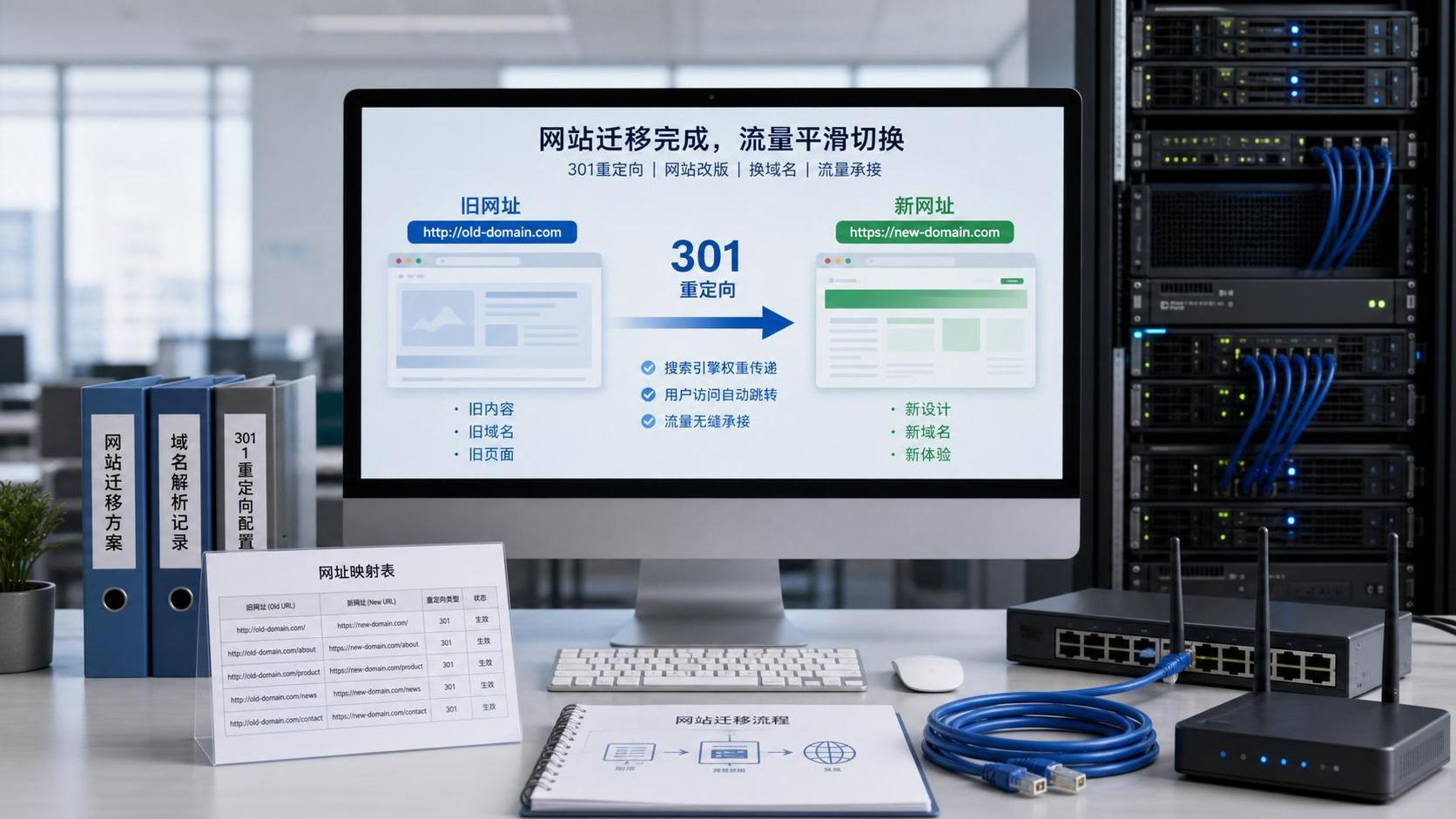
 Detailed explanation of 301 redirect setup methods:which pages must be redirected during a website redesign or domain change


Related Products
