









- What Does a Global Traffic Ecosystem Service Provider Do? What Are the Differences from a Single Advertising AgencyJul 16, 2026View details
- What should you focus on in the latest enterprise SaaS report? From renewal rates and delivery costs to overseas growth opportunitiesJul 12, 2026View details
- What signals are worth paying attention to in a cross-border marketing trend report? B2B companies should look at these 6 signalsJul 11, 2026View details
- How to Read a Cross-Border Marketing Trends Report? Five Key Dimensions for Evaluating Channel OpportunitiesJul 11, 2026View details
- Which channel has the highest ROI in the global traffic ecosystem? Comparative analysis of search, social media, and advertisingJul 10, 2026View details
- What multilingual website services are available in Sanya? Which model is more suitable for local businesses going global?Jul 08, 2026View details
How to Build a Multilingual Website to Boost SEO & Overseas Traffic: A Hands-On Guide to URLs & Hreflang
introduction
How to build a multilingual website? This guide combines AI-powered website building with practical Hreflang tagging to help you steadily increase traffic from overseas search engines. As an implementation manual for enterprises, this article targets a diverse audience including users, project managers, quality control and security personnel, distributors, and end customers. It focuses on four core aspects: technology selection, URL and language tagging, content localization processes, and deployment and monitoring, addressing common pain points for businesses expanding overseas, such as traffic fragmentation, duplicate content, incorrect tagging, and performance bottlenecks. Through practical suggestions and tools, it guides teams to develop a reusable methodology for building multilingual websites, from architecture to operation. This facilitates a balance between compliance and localization in cross-border markets, thereby steadily improving visibility and business conversion efficiency on overseas search engines.
I. URL Strategy and Site Architecture Selection: Advantages and Disadvantages of Subdomains, Subdirectories, and Country Code Domains

When deciding how to build a multilingual website, URL strategy is the primary consideration. Project managers need to weigh the pros and cons of subdomains, subdirectories, and ccTLDs. Subdomains are convenient for independent deployment by market, facilitate localized CDNs and legal compliance, but require more cross-domain verification for SEO weight integration. Subdirectories are easier to centrally manage and have smoother weight transfer, but require more detailed server and caching strategies to ensure the response speed of pages in different languages. ccTLDs significantly help with local trust, but are more costly and complex to maintain. Enterprises should choose a combination strategy based on traffic goals, compliance requirements, and operational capabilities, and implement a unified sitemap structure, language parameters, and standardization rules. Recommended practical steps include assessing target market priorities, determining the main domain and multilingual paths, designing language switching UX and implementing language persistence. The use of cookies or URL parameters should be cautious to avoid generating a large number of duplicate URLs and should be coordinated with the server to return appropriate HTTP headers to facilitate search engine crawling and user experience. At the architecture level, combining global CDN and near-origin deployment can significantly reduce latency, improve user experience, and help search engines crawl pages in different languages more stably. The ultimate goal is to maximize language weight while ensuring technical maintainability.
II. Practical Application of Hreflang Tags and Avoiding Common Mistakes
Hreflang is a core tool for multilingual SEO. Proper implementation can avoid duplicate content penalties and improve search visibility in target languages. Practical tips include accurate use of language and region codes, such as distinguishing between zh-CN and zh-TW. All language versions must be cross-referenced in the page head, with x-default pointing to the default page. Large sites can declare hreflang in bulk via sitemap to reduce head size. When dynamically generating hreflang, ensure stable links and enable absolute URLs. Common errors include hreflang pointing to 404 or redirect pages, inconsistent protocols, or mismatches due to the inclusion/exclusion of www. Incorrect code formatting or omitting x-default. If conflicts arise with canonical tags, ensure rel=canonical points to each language version itself or the appropriate preferred page. The recommended process is to verify all language cross-links in a test environment during initial deployment, check response headers and actual crawl results using Search Console and site crawling tools, regularly compare access logs and index reports, and promptly repair broken links caused by redirects or page redesigns. For enterprises with numerous language versions, automated tools can be used to generate hreflang in conjunction with the sitemap and incorporate it into the CI/CD pipeline to ensure the integrity of each release.
III. Content Localization and AI-Driven Efficiency Improvement
Content is the decisive factor for multilingual websites to obtain long-term organic traffic. Machine translation can accelerate large-scale coverage, but it must be combined with localized proofreading to ensure semantic and commercial accuracy. It is recommended to adopt a process of "AI draft + local review + terminology database management". Using AI to generate TDK and Meta descriptions on templated pages can significantly improve work efficiency. At the same time, by using AI to expand keywords to obtain long-tail keywords in various languages and building localized theme clusters, it is possible to effectively avoid keyword conflicts on the same theme in multiple languages. Enterprises can introduce automation tools to complete AI batch writing and automatic TDK generation, but a glossary and brand style guide must be established to ensure output consistency. Set up language version mapping and version release time strategy on the content publishing end to avoid index fluctuations caused by synchronizing a large amount of similar content in a short period of time. For e-commerce and product pages, it is recommended to prioritize elements such as prices, local logistics and compliance statements in the localization review to improve conversion rates. Verify the performance of landing pages in various languages through multi-channel A/B testing. In this process, the enterprise's AI+SEO integrated platform can be combined to achieve batch output and real-time quality detection. For example, AI+SEO marketing solutions can help the team achieve a closed loop from keyword expansion to TDK generation to batch content publishing, ensuring both efficiency and quality control.
IV. Deployment, Performance, Security, and Monitoring Strategies
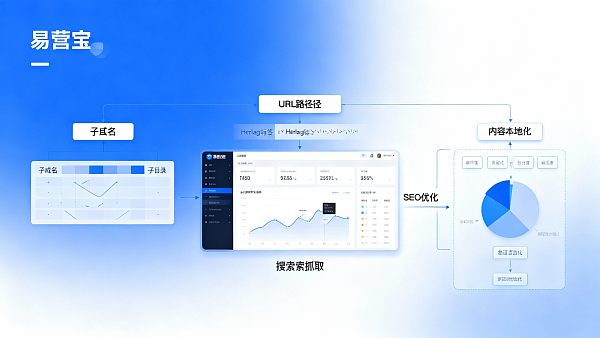
Stable, secure, and high-speed infrastructure is the foundation for successful overseas SEO. Deployment recommendations include global CDN and near-origin caching strategies, supporting automatic SSL certificate issuance and enabling HSTS to ensure security and search engine trust. Geographic load balancing should be used to handle peak cross-border traffic. In terms of SEO, multilingual sitemaps should be configured, and crawling guidelines should be clearly defined in robots.txt. To avoid wasted crawling, reasonable crawler rate limits should be set, and server logs should be monitored to detect crawling anomalies. The monitoring system should include multilingual attribute settings in Google Search Console and binding to webmaster tools accounts in the target market. Regularly check index and coverage reports and evaluate bounce rate and conversion rate of language pages based on site analytics data. Security-wise, preparation for cross-border regulations is necessary, including privacy-compliant cookie statements and data storage compliance in various regions. Operationally, it is recommended to establish multilingual fault response plans and localized knowledge bases for frequently asked questions so that the after-sales maintenance team can quickly locate and restore service. Finally, continuous performance testing and SEO checkups are essential for the routine optimization of the platform and content.
Summary and Action Guidance
This article outlines the key implementation points for the entire process, from URL architecture selection and Hreflang tag practice to content localization and deployment monitoring. When considering how to build a multilingual website, businesses should focus on user experience and search engine crawlability, while using automation tools to improve scalable production capabilities and ensuring brand and compliance through rigorous localization review. YiYingBao, supported by years of experience in overseas projects and technical capabilities, provides integrated services covering intelligent website building, AI writing, automatic TDK generation, and ad placement. The company has mature practices and partner endorsements in global CDN deployment and compliance support. If you wish to build a high-quality multilingual website in a short period and continuously optimize overseas traffic, please contact us immediately for a personalized technical assessment and implementation plan. Learn more about our solutions and launch a pilot project, making technology and localization a stable engine for your global growth.
Related Articles

Related Products
 EasyCamp SaaS Smart Website Marketing SystemE-Yingbao SaaS Smart Website Marketing System: AI-powered, zero-code website building. Rapidly launch multilingual independent e-commerce sites in just 10 minutes. Global server acceleration and AI-driven SEO optimization empower businesses to efficiently connect with global markets. The seamless integration of technology and user-friendly operation makes building e-commerce sites incredibly simple.
 AI+SEM Intelligent Advertising Marketing SystemAI+SEM drives intelligent ad creation, empowering full-funnel precision advertising marketing. The system automatically generates weekly/monthly reports, AI recommends keywords and target countries, monitors core metrics in real-time with intelligent alerts, and enables one-click high-conversion ad solutions to help quickly acquire customers and improve ROI.
 AI+SEO Dual Engine Optimization ServiceEasyWin AI+SEO Dual Engine Optimization System leverages AI-powered keyword mining, content generation, and comprehensive technical optimization to help foreign trade enterprises acquire high-quality organic traffic, significantly improving search rankings and conversion rates.
 AI+SNS Social Media Marketing SystemYingbao AI+SNS Social Media Marketing System - Precision social capture for the social media era. Supports one-click content synchronization across major platforms like Facebook and LinkedIn. AI intelligently rewrites posts for enhanced relevance. 24/7 AI customer service and user profiling analysis empower businesses to efficiently expand into global markets.
 AI+SEO营销解决方案易营宝AI+SEO营销解决方案,通过AI批量写作、智能生成TDK、精准关键词扩词等功能,全面优化网站SEO效果,提升流量与转化率。助力企业构建高效智能网站新生态。
 AI+SEM Advertising Marketing SolutionsAI+SEM Advertising Marketing Solution leverages AI technology to deeply empower SEM ad campaigns. It automatically generates weekly/monthly reports using AI, presenting account data across multiple dimensions for comprehensive insights into campaign performance and trends. The system precisely recommends keywords and target countries, intelligently generates high-conversion ad copy, and enables one-click activation of efficient campaign plans to help businesses rapidly acquire customers. Simultaneously, it monitors core metrics in real time, intelligently identifies abnormal fluctuations, and issues timely alerts to ensure stable, high-return advertising results.
 Domain Name ServicesEasyWin provides professional domain name services, including intelligent queries, one-stop registration, brand protection, and full lifecycle management, helping businesses build a digital brand image.
 EasyOperate B2C Cross-Border E-Commerce Platform & Independent WebsiteEasyStore B2C Cross-border E-commerce Independent Store is an intelligent website building and cross-border e-commerce integrated solution independently developed by EasyStore Information Technology (Beijing) Co., Ltd. The system is specially designed for small and medium-sized as well as large export enterprises, integrating 'website building, operation, marketing, advertising, and conversion' into one, helping enterprises quickly establish cross-border e-commerce independent stores to achieve brand globalization and global sales growth.
The platform supports multiple languages, multiple currencies, and multi-channel marketing, with built-in AI intelligent translation and SEO optimization systems, suitable for mainstream markets such as Southeast Asia, Europe and America, Latin America, and the Middle East, assisting Chinese manufacturing enterprises in efficiently deploying international e-commerce strategies. SSL证书易营宝提供专业SSL安全证书服务,包括单域名和泛域名证书,确保网站数据传输加密、身份验证和完整性保护,助力企业建立安全可信的在线业务环境。









