









- What stages does the cross-border services ecosystem include? How do website building, promotion, payment, and compliance work togetherJun 22, 2026View details
- How will email marketing costs change in 2026Jun 22, 2026View details
- The China-US tariff arrangement has reached a preliminary consensus, and the trade association will be establishedJun 15, 2026View details
- Should overseas brand marketing start with ads or contentJun 21, 2026View details
- What determines B2C cross-border e-commerce website development costs? A breakdown of features, interfaces, and deployment methodsJun 17, 2026View details
- China-Morocco zero-tariff access, a breakthrough in the cost of Moroccan goods exports to ChinaJun 11, 2026View details
Global Market SEO Optimization Strategy: Practical Roadmap to Boost Overseas Organic Traffic with Structured Data and Multi-Domain Approaches

Master Global Market SEO Strategies with AI-Driven Multilingual Marketing Systems and Website Acceleration to Rapidly Boost Overseas Organic Traffic and Brand Exposure.
As a professional guide for information researchers and users/operators, this article focuses on actionable pathways to enhance overseas organic traffic. Common pain points for businesses expanding globally include: chaotic multilingual content management, lack of strategic planning for domains and hosting, slow page loading affecting conversions, missing structured data limiting search result visibility, and insufficient synergy between paid ads and organic traffic. From a universal internet service perspective, this article combines practical approaches from AI-powered ad platforms, SaaS website builders, and multilingual marketing systems to provide executable cross-border e-commerce operations and promotion strategies, helping teams achieve scalable growth across markets.

Multi-Domain & Multilingual Strategy Design: Domain Architecture, hreflang, and Localized Hosting
The primary decision for global SEO strategy is domain-language mapping. Common options include: Country-code top-level domains (ccTLDs) for deep localization and trust-building, subdirectories (example.com/es/) for centralized authority and management ease, and subdomains (es.example.com) for independent site operations. Choices should prioritize market needs, compliance, and technical capabilities. For cross-border platforms, we recommend ccTLDs or localized subdomains for core markets to enhance user trust and local search performance, while implementing standardized hreflang tags to prevent language confusion and duplicate content penalties.
Multilingual marketing systems and SaaS platforms significantly reduce localization costs. Through AI translation engines and semantic validation workflows, ensure keyword accuracy while incorporating industry terminology. Implementation steps include: 1) Creating language-specific keyword sets (covering cross-border operations, digital solutions, etc.); 2) Generating localized TDK (Title, Description, Keywords) per domain/directory with automated validation tools; 3) Deploying servers/CDNs near target users to accelerate load times and reduce latency. Effective domain strategies combined with multilingual systems can rapidly improve overseas organic traffic and brand visibility.
Structured Data & Semantic SEO: Enhancing SERP Features and CTR
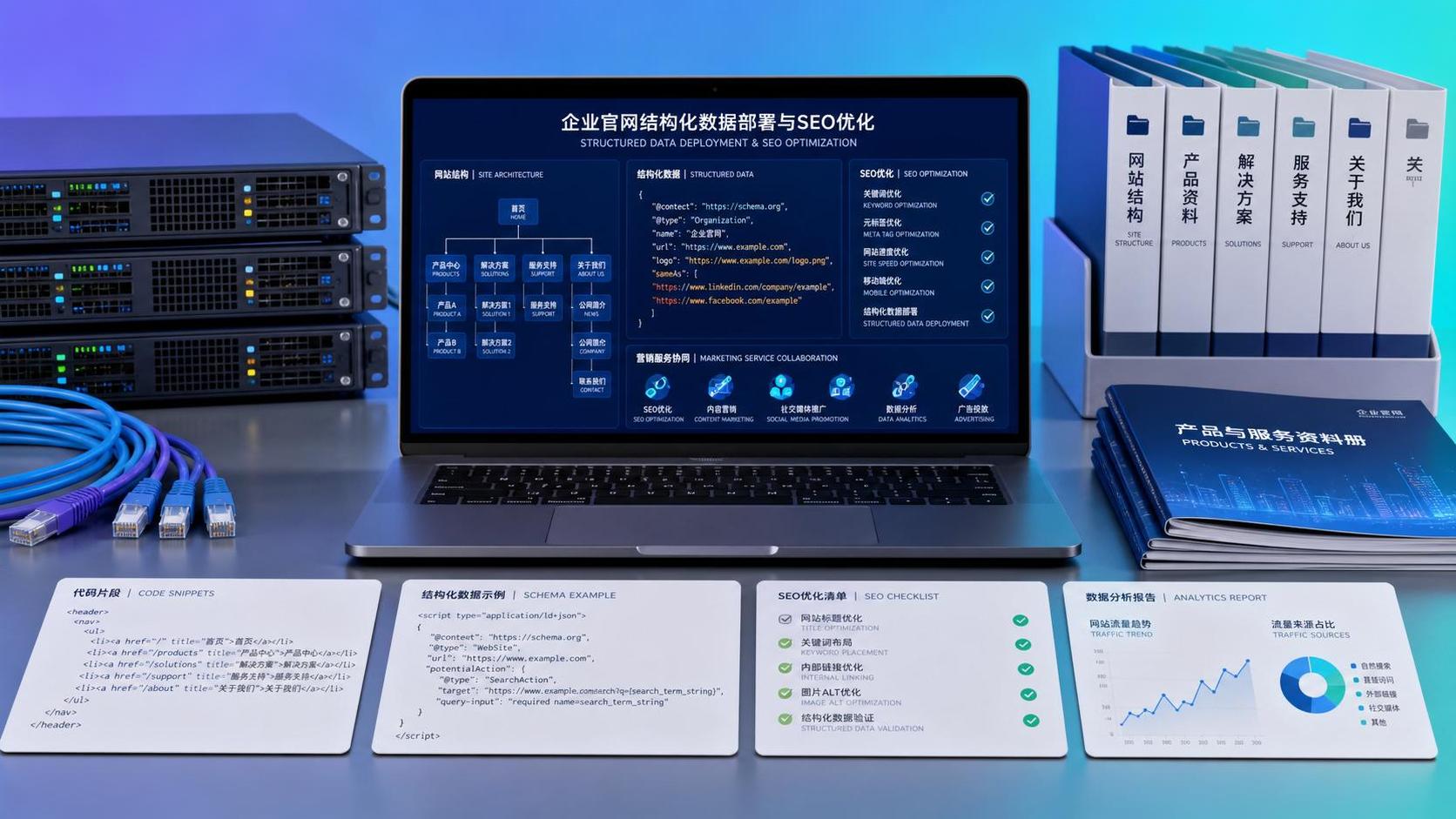
Semantic content and structured data are key to helping search engines understand page intent. For international sites, standardized JSON-LD schemas enable rich snippets for products, organizations, breadcrumbs, and FAQs. Key practices: Output independent JSON-LD per language with URL consistency; use Product schema with pricing, currency, inventory, and shipping details; implement Article and BreadcrumbList for blog/guide pages to improve navigation and indexing.
Concurrently, AI-driven "Keyword Expansion + Auto-TDK Generation + AI-Generated Visuals" can rapidly expand semantic coverage. By analyzing search intent across markets and mapping long-tail queries to content matrices, create a "Content→Structured Data→Internal Links" virtuous cycle. We recommend periodic schema adjustments (e.g., adding localizedPrice or availability fields) and structured FAQs on key pages to boost CTR. Structured data combined with multilingual pages and multi-domain strategies significantly improves overseas traffic quality and conversions.
Website Acceleration & Network Optimization: From CDN to IPv6 Implementation

Site performance directly impacts SEO rankings and UX. Prioritize: Resource distribution, latency reduction, and mobile experience. Best practices include global CDN nodes, edge caching, lazy loading for media, HTTP/2 or HTTP/3 support, and server compression. Using continental server clusters with intelligent routing can reduce load times by 40%, typically improving SEO scores by 35%. These are critical for cross-border platforms and SaaS builders.
At the network layer, adopting modern protocols prepares for future scaling. Implementing IPv6 provides near-unlimited addressing, faster connections, and enhanced security. Technically, IPv6 uses 128-bit addresses (e.g., 3001:0da8:75a3::8a2e:0370:7334) with built-in IPSec support for encryption and multicast. For businesses deploying private nodes or hybrid clouds, IPv6's native security and addressing are foundational for high-availability global networks. Combining AI acceleration with security measures is essential for boosting overseas organic traffic and conversions.
Data-Driven Content & Ad Synergy: From Acquisition to Conversion
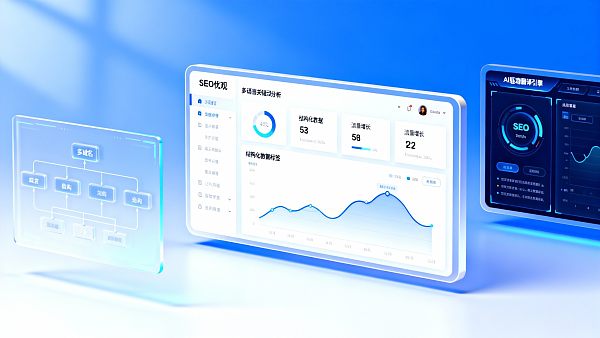
Organic traffic alone isn't enough for scalable growth—it requires synergy with AI ad platforms and social automation. Integrate search, social, and e-commerce data into a unified dashboard for "Data→Strategy→Execution" responsiveness. Key workflows: 1) Use AI keyword discovery to allocate high-intent terms across organic and paid channels; 2) Implement structured data and A/B testing on landing pages; 3) Optimize Google Ads, Meta, and Yandex campaigns with AI diagnostics to lower CAC and increase ROI.
Social automation amplifies brand visibility. Multilingual systems enable automated publishing, interaction, and conversion tracking, efficiently channeling social traffic to onsite resources. For cross-border operations, establish unified conversion events (e.g., AddToCart, Purchase) with cross-domain tracking to accurately attribute ad and organic performance. The goal is a "Content Supply→Search Coverage→Paid Acquisition→Conversion Loop" cycle for sustained overseas organic growth.
Conclusion & Call-to-Action
Global organic growth requires integrated domain-language strategies, structured data, website acceleration, modern protocols, and data-driven ad-content synergy. With AI-powered multilingual systems, ad platforms, and SaaS builders, businesses can achieve sustainable cross-border growth under compliant frameworks. [Brand] drives innovation and localization, offering full-funnel solutions from smart site-building to ad optimization, backed by AI patents and global partnerships for seamless overseas expansion.
Ready to rapidly boost overseas organic traffic and brand exposure? Contact us to explore digital marketing solutions or request a demo of our AI marketing engine and acceleration capabilities.
- Website Builder Platform
- SEO Ranking
- Google Ads
- Yiyingbao
- SEO
- Independent Website
- SEO Optimization
- Smart Website Building
- AI Translation
- AI Marketing Engine
- Social Media Automation
- AI Translation Engine
- cross-border e-commerce
- AI Website Acceleration Technology Enhances User Experience
- Global Market SEO Optimization Strategies
- SaaS Website Platform
- Cross-border e-commerce platform
- Multilingual Marketing System
- AI Smart Advertising Platform
- Digital Marketing Solutions
- Website Acceleration and Performance Optimization
- Cross-border e-commerce operation and promotion
Related Articles
 Urgent customs declaration for drone exports starting June 30: 10-digit HS code and domestic manufacturer information required
 Drone export declaration tightening: 5 new required items effective June 30
 What types of structured data are there? Which Schema markup should a corporate website prioritize?


Related Products
 EasyCamp SaaS Smart Website Marketing SystemE-Yingbao SaaS Smart Website Marketing System: AI-powered, zero-code website building. Rapidly launch multilingual independent e-commerce sites in just 10 minutes. Global server acceleration and AI-driven SEO optimization empower businesses to efficiently connect with global markets. The seamless integration of technology and user-friendly operation makes building e-commerce sites incredibly simple.
 AI+SEM Intelligent Advertising Marketing SystemAI+SEM drives intelligent ad creation, empowering full-funnel precision advertising marketing. The system automatically generates weekly/monthly reports, AI recommends keywords and target countries, monitors core metrics in real-time with intelligent alerts, and enables one-click high-conversion ad solutions to help quickly acquire customers and improve ROI.
 AI+SEO Dual Engine Optimization ServiceEasyWin AI+SEO Dual Engine Optimization System leverages AI-powered keyword mining, content generation, and comprehensive technical optimization to help foreign trade enterprises acquire high-quality organic traffic, significantly improving search rankings and conversion rates.
 AI+SNS Social Media Marketing SystemYingbao AI+SNS Social Media Marketing System - Precision social capture for the social media era. Supports one-click content synchronization across major platforms like Facebook and LinkedIn. AI intelligently rewrites posts for enhanced relevance. 24/7 AI customer service and user profiling analysis empower businesses to efficiently expand into global markets.
 AI+SEO营销解决方案易营宝AI+SEO营销解决方案,通过AI批量写作、智能生成TDK、精准关键词扩词等功能,全面优化网站SEO效果,提升流量与转化率。助力企业构建高效智能网站新生态。
 AI+SEM Advertising Marketing SolutionsAI+SEM Advertising Marketing Solution leverages AI technology to deeply empower SEM ad campaigns. It automatically generates weekly/monthly reports using AI, presenting account data across multiple dimensions for comprehensive insights into campaign performance and trends. The system precisely recommends keywords and target countries, intelligently generates high-conversion ad copy, and enables one-click activation of efficient campaign plans to help businesses rapidly acquire customers. Simultaneously, it monitors core metrics in real time, intelligently identifies abnormal fluctuations, and issues timely alerts to ensure stable, high-return advertising results.
 Domain Name ServicesEasyWin provides professional domain name services, including intelligent queries, one-stop registration, brand protection, and full lifecycle management, helping businesses build a digital brand image.
 EasyOperate B2C Cross-Border E-Commerce Platform & Independent WebsiteEasyStore B2C Cross-border E-commerce Independent Store is an intelligent website building and cross-border e-commerce integrated solution independently developed by EasyStore Information Technology (Beijing) Co., Ltd. The system is specially designed for small and medium-sized as well as large export enterprises, integrating 'website building, operation, marketing, advertising, and conversion' into one, helping enterprises quickly establish cross-border e-commerce independent stores to achieve brand globalization and global sales growth.
The platform supports multiple languages, multiple currencies, and multi-channel marketing, with built-in AI intelligent translation and SEO optimization systems, suitable for mainstream markets such as Southeast Asia, Europe and America, Latin America, and the Middle East, assisting Chinese manufacturing enterprises in efficiently deploying international e-commerce strategies. SSL证书易营宝提供专业SSL安全证书服务,包括单域名和泛域名证书,确保网站数据传输加密、身份验证和完整性保护,助力企业建立安全可信的在线业务环境。









