









- How Can a Brand Updates Page Be Made More SEO-Friendly? Analysis of Update Frequency, Content Structure, and Internal Linking StrategyJun 28, 2026View details
- What stages does the cross-border services ecosystem include? How do website building, promotion, payment, and compliance work togetherJun 22, 2026View details
- How will email marketing costs change in 2026Jun 22, 2026View details
- The China-US tariff arrangement has reached a preliminary consensus, and the trade association will be establishedJun 15, 2026View details
- Should overseas brand marketing start with ads or contentJun 21, 2026View details
- What determines B2C cross-border e-commerce website development costs? A breakdown of features, interfaces, and deployment methodsJun 17, 2026View details
- China-Morocco zero-tariff access, a breakthrough in the cost of Moroccan goods exports to ChinaJun 11, 2026View details
- What signal should be released for the suspension of exports to JapanJun 10, 2026View details
Google has launched a global sourcing intent recognition model, and traffic to foreign trade corporate websites may be significantly affected
On May 14, 2026, Google’s official developer platform Search Central officially launched the ‘Global Sourcing Intent Model’ (GSIM), incorporating high-frequency procurement behavioral signals such as MOQ confirmation, FOB terms inquiries, sample requests, and custom lead time inquiries into the search ranking algorithm for the first time. This move will directly affect the visibility and conversion efficiency of Chinese foreign trade websites targeting the global market in organic search, posing a substantial traffic challenge հատկապես for B2B companies that have not adapted to multilingual procurement pathways.
Event Overview
On May 14, 2026, Google Search Central announced the launch of the ‘Global Sourcing Intent Model’ (GSIM). Through semantic recognition and user behavior modeling, this model systematically analyzes procurement intent signals reflected in search queries and page interactions, including but not limited to ‘MOQ confirmation’, ‘FOB terms inquiry’, ‘sample request’, and ‘custom lead time inquiry’. If Chinese foreign trade websites have not deployed structured procurement terminology libraries, multilingual RFQ pop-ups, and one-click inquiry pathways on the homepage or core product pages, they will be flagged by the system as ‘non-procurement-friendly’, and their organic search exposure weight may decline by as much as 63%.
Which Industry Segments Will Be Affected

Direct trading enterprises: Industrial-trade integrated enterprises or outbound brands primarily engaged in self-operated exports and relying on independent websites to receive inquiries from overseas buyers, with their websites serving as the primary procurement entry point. After GSIM goes live, if procurement-related semantic nodes are not explicitly presented (such as a ‘Request Quotation’ button embedded in the multilingual navigation bar and a fixed RFQ form at the bottom of product pages), high-intent search traffic will be lost, and inquiry conversion rates will decline not because of insufficient product competitiveness, but because of algorithm-level entry-point failure.
Raw material sourcing enterprises: Enterprises engaged in cross-border sourcing of raw materials (such as chemical additives, electronic components, and specialty metals), whose websites often emphasize technical parameters and certification qualifications while weakening guidance for transaction actions. GSIM will reduce the ranking weight of long-tail procurement terms such as ‘aluminum alloy 6061 MOQ’ and ‘food-grade silicone sample request’, forcing the buyer journey to shift visibly forward from information acquisition to transaction preparation.
Processing and manufacturing enterprises: OEM/ODM factory websites generally exhibit the characteristic of ‘heavy capacity display, light procurement response’, lacking multilingual inquiry entry points on the homepage, minimum order quantity labels on product pages, and interactive modules such as ‘Lead Time Calculator’. GSIM will amplify these structural shortcomings, causing factories that genuinely possess flexible delivery capabilities to lose search exposure opportunities due to missing page signals.
Supply chain service enterprises: B2B platforms providing supporting services such as factory audits, logistics, and customs clearance, whose clients are mostly buyers with clear procurement needs. If the platform itself has not built procurement intent anchor points (such as a ‘Find Verified Suppliers by MOQ Range’ filter and a ‘Compare FOB Quotes’ price comparison tool), it will be difficult to be included in the GSIM-related recommendation ecosystem, leading to narrowed customer acquisition paths and traffic entry points shifting passively from ‘service search’ to ‘procurement intent driven’.
Key Areas of Attention and Response Measures for Relevant Enterprises or Practitioners
Structured procurement terminology libraries must cover high-frequency intent phrases across all languages
Based on the language habits of target markets, the ‘sourcingIntentKeywords’ field should be embedded in Schema.org Product markup. For example, the English page should add ‘minimum order quantity’, the French page should add ‘quantité minimale de commande’, and the Japanese page should include ‘最低発注数量’, rather than merely translating Chinese keywords. The terminology library must be synchronized and updated with Google Merchant Center product data.
The RFQ pathway must meet the ‘reachable within three seconds’ design standard
A multilingual ‘Get Quote’ floating button should be placed in the top navigation bar of the homepage; an RFQ pop-up with pre-filled SKU must be embedded below the main image on product pages (supporting automatic recognition of the user’s geographic location and default switching to the corresponding currency and shipping terms); on mobile, the RFQ form must ensure ≤5 fields and remain visible on the first screen, avoiding collapse or redirection.
Procurement intent signals must be validated through a closed loop with user behavior data
Deploy Google Analytics 4 event tracking to monitor custom events such as ‘rfq_form_submitted’, ‘moq_expanded_click’, and ‘sample_request_initiated’, and cross-analyze them with the click-through rate of ‘sourcing-intent query’ in Search Console. If a product page has a high search click-through rate for ‘FOB inquiry’ but a low RFQ submission rate, the placement of terms explanations and the density of interaction prompts must be optimized.
Editorial Viewpoint / Industry Observation
Observably, GSIM is not merely a technical upgrade, but a redefinition by Google of the nature of B2B search—from ‘information retrieval’ to ‘transaction initiation’. Analysis shows that the 63% exposure penalty applies not to static content gaps, but to absence of real-time, actionable procurement signals. From an industry perspective, this shifts SEO investment priority from keyword density to conversion architecture. What is more noteworthy is that GSIM’s multilingual intent parsing currently favors Latin-script languages over CJK; Chinese-language product pages may face higher false-negative rates in intent recognition until the Q3 2026 model iteration.
Conclusion
The rollout of GSIM marks the entry of global B2B search into the era of ‘procurement intent first’. Its significance does not lie in penalizing those who are not optimized, but in accelerating the elimination of corporate websites that only satisfy basic SEO compliance while neglecting the buyer decision-making journey. It is more appropriately understood as search engines evolving from ‘content matchers’ into ‘transaction facilitators’, and the underlying logic for evaluating the value of corporate websites has already undergone a structural shift.
Source Information
Official sources: Google Search Central Blog (announcement on May 14, 2026), Google Developers Documentation v3.7.2 ‘Global Sourcing Intent Model Technical Specification’. Items for continued observation: GSIM’s intent recognition accuracy in Southeast Asian less-common languages (such as Vietnamese and Thai) and Arabic-language markets, the integration progress of third-party SEO tools into the ‘procurement friendliness’ scoring system, and the potential response of China’s Ministry of Industry and Information Technology to the standardization of procurement pathways for cross-border B2B websites.” }
Related Articles
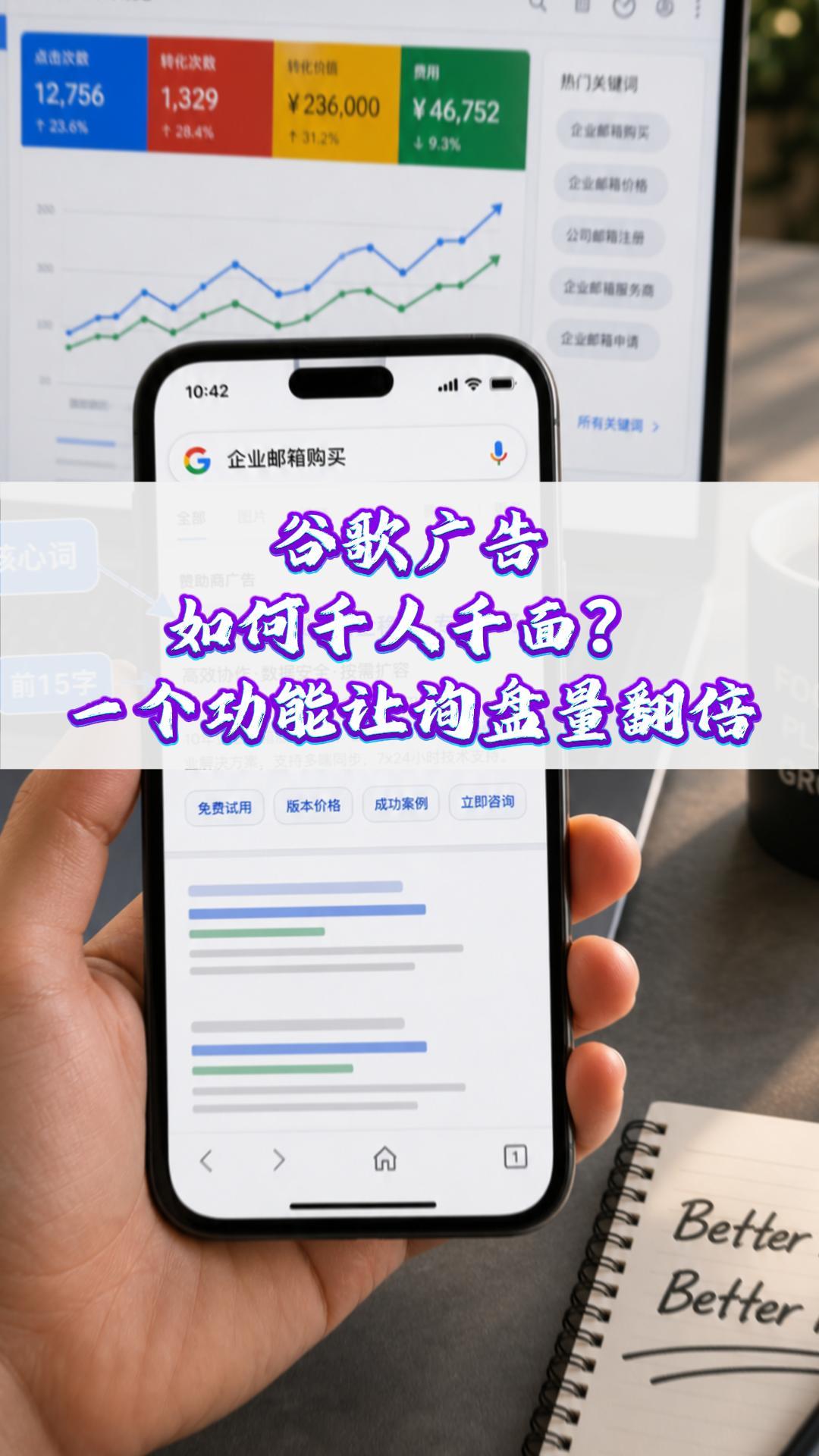
 How can Google Ads deliver one-to-one personalization? One feature can double your inquiry volume#ExportMarketing#OverseasPromotion#GoogleAds#SocialMediaMarketing#ForeignTradeIndependentWebsite
 Why a Google-optimized independent website is essential for trailer exports
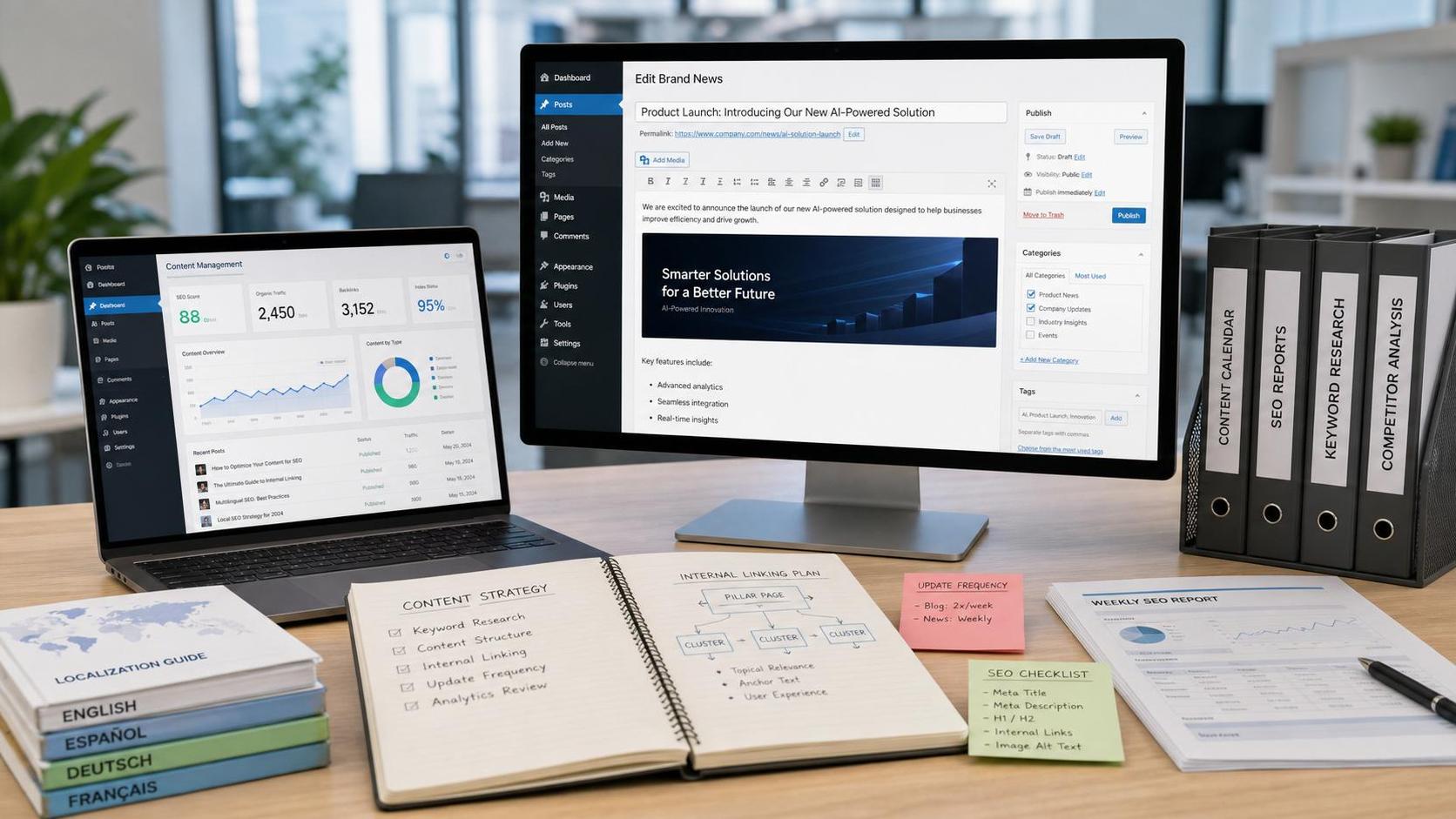
 How Can a Brand Updates Page Be Made More SEO-Friendly? Analysis of Update Frequency, Content Structure, and Internal Linking Strategy

Related Products
 EasyCamp SaaS Smart Website Marketing SystemE-Yingbao SaaS Smart Website Marketing System: AI-powered, zero-code website building. Rapidly launch multilingual independent e-commerce sites in just 10 minutes. Global server acceleration and AI-driven SEO optimization empower businesses to efficiently connect with global markets. The seamless integration of technology and user-friendly operation makes building e-commerce sites incredibly simple.
 AI+SEM Intelligent Advertising Marketing SystemAI+SEM drives intelligent ad creation, empowering full-funnel precision advertising marketing. The system automatically generates weekly/monthly reports, AI recommends keywords and target countries, monitors core metrics in real-time with intelligent alerts, and enables one-click high-conversion ad solutions to help quickly acquire customers and improve ROI.
 AI+SEO Dual Engine Optimization ServiceEasyWin AI+SEO Dual Engine Optimization System leverages AI-powered keyword mining, content generation, and comprehensive technical optimization to help foreign trade enterprises acquire high-quality organic traffic, significantly improving search rankings and conversion rates.
 AI+SNS Social Media Marketing SystemYingbao AI+SNS Social Media Marketing System - Precision social capture for the social media era. Supports one-click content synchronization across major platforms like Facebook and LinkedIn. AI intelligently rewrites posts for enhanced relevance. 24/7 AI customer service and user profiling analysis empower businesses to efficiently expand into global markets.
 AI+SEO营销解决方案易营宝AI+SEO营销解决方案,通过AI批量写作、智能生成TDK、精准关键词扩词等功能,全面优化网站SEO效果,提升流量与转化率。助力企业构建高效智能网站新生态。
 AI+SEM Advertising Marketing SolutionsAI+SEM Advertising Marketing Solution leverages AI technology to deeply empower SEM ad campaigns. It automatically generates weekly/monthly reports using AI, presenting account data across multiple dimensions for comprehensive insights into campaign performance and trends. The system precisely recommends keywords and target countries, intelligently generates high-conversion ad copy, and enables one-click activation of efficient campaign plans to help businesses rapidly acquire customers. Simultaneously, it monitors core metrics in real time, intelligently identifies abnormal fluctuations, and issues timely alerts to ensure stable, high-return advertising results.
 Domain Name ServicesEasyWin provides professional domain name services, including intelligent queries, one-stop registration, brand protection, and full lifecycle management, helping businesses build a digital brand image.
 EasyOperate B2C Cross-Border E-Commerce Platform & Independent WebsiteEasyStore B2C Cross-border E-commerce Independent Store is an intelligent website building and cross-border e-commerce integrated solution independently developed by EasyStore Information Technology (Beijing) Co., Ltd. The system is specially designed for small and medium-sized as well as large export enterprises, integrating 'website building, operation, marketing, advertising, and conversion' into one, helping enterprises quickly establish cross-border e-commerce independent stores to achieve brand globalization and global sales growth.
The platform supports multiple languages, multiple currencies, and multi-channel marketing, with built-in AI intelligent translation and SEO optimization systems, suitable for mainstream markets such as Southeast Asia, Europe and America, Latin America, and the Middle East, assisting Chinese manufacturing enterprises in efficiently deploying international e-commerce strategies. SSL证书易营宝提供专业SSL安全证书服务,包括单域名和泛域名证书,确保网站数据传输加密、身份验证和完整性保护,助力企业建立安全可信的在线业务环境。









