









- How Can a Brand Updates Page Be Made More SEO-Friendly? Analysis of Update Frequency, Content Structure, and Internal Linking StrategyJun 28, 2026View details
- What stages does the cross-border services ecosystem include? How do website building, promotion, payment, and compliance work togetherJun 22, 2026View details
- How will email marketing costs change in 2026Jun 22, 2026View details
- The China-US tariff arrangement has reached a preliminary consensus, and the trade association will be establishedJun 15, 2026View details
- Should overseas brand marketing start with ads or contentJun 21, 2026View details
- What determines B2C cross-border e-commerce website development costs? A breakdown of features, interfaces, and deployment methodsJun 17, 2026View details
- China-Morocco zero-tariff access, a breakthrough in the cost of Moroccan goods exports to ChinaJun 11, 2026View details
- What signal should be released for the suspension of exports to JapanJun 10, 2026View details
Red Sea rerouting is accelerating the adoption of real-time delivery dashboards on official websites by Middle Eastern B2B buyers
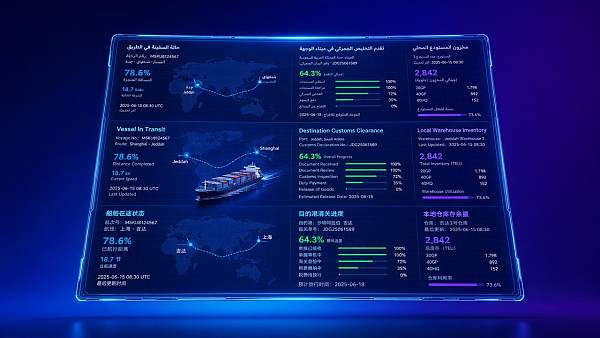
On May 14, 2026, Alphaliner, a globally authoritative maritime data organization, issued a warning pointing out that due to the ongoing disruption of Red Sea shipping routes, B2B procurement behavior in major Middle Eastern import markets such as Saudi Arabia, the UAE, and Qatar is undergoing a structural transformation——whether Chinese exporters' official websites integrate multiple languages and include real-time delivery visualization functions covering the three nodes of shipping schedules/customs clearance/inventory has already materially affected procurement decision-making efficiency and order conversion results.
Event Overview
On May 14, 2026, the global shipping alliance Alphaliner released the 2026 Q2 Middle East Procurement Behavior White Paper. The report clearly states: because the security risks in the Red Sea route remain unresolved, more than 83% of Middle Eastern B2B importers have listed 'whether the supplier's official website has a real-time delivery dashboard' as the primary technical indicator in the qualification assessment of new suppliers; this dashboard must support Arabic, English, and Chinese interfaces, and dynamically synchronize vessel in-transit status, destination port customs clearance progress, and local warehouse inventory balance; for Chinese factory websites without this function, the average inquiry conversion rate dropped by 41% year-on-year, and the procurement cycle was extended by 2.7 working days.
Which Sub-sectors Are Affected
Direct trade enterprises: As the contracting entity serving end customers in the Middle East, its official website is the first touchpoint for buyers conducting due diligence. Buyers are no longer only checking qualification documents, but are directly verifying delivery reliability through the website dashboard. Enterprises that have not deployed this function are facing triple pressure: declining inquiry quality, weakened bargaining power, and prolonged contract signing cycles.
Raw material procurement enterprises: To fulfill delivery commitments to downstream manufacturing companies, they need to pass delivery visualization requirements upstream to overseas suppliers. For example, a Tier 1 auto parts supplier in Guangdong has already issued a written notice to its Turkish steel supplier, requiring its official website to launch a customs clearance node tracking module within 90 days, otherwise an alternative supplier review process will be initiated.
Processing and manufacturing enterprises: Especially factories serving Middle Eastern brand customers under the OEM/ODM model, the delivery dashboard on their official websites has become one of the digital assessment items in customer factory audits. Alphaliner data shows that among Chinese factories passing the initial screening of Saudi SASO digital factory audits in Q1 2026, 96% had already deployed this dashboard, while all those that had not were placed on the 'rectification within a prescribed period' list.
Supply chain service enterprises: Including freight forwarders, customs service providers, overseas warehouse operators, etc., whose system interface capability has become a new competitive barrier. Some leading freight forwarders have opened APIs, allowing clients' official websites to connect directly to their shipping schedule and customs clearance status databases; service providers that have not completed system integration are being removed in batches from buyers' approved vendor lists.
Key Focus Areas and Response Measures for Relevant Enterprises or Practitioners
Prioritize verification of website technical compatibility rather than only UI beautification
What buyers currently care about is the authenticity of data sources and update frequency (requiring ≤15 minutes delay), rather than page visual effects. Enterprises should first confirm whether ERP/WMS/TMS systems support standard API output, and then match front-end display components, so as to avoid investing resources in developing a 'static dashboard' that cannot connect to real business systems.
Deploy in phases, with customs clearance nodes covered in the initial stage
Alphaliner research shows that Middle Eastern buyers are most sensitive to the real-time nature of customs clearance progress (weight reaching 48%), followed by shipping schedules (32%) and inventory (20%). It is recommended that the initial launch focus on synchronizing destination port customs clearance status, which can be quickly integrated through China's Single Window or the systems of partner customs brokers.
Language localization must include terminology adaptation, not simple machine translation
The Arabic version must comply with the common trade terminology conventions of the Gulf Cooperation Council (GCC). For example, 'bill of lading release' should be translated as 'إطلاق السندات' rather than a literal translation; the English version should adopt the ISO 8601 date format (YYYY-MM-DD) and standard expressions under INCOTERMS® 2020 such as FCA/DDP to avoid ambiguity.
Editorial Viewpoint / Industry Observation
Observably, this is not merely a UI upgrade requirement but a systemic shift in cross-border trust architecture: real-time visibility replaces paper-based assurances as the new baseline for commercial credibility in high-risk logistics corridors. Analysis shows that suppliers treating the dashboard as a 'marketing add-on' rather than an integrated operational nerve center are likely to face progressive marginalization—not due to cost, but due to perceived execution risk. From an industry perspective, the threshold for 'digital readiness' in export-oriented manufacturing has effectively risen from 'having a website' to 'operating a synchronized, auditable delivery nervous system'.
Conclusion
The Red Sea situation is unlikely to fundamentally ease in the short term, while the digital evolution of procurement logic in the Middle Eastern market has already become irreversible. For Chinese export enterprises, the website delivery dashboard is not an optional item, but qualifying infrastructure for participating in regional supply chain competition and cooperation. It is more appropriately understood as marking that the trust mechanism of B2B international trade is rapidly shifting from 'based on relationships and documents' to 'based on data and real-time performance'.
Information Source Statement
This article is compiled based on the officially released 2026 Q2 Middle East Procurement Behavior White Paper by Alphaliner (public version dated May 14, 2026). The data in the article all comes from the empirical research section on pages 12–15 of the report (sample covering a total of 217 B2B importers in Saudi Arabia, the UAE, and Qatar). Content for continued observation: Alphaliner will update its Q3 tracking report in August 2026, focusing on monitoring changes in the deployment rate of dashboards among Chinese suppliers and the corresponding progress in conversion rate recovery.
Related Articles
 How can Google Ads deliver one-to-one personalization? One feature can double your inquiry volume#ExportMarketing#OverseasPromotion#GoogleAds#SocialMediaMarketing#ForeignTradeIndependentWebsite
 Why a Google-optimized independent website is essential for trailer exports
 How Can a Brand Updates Page Be Made More SEO-Friendly? Analysis of Update Frequency, Content Structure, and Internal Linking Strategy


Related Products
 EasyCamp SaaS Smart Website Marketing SystemE-Yingbao SaaS Smart Website Marketing System: AI-powered, zero-code website building. Rapidly launch multilingual independent e-commerce sites in just 10 minutes. Global server acceleration and AI-driven SEO optimization empower businesses to efficiently connect with global markets. The seamless integration of technology and user-friendly operation makes building e-commerce sites incredibly simple.
 AI+SEM Intelligent Advertising Marketing SystemAI+SEM drives intelligent ad creation, empowering full-funnel precision advertising marketing. The system automatically generates weekly/monthly reports, AI recommends keywords and target countries, monitors core metrics in real-time with intelligent alerts, and enables one-click high-conversion ad solutions to help quickly acquire customers and improve ROI.
 AI+SEO Dual Engine Optimization ServiceEasyWin AI+SEO Dual Engine Optimization System leverages AI-powered keyword mining, content generation, and comprehensive technical optimization to help foreign trade enterprises acquire high-quality organic traffic, significantly improving search rankings and conversion rates.
 AI+SNS Social Media Marketing SystemYingbao AI+SNS Social Media Marketing System - Precision social capture for the social media era. Supports one-click content synchronization across major platforms like Facebook and LinkedIn. AI intelligently rewrites posts for enhanced relevance. 24/7 AI customer service and user profiling analysis empower businesses to efficiently expand into global markets.
 AI+SEO营销解决方案易营宝AI+SEO营销解决方案,通过AI批量写作、智能生成TDK、精准关键词扩词等功能,全面优化网站SEO效果,提升流量与转化率。助力企业构建高效智能网站新生态。
 AI+SEM Advertising Marketing SolutionsAI+SEM Advertising Marketing Solution leverages AI technology to deeply empower SEM ad campaigns. It automatically generates weekly/monthly reports using AI, presenting account data across multiple dimensions for comprehensive insights into campaign performance and trends. The system precisely recommends keywords and target countries, intelligently generates high-conversion ad copy, and enables one-click activation of efficient campaign plans to help businesses rapidly acquire customers. Simultaneously, it monitors core metrics in real time, intelligently identifies abnormal fluctuations, and issues timely alerts to ensure stable, high-return advertising results.
 Domain Name ServicesEasyWin provides professional domain name services, including intelligent queries, one-stop registration, brand protection, and full lifecycle management, helping businesses build a digital brand image.
 EasyOperate B2C Cross-Border E-Commerce Platform & Independent WebsiteEasyStore B2C Cross-border E-commerce Independent Store is an intelligent website building and cross-border e-commerce integrated solution independently developed by EasyStore Information Technology (Beijing) Co., Ltd. The system is specially designed for small and medium-sized as well as large export enterprises, integrating 'website building, operation, marketing, advertising, and conversion' into one, helping enterprises quickly establish cross-border e-commerce independent stores to achieve brand globalization and global sales growth.
The platform supports multiple languages, multiple currencies, and multi-channel marketing, with built-in AI intelligent translation and SEO optimization systems, suitable for mainstream markets such as Southeast Asia, Europe and America, Latin America, and the Middle East, assisting Chinese manufacturing enterprises in efficiently deploying international e-commerce strategies. SSL证书易营宝提供专业SSL安全证书服务,包括单域名和泛域名证书,确保网站数据传输加密、身份验证和完整性保护,助力企业建立安全可信的在线业务环境。









