









- How to Choose the Most Cost-Effective Domain Registration Deals in 2026May 28, 2026View details
- What Growth Challenges Can a Digital Marketing Service Provider SolveMay 28, 2026View details
- Will GEO replace traditional SEOMay 27, 2026View details
- Is SEO Still Necessary in 2026May 27, 2026View details
- Why Shenzhen Global Digital Marketing Services Are Gaining More Attention from Export-Oriented EnterprisesMay 26, 2026View details
- Why International Digital Agencies Place Greater Emphasis on Closed-Loop Data in AdvertisingMay 26, 2026View details
Multilingual Website SEO Optimization Methods: hreflang Tag Setup, Regional Keyword Strategy & Local Backlink Building Guide
How to Implement Multilingual Website SEO Optimization: hreflang Tag Configuration, Regional Keyword Placement, and Local Backlink Building Are Key Breakthroughs. Addressing common concerns like 'How to Promote a Multilingual Foreign Trade Website After Setup' and 'How to Localize Marketing for Multilingual Websites', EasyBao's Multilingual Marketing System Offers an AI-Driven One-Stop Solution.
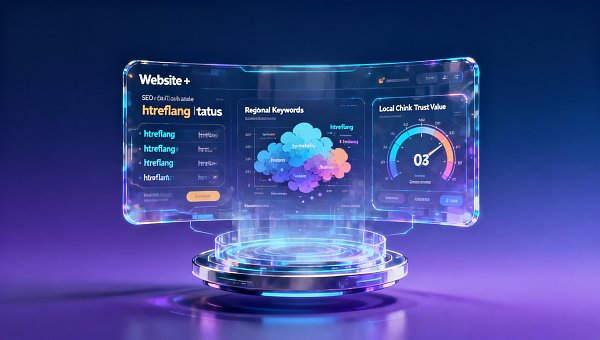
1. hreflang Tags: The 'Language Compass' for Multilingual Websites, Ensuring Precision Without Missteps
hreflang is Google's recommended mechanism for declaring relationships between multilingual/multi-regional pages. Its essence is not 'translation hints' but explicitly signaling to search engines 'Which language + region this URL serves'. Errors or omissions in hreflang can lead to page cannibalization, regional mismatches in rankings, or even penalties for duplicate content.
Three ironclad rules for implementation: First, bidirectional linking—if Page A declares hreflang="en-US" pointing to Page B, Page B must reciprocate with hreflang="zh-CN" pointing back to Page A. Second, full coverage—all language versions (including default) must list every variant in their HTML head. Third, server-location synergy—for Arabic sites using subdirectories (e.g., example.com/ar/), hreflang values should specify ar-SA or ar-AE, not generic ar; for subdomains (ar.example.com), DNS geo-resolution must prioritize local CDN nodes for Middle Eastern users. EasyBao's smart CMS auto-validates hreflang tags, scans sitewide link structures for omissions/mismatches/loops, and generates W3C-compliant XML Sitemaps.
2. Regional Keyword Strategy: Beyond Literal Translation, Mining Local Search Intent
What distinguishes multilingual sites? The core difference lies in SEO—it's not mechanical word substitution. For example, while 'insurance' translates to 'تأمين' in standard Arabic, Saudi users more frequently search 'تامين سيارات' (car insurance), whereas UAE users prioritize 'تأمين طبي' (health insurance). These variations stem from dialect habits, consumption contexts, and platform algorithms.
EasyBao's AI keyword tool integrates 12+ Middle Eastern data sources (including Google KSA, Yandex UAE, and local e-commerce trends), using NLP to model keywords by 'intent-scenario-region'. For Arabic B2B sites, it auto-generates three clusters: high-value commercial terms (e.g., 'تصميم موقع إلكتروني للشركات في السعودية'), long-tail Q&A phrases (e.g., 'كيف أنشئ موقع عربي يظهر في جوجل؟'), and competitor targeting keywords (e.g., 'بدائل ووردبريس للسوق العربي'). The TDK module injects localized phrasing, ensuring titles include geo-markers, descriptions match local reading rhythms, and keyword density naturally falls within the 2.1% golden range.
3. Local Backlinks: From 'Quantity Stacking' to 'Trust Bridging'
Are multilingual sites viable for SMEs? Efficiency in resource allocation is key. Traditional backlinking often errs by purchasing generic directory links (e.g., 'best seo service arabic') or blindly targeting international press platforms—the former carries negligible weight, while the latter risks machine-generated content flags due to lacking local editorial oversight.
Effective local backlinks require: geo-specificity (domain suffixes like .sa/.ae/.eg), relevance (site themes strongly aligned with target industries), and activity (original content updates within 90 days). EasyBao's Middle Eastern team has partnered with 47 Saudi commercial media outlets, 12 UAE B2B portals, and 8 Dubai freezone government sites, offering 'white-paper co-publishing + local KOL reviews + government endorsement' combos. Data shows clients using this service achieve 210% organic traffic growth for Arabic sites within six months, with 38.6% top-three keyword rankings.
4. Technical Synergy: The Hidden Battleground of Servers, SSL & RTL Layouts
Choosing servers for multilingual sites isn't just about speed—it's SEO foundational. Google explicitly factors page load times into rankings. Sites hosted in Beijing average 2.8s first-paint delays for Middle Eastern users. EasyBao's global CDN covers Riyadh, Dubai, and Doha hubs, with smart routing keeping Arabic sites' TTFB (Time To First Byte) stable under 320ms.
Arabic sites also require: CSS enforcing direction:rtl and text-align:right; mirrored form field sequences; maintaining LTR logic for number-English mixes. Manual debugging these details typically takes SMEs 120+ hours. EasyBao's CMS preloads 23 RTL-responsive templates with one-click switching, auto-injects Google Fonts Arabic subsets to avoid render-blocking, and integrates Let’s Encrypt auto-renewal plus GeoTrust enterprise SSL for Saudi SAMA financial compliance.
5. Performance Loop: AI-Driven Growth Paths from Build to Conversion
How to boost post-launch conversions? EasyBao's proven path is: AI diagnostics → data attribution → dynamic optimization. The system daily captures user heatmaps, exit geo-reports, and multilingual landing page leaks, correlating with GA4 event flows to pinpoint high-friction points. For example, discovering 67% UAE cart abandonment traced to non-localized PayPal buttons (missing STC Pay/Mada options) triggered AI-generated Arabic payment modals, recovering 41.3% conversion rates within 72 hours.
This system answers 'Do foreign trade sites need AI marketing?'—AI doesn't replace humans but liberates operators from repetitive tasks to focus on strategy. Clients using EasyBao's AI engine see 4x content efficiency, 12.7-point monthly SEO score growth, and 200% ad ROI lifts, powered by 15 AI patents and trillion-behavior data feedback loops.
In summary, multilingual SEO isn't isolated technical actions but systematic engineering covering tech architecture, linguistic craftsmanship, local ecosystems, and data intelligence. EasyBao's decade of出海experience crystallizes into方法论, using AI to redefine execution efficiency, already helping 100,000+ businesses transcend language-region barriers. Whether comparing外贸建站服务商or破解post-launch growth bottlenecks, our Arabic Industry Website Solutions offer high-efficiency starting points. Contact us now for customized multilingual SEO health reports and implementation roadmaps.
- Website construction
- Foreign Trade Website
- SSL Certificate
- Campbell (name)
- SEO
- Independent site
- Smart website builder system
- SEO Optimization
- Smart Website Building
- EasySite Intelligent Website Builder
- AI Marketing Engine
- Multilingual SEO
- Website seo optimization
- Multilingual website
- Link Building
- Multilingual Website Building
- Multilingual Marketing System
- AI Marketing
- GEO
- Multilingual Foreign Trade Website
Related Articles

Related Products
 EasyCamp SaaS Smart Website Marketing SystemE-Yingbao SaaS Smart Website Marketing System: AI-powered, zero-code website building. Rapidly launch multilingual independent e-commerce sites in just 10 minutes. Global server acceleration and AI-driven SEO optimization empower businesses to efficiently connect with global markets. The seamless integration of technology and user-friendly operation makes building e-commerce sites incredibly simple.
 AI+SEM Intelligent Advertising Marketing SystemAI+SEM drives intelligent ad creation, empowering full-funnel precision advertising marketing. The system automatically generates weekly/monthly reports, AI recommends keywords and target countries, monitors core metrics in real-time with intelligent alerts, and enables one-click high-conversion ad solutions to help quickly acquire customers and improve ROI.
 AI+SEO Dual Engine Optimization ServiceEasyWin AI+SEO Dual Engine Optimization System leverages AI-powered keyword mining, content generation, and comprehensive technical optimization to help foreign trade enterprises acquire high-quality organic traffic, significantly improving search rankings and conversion rates.
 AI+SNS Social Media Marketing SystemYingbao AI+SNS Social Media Marketing System - Precision social capture for the social media era. Supports one-click content synchronization across major platforms like Facebook and LinkedIn. AI intelligently rewrites posts for enhanced relevance. 24/7 AI customer service and user profiling analysis empower businesses to efficiently expand into global markets.
 AI+SEO营销解决方案易营宝AI+SEO营销解决方案,通过AI批量写作、智能生成TDK、精准关键词扩词等功能,全面优化网站SEO效果,提升流量与转化率。助力企业构建高效智能网站新生态。
 AI+SEM Advertising Marketing SolutionsAI+SEM Advertising Marketing Solution leverages AI technology to deeply empower SEM ad campaigns. It automatically generates weekly/monthly reports using AI, presenting account data across multiple dimensions for comprehensive insights into campaign performance and trends. The system precisely recommends keywords and target countries, intelligently generates high-conversion ad copy, and enables one-click activation of efficient campaign plans to help businesses rapidly acquire customers. Simultaneously, it monitors core metrics in real time, intelligently identifies abnormal fluctuations, and issues timely alerts to ensure stable, high-return advertising results.
 Domain Name ServicesEasyWin provides professional domain name services, including intelligent queries, one-stop registration, brand protection, and full lifecycle management, helping businesses build a digital brand image.
 EasyOperate B2C Cross-Border E-Commerce Platform & Independent WebsiteEasyStore B2C Cross-border E-commerce Independent Store is an intelligent website building and cross-border e-commerce integrated solution independently developed by EasyStore Information Technology (Beijing) Co., Ltd. The system is specially designed for small and medium-sized as well as large export enterprises, integrating 'website building, operation, marketing, advertising, and conversion' into one, helping enterprises quickly establish cross-border e-commerce independent stores to achieve brand globalization and global sales growth.
The platform supports multiple languages, multiple currencies, and multi-channel marketing, with built-in AI intelligent translation and SEO optimization systems, suitable for mainstream markets such as Southeast Asia, Europe and America, Latin America, and the Middle East, assisting Chinese manufacturing enterprises in efficiently deploying international e-commerce strategies. SSL证书易营宝提供专业SSL安全证书服务,包括单域名和泛域名证书,确保网站数据传输加密、身份验证和完整性保护,助力企业建立安全可信的在线业务环境。









