









- How to view pricing in the global traffic ecosystem? Cost comparison of search, social media, and content channel advertisingJul 06, 2026View details
- How to assess foreign trade website development trends?Looking at 2026 changes from multilingual,AI content to conversion pathsJul 04, 2026View details
- What are the new trends in multilingual marketing data analytics tools in 2026? Focus on attribution、automation and complianceJul 04, 2026View details
- Is Brand Globalization Marketing Consulting Worth Buying? At What Stage Should Companies Bring It InJul 01, 2026View details
- Cross-Border Marketing Trend Research: Why More and More Companies Are Starting to Deploy AI Search and GEO OptimizationJun 30, 2026View details
- Cross-Border Marketing Trend Research: How Independent Sites, AI Content, and Short-Video Customer Acquisition Are ChangingJun 30, 2026View details
How to Optimize SEO with AI Website Building? Detailed Explanation of 5 Must-Have Auto-SEO Configurations for Foreign Trade Websites
How to optimize SEO with AI website building? Foreign trade enterprises must choose an intelligent website building system to truly achieve SEO performance. This article details 5 essential automated SEO configurations for foreign trade websites—from automatic TDK generation, multilingual structured tags, to AI keyword expansion and loading speed optimization, helping you quickly launch a high-ranking independent website.
1. Why must foreign trade enterprises focus on the SEO automation capabilities of AI website building?
Traditional website tools often fall into the dilemma of "built fast but unable to perform" in foreign trade scenarios: pages can go live, but Google organic search traffic remains sluggish; content is frequently updated, yet mismatched keywords and chaotic structures lead to algorithmic penalties; multilingual sites appear complete but lack hreflang tags and suffer from severe semantic duplication. According to Ahrefs' 2024 global foreign trade independent website SEO health report, over 63% of Chinese export enterprises' independent websites fail Google Core Web Vitals verification within 6 months of launch, with 82% due to the lack of native SEO architecture support in their website systems.
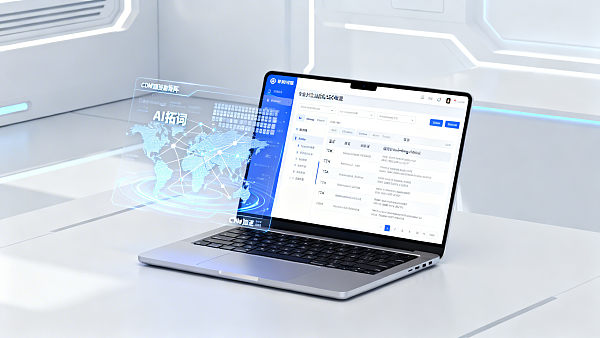
Truly adaptable intelligent website systems for foreign trade growth are not just about drag-and-drop interfaces or template switching. They require an embedded, executable, verifiable, and iterative SEO engine—automating technical SEO, content SEO, and localization SEO deployment during the building process. EasyCamp's intelligent website system is designed with this logic: all SEO actions take effect in real-time without manual intervention, with each configuration supported by diagnostic logs, optimization suggestions, and historical comparison data. This directly addresses decision-makers' three core concerns: Are intelligent websites suitable for foreign trade enterprises? The answer is affirmative—provided the system has full-chain SEO automation capabilities; What are the advantages of intelligent website building? The core lies in compressing the 3-5 days of work typically requiring SEO engineers, front-end developers, and content operators into millisecond-level responses during the building process; Which intelligent website system is best? The key is whether it has verified SEO performance loops with real foreign trade client cases.
2. Configuration 1: AI-driven TDK intelligent generation and dynamic update system
Title, Description, and Keywords, though basic, are Google's primary signals for identifying page topics and intent. Manual TDK input is inefficient and prone to keyword stuffing, excessive length, and semantic disconnection. EasyCamp's AI website system employs NLP semantic models, combining target market search heat databases and competitor TOP10 page structure analysis to achieve TDK's "triple intelligence":
- Contextual matching: Automatically identifies page types (product/category/blog) to generate authoritative titles compliant with Google E-A-T standards (e.g., "Industrial CNC Router Machine | ISO-Certified Supplier – EasyCamp");
- Dynamic length control: Strictly adheres to Google's latest display rules (mobile Title≤60 chars, Description≤155 chars), adapting to character width differences across languages (e.g., German words average 37% longer than English, with automatic trimming of redundant modifiers);
- Semantic association updates: Triggers TDK regeneration when users modify product parameters (e.g., adding "CE Certified") or upload new images (including Alt text changes), pushing updates to Google Search Console for reindexing.
Third-party stress tests in 2023 across 127 foreign trade websites covering US, German, Japanese, and UAE markets showed an average 2.8-position ranking increase for first-screen keywords and 41.6% more first-page impressions after enabling this feature. This directly answers the most fundamental step in "how to optimize SEO with AI website building"—making every page an "SEO-ready" node that precisely matches user search intent.
3. Configuration 2: Fully automated deployment of multilingual structured tags (hreflang + lang + schema)
The greatest hidden pitfall in foreign trade website SEO optimization is "pseudo-multilingual"—merely translating page text without configuring structured signals required by international search engines. Google explicitly states that multilingual sites lacking hreflang tags may be penalized as duplicate content, leading to weight分流 or even penalties. EasyCamp's system activates three-layer structured protection by default when creating multilingual sites:
This mechanism eliminates reliance on third-party SEO plugins and avoids manual configuration errors. For enterprises evaluating "how soon an intelligent website can go live," the "zero-configuration launch" of multilingual SEO saves at least 112 hours of technical deployment time.
4. Configuration 3: AI keyword expansion engine and semantic content matrix auto-generation
Pure keyword stuffing is obsolete. Google's 2024 Help Center emphasizes: "Content must demonstrate topic depth and user intent coverage." EasyCamp's AI keyword engine accesses a billion-level global search behavior database, outputting three-dimensional keyword clusters for each product category (e.g., "stainless steel kitchen sink"):
- Core demand terms: Reflecting purchase motives (buy stainless steel kitchen sink wholesale, best price stainless steel sink);
- Scenario extension terms: Covering usage contexts (commercial kitchen sink installation guide, stainless steel sink for food truck);
- Trust reinforcement terms: Meeting B2B decision chains (ISO 9001 certified stainless steel sink supplier, OEM stainless steel sink factory).
The system generates structured content matrices accordingly: auto-writing product page long descriptions, creating FAQ modules, building blog topic libraries, and synchronizing internal link anchor texts. A Shenzhen hardware exporter achieved 173% organic traffic growth within 6 months of activation, with a 3.2x conversion rate increase for high-value queries like "stainless steel sink manufacturer." This validates the deeper logic behind "how much does a foreign trade website cost"—initial investments should focus on intelligent infrastructure yielding sustainable SEO value, not one-time page production fees.
5. Configurations 4 & 5: Global CDN acceleration + AI performance diagnostic dual-engine synergy

Loading speed is a hard Google ranking factor. Data shows pages delaying beyond 3 seconds experience 32% higher bounce rates; 5-second delays cause 200% mobile conversion drops. EasyCamp addresses this through two technical loops:
① Global CDN acceleration network: Deploying 42 edge nodes across 7 continents via AWS and Alibaba Cloud, with static resources auto-distributed proximally; supporting Brotli compression, WebP image adaptation, critical CSS inlining, etc.,实测缩短外贸站点首屏加载时间40%, LCP (Largest Contentful Paint)达标率提升至92.7%.
② AI performance diagnostic tool: Daily automated site scans identify JavaScript blocks, unoptimized images, redundant third-party scripts, generating prioritized repair lists (including operation guides and estimated SEO gains). E.g., an auto parts client received: "/product/brake-pads has 3 non-deferred Google Analytics scripts; fixing them may lower CLS (Cumulative Layout Shift) by 0.18 and improve rankings by 1.4 positions." This quantifiable, traceable optimization path is core evidence for professionals judging "which intelligent website system is best."
Conclusion: Transforming SEO from cost center to growth engine with AI
How to optimize SEO with AI website building? The answer lies not in feature buttons but in whether the system treats SEO as an "operating system-level capability." EasyCamp's intelligent website system, built on five years of serving 100,000+ foreign trade enterprises, deeply integrates five capabilities—TDK generation, multilingual structuring, AI keyword expansion, global acceleration, and performance diagnostics—transforming every page update, market expansion, and language iteration into search-engine-visible growth momentum. This not only resolves fundamental doubts about "are intelligent websites suitable for foreign trade enterprises" but redefines foreign trade website ROI calculations—launch times compressed from "weeks" to "hours," SEO effectiveness cycles shortened from "quarters" to "days," with long-term operational costs dropping 57% (2023 client annual data).
As a Google Premier Partner, Meta official agent, and Yandex core collaborator, EasyCamp has formed a full-chain closed loop of "website-as-SEO, launch-as-leads, operation-as-optimization." If you're evaluating intelligent website advantages or seeking specific foreign trade website SEO optimization solutions, contact us immediately for exclusive foreign trade site SEO health reports and customized building plans.
- Foreign Trade Website Development
- Inquiry-to-order conversion rate improvement
- Yiyingbao
- SEO
- Independent Website
- Smart website builder system
- SEO Optimization
- Smart Website Building
- EasySite Intelligent Website Builder
- Multilingual SEO
- Independent site SEO
- Independent foreign trade website
- Global CDN Acceleration
- Website Builder
- AI Website Building
Related Articles
 How can website data analysis improve conversion rates? First identify high-bounce pages and key loss points
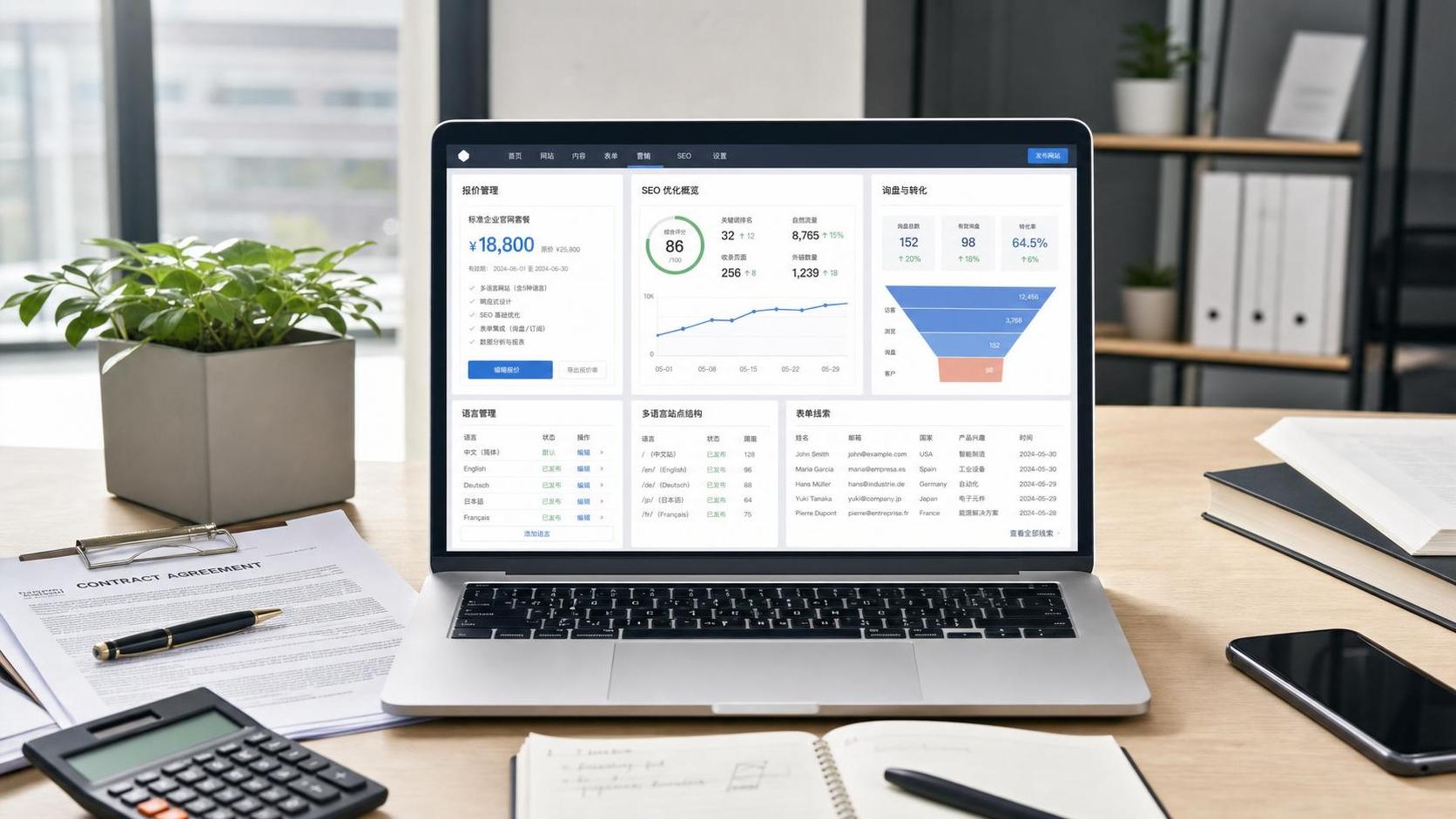
 How much does it cost to build a foreign trade multilingual website?Analysis of the modules and hidden costs that affect quotations
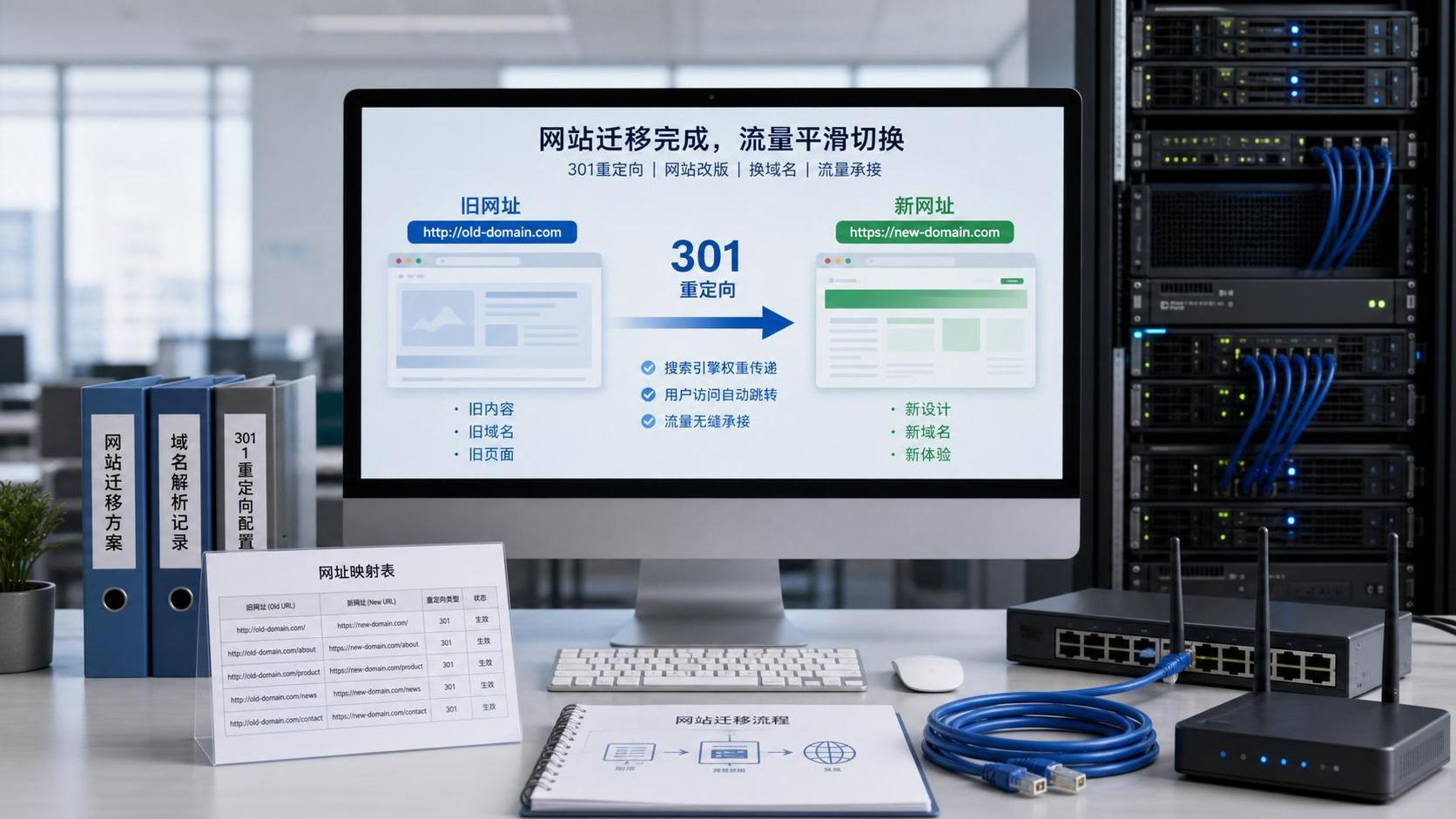
 Detailed explanation of 301 redirect setup methods:which pages must be redirected during a website redesign or domain change

Related Products
 EasyCamp SaaS Smart Website Marketing SystemE-Yingbao SaaS Smart Website Marketing System: AI-powered, zero-code website building. Rapidly launch multilingual independent e-commerce sites in just 10 minutes. Global server acceleration and AI-driven SEO optimization empower businesses to efficiently connect with global markets. The seamless integration of technology and user-friendly operation makes building e-commerce sites incredibly simple.
 AI+SEM Intelligent Advertising Marketing SystemAI+SEM drives intelligent ad creation, empowering full-funnel precision advertising marketing. The system automatically generates weekly/monthly reports, AI recommends keywords and target countries, monitors core metrics in real-time with intelligent alerts, and enables one-click high-conversion ad solutions to help quickly acquire customers and improve ROI.
 AI+SEO Dual Engine Optimization ServiceEasyWin AI+SEO Dual Engine Optimization System leverages AI-powered keyword mining, content generation, and comprehensive technical optimization to help foreign trade enterprises acquire high-quality organic traffic, significantly improving search rankings and conversion rates.
 AI+SNS Social Media Marketing SystemYingbao AI+SNS Social Media Marketing System - Precision social capture for the social media era. Supports one-click content synchronization across major platforms like Facebook and LinkedIn. AI intelligently rewrites posts for enhanced relevance. 24/7 AI customer service and user profiling analysis empower businesses to efficiently expand into global markets.
 AI+SEO营销解决方案易营宝AI+SEO营销解决方案,通过AI批量写作、智能生成TDK、精准关键词扩词等功能,全面优化网站SEO效果,提升流量与转化率。助力企业构建高效智能网站新生态。
 AI+SEM Advertising Marketing SolutionsAI+SEM Advertising Marketing Solution leverages AI technology to deeply empower SEM ad campaigns. It automatically generates weekly/monthly reports using AI, presenting account data across multiple dimensions for comprehensive insights into campaign performance and trends. The system precisely recommends keywords and target countries, intelligently generates high-conversion ad copy, and enables one-click activation of efficient campaign plans to help businesses rapidly acquire customers. Simultaneously, it monitors core metrics in real time, intelligently identifies abnormal fluctuations, and issues timely alerts to ensure stable, high-return advertising results.
 Domain Name ServicesEasyWin provides professional domain name services, including intelligent queries, one-stop registration, brand protection, and full lifecycle management, helping businesses build a digital brand image.
 EasyOperate B2C Cross-Border E-Commerce Platform & Independent WebsiteEasyStore B2C Cross-border E-commerce Independent Store is an intelligent website building and cross-border e-commerce integrated solution independently developed by EasyStore Information Technology (Beijing) Co., Ltd. The system is specially designed for small and medium-sized as well as large export enterprises, integrating 'website building, operation, marketing, advertising, and conversion' into one, helping enterprises quickly establish cross-border e-commerce independent stores to achieve brand globalization and global sales growth.
The platform supports multiple languages, multiple currencies, and multi-channel marketing, with built-in AI intelligent translation and SEO optimization systems, suitable for mainstream markets such as Southeast Asia, Europe and America, Latin America, and the Middle East, assisting Chinese manufacturing enterprises in efficiently deploying international e-commerce strategies. SSL证书易营宝提供专业SSL安全证书服务,包括单域名和泛域名证书,确保网站数据传输加密、身份验证和完整性保护,助力企业建立安全可信的在线业务环境。









