









- Digital marketing SaaS solutions: build in-house or outsourceMay 04 2026View details
- How to read an enterprise services SaaS report? Key points for vendor selectionMay 04 2026View details
- When choosing a GEO marketing service provider, should you look at case studies or capabilities?May 03 2026View details
- What Is the Difference Between a GEO Digital Marketing Platform and Traditional Advertising PlatformsMay 03 2026View details
- Key Points for Leveraging AI in Shanghai to Enhance Brand Awareness and VisibilityMay 03 2026View details
- What Matters Most When Evaluating Beijing AI Intelligent Advertising Platform ProvidersMay 04 2026View details
- How to Choose a Shanghai Digital Marketing Solutions ProviderMay 04 2026View details
- Should brand awareness enhancement services be done first or laterMay 02 2026View details
Key Points for Leveraging AI in Shanghai to Enhance Brand Awareness and Visibility
In Shanghai, brand competition is no longer about “whether marketing is being done,” but rather “whether brand awareness can be amplified faster and more precisely and converted into business opportunities.” For companies looking to expand in both domestic and international markets, AI is not just a new concept, but a practical tool for improving exposure efficiency, optimizing media buying decisions, and connecting the full journey from website building to customer acquisition. Leveraging Yiyingbao AI Ad Intelligent Manager, marketing automation platforms, and digital marketing solutions, companies can simultaneously achieve multilingual website development, precise customer acquisition, and conversion growth.
For Shanghai companies, the core of using AI for brand exposure is not “chasing trends,” but obtaining measurable results faster
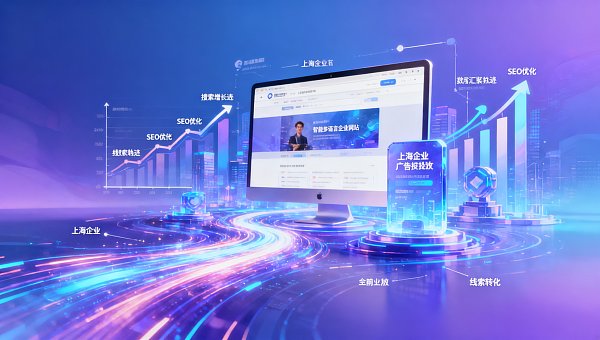
When users search for “key points for using AI in Shanghai to enhance brand voice and visibility,” the underlying intent is usually very clear: companies want to know whether AI can truly help their brand be seen by more people, whether it fits their business, and where to start implementing it in order to avoid high investment with weak results.
For business decision-makers, project leaders, and marketing execution teams, the greatest concern is usually not the principles behind AI, but the following practical questions:
- Can AI reduce customer acquisition costs and improve exposure efficiency;
- After brand awareness increases, can it continue to generate inquiries, leads, and deals;
- In a highly concentrated and competitive market like Shanghai, how can companies find more precise traffic entry points;
- Can existing official websites, SEO, advertising, and social media work collaboratively with AI tools instead of causing duplicate investment;
- How can companies judge whether a service provider truly has technical capabilities rather than just packaging concepts.
Therefore, the truly valuable criterion is not “whether AI is used,” but whether the company has integrated AI into a complete marketing growth chain: from content generation, keyword planning, ad placement, and user behavior identification, to sales lead nurturing and conversion follow-up, forming a closed loop. Especially in a highly internationalized and digitalized market like Shanghai, the earlier a company establishes an AI-driven marketing system, the easier it is to gain a first-mover advantage in competitive markets.
The first key point to enhancing brand voice: first identify “who will search for you, and why they search for you”
When many companies work on brand exposure, the biggest issue is not insufficient budget, but inaccurate traffic direction. The value of AI is first reflected in search intent analysis: it can help companies identify what target customers are searching for, what expressions they use, which platforms they appear on, and what stage of the decision-making journey they are in.
For example, even for the same concept of “brand exposure,” different audience types focus on completely different things:
- Business decision-makers care more about ROI, brand credibility, and market entry efficiency;
- Execution teams care more about keyword planning, content production efficiency, and ad optimization;
- Distributors and agents care more about brand momentum, channel recruitment appeal, and market support capabilities;
- Project leaders care more about process control, execution collaboration, and delivery results.
Based on search behavior, content interaction, and conversion data, AI can segment these audiences by intent in greater detail. In this way, when companies formulate content strategies, they will not remain at the rough level of “publishing news articles and buying information flow ads,” but instead can design different content for different stages:
- Awareness stage: industry trends, brand solutions, and case-based content;
- Comparison stage: product advantages, service processes, delivery capabilities, and cost structure;
- Conversion stage: consultation entry points, form design, demo booking, and consultant follow-up.
This step may seem basic, but it actually determines whether subsequent SEO, advertising, and social media operations can truly create a brand amplification effect.
The second key point: use AI to connect website building, SEO, advertising, and social media, rather than optimizing isolated points
Brand voice does not come from a sudden breakout on a single channel, but from the combined amplification of multiple touchpoints. This is especially true for companies integrating website + marketing services, which should place even greater emphasis on “full-funnel collaboration.”
A typical issue is this: some companies run ads and gain short-term traffic; operate social media and get some engagement; build an official website and publish content, but there is no data linkage between them, making it difficult to accumulate brand assets in the end. The key role of AI here is to turn scattered actions into a coordinated system.
Specifically, AI can help companies accomplish the following:
- Smart website building: Quickly build multilingual websites based on target markets, improving global user experience and search friendliness;
- SEO optimization: Analyze keyword competitiveness, content gaps, and user search trends to continuously improve organic exposure;
- Advertising: Through audience modeling and ad performance learning, dynamically optimize bids, creatives, and delivery timing;
- Social media marketing: Identify high-engagement content directions to improve brand discussion and dissemination efficiency on platforms;
- Marketing automation: Unify the management of visits, clicks, forms, and lead submissions to drive continuous lead conversion.
For Shanghai companies, this integrated capability is particularly important. Because the local market is highly competitive, customer decision cycles are shortening, and international business demand is increasing, it is difficult for a single channel to maintain high visibility over the long term. Only when websites, search, content, advertising, social media, and automated operations work together can brand voice be more than just “being seen,” and instead be continuously amplified and continuously converted.
The third key point: brand exposure must upgrade from “traffic thinking” to “conversion thinking”
When discussing exposure, many companies tend to focus on surface-level metrics such as impressions, clicks, and followers. But a truly mature brand growth strategy will always ask: did this exposure reach the target customers? Did it drive business opportunities? Did it strengthen brand trust?
The advantage of AI is that it not only helps companies expand their voice, but also helps them determine which exposure is effective. For example:
- Which keywords bring visitors who stay longer;
- Which ad creatives are more likely to trigger form submissions;
- Which content topics are more likely to be shared by potential agents or distributors;
- Which page paths are most effective in driving consultation bookings or sales connections.
This means brand exposure is no longer a one-time action, but a growth process that can be continuously optimized. With the help of AI, companies can establish a clearer indicator system, such as:
- Brand voice indicators: search volume, exposure volume, mention volume, and social media engagement rate;
- Quality indicators: bounce rate, average time on page, and visit depth;
- Conversion indicators: lead submission rate, inquiry volume, qualified lead rate, and deal conversion rate;
- Asset indicators: organic traffic growth to the official website, ranking of core keywords, and share of branded keywords.
Only by connecting these indicators can companies judge the true value of AI marketing, rather than staying at the superficial effect of “looking very busy and popular.”
The fourth key point: when doing AI marketing in the Shanghai market, content localization and multilingual capabilities are extremely important
A typical advantage of Shanghai companies is that they can more easily access international customers, foreign trade customers, and cross-regional business opportunities. But this also means that brand exposure cannot rely on only one language, one platform, and one form of expression.
AI can significantly improve brand reach in multilingual website building and content localization. By combining industry terminology, search habits in target countries, localized expressions, and page structure optimization, companies can more efficiently enter search results and user visibility in different markets.
This is particularly valuable in the following scenarios:
- Companies want to expand overseas B2B customers;
- Brands need to recruit agents and distributors in different regions;
- The official website needs to simultaneously support brand display, inquiry conversion, and product introduction;
- Companies want to improve visibility in international search engines.
In actual content operations, companies also need to avoid a common misconception: directly translating Chinese content into foreign languages does not equal localization. Truly effective AI marketing should also consider the issues local users care about, search entry points, content reading preferences, and conversion habits. Doing so not only improves exposure, but also strengthens the brand’s professionalism and trustworthiness.
The fifth key point: how companies can judge whether an AI marketing solution is worth investing in
Whether for management or execution teams, everyone ultimately faces one question: is AI marketing worth the investment? When evaluating it, it is recommended not to look only at tool functions, but at whether it can solve real business problems.
More effective evaluation dimensions include:
- Whether it improves efficiency: whether content production, data analysis, and optimization of media buying are significantly accelerated;
- Whether it improves results: whether brand exposure, keyword rankings, and lead quality steadily improve;
- Whether it facilitates collaboration: whether marketing, sales, operations, and project teams can share one set of data logic;
- Whether it suits the industry: whether the solution aligns with the company’s industry, customer cycle, and business model;
- Whether it supports continuous optimization: whether it is not a one-time delivery, but can be continuously iterated and reviewed.
For companies facing inventory, channel, and supply chain pressure, marketing efficiency is often closely tied to overall operational efficiency. When optimizing growth models, some managers also pay attention to issues such as cost control, turnover efficiency, and resource allocation, and therefore refer to content such as application strategies of lean cost concepts in enterprise inventory management to understand the relationship between marketing investment and operational efficiency from a broader business perspective.
If a service provider can only tell you “AI is very advanced,” but cannot answer “what channel mix suits your industry, what content structure, what conversion path, and how long it will take to see phased changes,” then such a solution is usually difficult to truly implement.
When companies implement AI brand marketing, the three things most worth prioritizing
If companies want to see results as soon as possible, it is recommended to start with the following three priorities:
First, sort out existing marketing assets. This includes official website structure, keyword foundation, existing content volume, ad accounts, social media matrix, and historical lead data. AI does not replace the foundation, but amplifies value based on the existing foundation.
Second, set phased goals. Do not pursue a full upgrade from the very beginning. You can start with goals such as improving official website exposure, increasing conversion on key product pages, building multilingual websites, and optimizing ad placement.
Third, establish a reviewable data mechanism. Review traffic sources, user behavior, lead quality, and conversion results every month, and continuously adjust keywords, content, and placement strategies. Only through continuous review will AI increasingly “understand” your customers.
For most Shanghai companies, the most suitable way to use AI marketing is not to blindly chase the new, but to gradually build their own digital growth system around the three priorities of “exposure growth, precise customer acquisition, and continuous conversion.”
Conclusion: the key to AI enhancing brand voice is making exposure truly serve business growth
For Shanghai companies using AI to enhance brand voice and visibility, the key is not simply using a certain tool, but whether they build a complete chain from website building, SEO, advertising, and social media to conversion operations around real search intent and business goals.
For business decision-makers, the focus should be on return on investment, measurable results, and applicable scenarios; for execution teams, the focus is on keyword strategy, content collaboration, media buying optimization, and data review. Only by balancing both brand voice and conversion efficiency can AI marketing become not just a “technology upgrade,” but an upgrade in the company’s growth model.
If a company is in the stage of brand upgrading, channel expansion, or global market布局, then building an AI-driven marketing system as early as possible is often more effective than simply increasing the media budget, and also provides a better chance of forming a long-term competitive advantage.
Related Articles
 Explosive foreign trade orders! Yiyingbao AI scheduled content generation + precise customer acquisition on FB, fully automated operations mode activated!
 Foreign trade promotion is full of pitfalls—don’t let your hard-earned money become tuition fees paid to “amateurs”
 Promote on Facebook with a personal account? You can't even target the right audience!



Related Products
 EasyCamp SaaS Smart Website Marketing SystemE-Yingbao SaaS Smart Website Marketing System: AI-powered, zero-code website building. Rapidly launch multilingual independent e-commerce sites in just 10 minutes. Global server acceleration and AI-driven SEO optimization empower businesses to efficiently connect with global markets. The seamless integration of technology and user-friendly operation makes building e-commerce sites incredibly simple.
 AI+SEM Intelligent Advertising Marketing SystemAI+SEM drives intelligent ad creation, empowering full-funnel precision advertising marketing. The system automatically generates weekly/monthly reports, AI recommends keywords and target countries, monitors core metrics in real-time with intelligent alerts, and enables one-click high-conversion ad solutions to help quickly acquire customers and improve ROI.
 AI+SEO Dual Engine Optimization ServiceEasyWin AI+SEO Dual Engine Optimization System leverages AI-powered keyword mining, content generation, and comprehensive technical optimization to help foreign trade enterprises acquire high-quality organic traffic, significantly improving search rankings and conversion rates.
 AI+SNS Social Media Marketing SystemYingbao AI+SNS Social Media Marketing System - Precision social capture for the social media era. Supports one-click content synchronization across major platforms like Facebook and LinkedIn. AI intelligently rewrites posts for enhanced relevance. 24/7 AI customer service and user profiling analysis empower businesses to efficiently expand into global markets.
 AI+SEO营销解决方案易营宝AI+SEO营销解决方案,通过AI批量写作、智能生成TDK、精准关键词扩词等功能,全面优化网站SEO效果,提升流量与转化率。助力企业构建高效智能网站新生态。
 AI+SEM Advertising Marketing SolutionsAI+SEM Advertising Marketing Solution leverages AI technology to deeply empower SEM ad campaigns. It automatically generates weekly/monthly reports using AI, presenting account data across multiple dimensions for comprehensive insights into campaign performance and trends. The system precisely recommends keywords and target countries, intelligently generates high-conversion ad copy, and enables one-click activation of efficient campaign plans to help businesses rapidly acquire customers. Simultaneously, it monitors core metrics in real time, intelligently identifies abnormal fluctuations, and issues timely alerts to ensure stable, high-return advertising results.
 Domain Name ServicesEasyWin provides professional domain name services, including intelligent queries, one-stop registration, brand protection, and full lifecycle management, helping businesses build a digital brand image.
 EasyOperate B2C Cross-Border E-Commerce Platform & Independent WebsiteEasyStore B2C Cross-border E-commerce Independent Store is an intelligent website building and cross-border e-commerce integrated solution independently developed by EasyStore Information Technology (Beijing) Co., Ltd. The system is specially designed for small and medium-sized as well as large export enterprises, integrating 'website building, operation, marketing, advertising, and conversion' into one, helping enterprises quickly establish cross-border e-commerce independent stores to achieve brand globalization and global sales growth.
The platform supports multiple languages, multiple currencies, and multi-channel marketing, with built-in AI intelligent translation and SEO optimization systems, suitable for mainstream markets such as Southeast Asia, Europe and America, Latin America, and the Middle East, assisting Chinese manufacturing enterprises in efficiently deploying international e-commerce strategies. SSL证书易营宝提供专业SSL安全证书服务,包括单域名和泛域名证书,确保网站数据传输加密、身份验证和完整性保护,助力企业建立安全可信的在线业务环境。









