









- What Does a Global Traffic Ecosystem Service Provider Do? What Are the Differences from a Single Advertising AgencyJul 16, 2026View details
- What should you focus on in the latest enterprise SaaS report? From renewal rates and delivery costs to overseas growth opportunitiesJul 12, 2026View details
- What signals are worth paying attention to in a cross-border marketing trend report? B2B companies should look at these 6 signalsJul 11, 2026View details
- How to Read a Cross-Border Marketing Trends Report? Five Key Dimensions for Evaluating Channel OpportunitiesJul 11, 2026View details
- Which channel has the highest ROI in the global traffic ecosystem? Comparative analysis of search, social media, and advertisingJul 10, 2026View details
- What multilingual website services are available in Sanya? Which model is more suitable for local businesses going global?Jul 08, 2026View details
- How to view the complete list of China SaaS companies in the top 100? Practical methods for screening website-building and marketing service providersJul 08, 2026View details
- How to view pricing in the global traffic ecosystem? Cost comparison of search, social media, and content channel advertisingJul 06, 2026View details
Different SSL certificate purchase channels carry very different risks
Different SSL certificate purchasing channels show clear differences in price, issuance speed, and security assurance. When paying attention to SSL certificate pricing and the SSL certificate application process, enterprises should place greater emphasis on certificate source, after-sales support, and compliance risks, so as to avoid affecting website SEO optimization and user trust due to poor choices.
Why can the risks vary so much when the product is the same SSL certificate but the purchasing channel is different?

When many companies purchase SSL certificates, their first reaction is to compare prices. In fact, what truly creates the gap is often not the certificate itself, but the review process, service capability, renewal reminders, deployment support, and issue response speed of the purchasing channel. For integrated website building and marketing projects, certificate abnormalities may affect access, conversions, and the performance of advertising landing pages within 1 hour.
Information researchers focus on “where it is more reliable to buy,” technical evaluators care more about the certificate chain, compatibility, and certificate type, while enterprise decision-makers look at budget, risk, and long-term operation and maintenance costs. Different roles have different perspectives, but the core objective is the same: not only to complete HTTPS encryption, but also to avoid trust loss and fluctuations in search performance caused by incorrect procurement.
Common channels can generally be divided into 3 categories: the certificate brand’s official website, formal service provider platforms, and low-price resale channels with unclear sources. The first two categories usually provide more complete application assistance and after-sales support, while the third category, although it may be 10%—40% cheaper, is often accompanied by issues such as unclear qualifications, slow ticket processing, loss of contact for renewals, and refund difficulties.
For corporate websites aimed at customer acquisition, foreign trade websites, brand official websites, and marketing landing pages, SSL certificates are not only a security component, but also an entry point for user trust. Once the browser shows an “Not Secure” warning, bounce rate, inquiry submission rate, and form conversion usually all suffer direct impact, especially during advertising campaigns and promotional periods, when losses are amplified.
In which 4 aspects are the differences between purchasing channels usually reflected?
- Pre-sales judgment: Whether needs such as single domain, wildcard, multi-domain, OV, and EV are matched properly, rather than simply recommending higher-priced options.
- Application assistance: Whether domain validation, organization information submission, and CSR configuration can be guided and completed within 1—3 working days.
- Deployment support: Whether the provider helps troubleshoot server environments, certificate chain installation, redirect strategies, and mixed content issues.
- After-sales assurance: Whether it covers expiration reminders, reissuance for exceptions, compatibility troubleshooting, and coordinated management for multiple sites.
When enterprises procure SSL certificates, which risks are most easily overlooked?

The most common misunderstanding in procurement is treating an SSL certificate as a one-time product. In fact, from application to installation and then renewal, a certificate usually goes through 4 management nodes: requirement confirmation, issuance verification, deployment and launch, and renewal upon expiration. If any one of these stages is oversimplified by a low-cost channel, it will later turn into maintenance costs and business risks.
The first type of risk is non-transparent sourcing. Some channels are not directly authorized service providers and may acquire customers through multiple layers of resale, making the quote appear cheaper. However, when certificate revocation, reissuance, or information changes occur, the handling chain becomes too long. What project managers fear most is not spending a little more budget, but being unable to solve issues quickly before the delivery deadline.
The second type of risk is the lack of after-sales support. Technical personnel can usually complete basic installation, but when encountering load balancing, multi-node deployment, CDN origin fetch, legacy browser compatibility, or abnormal mobile trust chains, if the service provider does not offer ticket support, fault identification time may be dragged from 30 minutes to half a day or even more than 1 day.
The third type of risk is compliance and brand image loss. For corporate websites, bidding platforms, distributor portals, and after-sales service centers that need to display organizational identity, if the actual business should use OV or a higher validation level, but only a DV certificate is purchased because of price, it may fail to meet internal review or customer audit requirements.
Comparison of the core differences among different purchasing channels
The table below is suitable for use by technical evaluators and enterprise procurement teams during the preliminary channel screening stage. It not only looks at SSL certificate pricing, but also includes issuance efficiency, issue handling, and website marketing impact in the evaluation.
In the long run, SSL certificate procurement is not simply about comparing prices, but about comparing the “total cost of ownership.” If one channel saves a few hundred yuan, but causes page warnings during certificate expiration, configuration errors, or peak promotion periods, the overall loss is often far higher than the initial price difference.
How should you choose SSL certificates and purchasing methods based on website type?
Different business scenarios have different requirements for the SSL certificate application process and services. Display-oriented official websites usually place more emphasis on basic encryption and stable renewal, while e-commerce, membership systems, and lead collection pages need to focus on data transmission security, user trust, and the ongoing maintenance capability of certificate deployment.
If a website has only 1 primary domain and mainly serves brand display and basic inquiries, a single-domain DV certificate can often meet the basic need; if an enterprise has more than 5 sub-sites, or under the same brand there are campaign pages, agent backends, after-sales access points, and overseas sites, wildcard or multi-domain certificates are more conducive to unified management.
For websites that need to display corporate identity, participate in project reviews, or connect with procurement platforms, OV certificates are more suitable; if brand trust and high-value business touchpoints are emphasized, then a higher validation level can be further evaluated. Technical evaluators should also confirm the deployment method for Nginx, Apache, IIS, or cloud environments at the same time, so as to avoid rework after procurement.
Many companies separate website security from operational management, resulting in a disconnect between information systems and marketing systems. In fact, procurement decision logic is closely related to the management thinking behind fixed assets and digital resources. Methodologies such as Problems and Countermeasures in Fixed Asset Management of Public Institutions also remind enterprises to establish a traceable, auditable, and renewable resource ledger during procurement.
Choosing SSL certificates by business type is more efficient
The table below can be used as an initial project screening table, especially suitable for teams that need to determine a procurement plan within 2—5 working days, helping quickly match “website type, certificate type, and service requirements.”
If an enterprise is advancing intelligent website building, SEO optimization, and coordinated advertising campaigns, SSL certificate selection should be considered together with domain architecture, CDN strategy, and landing page publishing mechanisms. This can reduce repeated procurement and also lower technical friction during project transition stages.
5 key checks recommended before procurement
- Whether the number of domains covered by the certificate is consistent with the site plan for the next 6—12 months, to avoid repeated purchases in the short term.
- Whether the service provider clearly explains the required issuance materials, estimated timeline, and handling mechanism in case of failure.
- Whether deployment assistance is provided, including server installation, redirect rules, and certificate chain integrity checks.
- Whether there is a reminder mechanism before expiration; it is recommended to notify renewal and reissuance arrangements at least 15—30 days in advance.
- Whether coordinated troubleshooting can be performed together with SEO optimization and page access stability, instead of only selling the certificate without caring about the go-live effect.
From website security to marketing conversion, why should SSL certificates be considered together with overall website services?
In integrated website + marketing service scenarios, SSL certificates are not a standalone procurement item. They directly affect search engine crawl signals, page accessibility, advertising landing page review, form submission trust, and overseas access experience. Especially when enterprises are simultaneously doing SEO optimization, social media advertising, and content marketing, HTTPS stability becomes part of the infrastructure.
Since 2013, Yiyingbao Information Technology (Beijing) Co., Ltd. has developed end-to-end service capabilities around intelligent website building, SEO optimization, social media marketing, and advertising placement. For enterprises, the value of this integration lies in the fact that SSL certificate procurement is no longer just a single technical action, but is incorporated into a unified process covering website building, launch, promotion, and maintenance, reducing the time loss caused by coordination among multiple suppliers.
For example, after a marketing website goes live, it is often necessary to complete 301 redirects, sitemap submission, CDN configuration, form security validation, and mobile compatibility testing at the same time. If SSL certificate installation is delayed, search crawling and ad review will both be affected; if mixed content issues arise after deployment, it may also invalidate the page lock icon and weaken user trust.
For after-sales maintenance personnel and project leaders, the ideal solution does not end with “being able to install the certificate,” but rather forming a closed loop from application and installation to inspection. It is generally recommended to check certificate validity monthly, review site resource loading quarterly, and complete certificate and redirect checks 1—3 days before campaign launch.
What implementation nodes are usually included in integrated services?
- Requirement confirmation stage: Sort out domain structure, business type, server environment, and target launch time, usually taking 0.5—1 working day.
- Certificate application stage: Submit validation materials and complete domain or organization validation; the regular cycle is 1—3 working days, while complex situations may take longer.
- Deployment coordination stage: Install the certificate, configure forced HTTPS, and check origin fetch and static resource references, usually requiring 2—6 hours.
- Post-launch inspection stage: Verify browser compatibility, search crawl status, form submission, and advertising landing page access performance, and establish renewal reminders.
This model is particularly suitable for enterprises that do not have a dedicated security team, but still need to operate official websites, overseas independent sites, franchise招商 sites, or after-sales access points stably. It can make the hidden costs beyond SSL certificate pricing visible in advance, helping decision-makers make more accurate budget allocations.
FAQ: How should the SSL certificate application process, pricing, and renewal fees actually be judged?
When many users search for SSL certificate purchases, what they care about most is still “how much it costs, how long it takes to complete, and whether follow-up is troublesome.” There is no unified answer to these questions, because certificate type, number of domains, validation method, and service content differ, so price and timeline naturally vary. The truly effective way to judge is to break the quotation into 2 parts: certificate cost and service cost.
If the SSL certificate price is low, is it necessarily more cost-effective?
Not necessarily. If a low-price channel does not include installation support, exception reissuance, expiration reminders, and ticket response, then as long as 1 deployment error or 1 missed renewal occurs later, the marketing page may become inaccessible. For sites that are running ads or conducting招商 promotion, even a short abnormality can cause direct losses.
How long does the SSL certificate application process usually take?
If it is a basic domain validation scenario, it can usually be completed within 1—3 working days; if it involves organization validation, supplementary materials, or multi-department coordination, it may be extended to 3—7 working days. It is recommended that enterprises leave at least 1 week of buffer time before website launch to avoid conflicting with website building, revamps, or campaign releases.
What problems are most likely to occur during renewal?
The most common issues are forgetting to renew, a disconnect between the domain administrator and the certificate contact, failing to install the new certificate after server migration, and some nodes in a multi-site environment not being updated synchronously. It is recommended to establish a certificate ledger and record at least 3 items of information: domain name, expiration time, and deployment location. When needed, you may also refer to the ledger approach in Problems and Countermeasures in Fixed Asset Management of Public Institutions to strengthen digital asset management.
What should be the procurement focus instead of only looking at the brand?
Focus on 4 points: whether the channel is formal, whether the service covers deployment and renewal, whether the validation level matches the business, and whether it can be coordinated with website building and marketing processes. For enterprises, the certificate brand is important, but delivery experience, issue response, and launch stability are equally critical.
Why choose us: not only helping you buy certificates, but also helping your website go live securely and continue converting
If you are evaluating SSL certificate purchasing channels, what you truly need is not just a quotation, but an execution plan that balances website security, launch efficiency, and marketing performance. Relying on artificial intelligence and big data-driven capabilities, Yiyingbao Information Technology (Beijing) Co., Ltd. coordinates certificate procurement, intelligent website building, SEO optimization, social media marketing, and advertising placement from the same business perspective, helping enterprises reduce repeated communication and duplicate rework.
For information researchers, we can assist in sorting out SSL certificate price ranges, certificate types, and applicable scenarios; for technical evaluators, we can communicate about server environments, deployment methods, redirect strategies, and renewal mechanisms; for enterprise decision-makers, we can provide more actionable recommendations from the perspectives of budget, timeline, risk, and long-term maintenance costs.
If you are preparing to launch a new site, revamp an old site, build an overseas site, or integrate multi-domain business, you can now consult further: how to choose the certificate type, what to prepare for the SSL certificate application process, approximately how long the delivery cycle is, whether an OV solution is needed, whether multi-site deployment is supported, and how to coordinate with SEO optimization and advertising placement after launch.
Before formal procurement, it is recommended to first complete a requirement confirmation: number of domains, business type, launch time, server environment, budget range, and maintenance division of responsibilities. Only by clearly sorting out these 6 pieces of information can you more quickly obtain actionable selection recommendations, deployment plans, and quotation communication results, and better avoid later risks caused by choosing the wrong purchasing channel.
Related Articles
 Attention! Builders' must-see: Yibingbao AI components updated, design efficiency directly doubled!
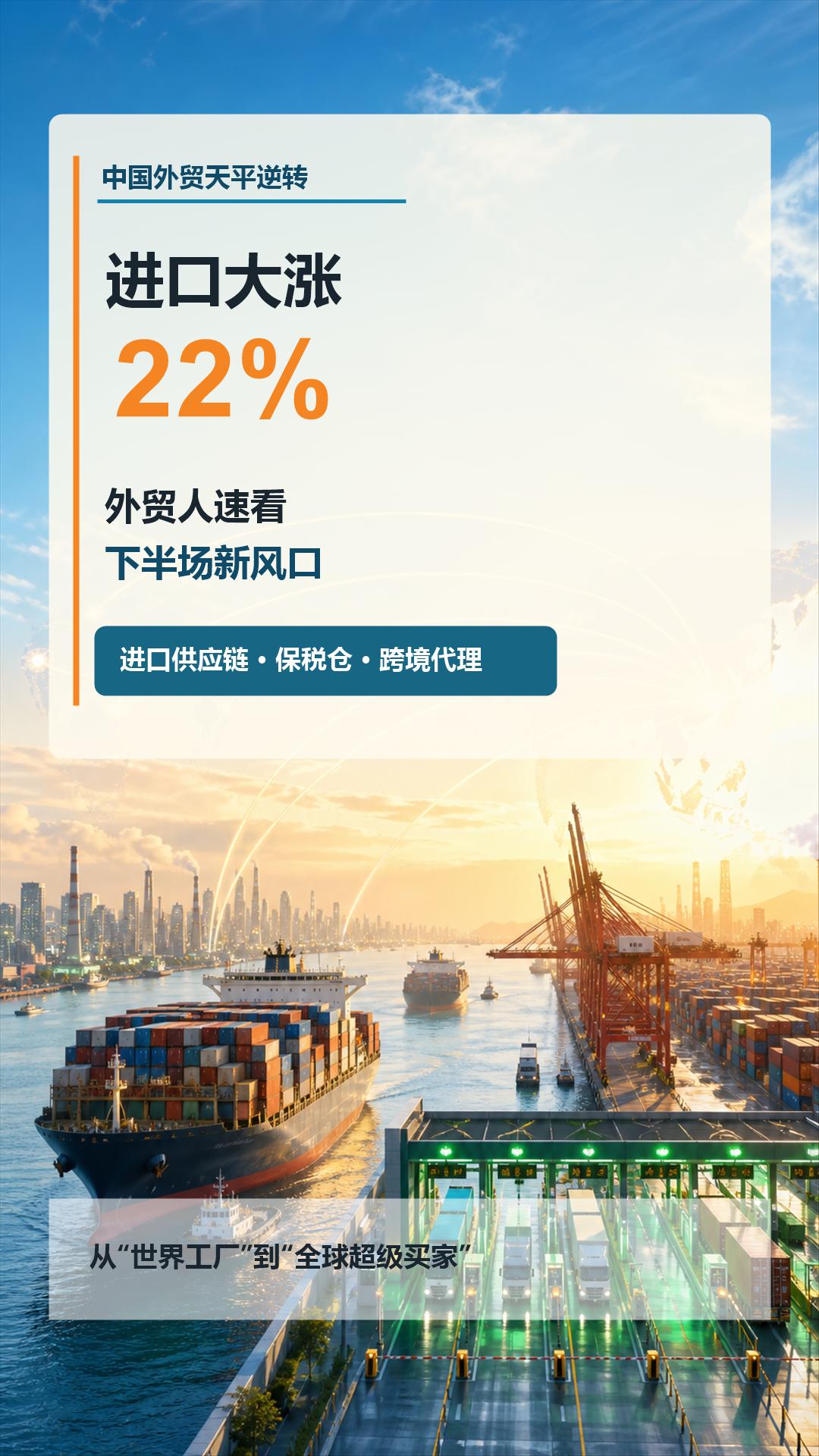
 China's foreign trade sees a turnaround: imports surge by 22%! Foreign trade professionals should quickly take note of the new trends in the second half of the year
 What Does a Global Traffic Ecosystem Service Provider Do? What Are the Differences from a Single Advertising Agency

Related Products
 EasyCamp SaaS Smart Website Marketing SystemE-Yingbao SaaS Smart Website Marketing System: AI-powered, zero-code website building. Rapidly launch multilingual independent e-commerce sites in just 10 minutes. Global server acceleration and AI-driven SEO optimization empower businesses to efficiently connect with global markets. The seamless integration of technology and user-friendly operation makes building e-commerce sites incredibly simple.
 AI+SEM Intelligent Advertising Marketing SystemAI+SEM drives intelligent ad creation, empowering full-funnel precision advertising marketing. The system automatically generates weekly/monthly reports, AI recommends keywords and target countries, monitors core metrics in real-time with intelligent alerts, and enables one-click high-conversion ad solutions to help quickly acquire customers and improve ROI.
 AI+SEO Dual Engine Optimization ServiceEasyWin AI+SEO Dual Engine Optimization System leverages AI-powered keyword mining, content generation, and comprehensive technical optimization to help foreign trade enterprises acquire high-quality organic traffic, significantly improving search rankings and conversion rates.
 AI+SNS Social Media Marketing SystemYingbao AI+SNS Social Media Marketing System - Precision social capture for the social media era. Supports one-click content synchronization across major platforms like Facebook and LinkedIn. AI intelligently rewrites posts for enhanced relevance. 24/7 AI customer service and user profiling analysis empower businesses to efficiently expand into global markets.
 AI+SEO营销解决方案易营宝AI+SEO营销解决方案,通过AI批量写作、智能生成TDK、精准关键词扩词等功能,全面优化网站SEO效果,提升流量与转化率。助力企业构建高效智能网站新生态。
 AI+SEM Advertising Marketing SolutionsAI+SEM Advertising Marketing Solution leverages AI technology to deeply empower SEM ad campaigns. It automatically generates weekly/monthly reports using AI, presenting account data across multiple dimensions for comprehensive insights into campaign performance and trends. The system precisely recommends keywords and target countries, intelligently generates high-conversion ad copy, and enables one-click activation of efficient campaign plans to help businesses rapidly acquire customers. Simultaneously, it monitors core metrics in real time, intelligently identifies abnormal fluctuations, and issues timely alerts to ensure stable, high-return advertising results.
 Domain Name ServicesEasyWin provides professional domain name services, including intelligent queries, one-stop registration, brand protection, and full lifecycle management, helping businesses build a digital brand image.
 EasyOperate B2C Cross-Border E-Commerce Platform & Independent WebsiteEasyStore B2C Cross-border E-commerce Independent Store is an intelligent website building and cross-border e-commerce integrated solution independently developed by EasyStore Information Technology (Beijing) Co., Ltd. The system is specially designed for small and medium-sized as well as large export enterprises, integrating 'website building, operation, marketing, advertising, and conversion' into one, helping enterprises quickly establish cross-border e-commerce independent stores to achieve brand globalization and global sales growth.
The platform supports multiple languages, multiple currencies, and multi-channel marketing, with built-in AI intelligent translation and SEO optimization systems, suitable for mainstream markets such as Southeast Asia, Europe and America, Latin America, and the Middle East, assisting Chinese manufacturing enterprises in efficiently deploying international e-commerce strategies. SSL证书易营宝提供专业SSL安全证书服务,包括单域名和泛域名证书,确保网站数据传输加密、身份验证和完整性保护,助力企业建立安全可信的在线业务环境。









