









- What Does a Global Traffic Ecosystem Service Provider Do? What Are the Differences from a Single Advertising AgencyJul 16, 2026View details
- What should you focus on in the latest enterprise SaaS report? From renewal rates and delivery costs to overseas growth opportunitiesJul 12, 2026View details
- What signals are worth paying attention to in a cross-border marketing trend report? B2B companies should look at these 6 signalsJul 11, 2026View details
- How to Read a Cross-Border Marketing Trends Report? Five Key Dimensions for Evaluating Channel OpportunitiesJul 11, 2026View details
- Which channel has the highest ROI in the global traffic ecosystem? Comparative analysis of search, social media, and advertisingJul 10, 2026View details
- What multilingual website services are available in Sanya? Which model is more suitable for local businesses going global?Jul 08, 2026View details
- How to view the complete list of China SaaS companies in the top 100? Practical methods for screening website-building and marketing service providersJul 08, 2026View details
- How to view pricing in the global traffic ecosystem? Cost comparison of search, social media, and content channel advertisingJul 06, 2026View details
Why Do SSL Certificate Prices Vary So Much for the Same Type
Why can the price gap for the same SSL certificate reach several times over? From brand and validation level to service support, all of these affect the purchasing cost of an SSL certificate. This article will combine the SSL certificate application process and security requirements to help you quickly understand the key factors behind the price differences.
Why prices for the same type of SSL certificate can vary significantly
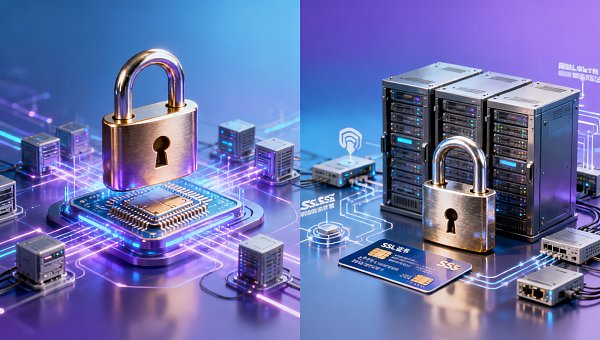
When many companies purchase SSL certificates, their first reaction is often, “It’s all HTTPS, so why is the quotation so different?” Such differences are not just brand premiums, but are also directly related to validation methods, warranty terms, compatibility, after-sales support, and deployment complexity. For integrated website building and marketing projects, certificates affect not only security, but also conversions, trust, and search performance.
Based on common market conditions, DV certificates, OV certificates, and EV certificates usually correspond to 3 levels of validation strength, and the issuance cycle can generally be divided into a few minutes to several hours, 1–3 business days, and 3–7 business days. Price differences often start here, because validation costs differ, and the business risks they are suited for are also different.
For information researchers and technical evaluators, it is not enough to look only at the “first-year quote.” If you ignore subsequent renewals, wildcard requirements, multi-domain coverage, CSR generation, server compatibility, and deployment support, the actual procurement cost can easily be amplified in the second stage, causing what originally seemed like a cheap SSL certificate price to become higher instead.
In integrated website + marketing service scenarios, corporate websites, landing pages, inquiry sites, online stores, and customer backends often coexist in parallel. If one project involves 2–10 subdomains, or needs to cover multiple country sites, certificate selection can no longer be judged using the budgeting logic of a single-page showcase website.
5 core variables that affect the purchasing cost of SSL certificates
- Different validation levels: DV is suitable for basic encryption, OV is more suitable for companies that need to display identity, and EV places greater emphasis on entity verification. The more manual review steps involved, the higher the cost.
- Different certificate types: single-domain, wildcard, and multi-domain certificates differ significantly in coverage scope, and their management complexity also varies.
- Different brands and root certificate ecosystems: compatibility, historical stability, browser trust chains, and international access experience all affect price.
- Different service support: whether deployment assistance, renewal reminders, reissue support, and troubleshooting are provided directly affects operation and maintenance costs.
- Different project scenarios: marketing websites place more emphasis on trust and form conversions, while e-commerce or membership systems care more about identity display and long-term stability.
In other words, SSL certificate pricing is not a quote for a single product, but the combined result of “the certificate itself + validation cost + risk assumption + service delivery.” If a company is in a stage of customer acquisition campaigns, overseas promotion, or brand upgrading, decisions should be based more on business value rather than the cost of a single certificate.
What to focus on when purchasing: how certificate type, scenario, and budget should match
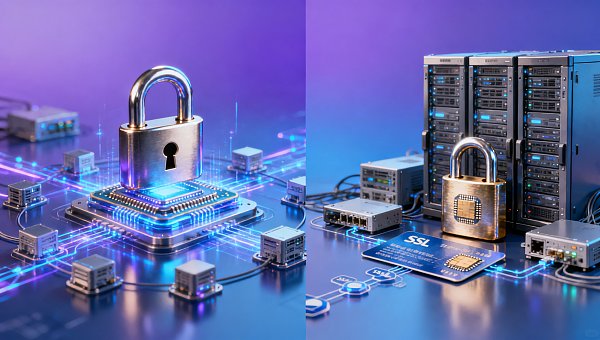
When choosing an SSL certificate, the most common question is not “Which one is the cheapest?” but “Which type does my business actually need?” If it is for a corporate website,招商 page, or SEO landing page, the focus is usually on basic encryption and stable issuance; if it involves inquiry forms, customer data, or payment interfaces, then the identity validation level and multi-site coverage capability must be further considered.
Project managers and security administrators usually evaluate from 3 dimensions: first, whether the certificate matches the current architecture; second, whether the delivery cycle meets the launch schedule; and third, whether renewals and scalability are controllable. For companies planning to complete website launch within 2–4 weeks, issuance efficiency and deployment coordination are often more important than simply low prices.
The table below is suitable for use during the initial procurement screening stage and can help companies quickly determine the applicable scope and cost logic of different SSL certificate application solutions.
As can be seen from the table, the essence of SSL certificate price differences is not merely “different quotes for similar products,” but delivery differences under different business requirements. For distributors, agents, and after-sales maintenance personnel, if the number of customer websites is large, centralized procurement and unified management are usually more time-saving than buying one by one, and are also more conducive to renewal control.
When the budget is limited, how should priorities be arranged
If the budget is limited, it is recommended to first clarify whether there are 3 types of high-risk points: whether customer privacy data is collected, whether brand endorsement is needed, and whether multiple second-level domains run in parallel. If none of the three is obvious, a DV certificate is usually sufficient to meet basic needs; if at least 2 of them apply, it is not recommended to make decisions based only on low-price logic.
Scenarios suitable for prioritizing certificate upgrades
- The corporate website also serves as a landing page for advertising campaigns, requiring stronger visitor trust and greater willingness to submit forms.
- The foreign trade website serves visitors from multiple countries and regions, so it must balance browser compatibility and international access stability.
- The website is connected to customer systems, member centers, or work order platforms, and certificate failure will directly affect business continuity.
In content strategy and website operations, it is also common for companies to simultaneously purchase website building, SEO, page optimization, and security configuration. Some knowledge-based project content, such as Research on the Current Situation and Optimization Strategies of Human Resource Management in Public Hospitals, if deployed on topic pages, resource download pages, or industry columns, likewise requires a stable HTTPS environment to avoid “Not Secure” warnings on download entries and form pages that would affect conversions.
Besides the certificate itself, which hidden costs are most easily overlooked
Many companies treat SSL certificate purchases as a one-time expense, but in actual projects, hidden costs often come from deployment and maintenance. For example, installation methods differ across environments such as Nginx, Apache, and IIS. If load balancing, CDN, WAF, or synchronization across multiple servers is involved, technical processing time may extend from 30 minutes to half a day or even 1 day.
The second type of hidden cost is certificate expiration management. If a company has more than 5 domains and they are maintained separately by different teams, issues such as missed renewals, expired certificates, and incomplete chain files are very common. Once HTTPS fails, it will not only affect search engine crawling and advertising landing page review, but may also cause inquiry loss.
The third type of cost is business loss cost. For marketing websites, a browser “Not Secure” warning often directly affects bounce rate and trust. Especially during time windows such as advertising periods, exhibition periods, and event registration periods, even an interruption of 2–6 hours may result in lead loss, and this portion of the loss is far higher than the certificate price difference itself.
Therefore, when purchasing SSL certificates, “annual certificate fee, implementation hours, renewal management, and fault response” should be placed within the same evaluation framework, rather than focusing only on the initial order amount.
Understand explicit and hidden costs at a glance with one table
If a company is currently in the stage of website upgrade, overseas promotion, or multi-site operation and maintenance, it is recommended to use the table below for internal evaluation, so as to avoid situations where SSL certificate application looks simple but actual delivery gets out of control.
For business decision-makers, the significance of this table lies in clarifying total cost of ownership. A low-cost certificate is not necessarily unsuitable, but it must be confirmed whether it matches the business level, technical architecture, and team maintenance capability. Otherwise, the portion saved in SSL certificate price may be paid back several times over during subsequent implementation.
From website building to marketing conversion, how SSL certificates affect overall project performance
In integrated website + marketing service projects, SSL certificates are not isolated configurations. They interact with website quality, page loading, form security, ad review, search indexing, and user trust formation. Even if a website has excellent content and advertising strategy, an incomplete HTTPS configuration may still cause it to lose leads that should have been captured because of browser warnings.
Yiyingbao Information Technology (Beijing) Co., Ltd., since its establishment in 2013, has continuously focused on coordinated scenarios involving intelligent website building, SEO optimization, social media marketing, and advertising placement. For enterprise clients, security configuration should not be treated as a temporary patch during development, but should be included from the early stage of website building in unified planning for domains, servers, CDN, page redirects, and search deployment.
Especially for corporate websites targeting the global market, it is often necessary to simultaneously meet requirements for multi-region access, mobile compatibility, landing page duplication and expansion, and ad platform reviews. If certificate selection is completed in Phase 1 of the project, HTTPS redirection and mixed content troubleshooting are carried out in sync in Phase 2, and marketing placement begins in Phase 3, overall delivery will be more stable.
This is also why more and more companies no longer outsource SSL certificate applications separately, but instead prefer to hand them over to service teams that can simultaneously understand technology, security, and customer acquisition goals for unified implementation. This includes topic pages, resource centers, and industry content pages, such as content entry points like Research on the Current Situation and Optimization Strategies of Human Resource Management in Public Hospitals. Only when combined with secure downloads, form collection, and search optimization can they truly become sustainable traffic assets.
6 key checkpoints recommended during implementation
- Confirm the domain coverage scope, whether it is a single-domain, wildcard, or multi-domain certificate.
- Confirm whether the issuance time meets the launch plan, to avoid starting the review process only right before release.
- Complete server environment adaptation, and check the certificate chain, private key, and intermediate certificate files.
- Set up HTTP to HTTPS redirection to avoid fragmented indexing and diluted authority.
- Check for mixed content issues in images, scripts, and form interfaces to ensure complete page encryption.
- Establish renewal and inspection mechanisms, and it is recommended to review certificate status and site alerts once every quarter.
For after-sales maintenance personnel and project leaders, the above 6 checkpoints basically cover the core process from procurement to launch and then to operation and maintenance. As long as the process is clear, SSL certificate price is no longer an isolated issue, but part of the overall project ROI calculation.
Common misconceptions and FAQ: does a lower price always mean better value
In actual consultations, there are 2 common pitfalls companies most easily fall into: one is treating all SSL certificates as “exactly the same in function,” and the other is ignoring deployment, renewal, and management costs. The following, combined with common questions, helps different roles quickly establish a judgment framework.
Are low-cost SSL certificates suitable for all corporate websites?
Not necessarily. If the corporate website only serves a basic display purpose, has few domains, and is on a tight launch schedule, a low-cost DV certificate can usually meet the need. But if the website is used for ad conversion, customer login, data submission, or brand credibility display, judging only by price may underestimate subsequent risks. Whether it is suitable depends on the business role, not just the certificate name.
How long does the SSL certificate application process usually take?
Under common circumstances, a DV certificate can be completed within a few minutes to several hours, an OV certificate usually takes 1–3 business days, and an EV certificate usually takes 3–7 business days. If company documents are incomplete, phone verification does not go smoothly, or domain resolution preparation is insufficient, the time will be extended further. Therefore, it is recommended to reserve at least 3–7 days of buffer time instead of handling it on the day of launch.
For multi-domain and wildcard certificates, which one is more cost-saving?
It depends on the domain structure. If the company mainly uses multiple second-level domains under the same primary domain, wildcard certificates are more convenient to manage; if multiple different primary domains coexist, multi-domain certificates are more suitable. Cost savings are not determined only by the purchase price, but also by renewal, deployment, and management efficiency during certificate changes.
Why are some certificate quotes low, but the total follow-up cost ends up higher?
There are usually 4 reasons: deployment support is not included, renewal prices are relatively high, compatibility issues require additional manual handling, and after site expansion a new purchase becomes necessary. For websites that require long-term operation, it is recommended to evaluate the 1-year cost together with the 2–3 year management cost, which is closer to the real procurement outcome.
Why choose us: integrate SSL certificate selection into the website building and growth system for a unified solution
If you are comparing SSL certificate prices, what is truly worth paying attention to is not only which certificate to buy, but whether that certificate can be smoothly integrated into your website building, SEO optimization, advertising placement, and subsequent operation and maintenance system. Yiyingbao Information Technology (Beijing) Co., Ltd. takes artificial intelligence and big data as its core driving force, has long served global growth scenarios, and can reverse-engineer security and deployment solutions from business goals.
For information researchers, we can help sort out the differences among DV, OV, EV, multi-domain, and wildcard solutions; for technical evaluators, we can coordinate confirmation of server environments, deployment processes, and HTTPS transformation checkpoints; for enterprise decision-makers, we can provide overall recommendations around budget, delivery cycle, and scalability.
If you are preparing for a new website launch, old website upgrade, overseas site deployment, or marketing landing page encryption upgrade, it is recommended to first communicate 4 items: the current domain structure, expected launch time, whether forms and user data are involved, and whether unified management of multi-region sites is needed. Based on this information, it becomes easier to quickly determine whether the SSL certificate purchasing solution is reasonable.
You may further consult on specific issues such as certificate type matching, implementation process, delivery cycle, renewal management, site HTTPS transformation, and search and advertising compatibility configuration. Putting security, website building, and marketing into the same solution often saves more time than comparing prices alone, and can also better reduce the risk of rework later.
Related Articles
 Attention! Builders' must-see: Yibingbao AI components updated, design efficiency directly doubled!
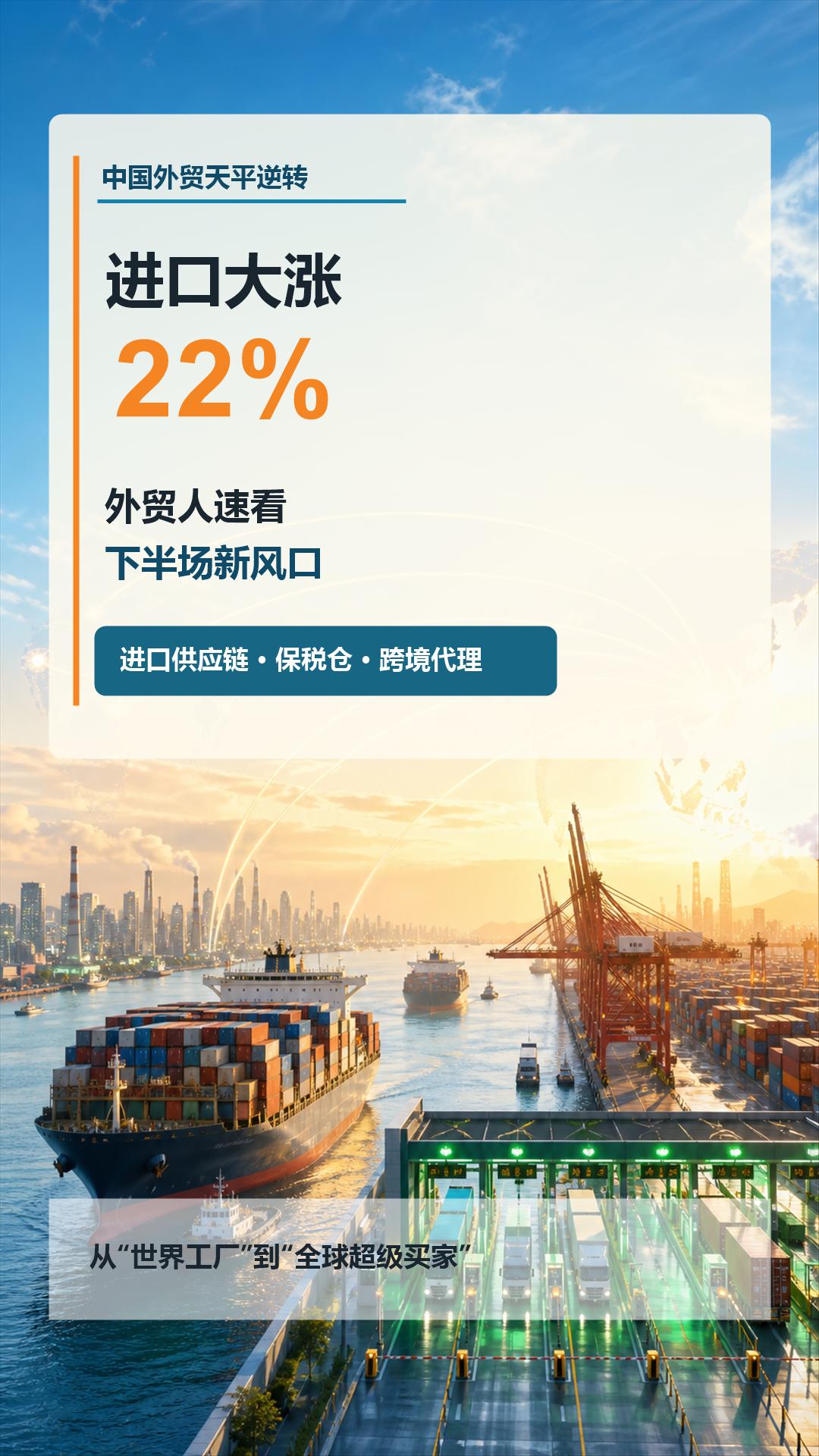
 China's foreign trade sees a turnaround: imports surge by 22%! Foreign trade professionals should quickly take note of the new trends in the second half of the year
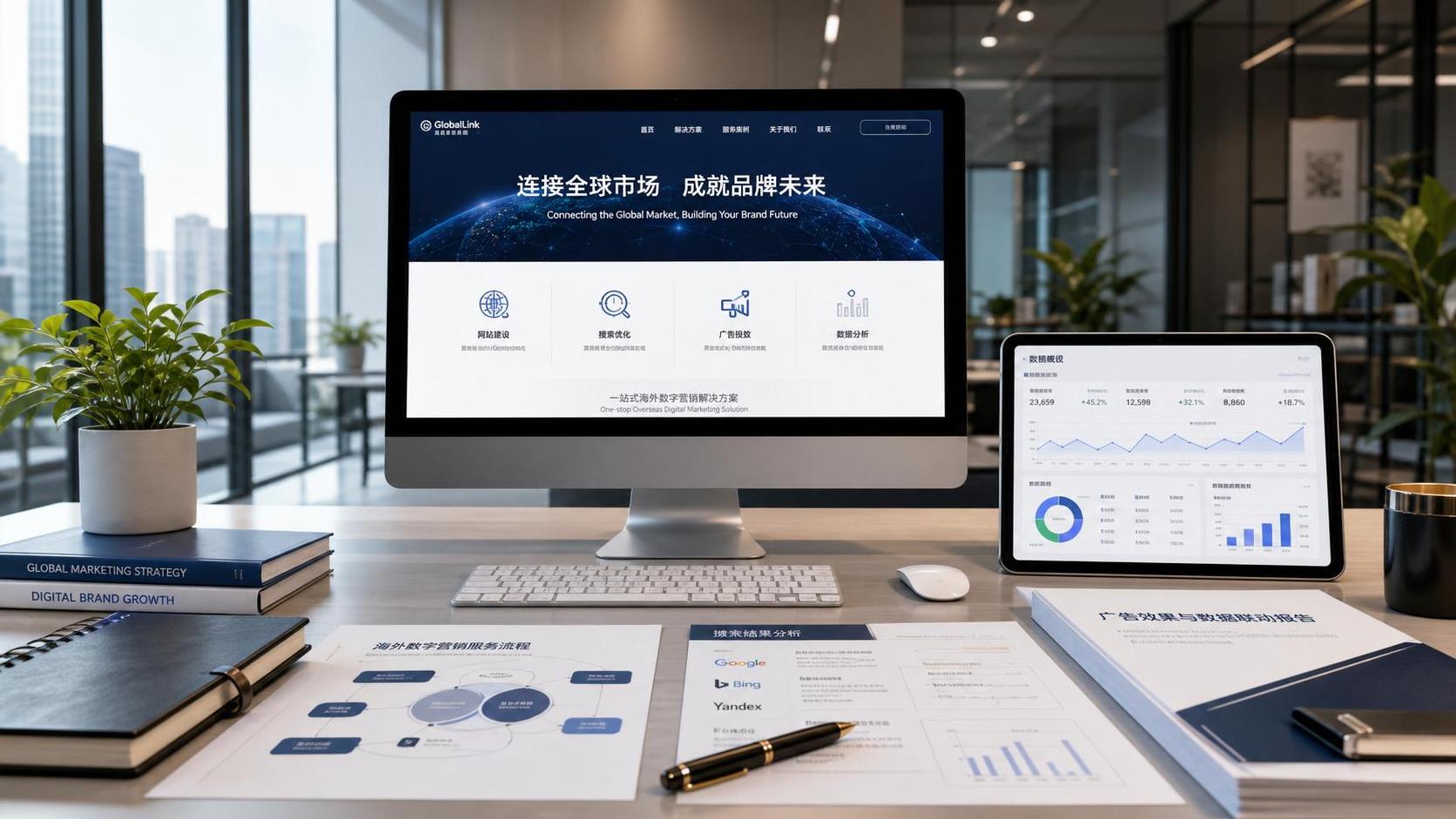
 What Does a Global Traffic Ecosystem Service Provider Do? What Are the Differences from a Single Advertising Agency

Related Products
 EasyCamp SaaS Smart Website Marketing SystemE-Yingbao SaaS Smart Website Marketing System: AI-powered, zero-code website building. Rapidly launch multilingual independent e-commerce sites in just 10 minutes. Global server acceleration and AI-driven SEO optimization empower businesses to efficiently connect with global markets. The seamless integration of technology and user-friendly operation makes building e-commerce sites incredibly simple.
 AI+SEM Intelligent Advertising Marketing SystemAI+SEM drives intelligent ad creation, empowering full-funnel precision advertising marketing. The system automatically generates weekly/monthly reports, AI recommends keywords and target countries, monitors core metrics in real-time with intelligent alerts, and enables one-click high-conversion ad solutions to help quickly acquire customers and improve ROI.
 AI+SEO Dual Engine Optimization ServiceEasyWin AI+SEO Dual Engine Optimization System leverages AI-powered keyword mining, content generation, and comprehensive technical optimization to help foreign trade enterprises acquire high-quality organic traffic, significantly improving search rankings and conversion rates.
 AI+SNS Social Media Marketing SystemYingbao AI+SNS Social Media Marketing System - Precision social capture for the social media era. Supports one-click content synchronization across major platforms like Facebook and LinkedIn. AI intelligently rewrites posts for enhanced relevance. 24/7 AI customer service and user profiling analysis empower businesses to efficiently expand into global markets.
 AI+SEO营销解决方案易营宝AI+SEO营销解决方案,通过AI批量写作、智能生成TDK、精准关键词扩词等功能,全面优化网站SEO效果,提升流量与转化率。助力企业构建高效智能网站新生态。
 AI+SEM Advertising Marketing SolutionsAI+SEM Advertising Marketing Solution leverages AI technology to deeply empower SEM ad campaigns. It automatically generates weekly/monthly reports using AI, presenting account data across multiple dimensions for comprehensive insights into campaign performance and trends. The system precisely recommends keywords and target countries, intelligently generates high-conversion ad copy, and enables one-click activation of efficient campaign plans to help businesses rapidly acquire customers. Simultaneously, it monitors core metrics in real time, intelligently identifies abnormal fluctuations, and issues timely alerts to ensure stable, high-return advertising results.
 Domain Name ServicesEasyWin provides professional domain name services, including intelligent queries, one-stop registration, brand protection, and full lifecycle management, helping businesses build a digital brand image.
 EasyOperate B2C Cross-Border E-Commerce Platform & Independent WebsiteEasyStore B2C Cross-border E-commerce Independent Store is an intelligent website building and cross-border e-commerce integrated solution independently developed by EasyStore Information Technology (Beijing) Co., Ltd. The system is specially designed for small and medium-sized as well as large export enterprises, integrating 'website building, operation, marketing, advertising, and conversion' into one, helping enterprises quickly establish cross-border e-commerce independent stores to achieve brand globalization and global sales growth.
The platform supports multiple languages, multiple currencies, and multi-channel marketing, with built-in AI intelligent translation and SEO optimization systems, suitable for mainstream markets such as Southeast Asia, Europe and America, Latin America, and the Middle East, assisting Chinese manufacturing enterprises in efficiently deploying international e-commerce strategies. SSL证书易营宝提供专业SSL安全证书服务,包括单域名和泛域名证书,确保网站数据传输加密、身份验证和完整性保护,助力企业建立安全可信的在线业务环境。









