









- Which customer acquisition channels will be affected by cross-border marketing trends in 2026?Sep 06, 2026View details
- Which homogenization risks should be considered in an analysis of the AI-powered website building industry?Aug 30, 2026View details
- How Will AI Marketing Trends 2026 Change Advertising Budget AllocationAug 28, 2026View details
- Is the EV SSL certificate market shrinking or upgrading? How should companies assess certificate procurement?Aug 11, 2026View details
- Why the old AMP SEO 2020 practices no longer work and what has changed in current optimization prioritiesAug 02, 2026View details
- How to Choose Topics for an Industry News Section to Attract More Organic Search TrafficJul 29, 2026View details
What parameters should a product selection guide include to reduce repeated communication with sales?
When an operator submits a request such as “I want to build an official website” or “I need promotion,” sales staff often still need to ask a series of follow-up questions: Is it a showcase website or an online store? Which countries will it target? Are English-language materials available? Should forms be integrated? Who will run the advertising? When does the site need to go live? Missing information can cause the solution, quotation, and delivery scope to keep changing. Communication may appear smooth at the outset, but rework can easily occur once the project enters the website development or promotion stage.
A product selection guide that reduces repeated communication does not need to be lengthy, but it should clearly define the business objectives, use cases, functional scope, existing conditions, budget timeline, and acceptance criteria in advance. The key is not to fill it with specifications, but to enable the person submitting the request to determine “whether this is essential,” “whether the materials are already available,” and “who is responsible for confirmation.”
Change “what do we need” into “what problem do we need to solve”
The most common mistake in website and marketing services is to start selection directly from the number of pages, the number of languages, or promotional packages. In fact, although they may all be multilingual websites, B2B lead generation sites, brand showcase sites, cross-border retail stores, and advertising landing pages have entirely different requirements for content structure, conversion paths, payment capabilities, and data tracking.
The first section of the selection form should define the business task rather than the product name. Request submitters can be asked to select a primary objective from the following scenarios and rank them by priority:
- Generating overseas inquiries: The key products, inquiry form fields, sales follow-up methods, and target markets need to be specified.
- Showcasing the brand and qualifications: Brand materials, case studies, certificates, download center content, and the source of multilingual content need to be confirmed.
- Online sales: In addition to product display, the number of SKUs, inventory, logistics, taxes, payment methods, and after-sales policies must also be confirmed.
- Handling advertising traffic: The advertising regions, number of landing pages, conversion actions, and tracking requirements should be determined first.
- Long-term customer acquisition through organic search: Keyword directions, category planning, responsibility for content updates, and the status of legacy website migration need to be verified.
A project may have multiple objectives, but the “primary objective” must be stated. For example, if a website needs both to showcase products and collect inquiries, and inquiries are the core objective, forms, CTA buttons, and page paths cannot be configured solely according to the standards of a visual showcase site.
Key parameters to include in a product selection guide
Parameters are recommended to be divided into two categories: “must be confirmed” and “can be supplemented later.” The former determines whether a solution can be established, while the latter affects production efficiency and expansion arrangements. When completing the form, operators should use verifiable information whenever possible and avoid non-actionable descriptions such as “as advanced as possible” or “must deliver good results.”
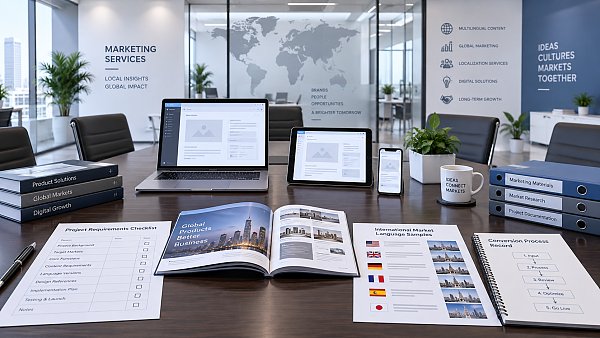
Technical parameters should not only ask “whether it is supported”
Technical requirements are often written simply as “a responsive website is required” or “SEO functionality is required,” which is insufficient for sales or implementation personnel to determine the configuration. A more effective approach is to link functions to specific usage actions. For example, mobile adaptation should specify whether form submission, instant communication, or online ordering is the primary activity on mobile devices. For SEO, it should specify whether legacy page URLs will be retained, whether title and description editing is required, and whether personnel are available to continuously publish content.
Items to confirm for website development
- Domain name and legacy website: Whether a domain name already exists, whether original pages and indexed content will be retained, and whether email accounts or downloadable materials need to be migrated.
- Content management: Which personnel can add products, publish articles, and modify language versions; whether publishing requires approval.
- External tools: Whether customer service tools, CRM, email systems, payment systems, logistics systems, or analytics code need to be integrated. Simply stating “system integration is required” is not enough; the system name, interface conditions, and integration purpose should be provided.
- Permissions and security: Whether accounts for different roles, operation logs, anti-spam form submission, and data export permissions are required.
Confirming these matters at an early stage saves more time than adding them temporarily before launch. This is particularly true for legacy website migration: it is necessary not only to ask “whether content will be retained,” but also to confirm which pages still have traffic value, which downloadable files will continue to be used, and whether old links need redirects. Otherwise, even after the new website pages are completed, publication may still be delayed due to unclear ownership of materials and redirect rules.
Write marketing requirements as verifiable actions
“We hope the website will achieve promotional results” is not a verifiable parameter. It should be broken down into specific actions to be completed after the website goes live: whether inquiries can be submitted, whether traffic sources can be tracked, whether there is an entry point for content publishing, which page users enter after clicking an ad, and who maintains pages for organic search. This enables sales personnel to distinguish between basic website development requirements, SEO preparation requirements, and advertising landing page requirements, rather than combining all services into one vague quotation.
For example, personnel responsible for backend content and material processes may also refer to the approach of “standardizing information first, then establishing processes” in How to Optimize Personnel and Payroll Management in Public Institutions in the Digital Economy Era. Although the application fields differ, selection materials likewise need to specify the person responsible for each field, submission deadlines, and review methods. No matter how complete the parameters are, they will quickly become ineffective if no one maintains them.
Budget, timeline, and responsible persons should appear together
The budget does not necessarily need to provide an exact amount in the first round, but it should indicate a budget range and specify which items cannot exceed that range, such as the number of languages, page scale, content entry, custom integrations, or the duration of promotional services. Based on this, sales staff can first eliminate clearly unsuitable solutions and avoid repeated discussions over configurations that cannot realistically be implemented.
The timeline should also not simply state “go live as soon as possible.” It is more practical to separately specify the time for providing materials, design confirmation, internal review, and planned launch. Delays in website projects are often caused not by the production time itself, but by product materials, translated copy, image authorization, and account permissions not being ready in time.
Finally, assign a person responsible for confirming each type of information: product materials should be confirmed by the business department; brand assets by the relevant person in charge; domain names and accounts should be provided by technical or administrative personnel; and promotional objectives should be confirmed by the marketing manager. Sales staff then only need to follow up on missing fields, rather than repeatedly relaying the same question among multiple people.
Perform a “can a quotation be provided directly” check before submission
After completing the product selection guide, a simple standard can be used to determine whether it is sufficient: Can sales personnel, based solely on this document, determine the site type, core pages, necessary functions, promotion integration, delivery timeline, and main constraints? After receiving the document, can implementation personnel list which materials and permissions are still missing? If the answer is no, there is usually no need to add more marketing terminology; it is enough to supplement the target market, volume of product materials, conversion actions, and division of responsibilities.
The value of a selection guide is not to replace subsequent communication, but to focus subsequent communication on the differences that genuinely require decisions. The closer the parameters are to actual operations, material status, and acceptance actions, the more closely the solution provided by sales will align with the feasible scope.
Related Articles

Related Products
 Yiyingbao SaaS Intelligent Website Building and Marketing SystemYiyingbao SaaS Intelligent Website Building and Marketing System, AI-powered no-code website building, rapid creation of multilingual B2B international websites in 10 minutes, global server acceleration, AI-powered SEO optimization, helping businesses connect efficiently with global markets. The perfect integration of technology and operation makes building an international trade website remarkably simple
 AI+SEM Intelligent Advertising Marketing SystemAI+SEM drives intelligent ad creation, empowering full-funnel precision advertising marketing. The system automatically generates weekly/monthly reports, AI recommends keywords and target countries, monitors core metrics in real-time with intelligent alerts, and enables one-click high-conversion ad solutions to help quickly acquire customers and improve ROI.
 AI+SEO Dual-Engine System Optimization ServicesYiyingbao’s AI+SEO dual-engine optimization system helps foreign trade enterprises acquire high-quality organic traffic through AI-powered keyword research, content generation, and comprehensive technical optimization, significantly improving search rankings and conversion rates.
 AI+SNS Social Media Marketing SystemYingbao AI+SNS Social Media Marketing System - Precision social capture for the social media era. Supports one-click content synchronization across major platforms like Facebook and LinkedIn. AI intelligently rewrites posts for enhanced relevance. 24/7 AI customer service and user profiling analysis empower businesses to efficiently expand into global markets.
 AI+SEO营销解决方案易营宝AI+SEO营销解决方案,通过AI批量写作、智能生成TDK、精准关键词扩词等功能,全面优化网站SEO效果,提升流量与转化率。助力企业构建高效智能网站新生态。
 AI+SEM Advertising Marketing SolutionsAI+SEM Advertising Marketing Solution leverages AI technology to deeply empower SEM ad campaigns. It automatically generates weekly/monthly reports using AI, presenting account data across multiple dimensions for comprehensive insights into campaign performance and trends. The system precisely recommends keywords and target countries, intelligently generates high-conversion ad copy, and enables one-click activation of efficient campaign plans to help businesses rapidly acquire customers. Simultaneously, it monitors core metrics in real time, intelligently identifies abnormal fluctuations, and issues timely alerts to ensure stable, high-return advertising results.
 Domain Name ServicesEasyWin provides professional domain name services, including intelligent queries, one-stop registration, brand protection, and full lifecycle management, helping businesses build a digital brand image.
 EasyOperate B2C Cross-Border E-Commerce Platform & Independent WebsiteEasyStore B2C Cross-border E-commerce Independent Store is an intelligent website building and cross-border e-commerce integrated solution independently developed by EasyStore Information Technology (Beijing) Co., Ltd. The system is specially designed for small and medium-sized as well as large export enterprises, integrating 'website building, operation, marketing, advertising, and conversion' into one, helping enterprises quickly establish cross-border e-commerce independent stores to achieve brand globalization and global sales growth.
The platform supports multiple languages, multiple currencies, and multi-channel marketing, with built-in AI intelligent translation and SEO optimization systems, suitable for mainstream markets such as Southeast Asia, Europe and America, Latin America, and the Middle East, assisting Chinese manufacturing enterprises in efficiently deploying international e-commerce strategies. SSL证书易营宝提供专业SSL安全证书服务,包括单域名和泛域名证书,确保网站数据传输加密、身份验证和完整性保护,助力企业建立安全可信的在线业务环境。









