









- Amazon Raises Fulfillment Fees Twice, Yet the Median Platform Fee Remains Around 40%Oct 22, 2026View details
- AliExpress and YouTube Partner to Expand Marketing Opportunities for Chinese Brands Going GlobalOct 22, 2026View details
- Publicis says AI marketing is developing at two speeds, with agentic AI helping win clientsOct 21, 2026View details
- Salesforce Plans to Acquire Braze for $5.66 Billion to Enhance AI Marketing CapabilitiesOct 21, 2026View details
- Levanta’s Inaugural China Summit Held in Shenzhen, Focusing on AI and Cross-Border Brand GrowthOct 20, 2026View details
- The October Edition of the 2026 GGE Shenzhen Cross-Border E-Commerce Expo OpensOct 20, 2026View details
Overseas Advertising vs. Social Media Marketing: Which Has a Lower Customer Acquisition Cost?
When companies prepare to acquire customers overseas, they often encounter a seemingly simple question that is actually difficult to answer in one sentence: which has a lower customer acquisition cost, overseas advertising or social media marketing? Some companies quickly receive inquiries through Google Ads but find that the cost per lead keeps rising; others consistently manage LinkedIn, Facebook, and Instagram, generating engagement with their content but struggling to convert it into orders.
What truly affects customer acquisition cost is not simply “how much one click costs” or “how much time it takes to publish a piece of content,” but rather the target market, product decision-making cycle, customer order value, website conversion capability, and whether the company can consistently follow up on leads. For most companies expanding overseas, advertising and social media are not either-or choices, but two growth tools with different rhythms.
Do Not Look Only at Click Costs: Customer Acquisition Costs Must Cover the Full Conversion Journey
Many companies regard CPC (cost per click) in their advertising dashboard as customer acquisition cost, which is a common misconception. After a click, whether the user reaches a relevant landing page, is willing to submit their details, receives timely sales follow-up, and finds the quotation aligned with market expectations will all affect the final outcome.
A more meaningful calculation is:
Customer acquisition cost = Total channel investment ÷ Number of qualified leads
If orders matter more, companies should further track: Customer acquisition cost = Total channel investment ÷ Number of converted customers.
“Total investment” here includes not only advertising spend, but also labor costs for creative production, multilingual content, account management, website maintenance, data analysis, and sales follow-up. The surface-level traffic from social media may appear “free,” but long-term content investment is not low; advertising may seem expensive per unit, yet it can generate qualified inquiries faster because user intent is clear.
Overseas Advertising: Suitable for Reaching People Who Already Have a Need
Take Google Search ads as an example. When users actively search for products, suppliers, solutions, or industry-related issues, they have usually entered the demand research stage. For businesses with clear search demand, such as industrial equipment, components, foreign trade B2B services, and software solutions, advertising can often generate trackable inquiries in a relatively short time.
Its advantages are fast launch and relatively clear targeting. Companies can control budgets by country, language, keyword, device, and time period, while quickly testing which product terms and application-scenario terms are more likely to convert. If a new website has just launched and organic rankings have not yet been established, advertising is often an important entry point for validating overseas markets.
However, advertising costs are not inherently lower. Highly competitive categories, broad keywords, and overly loose geographic targeting can all consume budget. In particular, directing users straight to the homepage rather than to a relevant product page, industry solution page, or inquiry page can easily turn clicks into “one look and leave.”
Advertising is more suitable in the following situations:
- Product demand is clear, and overseas buyers actively search;
- You want to gain market feedback quickly before or after trade shows or during new product launches;
- You have English or multilingual landing pages that can support conversion;
- The sales team can respond to inquiries within a short period and nurture them continuously.
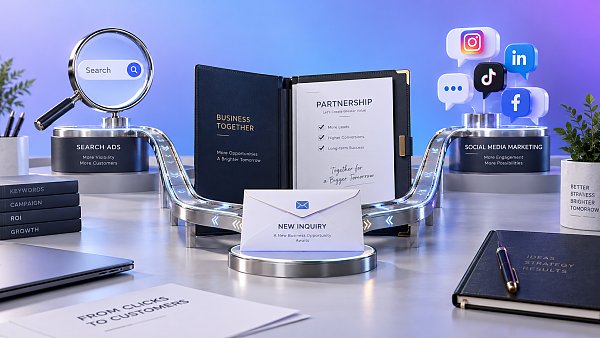
Social Media Marketing: It May Not Be Cheaper Initially, but It Can Reduce the Cost of Building Trust
The value of social media marketing often does not lie in closing a deal immediately, but in allowing overseas customers to get to know you before they need you. LinkedIn is better suited for reaching B2B decision-makers, building industry content, and nurturing sales leads; Facebook and Instagram are better suited for visual products, consumer goods, and brand interaction; short-video platforms such as YouTube and TikTok can reduce customers’ barriers to understanding through content such as factory scenes, product demonstrations, and usage comparisons.
For products with long procurement cycles that require factory audits, sample testing, or multi-person decision-making, social media often has unique value. After first entering a website through an advertisement, customers may check the brand page, product videos, and user reviews. Continuously updated social media content can make an unfamiliar supplier appear more authentic and verifiable.
However, social media does not mean “post and customers will come.” If content simply repeats product images and company introductions, it is difficult to stand out in overseas users’ feeds. Effective content is generally closer to customers’ questions: how to select a model, differences between materials, delivery and quality inspection processes, how to use a product in a particular application scenario, and how to avoid common failures. Only useful content has the potential to be saved, shared, and generate direct-message inquiries.
Therefore, the cost per lead from social media is sometimes lower than advertising and sometimes higher. It is generally more suitable for brand awareness, customer education, remarketing, and long-term relationship maintenance, rather than being expected to generate orders consistently in the first week.
For Different Businesses, the Answer May Be Completely Different
If you sell standardized products for immediate purchase, social media advertising may scale rapidly through interest targeting and creative assets; if you provide customized equipment or business services, users generated by search advertising are often closer to the point of purchase. In other words, high-intent channels may not have the cheapest clicks, but they may achieve conversions at a lower cost; content channels may not be the most cost-effective in the short term, but they can make subsequent ad conversions easier.
Before Deciding Where to Allocate Your Budget, Check These Four Things
First, assess search demand. Do customers in the target country actively search for product names, models, applications, and suppliers? If search behavior is evident, prioritizing Google Ads testing and SEO page planning is usually more reliable than blindly casting a wide net.
Second, assess content capabilities. Does the company have product videos, application cases, engineer explanations, production processes, or frequently asked customer questions? These assets determine whether social media can be operated consistently, rather than falling silent after updates every few days.
Third, assess website conversion support. After overseas traffic enters the website, visitors should be able to quickly understand product selling points, applicable industries, certification information, delivery capabilities, and contact paths. Multilingual websites should also avoid mechanical translation. Without an independent website that can be promoted, indexed, and converted, even highly targeted traffic will be wasted.
Fourth, assess attribution methods. Do not only ask customers, “Where did you see us?” Also use form sources, UTM parameters, ad conversion tracking, and CRM records to identify where the first interaction and final conversion respectively came from. Many orders are not generated by a single channel.
A More Practical Approach: Test the Combination of “Advertising for Acquisition, Social Media for Nurturing”
For most foreign trade companies, a more prudent approach is not to place the entire budget on one platform from the beginning, but to let advertising and social media serve different functions. Search advertising is used to capture clear demand, while social media is used to demonstrate capabilities, build up content, and remarket to people who have visited the website. After customers see product demonstrations, industry content, or solutions multiple times, they are generally more willing to submit their details.
At the execution level, companies can first build multilingual landing pages around one or two key countries and core product lines, then use small-scale advertising to test high-intent keywords. At the same time, technical explanations, application images and text, and short videos from the landing pages can be repurposed into social media content. In this way, the same business materials can serve search, advertising, social media, and subsequent SEO, rather than requiring every channel to start from scratch.
For integrated services such as Yiyingbao that cover intelligent website building, Google SEO, advertising, and overseas social media operations, the value lies in viewing website conversion support, traffic acquisition, and data tracking within the same growth journey. Companies do not need to focus only on surface-level data from a single platform, but can more clearly determine which markets have genuine demand, which pages are losing customers, and which content is worth sustained investment.
Conclusion: Lower Cost Does Not Mean Choosing the Cheapest Channel
There is no universally applicable answer to which has a lower customer acquisition cost, overseas advertising or social media marketing. Advertising is generally better at acquiring customers with immediate demand, while social media is better at building trust, influencing decisions, and reducing long-term conversion resistance. What is truly worth pursuing is not cheaper individual clicks, but ensuring that every investment can be supported by the website, followed up by sales, and reviewed through data.
If a company is at the beginning of its overseas expansion, it may first validate advertising demand with a controllable budget while simultaneously building content assets and social media channels. Only by looking at inquiry quality in the short term and the value of converted customers in the long term can it find the overseas customer acquisition mix that truly suits its business.
Related Articles
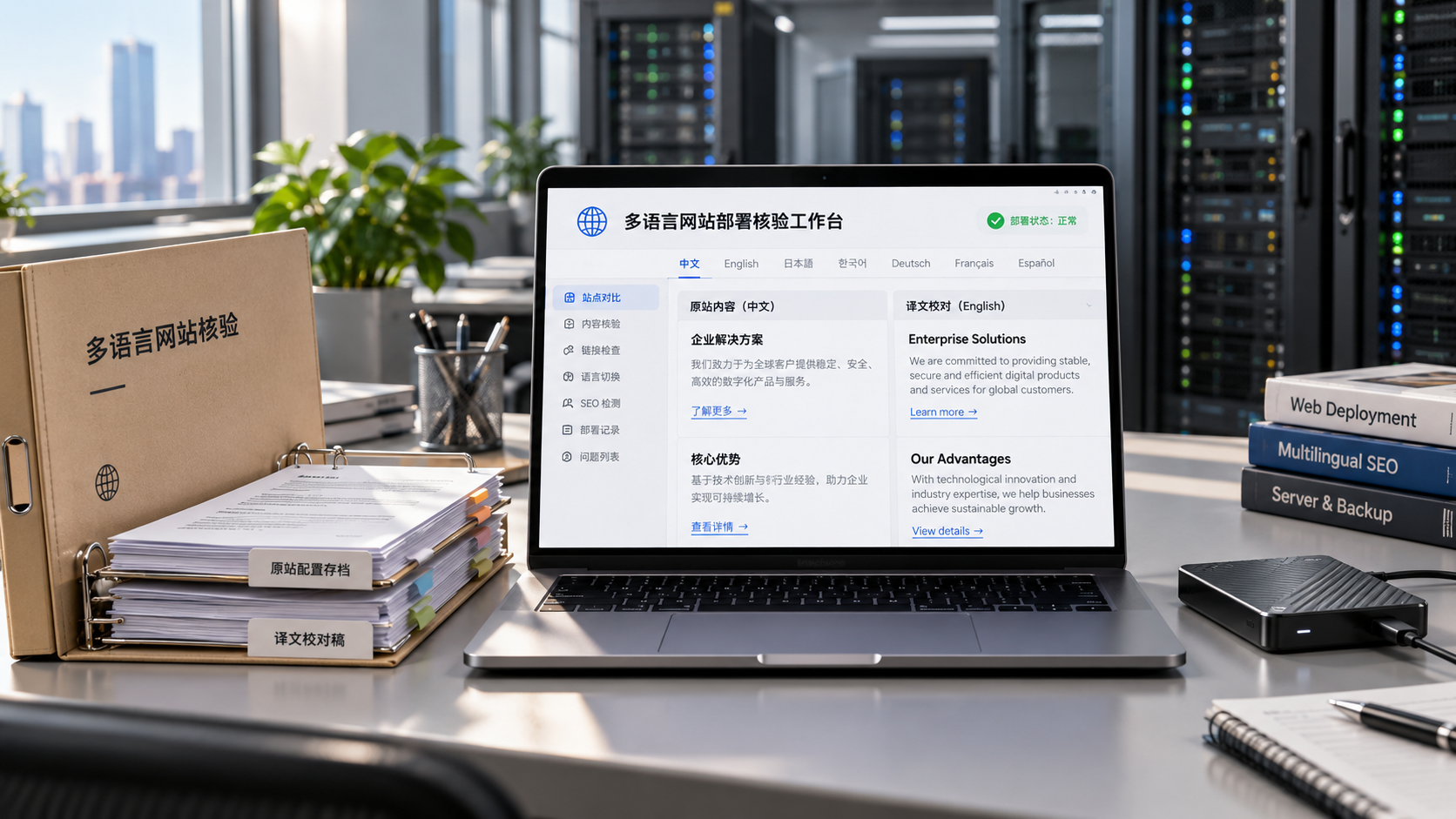
 Choosing an AI-powered multilingual website service for export businesses: How can you verify translation quality?
 Can a multilingual website translation platform preserve existing SEO settings?
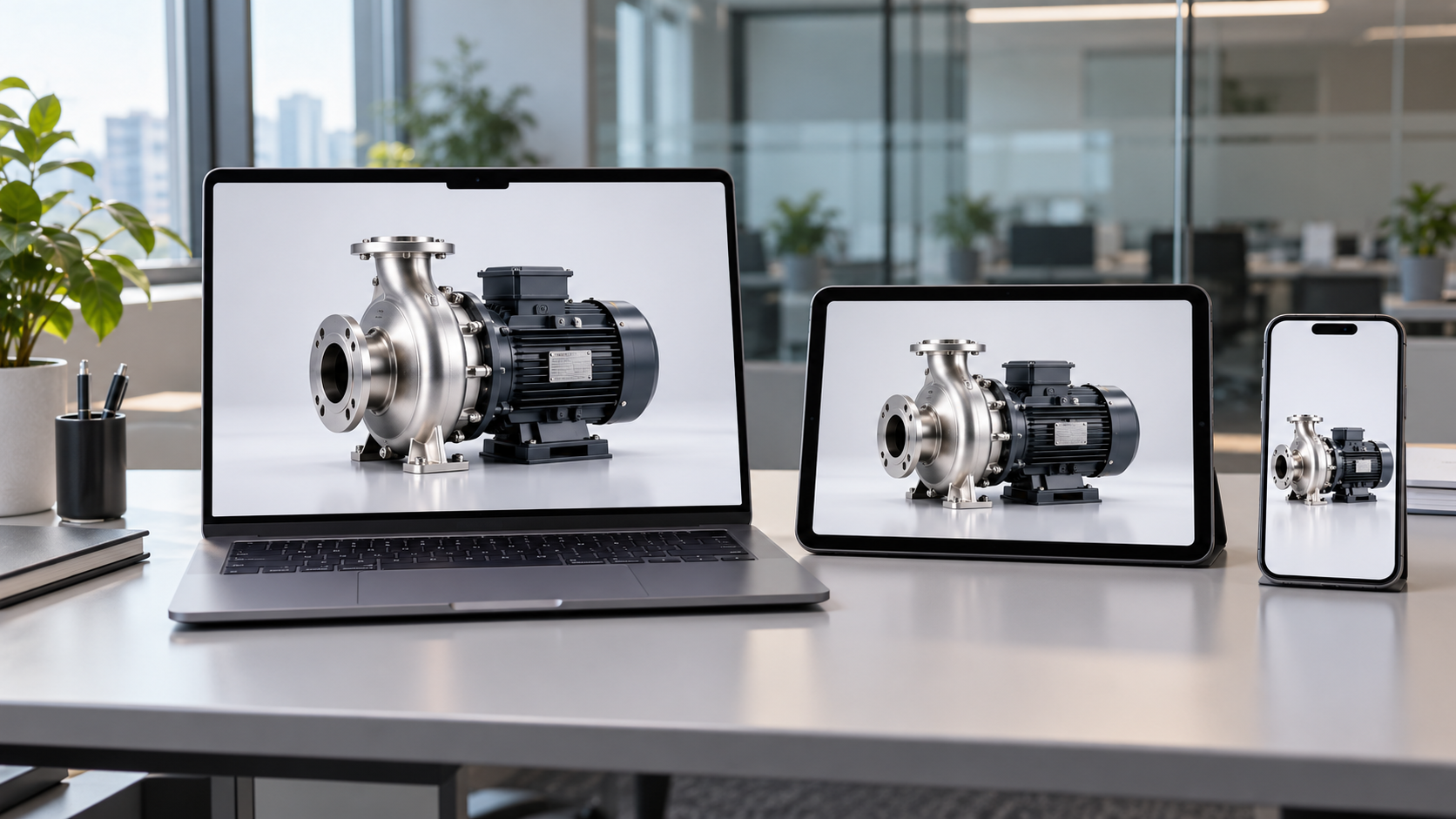
 How can you test responsive design compatibility in a global website-building SaaS platform?

Related Products
 Yiyingbao SaaS Intelligent Website Building and Marketing SystemYiyingbao SaaS Intelligent Website Building and Marketing System, AI-powered no-code website building, rapid creation of multilingual B2B international websites in 10 minutes, global server acceleration, AI-powered SEO optimization, helping businesses connect efficiently with global markets. The perfect integration of technology and operation makes building an international trade website remarkably simple
 AI+SEM Intelligent Advertising Marketing SystemAI+SEM drives intelligent ad creation, empowering full-funnel precision advertising marketing. The system automatically generates weekly/monthly reports, AI recommends keywords and target countries, monitors core metrics in real-time with intelligent alerts, and enables one-click high-conversion ad solutions to help quickly acquire customers and improve ROI.
 AI+SEO Dual-Engine System Optimization ServicesYiyingbao’s AI+SEO dual-engine optimization system helps foreign trade enterprises acquire high-quality organic traffic through AI-powered keyword research, content generation, and comprehensive technical optimization, significantly improving search rankings and conversion rates.
 AI+SNS Social Media Marketing SystemYingbao AI+SNS Social Media Marketing System - Precision social capture for the social media era. Supports one-click content synchronization across major platforms like Facebook and LinkedIn. AI intelligently rewrites posts for enhanced relevance. 24/7 AI customer service and user profiling analysis empower businesses to efficiently expand into global markets.
 AI+SEO营销解决方案易营宝AI+SEO营销解决方案,通过AI批量写作、智能生成TDK、精准关键词扩词等功能,全面优化网站SEO效果,提升流量与转化率。助力企业构建高效智能网站新生态。
 AI+SEM Advertising Marketing SolutionsAI+SEM Advertising Marketing Solution leverages AI technology to deeply empower SEM ad campaigns. It automatically generates weekly/monthly reports using AI, presenting account data across multiple dimensions for comprehensive insights into campaign performance and trends. The system precisely recommends keywords and target countries, intelligently generates high-conversion ad copy, and enables one-click activation of efficient campaign plans to help businesses rapidly acquire customers. Simultaneously, it monitors core metrics in real time, intelligently identifies abnormal fluctuations, and issues timely alerts to ensure stable, high-return advertising results.
 Domain Name ServicesEasyWin provides professional domain name services, including intelligent queries, one-stop registration, brand protection, and full lifecycle management, helping businesses build a digital brand image.
 EasyOperate B2C Cross-Border E-Commerce Platform & Independent WebsiteEasyStore B2C Cross-border E-commerce Independent Store is an intelligent website building and cross-border e-commerce integrated solution independently developed by EasyStore Information Technology (Beijing) Co., Ltd. The system is specially designed for small and medium-sized as well as large export enterprises, integrating 'website building, operation, marketing, advertising, and conversion' into one, helping enterprises quickly establish cross-border e-commerce independent stores to achieve brand globalization and global sales growth.
The platform supports multiple languages, multiple currencies, and multi-channel marketing, with built-in AI intelligent translation and SEO optimization systems, suitable for mainstream markets such as Southeast Asia, Europe and America, Latin America, and the Middle East, assisting Chinese manufacturing enterprises in efficiently deploying international e-commerce strategies. SSL证书易营宝提供专业SSL安全证书服务,包括单域名和泛域名证书,确保网站数据传输加密、身份验证和完整性保护,助力企业建立安全可信的在线业务环境。









