









- Amazon Raises Fulfillment Fees Twice, Yet the Median Platform Fee Remains Around 40%Oct 22, 2026View details
- AliExpress and YouTube Partner to Expand Marketing Opportunities for Chinese Brands Going GlobalOct 22, 2026View details
- Publicis says AI marketing is developing at two speeds, with agentic AI helping win clientsOct 21, 2026View details
- Salesforce Plans to Acquire Braze for $5.66 Billion to Enhance AI Marketing CapabilitiesOct 21, 2026View details
- Levanta’s Inaugural China Summit Held in Shenzhen, Focusing on AI and Cross-Border Brand GrowthOct 20, 2026View details
- The October Edition of the 2026 GGE Shenzhen Cross-Border E-Commerce Expo OpensOct 20, 2026View details
Can a multilingual website translation platform preserve existing SEO settings?
A multilingual website translation platform can preserve existing SEO settings, provided it does not override the source site's rules and generates separate, crawlable pages with consistent signals for translated content. A claim that a platform “supports SEO” is not sufficient grounds for choosing it: whether meta tags are fully output, URLs remain stable, redirects change, and canonical tags point to the correct versions all need to be verified through page responses.
It is also important to distinguish between two things: preserving the source site's existing configuration and making newly added language pages eligible for indexing. Keeping the source site's titles, links, and indexing rules unchanged does not mean translated pages can participate in search; conversely, a platform's ability to generate translated titles does not mean the source site's existing rankings will be unaffected by deployment.
“Preserving” does not mean copying every setting exactly
After integration, the original-language page's title, description, canonical tag, robots directives, and structured data should continue to follow their established logic. New language pages should inherit the relationships between pages, rather than mechanically copying every field.
For example, if a German version is added to an English product page, the German page should have a title and description in the corresponding language. If independent indexing is desired, the canonical tag should generally point to the German page itself, rather than continuing to point to the English source page. If all translated pages are canonicalized to the English page, search engines may consolidate them, undermining the basis for independent indexing.
Meta descriptions are not a direct ranking factor, but they affect how search snippets appear. The name, description, and links in product structured data should also match the visible content on the current page. Prices, currencies, and inventory must not be changed without authorization just because the language has changed; language localization and trade-market configuration are two separate sets of logic.
The integration method determines which settings are prone to becoming uncontrolled
A translation component that replaces text only in the browser may not create separate language URLs, even if the visual result is complete. If all languages share the same address and switching is handled only through a button or browser state, it is difficult to establish a stable multilingual indexing structure. JavaScript rendering is not necessarily impossible to index, but reliance on subsequent API calls and rendering adds steps for content retrieval and troubleshooting.
Generating language pages through a CMS or serving translated content through a reverse proxy can establish separate URLs, but this alone does not determine SEO compatibility. A CMS plugin may compete with existing SEO plugins to output tags; a proxy layer may change response headers, caching, and redirect behavior. What matters is not the name of the architecture, but the content ultimately delivered to search engines.
In particular, check whether caching is isolated by language. If the language is determined by a cookie and the cache does not distinguish between languages, the same URL may return different page content. The platform should provide stable language-specific URLs and ensure that requests without a login or previously set cookies can also retrieve the corresponding content.
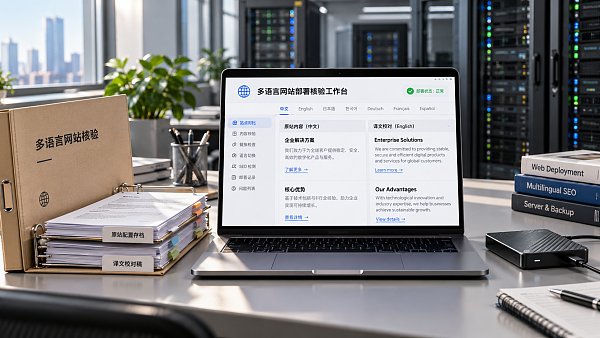
Turn compatibility claims into verifiable checks
Evaluate against the source site's current state as a baseline, and check both the original-language pages and the newly added language pages. A “synced” status in the admin panel cannot replace checking the final response.
hreflang expresses the relationship between language or regional versions; it does not replace canonical tags or guarantee that pages will be indexed. Different language versions should be linked to one another and include self-referencing entries. If no corresponding translation exists, links should not all point to that language's homepage. x-default can be used for a default entry point, but it is not required for every website.
Whether URL paths are translated should not be a standalone reason for rejection. Language pages can be created while retaining the original product paths; what matters more is that paths remain stable, links are crawlable, and the platform allows control over naming rules. If editing a translated title automatically changes the URL, with no redirect management, subsequent edits will continually create broken links.
Risks to existing traffic often stem from URL and redirect changes
If integration only adds language directories, the original site URLs can remain unchanged. If it also changes the domain, directories, or page-generation system, it constitutes a website migration and should not be accepted based solely on translation functionality. Old URLs should have explicit mappings. Permanent moves can use 301 or 308 redirects, while redirect chains, loops, and large numbers of pages all redirecting to the homepage should be avoided.
Forced redirects based on IP address or browser language also need to be evaluated separately. Users and crawlers should be able to access a specified language URL directly, rather than being sent back to the default version every time. Language prompts can remain, but they should not block access to other versions.
Test samples should cover the homepage, category pages, product detail pages, article pages, and URLs with filter parameters, discontinued products, or existing redirects. Compare status codes, response headers, raw HTML, and rendered results before and after integration, then crawl internal links for verification. Looking only at a demo homepage can easily miss template differences and abnormal pages.
When selecting a platform, also confirm control over configuration and the exit process: whether manually edited SEO fields can be protected from being overwritten by retranslation, whether URL mappings and translations can be exported, and what happens to language pages if the platform is deactivated. A platform that preserves existing SEO settings should make these rules configurable, verifiable, and reversible. “Guaranteed unchanged rankings” is not a technically verifiable commitment. Indexing and traffic after launch need to be monitored continuously, but before launch, at a minimum, ensure that the source site's rules have not been disrupted and that the new pages do not have conflicting indexing signals.
Related Articles
 Can a multilingual website translation platform preserve existing SEO settings?
 How can you test responsive design compatibility in a global website-building SaaS platform?
 How do you choose tools for a cross-border e-commerce website without paying twice?


Related Products
 Yiyingbao SaaS Intelligent Website Building and Marketing SystemYiyingbao SaaS Intelligent Website Building and Marketing System, AI-powered no-code website building, rapid creation of multilingual B2B international websites in 10 minutes, global server acceleration, AI-powered SEO optimization, helping businesses connect efficiently with global markets. The perfect integration of technology and operation makes building an international trade website remarkably simple
 AI+SEM Intelligent Advertising Marketing SystemAI+SEM drives intelligent ad creation, empowering full-funnel precision advertising marketing. The system automatically generates weekly/monthly reports, AI recommends keywords and target countries, monitors core metrics in real-time with intelligent alerts, and enables one-click high-conversion ad solutions to help quickly acquire customers and improve ROI.
 AI+SEO Dual-Engine System Optimization ServicesYiyingbao’s AI+SEO dual-engine optimization system helps foreign trade enterprises acquire high-quality organic traffic through AI-powered keyword research, content generation, and comprehensive technical optimization, significantly improving search rankings and conversion rates.
 AI+SNS Social Media Marketing SystemYingbao AI+SNS Social Media Marketing System - Precision social capture for the social media era. Supports one-click content synchronization across major platforms like Facebook and LinkedIn. AI intelligently rewrites posts for enhanced relevance. 24/7 AI customer service and user profiling analysis empower businesses to efficiently expand into global markets.
 AI+SEO营销解决方案易营宝AI+SEO营销解决方案,通过AI批量写作、智能生成TDK、精准关键词扩词等功能,全面优化网站SEO效果,提升流量与转化率。助力企业构建高效智能网站新生态。
 AI+SEM Advertising Marketing SolutionsAI+SEM Advertising Marketing Solution leverages AI technology to deeply empower SEM ad campaigns. It automatically generates weekly/monthly reports using AI, presenting account data across multiple dimensions for comprehensive insights into campaign performance and trends. The system precisely recommends keywords and target countries, intelligently generates high-conversion ad copy, and enables one-click activation of efficient campaign plans to help businesses rapidly acquire customers. Simultaneously, it monitors core metrics in real time, intelligently identifies abnormal fluctuations, and issues timely alerts to ensure stable, high-return advertising results.
 Domain Name ServicesEasyWin provides professional domain name services, including intelligent queries, one-stop registration, brand protection, and full lifecycle management, helping businesses build a digital brand image.
 EasyOperate B2C Cross-Border E-Commerce Platform & Independent WebsiteEasyStore B2C Cross-border E-commerce Independent Store is an intelligent website building and cross-border e-commerce integrated solution independently developed by EasyStore Information Technology (Beijing) Co., Ltd. The system is specially designed for small and medium-sized as well as large export enterprises, integrating 'website building, operation, marketing, advertising, and conversion' into one, helping enterprises quickly establish cross-border e-commerce independent stores to achieve brand globalization and global sales growth.
The platform supports multiple languages, multiple currencies, and multi-channel marketing, with built-in AI intelligent translation and SEO optimization systems, suitable for mainstream markets such as Southeast Asia, Europe and America, Latin America, and the Middle East, assisting Chinese manufacturing enterprises in efficiently deploying international e-commerce strategies. SSL证书易营宝提供专业SSL安全证书服务,包括单域名和泛域名证书,确保网站数据传输加密、身份验证和完整性保护,助力企业建立安全可信的在线业务环境。









