









- Amazon Raises Fulfillment Fees Twice, Yet the Median Platform Fee Remains Around 40%Oct 22, 2026View details
- AliExpress and YouTube Partner to Expand Marketing Opportunities for Chinese Brands Going GlobalOct 22, 2026View details
- Publicis says AI marketing is developing at two speeds, with agentic AI helping win clientsOct 21, 2026View details
- Salesforce Plans to Acquire Braze for $5.66 Billion to Enhance AI Marketing CapabilitiesOct 21, 2026View details
- Levanta’s Inaugural China Summit Held in Shenzhen, Focusing on AI and Cross-Border Brand GrowthOct 20, 2026View details
- The October Edition of the 2026 GGE Shenzhen Cross-Border E-Commerce Expo OpensOct 20, 2026View details
Amazon Raises Fulfillment Fees Twice, Yet the Median Platform Fee Remains Around 40%
According to a quarterly report by third-party tool provider Seller Assistant, after Amazon raised fulfillment fees twice in four months in 2026, the median share of product selling prices taken up by platform fees remained broadly stable at around 40%. For sellers, the simultaneous rise in fees and stability in the fee share means that assessing business pressures requires looking at both the actual fee amounts and fees as a proportion of selling prices.
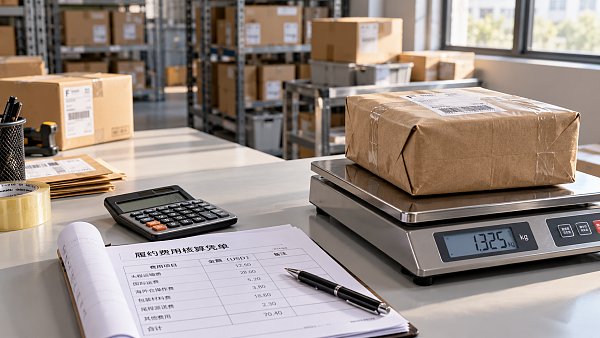
These two metrics are not contradictory. Higher fulfillment fees reflect changes in charges, while the fee share is affected by both the fee amount and the product selling price. Therefore, a broadly stable share does not mean that sellers’ expenses have not increased, nor does it establish that price increases have been offset by sales revenue growth. The report’s overall findings are also insufficient to explain the specific reasons why this proportion remained stable.
A median of around 40% offers a reference point for assessing the burden of platform fees, but it does not mean that every product or seller is at the same level. This metric describes platform fees as a proportion of the selling price; it is not equivalent to an individual commission rate, and the remainder should not be considered the seller’s profit.
The impact of higher fulfillment fees on profits still depends on the selling price of each product, other costs, and the existing profit margin. If the selling price and other costs remain unchanged, the additional fulfillment fees will reduce profit per unit. Products with narrower profit margins are generally more sensitive to an increase of the same amount.
The more useful focus now is how actual charges and profits for specific products have changed following the fee adjustments. To determine whether sellers have absorbed the additional costs, it will also be necessary to consider changes in selling prices and the ongoing trend in fees as a proportion of those prices. The stability of the median share of platform fees alone is not enough to conclude that sellers’ profitability has remained stable.
Related Articles
 Amazon Raises Fulfillment Fees Twice, Yet the Median Platform Fee Remains Around 40%
 AliExpress and YouTube Partner to Expand Marketing Opportunities for Chinese Brands Going Global
 Publicis says AI marketing is developing at two speeds, with agentic AI helping win clients


Related Products
 Yiyingbao SaaS Intelligent Website Building and Marketing SystemYiyingbao SaaS Intelligent Website Building and Marketing System, AI-powered no-code website building, rapid creation of multilingual B2B international websites in 10 minutes, global server acceleration, AI-powered SEO optimization, helping businesses connect efficiently with global markets. The perfect integration of technology and operation makes building an international trade website remarkably simple
 AI+SEM Intelligent Advertising Marketing SystemAI+SEM drives intelligent ad creation, empowering full-funnel precision advertising marketing. The system automatically generates weekly/monthly reports, AI recommends keywords and target countries, monitors core metrics in real-time with intelligent alerts, and enables one-click high-conversion ad solutions to help quickly acquire customers and improve ROI.
 AI+SEO Dual-Engine System Optimization ServicesYiyingbao’s AI+SEO dual-engine optimization system helps foreign trade enterprises acquire high-quality organic traffic through AI-powered keyword research, content generation, and comprehensive technical optimization, significantly improving search rankings and conversion rates.
 AI+SNS Social Media Marketing SystemYingbao AI+SNS Social Media Marketing System - Precision social capture for the social media era. Supports one-click content synchronization across major platforms like Facebook and LinkedIn. AI intelligently rewrites posts for enhanced relevance. 24/7 AI customer service and user profiling analysis empower businesses to efficiently expand into global markets.
 AI+SEO营销解决方案易营宝AI+SEO营销解决方案,通过AI批量写作、智能生成TDK、精准关键词扩词等功能,全面优化网站SEO效果,提升流量与转化率。助力企业构建高效智能网站新生态。
 AI+SEM Advertising Marketing SolutionsAI+SEM Advertising Marketing Solution leverages AI technology to deeply empower SEM ad campaigns. It automatically generates weekly/monthly reports using AI, presenting account data across multiple dimensions for comprehensive insights into campaign performance and trends. The system precisely recommends keywords and target countries, intelligently generates high-conversion ad copy, and enables one-click activation of efficient campaign plans to help businesses rapidly acquire customers. Simultaneously, it monitors core metrics in real time, intelligently identifies abnormal fluctuations, and issues timely alerts to ensure stable, high-return advertising results.
 Domain Name ServicesEasyWin provides professional domain name services, including intelligent queries, one-stop registration, brand protection, and full lifecycle management, helping businesses build a digital brand image.
 EasyOperate B2C Cross-Border E-Commerce Platform & Independent WebsiteEasyStore B2C Cross-border E-commerce Independent Store is an intelligent website building and cross-border e-commerce integrated solution independently developed by EasyStore Information Technology (Beijing) Co., Ltd. The system is specially designed for small and medium-sized as well as large export enterprises, integrating 'website building, operation, marketing, advertising, and conversion' into one, helping enterprises quickly establish cross-border e-commerce independent stores to achieve brand globalization and global sales growth.
The platform supports multiple languages, multiple currencies, and multi-channel marketing, with built-in AI intelligent translation and SEO optimization systems, suitable for mainstream markets such as Southeast Asia, Europe and America, Latin America, and the Middle East, assisting Chinese manufacturing enterprises in efficiently deploying international e-commerce strategies. SSL证书易营宝提供专业SSL安全证书服务,包括单域名和泛域名证书,确保网站数据传输加密、身份验证和完整性保护,助力企业建立安全可信的在线业务环境。









