









- Amazon Raises Fulfillment Fees Twice, Yet the Median Platform Fee Remains Around 40%Oct 22, 2026View details
- AliExpress and YouTube Partner to Expand Marketing Opportunities for Chinese Brands Going GlobalOct 22, 2026View details
- Publicis says AI marketing is developing at two speeds, with agentic AI helping win clientsOct 21, 2026View details
- Salesforce Plans to Acquire Braze for $5.66 Billion to Enhance AI Marketing CapabilitiesOct 21, 2026View details
- Levanta’s Inaugural China Summit Held in Shenzhen, Focusing on AI and Cross-Border Brand GrowthOct 20, 2026View details
- The October Edition of the 2026 GGE Shenzhen Cross-Border E-Commerce Expo OpensOct 20, 2026View details
What Core Functional Modules Should a B2B Lead Generation Website Have?
The core value of a B2B lead generation website is not to showcase what a company “has,” but to enable unfamiliar visitors to make three judgments within a limited time: whether the product is a match, whether the supplier is trustworthy, and how to make contact next at a low cost. If any of these elements is missing, even if the website gains traffic from search, advertising, or social media, that traffic is likely to remain visits rather than become qualified business opportunities.
Therefore, assessing the essential functional modules of a B2B lead generation website cannot be based solely on the number of pages, visual design, or whether it has an online form. More importantly, the website must be able to serve visitors from different sources and at different purchasing stages, and convert vague interest into actionable inquiry information whose quality can be evaluated.
Product Information Module: Enabling Accurate Matching of Procurement Needs
B2B buyers do not usually submit an inquiry simply because of a claim such as “high-quality supplier.” They first confirm specifications, applications, materials, delivery capabilities, and compliance requirements. A website’s product module should support a clear classification hierarchy: industries or application scenarios, product series, specific models, and supporting services or solutions. The classification logic should align with buyers’ search and filtering methods rather than merely replicate the company’s internal organizational structure.
An individual product page should not consist only of images and a brief introduction. For highly customized industrial products, components, equipment, or raw materials, the page should at least explain product uses, key parameter ranges, available materials or configurations, manufacturing processes, applicable standards, packaging methods, and the basic conditions for MOQ, sampling, or customization. When parameters cannot be fully disclosed, the page should still define what can be discussed, such as customization based on drawings, provision of specification sheets, or support for specific testing requirements.
Product pages should also provide related recommendations. A visitor viewing a specific model may also need alternative materials, related accessories, or other solutions for the same application. This type of association is not simply intended to increase time on site; it reduces the buyer’s repeated search costs and helps companies capture non-standard requirements.
Search Indexing and Landing Page Capabilities: Traffic Entry Points Cannot Rely on the Homepage
Visits generated by search engines, advertising links, and overseas social media often land directly on product pages, application pages, or campaign landing pages rather than the homepage. An inquiry website needs a page system that can independently receive traffic: every important product category, application scenario, industry solution, and regional market demand should have a standalone page that can be indexed, understood, and converted.
This requires the website-building system to support fundamental SEO settings such as custom page titles, descriptions, URL structures, image alt text, canonical links, and sitemaps. It should also prevent large numbers of duplicate pages caused by filtering parameters, duplicate categories, or improperly configured multilingual pages. For Google Ads or social media advertising, landing pages must also align with target keywords and advertising promises. If users search for a specific product but arrive at a generic company introduction page, their willingness to inquire will usually decline.
Page loading speed is also part of customer acquisition capability. High-resolution product images, autoplay videos, and excessive third-party scripts can all slow down mobile access. A B2B website does not need to stack dynamic elements merely for visual effect, but it should ensure that product information, inquiry entry points, and contact details load quickly under common network conditions.

Trust-Building Module: Answering “Why Should We Contact You?”
Risk assessment in purchasing decisions usually takes place before an inquiry is submitted. A website should place verifiable information where it is relevant, rather than concentrating it all on an “About Us” page. Product pages can display relevant testing, certification, or quality-control information; factory capability pages can describe equipment, capacity ranges, process flows, and inspection procedures; and industry solution pages can present service scope and delivery conditions.
The emphasis here is on verifiability rather than decorative endorsements. Certification marks should match their actual certification scope, and a management system certification must not be generalized to imply that all products are certified. Test reports, patents, customer logos, and project photos should also avoid content whose source or authorization status cannot be explained. For cross-border procurement, legal entity information, factory or office location, business email, telephone number, working hours, and basic trade capability statements are likewise necessary information for reducing concerns among unfamiliar customers.
Videos, production-site images, and quality process charts can improve understanding, but they cannot replace written explanations. Buyers need to quickly obtain clear information that can be forwarded to technical, procurement, or management teams. Therefore, key capabilities should still be presented in structured text.
An Inquiry Form Is More Than “Contact Us”
A form containing only a name, email address, and message box can generate leads, but not necessarily leads that can be quoted. Based on product complexity, B2B inquiry forms should collect necessary information such as product model, required quantity, target market, purchasing cycle, drawings or reference images, special standards, and preferred trade terms.
Form fields should not be increased indefinitely. Too many fields raise the barrier to initial communication, especially for visitors still in the research stage; too few fields leave the sales team with no choice but to repeatedly request details. A more reasonable approach is to differentiate entry points: product pages provide lightweight inquiry forms directly related to that product; RFQ or customization pages provide in-depth forms that allow file uploads and technical requirements; and general contact pages are used for partnerships, after-sales service, or other non-procurement inquiries.
Inquiry entry points should not be placed only at the bottom of the page. After product specifications, after customization capability descriptions, and near document download sections are all points at which users may be ready to take action. Button text should correspond to the task of the page. For example, “Get Specifications,” “Submit RFQ,” and “Request a Custom Solution” communicate post-submission expectations more clearly than a generic “Contact Us Now.”
Lead Assignment and Follow-Up Integration Determine Whether Inquiries Are Lost
Form data generated by the website must enter an actionable follow-up process. Basic requirements include email notifications after form submission, automated confirmation replies, source page records, traffic source identification, and secure receipt of attachments. If the website integrates with a CRM, marketing automation tool, or internal customer management system, it should also ensure that information such as product names, form fields, countries or regions, and advertising sources is fully synchronized, rather than transmitting only a message without context.
Source identification is particularly important. The commercial value of the same inquiry email may vary: visitors from an organic search page for a specific product usually have clearer needs, while visitors from a brand promotion page or broad industry content page may still be in the information-gathering stage. Recording UTM parameters, landing pages, submission times, and visitor paths helps identify which pages generate qualified business opportunities and prevents all traffic from being attributed to the last click.
Automated replies should not promise quotation turnaround times or delivery dates that cannot be met, but they can clearly confirm that the request has been received, indicate the expected communication method, and specify any materials that need to be supplemented. For businesses operating across time zones, this confirmation mechanism can prevent visitors from turning to other suppliers because they do not receive an immediate response.
Multilingual Support and Localization: Not Word-for-Word Translation of Chinese Pages
When targeting multiple overseas markets, the multilingual module should allow each language version to independently maintain titles, product terminology, units, form options, and downloadable materials. Accuracy of technical terminology is especially important in industrial fields, as the same Chinese term may correspond to different procurement expressions in different countries and applications. Machine translation can be used for an initial draft, but it should not be used directly for external technical communication without proofreading.
Localization also includes units of measurement, date formats, contact details, privacy notices, and delivery wording. An English page is not inherently suitable for all regions; if a market has clear language preferences or regulatory requirements, the need to build dedicated language pages should be assessed rather than merely adding a language switch button.
Data, Privacy, and Security Configuration Cannot Be Deferred Until After Launch
Inquiry websites collect names, email addresses, phone numbers, company information, and technical files, and these data should have clearly defined processing boundaries. Privacy policies, Cookie notices, form consent statements, and third-party analytics tool configurations must be consistent with the actual methods of collection and use. When EU users are involved, the website’s arrangements for Cookies and personal data processing should also take applicable rules such as GDPR into account; a generic template cannot simply be regarded as compliance completed.
At the technical level, HTTPS should be enabled, backend permissions should be restricted, CMS platforms, plugins, and themes should be updated regularly, and forms should be configured with CAPTCHA, rate limits, or spam filtering. File upload functions must control permitted file types and sizes to avoid becoming an entry point for malicious files. Website backups, anomaly monitoring, and recovery mechanisms do not directly generate inquiries, but they affect whether marketing assets can remain sustainably usable.
Use “Whether It Supports Decision-Making” to Test Module Effectiveness
A B2B inquiry website does not need to make every function complex. For companies with narrower product lines and clear transaction processes, clear product pages, credible capability descriptions, and efficient RFQ entry points are often more important than an extensive range of interactive features. For businesses involving high customization, high order values, or demanding technical collaboration, more comprehensive capabilities are needed for parameter presentation, document downloads, file uploads, and lead grading.
What truly deserves ongoing review is not whether a website is “fully featured,” but whether visitors can find sufficient information on its pages to begin procurement discussions, whether the sales team can obtain leads sufficient to determine priorities, and whether the company can trace the origin of every qualified inquiry. Connecting these three elements is the core functional configuration of a B2B inquiry website.
Related Articles
 How Can You Prevent a Video News Module from Slowing Down Page Loading?
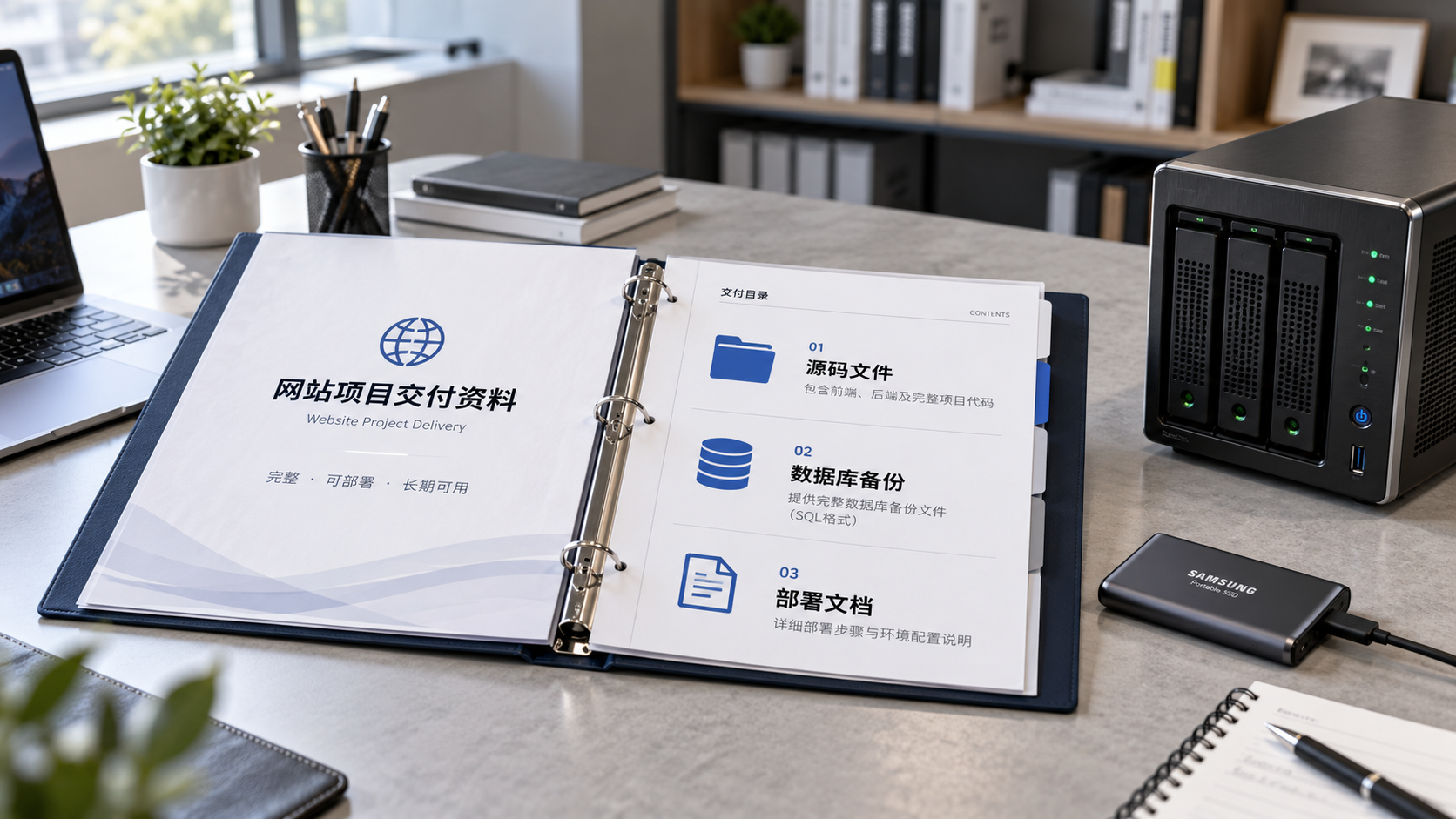
 When choosing a website development company in Xiamen, how should you agree on source code delivery?
 How can you identify what to optimize when the first screen of your B2B website loads slowly?


Related Products
 Yiyingbao SaaS Intelligent Website Building and Marketing SystemYiyingbao SaaS Intelligent Website Building and Marketing System, AI-powered no-code website building, rapid creation of multilingual B2B international websites in 10 minutes, global server acceleration, AI-powered SEO optimization, helping businesses connect efficiently with global markets. The perfect integration of technology and operation makes building an international trade website remarkably simple
 AI+SEM Intelligent Advertising Marketing SystemAI+SEM drives intelligent ad creation, empowering full-funnel precision advertising marketing. The system automatically generates weekly/monthly reports, AI recommends keywords and target countries, monitors core metrics in real-time with intelligent alerts, and enables one-click high-conversion ad solutions to help quickly acquire customers and improve ROI.
 AI+SEO Dual-Engine System Optimization ServicesYiyingbao’s AI+SEO dual-engine optimization system helps foreign trade enterprises acquire high-quality organic traffic through AI-powered keyword research, content generation, and comprehensive technical optimization, significantly improving search rankings and conversion rates.
 AI+SNS Social Media Marketing SystemYingbao AI+SNS Social Media Marketing System - Precision social capture for the social media era. Supports one-click content synchronization across major platforms like Facebook and LinkedIn. AI intelligently rewrites posts for enhanced relevance. 24/7 AI customer service and user profiling analysis empower businesses to efficiently expand into global markets.
 AI+SEO营销解决方案易营宝AI+SEO营销解决方案,通过AI批量写作、智能生成TDK、精准关键词扩词等功能,全面优化网站SEO效果,提升流量与转化率。助力企业构建高效智能网站新生态。
 AI+SEM Advertising Marketing SolutionsAI+SEM Advertising Marketing Solution leverages AI technology to deeply empower SEM ad campaigns. It automatically generates weekly/monthly reports using AI, presenting account data across multiple dimensions for comprehensive insights into campaign performance and trends. The system precisely recommends keywords and target countries, intelligently generates high-conversion ad copy, and enables one-click activation of efficient campaign plans to help businesses rapidly acquire customers. Simultaneously, it monitors core metrics in real time, intelligently identifies abnormal fluctuations, and issues timely alerts to ensure stable, high-return advertising results.
 Domain Name ServicesEasyWin provides professional domain name services, including intelligent queries, one-stop registration, brand protection, and full lifecycle management, helping businesses build a digital brand image.
 EasyOperate B2C Cross-Border E-Commerce Platform & Independent WebsiteEasyStore B2C Cross-border E-commerce Independent Store is an intelligent website building and cross-border e-commerce integrated solution independently developed by EasyStore Information Technology (Beijing) Co., Ltd. The system is specially designed for small and medium-sized as well as large export enterprises, integrating 'website building, operation, marketing, advertising, and conversion' into one, helping enterprises quickly establish cross-border e-commerce independent stores to achieve brand globalization and global sales growth.
The platform supports multiple languages, multiple currencies, and multi-channel marketing, with built-in AI intelligent translation and SEO optimization systems, suitable for mainstream markets such as Southeast Asia, Europe and America, Latin America, and the Middle East, assisting Chinese manufacturing enterprises in efficiently deploying international e-commerce strategies. SSL证书易营宝提供专业SSL安全证书服务,包括单域名和泛域名证书,确保网站数据传输加密、身份验证和完整性保护,助力企业建立安全可信的在线业务环境。









