









- Amazon Reportedly Sends Exclusivity Warning Letters to Multiplatform SellersNov 03, 2026View details
- New TikTok Shop Cross-Border Returns Rules for Southeast Asia Take Effect on November 5Nov 03, 2026View details
- U.S. Tightens De Minimis Exemption Channel and Revises Section 321 Data PilotNov 03, 2026View details
- Amazon FBA Fuel and Logistics Surcharge in 10 European Countries to Increase to 2% on November 2Nov 02, 2026View details
- EU Customs Code reform to take effect on November 1, with new handling fees for direct-mail small parcelsNov 01, 2026View details
- EU Plans to Raise Tax on Incoming Small Parcels to €5Oct 31, 2026View details
How Can TikTok Marketing Drive Website Traffic with Short-Form Videos?
TikTok marketing is not just about increasing video views; it is also about turning viewer interest into website visits. This article introduces practical ways to choose short-video topics, use profile links, and drive traffic and conversions.
The key to generating valuable traffic with short videos is not just the number of views. The right people need to see the content, understand why they should visit the website, and be able to reach a page related to the video easily. When managing your account, check the content, click-through path, and landing page performance together.
First, establish a clear traffic path: How do viewers reach your website?
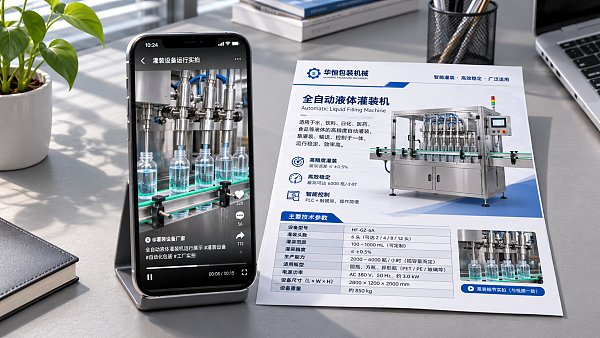
A common path is “watch a video—visit the profile—click the website link—browse the landing page.” Some accounts or regions may support other ways to direct users, but available features vary by account type, location, and platform policies. Check what is currently available in your account dashboard.
First, check whether you can add a website link to your profile and whether the link opens properly in your target market. If you are not yet eligible to add one, review the platform’s current account requirements. You can also display your brand name on your profile so interested users can search for it.
Your profile bio should quickly explain what your business offers and what visitors can get by clicking through. For example, an equipment supplier could list its main products, service regions, and the product information available on its website, rather than using only a vague brand slogan.
Do not direct every viewer to a cluttered homepage. A video about one product can link to the relevant product page. Accounts covering multiple topics can use a clear navigation landing page with separate links to product catalogs, case studies, and contact information, making it easier for visitors to find what they need.
What content can attract people who may visit your website?
Start with your target customers’ questions, then decide how to present the content. Export manufacturers can compile questions that repeatedly come up in inquiries, such as production capacity, quality inspections, and customization processes. Cross-border brands can focus on use cases, product differences, and purchase concerns.
Topics can be divided into three categories: videos that solve problems attract people with potential needs; product demonstrations help viewers decide whether a product is right for them; and case studies or production-process videos help build trust. Each type of content should point to additional information on your website.
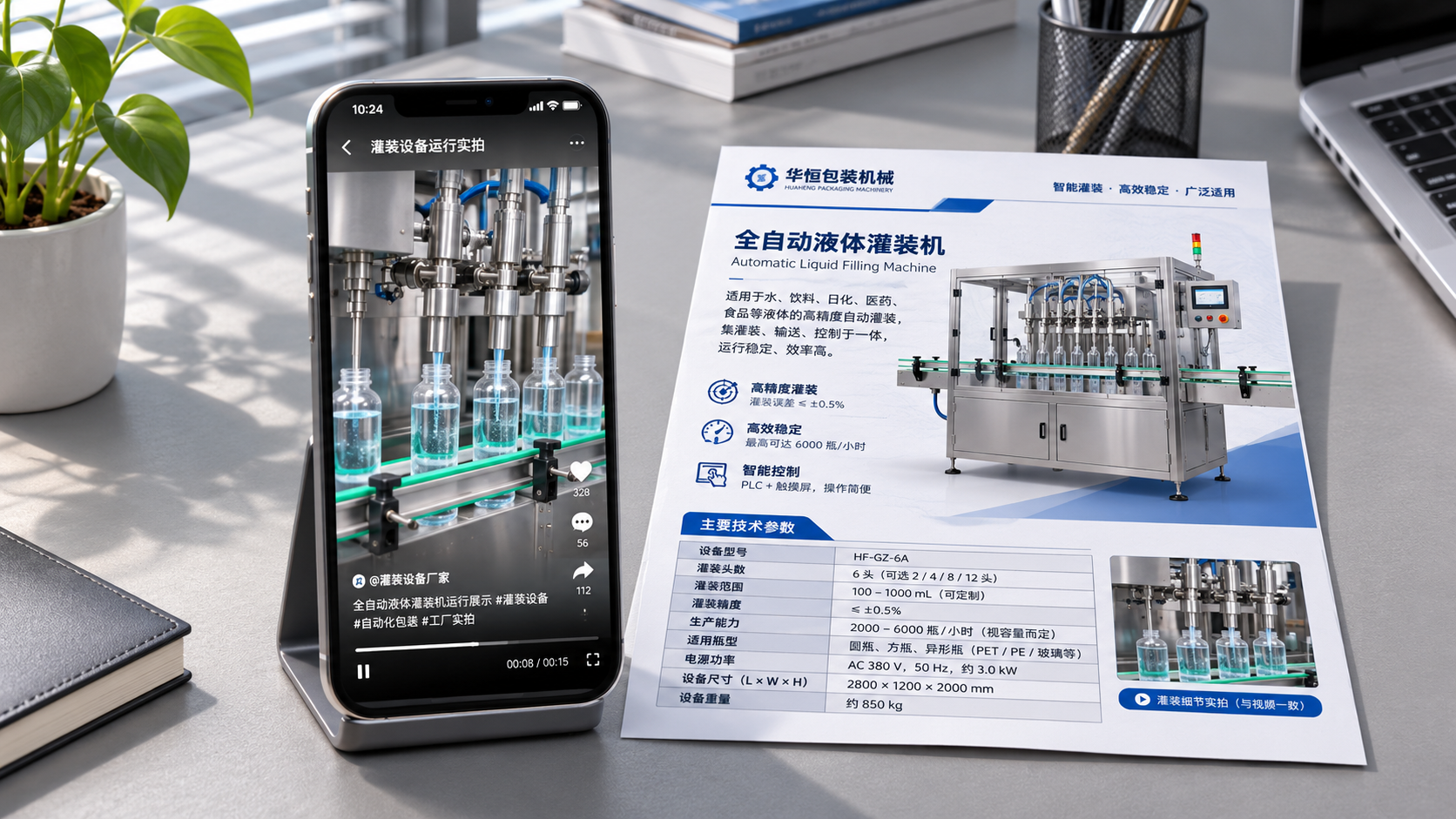
For example, a packaging equipment supplier could make a video titled “How to Choose Filling Equipment for Different Bottle Types,” show the key differences, and then direct viewers to the website to check model specifications. Visitors who arrive this way are generally more likely to have a specific need than people who simply watch the equipment in operation.
Other sources of ideas include sales records, customer emails, website search terms, and comments on similar videos. Do not simply copy trending topics. First assess whether they are relevant to your products and target market, and whether viewers have a reason to learn more after watching.
After publishing, compare profile visits and website visits by topic type rather than focusing only on views. A video with average views that drives more visits to product pages may be more worth making regularly than entertaining content with high views but little purchase intent.
How can you make videos that encourage viewers to learn more?
Show viewers’ concerns, a result, or a specific scenario right at the start—for example, by directly showing the difference before and after using a product. Then use concise visuals to explain the process and conditions of use. Avoid lengthy intros that cause viewers to leave before they see the key information.
Try to cover just one core question in each video. A product demonstration can follow the sequence “problem scenario—operation—result—next step.” When discussing performance or results, state the testing conditions. Do not exaggerate or imply that all users will achieve the same results.
Make sure the call to action follows naturally from the content and tells viewers what they will find after visiting. For example, “Find the full specification sheet via the website link in our profile” is more specific than “Click the link to learn more.” When using this approach, confirm that the profile link actually leads to the relevant information.
For overseas markets, consider adding subtitles in a language familiar to your target audience, and check the technical terminology, units of measurement, and contact details. Showing the actual product, operating details, or work environment can help viewers determine whether the content is relevant to them.
Keep a consistent posting schedule without sacrificing accuracy for volume. You can film several videos around different questions on the same topic, then test different openings, demonstration styles, and calls to action to see which combinations are more likely to drive further visits.
How should you prepare your website landing page?
The landing page content should deliver on what the video promises: if the video mentions a specification sheet, visitors should be able to find it easily; if it features a particular product, the page should show that product and its key information. Visitors are likely to leave if they land on an unrelated page.
Start by checking the mobile experience, including loading speed, text readability, image display, and button functionality. If you serve multiple markets, also check access from target regions and whether the page language, currency, and inquiry process suit local user expectations.
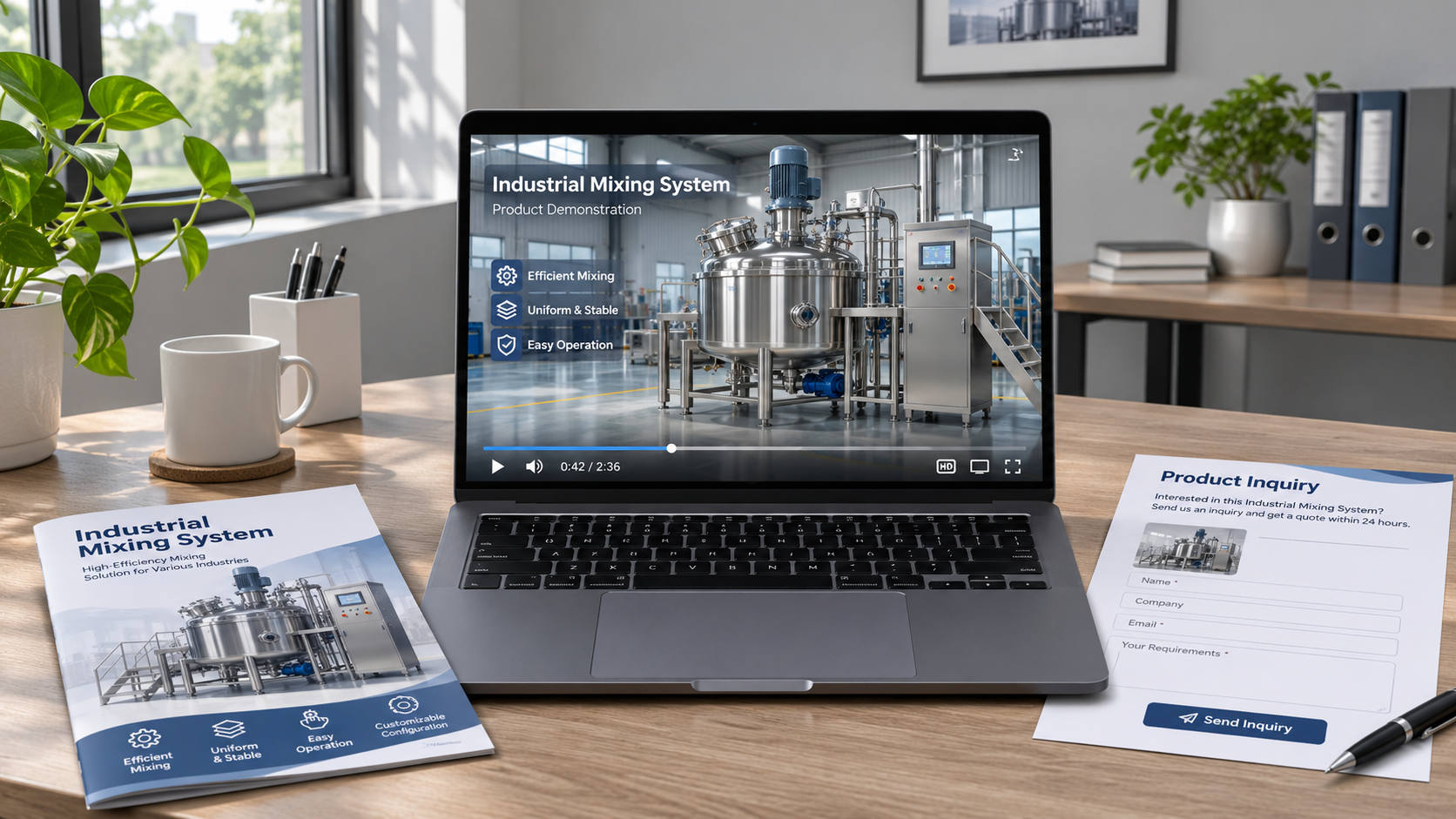
For export inquiries, the page should provide information visitors need to make a decision, such as product specifications, use cases, certifications, or case studies, along with a clear inquiry option. Collect only the necessary information in the form, avoid unnecessary required fields, and explain how you will follow up after submission.
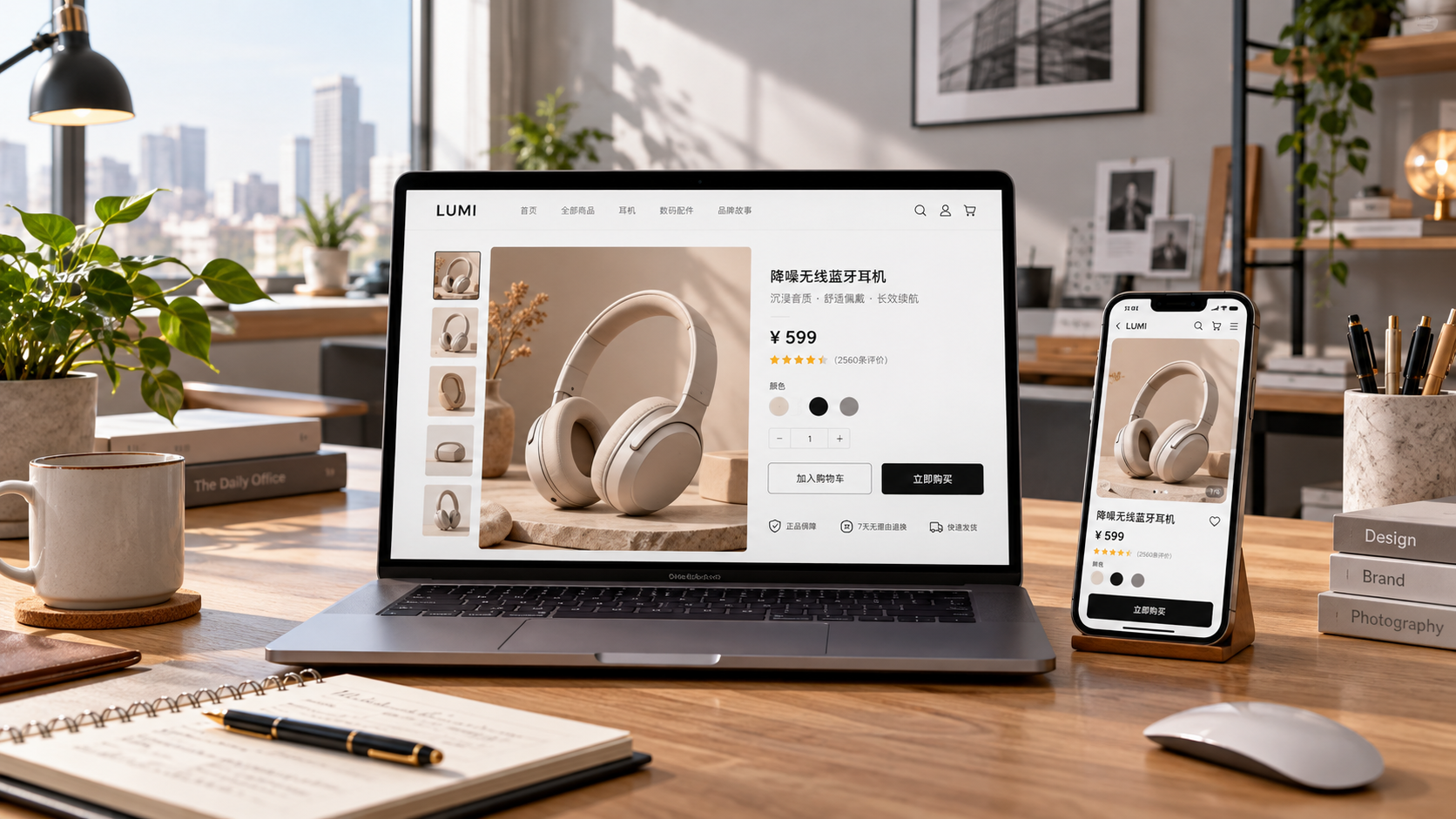
For cross-border e-commerce stores, make it easy for users to check prices, shipping costs, delivery regions, return and exchange policies, and payment methods, in addition to product details. The video sparks interest, while the page needs to answer practical questions before purchase. Otherwise, visitors may reach the site without converting.
YingYingBao provides multilingual website development and overseas social media operations services. When choosing related tools or services, businesses should confirm support for access in target markets, mobile display, landing page editing, and data tracking, then assess whether these features suit their operational capabilities.
How can you assess traffic quality and keep optimizing?
Before publishing, add source tags to your links—for example, UTM parameters that identify the source, channel, and campaign name—and check that your website analytics tool is receiving the data correctly. If multiple videos use the same profile link, make sure you can distinguish between campaigns.
Each week, review video views, profile visits, link clicks, landing page visits, and inquiries or purchases in sequence. Platform click counts and website visits may differ because of interrupted loading, differences in measurement methods, or user privacy settings, so they should not be treated as the same metric.
If a video gets many views but few profile visits, first check whether the content appeals to your target customers and whether the call to action is clear. If profile visits are high but link clicks are low, adjust the bio, link placement, and reason to visit. Try to change only one key factor at a time.
If your website gets a reasonable number of visits but few inquiries or orders, check whether the page matches the video, whether the form can be submitted, and whether shipping costs or prices are clear. Also investigate by audience region and device. If necessary, go through the entire user journey yourself.
When evaluating results, distinguish between traffic and business value: export businesses can track qualified inquiries and subsequent sales, while e-commerce stores can monitor add-to-cart activity and orders. Avoid drawing conclusions from small samples alone. Accumulate data over time before deciding which types of content to invest more in.
Conclusion: Treat short videos and your website as one complete journey
Effective TikTok marketing starts with confirming which link options are available, then creating content around customer questions, connecting it to relevant landing pages with a clear reason to visit, and continuously tracking visits and conversions. The real value lies not in a one-time increase in views, but in a repeatable approach that consistently attracts target customers.
Related Articles
 How Can YouTube Video Marketing Measure Traffic to Your Website?
 How Can TikTok Marketing Drive Website Traffic with Short-Form Videos?
 How Can Cross-Border E-Commerce Businesses Use Social Media Remarketing to Win Back Users Who Abandoned Their Carts?
Related Products
 Yiyingbao SaaS Intelligent Website Building and Marketing SystemYiyingbao SaaS Intelligent Website Building and Marketing System, AI-powered no-code website building, rapid creation of multilingual B2B international websites in 10 minutes, global server acceleration, AI-powered SEO optimization, helping businesses connect efficiently with global markets. The perfect integration of technology and operation makes building an international trade website remarkably simple
 AI+SEM Intelligent Advertising Marketing SystemAI+SEM drives intelligent ad creation, empowering full-funnel precision advertising marketing. The system automatically generates weekly/monthly reports, AI recommends keywords and target countries, monitors core metrics in real-time with intelligent alerts, and enables one-click high-conversion ad solutions to help quickly acquire customers and improve ROI.
 AI+SEO Dual-Engine System Optimization ServicesYiyingbao’s AI+SEO dual-engine optimization system helps foreign trade enterprises acquire high-quality organic traffic through AI-powered keyword research, content generation, and comprehensive technical optimization, significantly improving search rankings and conversion rates.
 AI+SNS Social Media Marketing SystemYingbao AI+SNS Social Media Marketing System - Precision social capture for the social media era. Supports one-click content synchronization across major platforms like Facebook and LinkedIn. AI intelligently rewrites posts for enhanced relevance. 24/7 AI customer service and user profiling analysis empower businesses to efficiently expand into global markets.
 AI+SEO营销解决方案易营宝AI+SEO营销解决方案,通过AI批量写作、智能生成TDK、精准关键词扩词等功能,全面优化网站SEO效果,提升流量与转化率。助力企业构建高效智能网站新生态。
 AI+SEM Advertising Marketing SolutionsAI+SEM Advertising Marketing Solution leverages AI technology to deeply empower SEM ad campaigns. It automatically generates weekly/monthly reports using AI, presenting account data across multiple dimensions for comprehensive insights into campaign performance and trends. The system precisely recommends keywords and target countries, intelligently generates high-conversion ad copy, and enables one-click activation of efficient campaign plans to help businesses rapidly acquire customers. Simultaneously, it monitors core metrics in real time, intelligently identifies abnormal fluctuations, and issues timely alerts to ensure stable, high-return advertising results.
 Domain Name ServicesEasyWin provides professional domain name services, including intelligent queries, one-stop registration, brand protection, and full lifecycle management, helping businesses build a digital brand image.
 EasyOperate B2C Cross-Border E-Commerce Platform & Independent WebsiteEasyStore B2C Cross-border E-commerce Independent Store is an intelligent website building and cross-border e-commerce integrated solution independently developed by EasyStore Information Technology (Beijing) Co., Ltd. The system is specially designed for small and medium-sized as well as large export enterprises, integrating 'website building, operation, marketing, advertising, and conversion' into one, helping enterprises quickly establish cross-border e-commerce independent stores to achieve brand globalization and global sales growth.
The platform supports multiple languages, multiple currencies, and multi-channel marketing, with built-in AI intelligent translation and SEO optimization systems, suitable for mainstream markets such as Southeast Asia, Europe and America, Latin America, and the Middle East, assisting Chinese manufacturing enterprises in efficiently deploying international e-commerce strategies. SSL证书易营宝提供专业SSL安全证书服务,包括单域名和泛域名证书,确保网站数据传输加密、身份验证和完整性保护,助力企业建立安全可信的在线业务环境。









