









- Can the average annual growth rate reflect real opportunities in overseas markets?Oct 07, 2026View details
- Which customer acquisition channels will be affected by cross-border marketing trends in 2026?Sep 06, 2026View details
- Which homogenization risks should be considered in an analysis of the AI-powered website building industry?Aug 30, 2026View details
- How Will AI Marketing Trends 2026 Change Advertising Budget AllocationAug 28, 2026View details
- Is the EV SSL certificate market shrinking or upgrading? How should companies assess certificate procurement?Aug 11, 2026View details
- Why the old AMP SEO 2020 practices no longer work and what has changed in current optimization prioritiesAug 02, 2026View details
What are the risks of using AI translation for hardware fastener product pages?
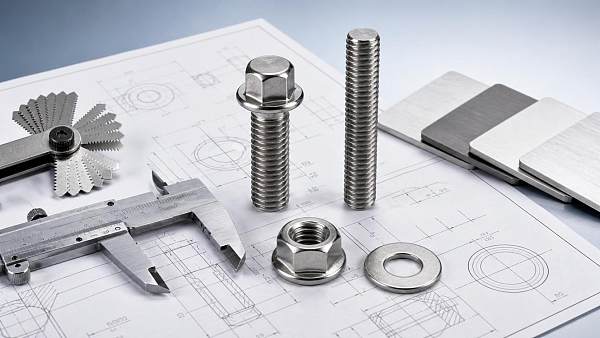
When using AI translation for hardware fastener product pages, the issues most likely to arise are not in general descriptions, but in technical fields that appear to differ by only one word yet can actually change purchasing decisions and assembly conditions. Multilingual versions of names for bolts, nuts, washers, screws and rivets can be generated quickly, but if specifications, materials, strength grades, surface treatments, thread systems and applicable standards are mistranslated, increased page traffic may still bring mismatched inquiries and even lead to disputes after orders are placed.
For example, in “M10×1.25,” 1.25 is the thread pitch and must not be written as the length; “A2-70” is commonly associated with “304 stainless steel,” but they should not be directly substituted for one another without verification; both “zinc plated” and “zinc flake coated” involve zinc-based protection, but their corrosion resistance, coating structures and applicable operating conditions are not the same. AI often provides fluent translations based on context, but it may not be able to identify the implicit constraints in drawings, process cards and product nomenclature.
Why Translating Technical Parameters Is More Risky Than Translating Product Copy
Fastener product names often consist of multiple modifiers, such as hex flange bolts, fully threaded rods, socket head cap screws and nylon lock nuts. Machine translation may treat “flange” as a general flange component or omit “full thread,” leaving the page with an approximate meaning while losing key structural characteristics. For custom-machined parts made according to drawings, the name itself may also be only an internal designation and cannot replace the drawing number, dimensional range and tolerance requirements.
Unit conversion is also a frequent risk. UNC, UNF and BSW in imperial specifications cannot be approximately matched to metric coarse and fine threads based on numbers alone; if inch lengths are automatically converted to millimeters, the page should clearly indicate that they are reference conversion values and must not replace the original dimensions. Fields such as torque, hardness, tensile strength and salt spray test duration likewise need to retain the original units and test conditions. Omitting even one condition, such as specimen condition, post-coating measurement or lubrication status, may cause readers to apply the parameter to an incorrect installation scenario.
- Overgeneralized material naming: Simply grouping alloy steel, carbon steel and stainless steel into the same metal category can easily conceal differences in heat treatment, corrosion resistance and magnetism.
- “Explanatory translation” of standard numbers: Standard numbers themselves should generally be retained as written, while translated names may be added separately; directly rewriting a number or treating similar standards as equivalent standards can compromise retrieval and technical comparison.
- Distorted surface treatment: The English terms for Dacromet, zinc-aluminum coating, black oxide, phosphating and hot-dip galvanizing need to be confirmed against the actual process and cannot be guessed based on color or rust-prevention purpose.
- Added application scope: AI may add statements such as “suitable for automotive, construction and marine applications” based on training data. If the original documentation does not verify this, such additions can create application commitment risks.
What AI Is Suitable for Handling and What Must Be Confirmed Manually
AI is suitable for initially handling title variants, product introductions, packaging instructions, general performance descriptions and common FAQ drafts. It is also suitable for generating drafts in batches from existing Chinese-English terminology lists. Its value lies in improving the speed of initial coverage, allowing personnel to focus their time on technical judgment rather than repetitive sentence-by-sentence input.
However, where dimensions, tolerances, thread forms, strength grades, chemical composition, heat-treatment condition, test methods, drawing notes and certificate names are involved, structured source data should prevail. Before page editing, fields can be divided into two categories: “not to be rewritten” and “localizable.” SKU, drawing numbers, standard numbers, specification values, units and grades belong to content that must not be rewritten; product title order, application descriptions and packaging wording may be adjusted according to language conventions. This ensures that core data will not be rewritten by the model even if the copy is regenerated.
A more prudent publishing sequence is to first lock down the field sources for the native-language page, then establish a terminology database and prohibited translation terms, and have personnel familiar with the products verify the translation after it is generated. Review should not focus only on fluency, but should also compare the content against drawings, quotations, inspection records or technical documentation. When a term is found to have multiple market names, a locally common term may be used in the title while the standard name or alias is retained in the parameter section, preventing conflicts between search visibility and technical accuracy.
During Page Redesigns, Translation Issues Often Overlap with URL Migration
How to migrate URLs after redesigning a multilingual foreign trade website without losing indexation cannot be addressed simply by setting redirects in batches before launch. If product page translation updates, catalog structure adjustments and URL rule changes occur at the same time, search engines and existing access links face two layers of uncertainty: old URLs may no longer find corresponding pages, while new page content may become less thematically related to the original language version. A common risk for fastener websites is changing pages originally created by specification into pages organized by series, or directly machine-translating English URLs into addresses in other languages, making one-to-one correspondence with old pages impossible.
Before migration, all accessible old URLs should be exported, including product pages, category pages, parameter download pages and landing pages previously used for advertising. Then determine a unique destination for every old address: where content still exists, use a server-side 301 redirect to the closest new page; where a product is no longer supplied but a replacement model exists, point to a clearly identified replacement page and explain the differences; addresses with no reasonable corresponding content should not all be redirected to the homepage. Homepage redirects conceal actual missing pages and can reduce visitors’ willingness to continue searching for specifications.
The correspondence between multilingual pages needs to remain stable. Old English pages should preferably migrate to new English pages, and the same applies to German, French, Japanese and other versions; they must not all be redirected to Chinese pages simply because new content is not yet complete. Each language version should have an independent, crawlable URL, with relationships indicated through canonical tags and language-region annotations. If pages differ only by language and have identical technical parameters, each version should still ensure that its title, description and body text have been genuinely localized rather than retaining large blocks of untranslated templates.
Several Easily Overlooked Points During Migration
First, the URL mapping table should be jointly confirmed by the development, content and marketing teams. The development team is responsible for redirect rules and status codes; the content team confirms whether models, specifications and translations correspond; and the marketing team supplements old pages that may be referenced by advertising links, historical social media links and tracking parameters. Without a mapping table, it is difficult to determine later whether traffic declines are caused by indexing fluctuations, redirect errors or product content changes.
Second, retain identifiable product primary keys. URLs can be adjusted for greater clarity, but SKU, model or series codes should preferably remain visible on the page and stay consistent in structured data, on-site search and sitemaps. For fasteners, combined searches such as “DIN 933 M8×30” have clear intent. If only marketing-oriented titles are retained after redesign, the connection between long-tail pages and actual specifications may be weakened.
Third, redirect paths need to be checked after launch. Old URLs should reach the final new URLs directly, avoiding multiple redirects such as an old page redirecting to a category page and then to a product page; HTTP and HTTPS, www and non-www versions, and variations with or without trailing slashes should also be consolidated into a single URL. The sitemap should submit only indexable new URLs, and old redirected addresses should not continue to be included.
AI translation can shorten multilingual page production time, but it cannot replace the verification of technical documentation or URL governance during a redesign. Only by first locking down specification data for fastener pages, then handling language expression, and ensuring that every old address has a clear destination can you avoid a situation where content appears to be updated while technical information and organic search entry points are both compromised.
Related Articles
Related Products
 Yiyingbao SaaS Intelligent Website Building and Marketing SystemYiyingbao SaaS Intelligent Website Building and Marketing System, AI-powered no-code website building, rapid creation of multilingual B2B international websites in 10 minutes, global server acceleration, AI-powered SEO optimization, helping businesses connect efficiently with global markets. The perfect integration of technology and operation makes building an international trade website remarkably simple
 AI+SEM Intelligent Advertising Marketing SystemAI+SEM drives intelligent ad creation, empowering full-funnel precision advertising marketing. The system automatically generates weekly/monthly reports, AI recommends keywords and target countries, monitors core metrics in real-time with intelligent alerts, and enables one-click high-conversion ad solutions to help quickly acquire customers and improve ROI.
 AI+SEO Dual-Engine System Optimization ServicesYiyingbao’s AI+SEO dual-engine optimization system helps foreign trade enterprises acquire high-quality organic traffic through AI-powered keyword research, content generation, and comprehensive technical optimization, significantly improving search rankings and conversion rates.
 AI+SNS Social Media Marketing SystemYingbao AI+SNS Social Media Marketing System - Precision social capture for the social media era. Supports one-click content synchronization across major platforms like Facebook and LinkedIn. AI intelligently rewrites posts for enhanced relevance. 24/7 AI customer service and user profiling analysis empower businesses to efficiently expand into global markets.
 AI+SEO营销解决方案易营宝AI+SEO营销解决方案,通过AI批量写作、智能生成TDK、精准关键词扩词等功能,全面优化网站SEO效果,提升流量与转化率。助力企业构建高效智能网站新生态。
 AI+SEM Advertising Marketing SolutionsAI+SEM Advertising Marketing Solution leverages AI technology to deeply empower SEM ad campaigns. It automatically generates weekly/monthly reports using AI, presenting account data across multiple dimensions for comprehensive insights into campaign performance and trends. The system precisely recommends keywords and target countries, intelligently generates high-conversion ad copy, and enables one-click activation of efficient campaign plans to help businesses rapidly acquire customers. Simultaneously, it monitors core metrics in real time, intelligently identifies abnormal fluctuations, and issues timely alerts to ensure stable, high-return advertising results.
 Domain Name ServicesEasyWin provides professional domain name services, including intelligent queries, one-stop registration, brand protection, and full lifecycle management, helping businesses build a digital brand image.
 EasyOperate B2C Cross-Border E-Commerce Platform & Independent WebsiteEasyStore B2C Cross-border E-commerce Independent Store is an intelligent website building and cross-border e-commerce integrated solution independently developed by EasyStore Information Technology (Beijing) Co., Ltd. The system is specially designed for small and medium-sized as well as large export enterprises, integrating 'website building, operation, marketing, advertising, and conversion' into one, helping enterprises quickly establish cross-border e-commerce independent stores to achieve brand globalization and global sales growth.
The platform supports multiple languages, multiple currencies, and multi-channel marketing, with built-in AI intelligent translation and SEO optimization systems, suitable for mainstream markets such as Southeast Asia, Europe and America, Latin America, and the Middle East, assisting Chinese manufacturing enterprises in efficiently deploying international e-commerce strategies. SSL证书易营宝提供专业SSL安全证书服务,包括单域名和泛域名证书,确保网站数据传输加密、身份验证和完整性保护,助力企业建立安全可信的在线业务环境。









