









- Amazon Raises Fulfillment Fees Twice, Yet the Median Platform Fee Remains Around 40%Oct 22, 2026View details
- AliExpress and YouTube Partner to Expand Marketing Opportunities for Chinese Brands Going GlobalOct 22, 2026View details
- Publicis says AI marketing is developing at two speeds, with agentic AI helping win clientsOct 21, 2026View details
- Salesforce Plans to Acquire Braze for $5.66 Billion to Enhance AI Marketing CapabilitiesOct 21, 2026View details
- Levanta’s Inaugural China Summit Held in Shenzhen, Focusing on AI and Cross-Border Brand GrowthOct 20, 2026View details
- The October Edition of the 2026 GGE Shenzhen Cross-Border E-Commerce Expo OpensOct 20, 2026View details
What Factors Determine the Cost of Building a Multilingual Website for Foreign Trade Businesses?
What Factors Determine the Cost of Building a Multilingual Website for Foreign Trade Companies
The cost of building a multilingual website for a foreign trade company is not as simple as “adding one more language means paying for one more set of pages.” The factors that truly create budget differences are often the target market, content depth, inquiry or transaction functionality, and whether the website will be responsible for customer acquisition after launch. An English corporate website used only to present company information involves fundamentally different underlying workloads from a multilingual marketing website targeting Europe, North America, and the Middle East that can continuously support search optimization and advertising traffic.
Many companies only ask, “How much does it cost to build five language versions?” before a project begins, only to discover after launch that the translations do not match local customers’ reading habits, product specification pages cannot be optimized independently, and advertising traffic reaches the website without a clear inquiry path. Subsequent adjustments may end up taking more time than early-stage planning. Understanding the cost structure of multilingual website development for foreign trade companies is not about blindly reducing quotations, but about determining which investments are worth retaining and which complex functions are not yet necessary.
The Number of Languages Is Only the Starting Point; Market Differences Determine the Depth of Work
English, French, and Spanish may all appear to be common foreign trade languages, but their actual handling differs. Some companies can begin with English as the primary site and then expand into local languages according to priority regions; others must distinguish between country-specific versions from the outset. For example, French content for Canada does not entirely follow the same conventions as expressions for the French market. If products involve technical specifications, installation instructions, compliance materials, or after-sales commitments, language conversion cannot focus solely on literal correspondence.
Costs generally rise with the degree of localization. A basic solution may include translation of interface language, navigation, product names, and core pages; deeper localization may involve keyword research, title rewriting, unit and date formats, currency display, contact details, text replacement within images, and even application-scenario expressions for different markets. For specialized categories such as machinery and equipment, industrial materials, and medical-related products, terminology review itself also requires the participation of the company’s technical team.
Therefore, languages should not be piled up based on “how many countries can be covered.” Prioritizing markets where there is already an existing customer base, more trade show leads, clear export growth, or stronger advertising test results is often more prudent than rolling out more than a dozen language versions at once.
Page Scale and Content Structure Affect More Than Just Production Costs
For multilingual websites, page costs depend primarily on content type and reusability rather than simply on the number of pages. Company profiles, qualifications displays, and contact pages usually have stable structures; product centers, industry solutions, technical articles, and downloadable materials require consideration of how they can be maintained in sync across different languages. For manufacturing companies with numerous product models and rapidly changing specifications, relying on manual page-by-page updates for every language may result in maintenance costs far exceeding the initial development cost.
A more reasonable approach is to first organize the content hierarchy: which core pages are required for every market, which can be gradually expanded by region, and which technical materials are available for download only to inquiry customers. The completeness of the product database, filtering logic, related recommendations, and bulk import mechanisms will also directly affect the project quotation. For companies with hundreds or even thousands of products, content management capabilities are often more important to confirm first than the visual appearance of the homepage.

Functional Complexity Determines Whether a Website Is a “Showcase” or a “Business Tool”
Basic functions of a multilingual website include responsive pages, language switching, form submission, product display, and basic content management. Further budget increases usually come from requirements that are more closely aligned with business processes: multi-level product filtering, inquiry forms that automatically include product information, file download permissions, regional distributor management, online quotations, inventory or ERP data integration, cross-border payments, and shipping rules for different countries.
The cost logic of B2B foreign trade websites also differs from that of B2C cross-border online stores. The former focuses on enabling buyers to quickly understand product capabilities, submit valid requirements, and enter the sales follow-up process; the latter must also handle orders, payments, logistics, taxes, memberships, and after-sales processes. If a company mainly relies on high-value inquiries to close deals, investing in complex retail functions at an early stage may not align with the return on investment. Conversely, a brand-owned website for standardized consumer goods cannot truly support transactions if it lacks a checkout process and order management.
Whether Promotion Is Considered Will Change How the Website Is Built
If a website is merely a corporate calling card for customer due diligence, website development can focus relatively more on brand presentation and the completeness of basic information. However, most foreign trade companies building multilingual websites ultimately hope to gain inquiries from search engines, advertising, social media, or overseas trade show traffic. Under this objective, the budget should reserve room for technical architecture, page content, data tracking, and ongoing operations.
For example, pages in different languages need clear corresponding relationships to prevent visitors from being redirected to the homepage after switching languages; product pages need to retain indexable content rather than turning all important text into images; advertising landing pages need to be designed around specific products and action paths. Search optimization is not something that can be completed by simply “adding a few keywords” after the website goes live. Site structure, page topics, internal links, loading experience, and content update mechanisms all affect the difficulty of subsequent implementation.
For companies with long-term overseas growth plans, the value of integrating website development and marketing services lies in reducing disconnects: the website development team understands which pages and data are needed for promotion, while the operations team can also adjust content based on actual inquiry feedback, rather than treating website delivery as the end of the project.
What Is Easily Underestimated Is the Post-Delivery Maintenance Cost
Domain names, servers, system upgrades, security maintenance, content updates, and technical support are all long-term expenses for multilingual websites. When comparing solutions, companies should not only look at the first-year development price, but should also clarify what subsequent renewals include, how additional language versions are charged, whether products can be updated independently, whether data can be exported, and how existing pages and forms will be migrated during redesigns.
This is particularly important for websites that rely on advertising. Tracking codes, conversion events, and form notifications need to be continuously checked. A single page modification may affect data collection or the inquiry path. While development costs may appear to be saved, without a stable maintenance mechanism, troubleshooting later will consume more time from sales and operations personnel.
Clarify the Growth Path First, Then Determine Whether the Budget Is Reasonable
Yiyingbao Information Technology (Beijing) Co., Ltd. has focused on global digital marketing since 2013, providing integrated services centered on intelligent website development, search optimization, social media operations, and advertising. For foreign trade companies, the significance of these capabilities is not to list as many functions as possible, but to arrange the priorities of website development and subsequent promotion according to different objectives, such as B2B inquiry generation, cross-border retail, brand presentation, or regional market testing.
Yiyingbao’s cloud-based intelligent website development, cross-border store, and AI marketing-related systems can support the continuous iteration of multilingual corporate websites, marketing landing pages, and overseas independent websites; however, the specific modules to adopt should still be determined based on the company’s product complexity, target regions, content resources, and team collaboration capabilities. First organize the priority markets, core product lines, existing materials, inquiry processes, and promotion channels, then obtain a matching list of functions and delivery boundaries. This usually provides more reference value than directly comparing a general “multilingual website development quotation.”
Related Articles
 Building a Website for the Russian-Speaking Market: Is Translating the Website Enough?
 Does the quote for building a website in a less commonly used language include localization and translation?
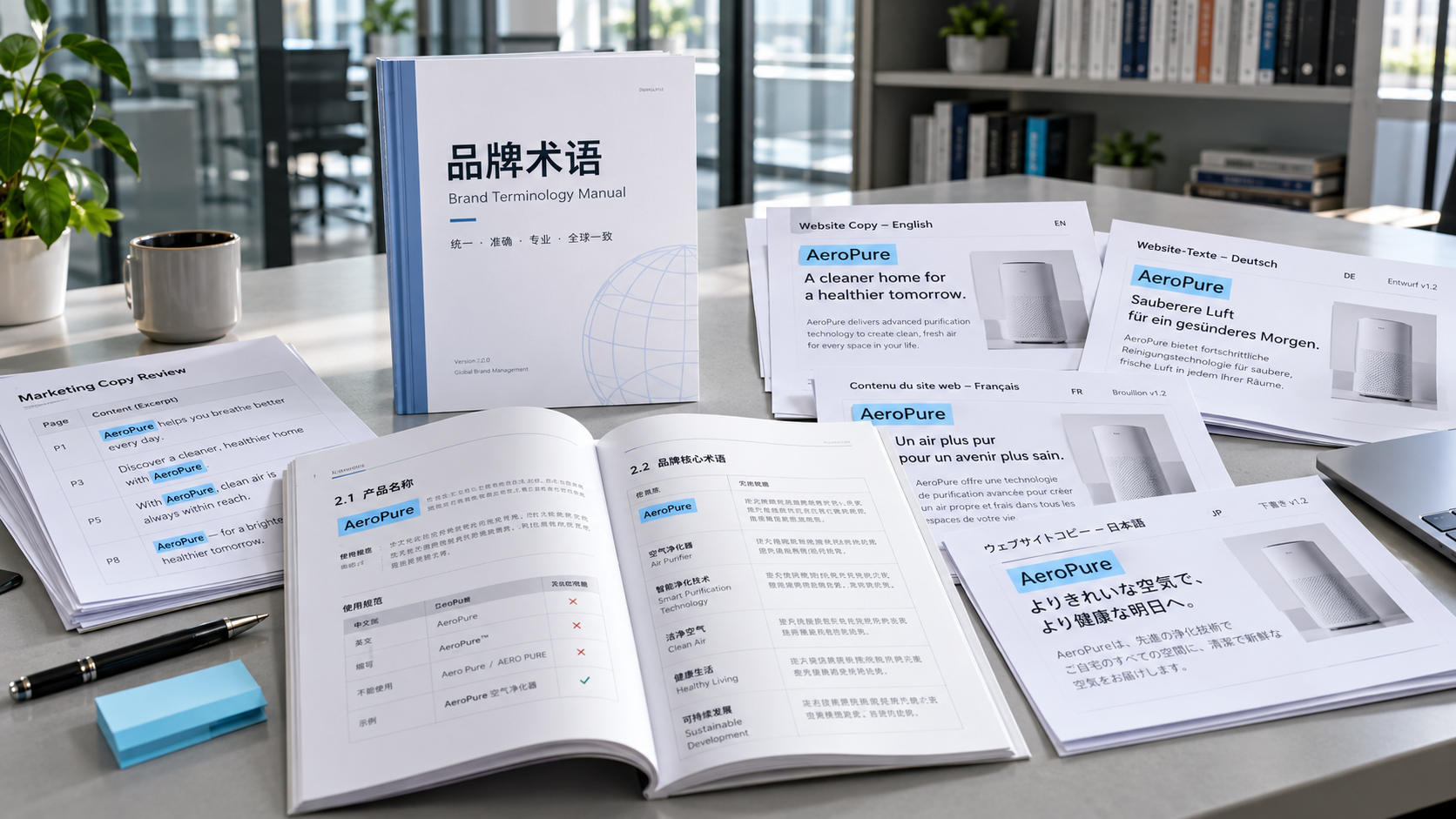
 Can an AI translation platform standardize brand terminology across multilingual websites?


Related Products
 Yiyingbao SaaS Intelligent Website Building and Marketing SystemYiyingbao SaaS Intelligent Website Building and Marketing System, AI-powered no-code website building, rapid creation of multilingual B2B international websites in 10 minutes, global server acceleration, AI-powered SEO optimization, helping businesses connect efficiently with global markets. The perfect integration of technology and operation makes building an international trade website remarkably simple
 AI+SEM Intelligent Advertising Marketing SystemAI+SEM drives intelligent ad creation, empowering full-funnel precision advertising marketing. The system automatically generates weekly/monthly reports, AI recommends keywords and target countries, monitors core metrics in real-time with intelligent alerts, and enables one-click high-conversion ad solutions to help quickly acquire customers and improve ROI.
 AI+SEO Dual-Engine System Optimization ServicesYiyingbao’s AI+SEO dual-engine optimization system helps foreign trade enterprises acquire high-quality organic traffic through AI-powered keyword research, content generation, and comprehensive technical optimization, significantly improving search rankings and conversion rates.
 AI+SNS Social Media Marketing SystemYingbao AI+SNS Social Media Marketing System - Precision social capture for the social media era. Supports one-click content synchronization across major platforms like Facebook and LinkedIn. AI intelligently rewrites posts for enhanced relevance. 24/7 AI customer service and user profiling analysis empower businesses to efficiently expand into global markets.
 AI+SEO营销解决方案易营宝AI+SEO营销解决方案,通过AI批量写作、智能生成TDK、精准关键词扩词等功能,全面优化网站SEO效果,提升流量与转化率。助力企业构建高效智能网站新生态。
 AI+SEM Advertising Marketing SolutionsAI+SEM Advertising Marketing Solution leverages AI technology to deeply empower SEM ad campaigns. It automatically generates weekly/monthly reports using AI, presenting account data across multiple dimensions for comprehensive insights into campaign performance and trends. The system precisely recommends keywords and target countries, intelligently generates high-conversion ad copy, and enables one-click activation of efficient campaign plans to help businesses rapidly acquire customers. Simultaneously, it monitors core metrics in real time, intelligently identifies abnormal fluctuations, and issues timely alerts to ensure stable, high-return advertising results.
 Domain Name ServicesEasyWin provides professional domain name services, including intelligent queries, one-stop registration, brand protection, and full lifecycle management, helping businesses build a digital brand image.
 EasyOperate B2C Cross-Border E-Commerce Platform & Independent WebsiteEasyStore B2C Cross-border E-commerce Independent Store is an intelligent website building and cross-border e-commerce integrated solution independently developed by EasyStore Information Technology (Beijing) Co., Ltd. The system is specially designed for small and medium-sized as well as large export enterprises, integrating 'website building, operation, marketing, advertising, and conversion' into one, helping enterprises quickly establish cross-border e-commerce independent stores to achieve brand globalization and global sales growth.
The platform supports multiple languages, multiple currencies, and multi-channel marketing, with built-in AI intelligent translation and SEO optimization systems, suitable for mainstream markets such as Southeast Asia, Europe and America, Latin America, and the Middle East, assisting Chinese manufacturing enterprises in efficiently deploying international e-commerce strategies. SSL证书易营宝提供专业SSL安全证书服务,包括单域名和泛域名证书,确保网站数据传输加密、身份验证和完整性保护,助力企业建立安全可信的在线业务环境。









